







Outdoor Kitchen & Islands
A narrow side yard punishes optimistic sketches. The cabinet looks fine on a product photo, then the grill lid, a fridge door, and a person with a platter all want the same 24 inches of path. The constraint is not a lack of taste. It is width, swing, and a walking lane that has to survive a real Saturday.
This is a size-constrained placement guide, not a redo of how to fasten an island to a pad. For that mechanical question, use the existing guide to anchoring an outdoor kitchen island. A broader zone-buying view already lives in the island buying guide; this page stays on tight side yards.

Minimum widths you can actually defend
Start with numbers the manufacturer has published, then add the space your body and your doors need. The current 6+2 outdoor kitchen island page lists an overall size of 108.26 inches long, 24.8 inches deep, and 49.6 inches high. That is a long, relatively shallow cabinet, and it still needs walkway, lid clearance, and the setbacks in the manual and in local rules. This article will not invent a universal “minimum yard width.”
Other islands in the outdoor kitchen island collection may not publish a full cabinet size in the same way. The current 4+2 island listing emphasizes a 750-square-inch cooking area rather than an overall length in the text we could verify; confirm the live page or the shipping information before you assume it is shorter. A 39,000 BTU island in the same collection lists a smaller 488-square-inch grate (27.56 by 17.71 inches) and a dedicated searing burner, but overall cabinet width should still be measured, not guessed from the grate.
Straight versus L-shaped layouts
In a side yard, a straight run along the house or fence is usually easier to walk past. An L can create a useful corner for the cook and also pinch the only passing lane. If you choose an L, put the short leg where the yard opens, and do not let a fridge door open into the pinch point.
Think about which way people already walk to a gate or a garage. An island that blocks a daily path will get bumped, and bumping a propane cabinet is a safety issue, not a decorating one. Official outdoor-gas and fire sense from the NFPA grilling safety pages belongs in that measurement, along with local setback rules this page cannot write for you.
| Side-yard situation | Layout that often fits | What you must still measure | Skip or rethink if |
|---|---|---|---|
| A long, narrow strip along a fence | A straight, shallow island, operator facing the yard if possible | Published cabinet depth, lid arc, and a walking lane | The path disappears once a door is open |
| A dead-end side yard with a wider opening at one end | A short L, with the corner at the opening | The pinch point at the inside corner | Guests have no way past the cook |
| A path people use every day | A rolling cart station instead of a built-in cabinet | Cart width and storage when it is parked | You cannot leave a clear exit |
Cart-plus-oven or cart-plus-grill as an alternative
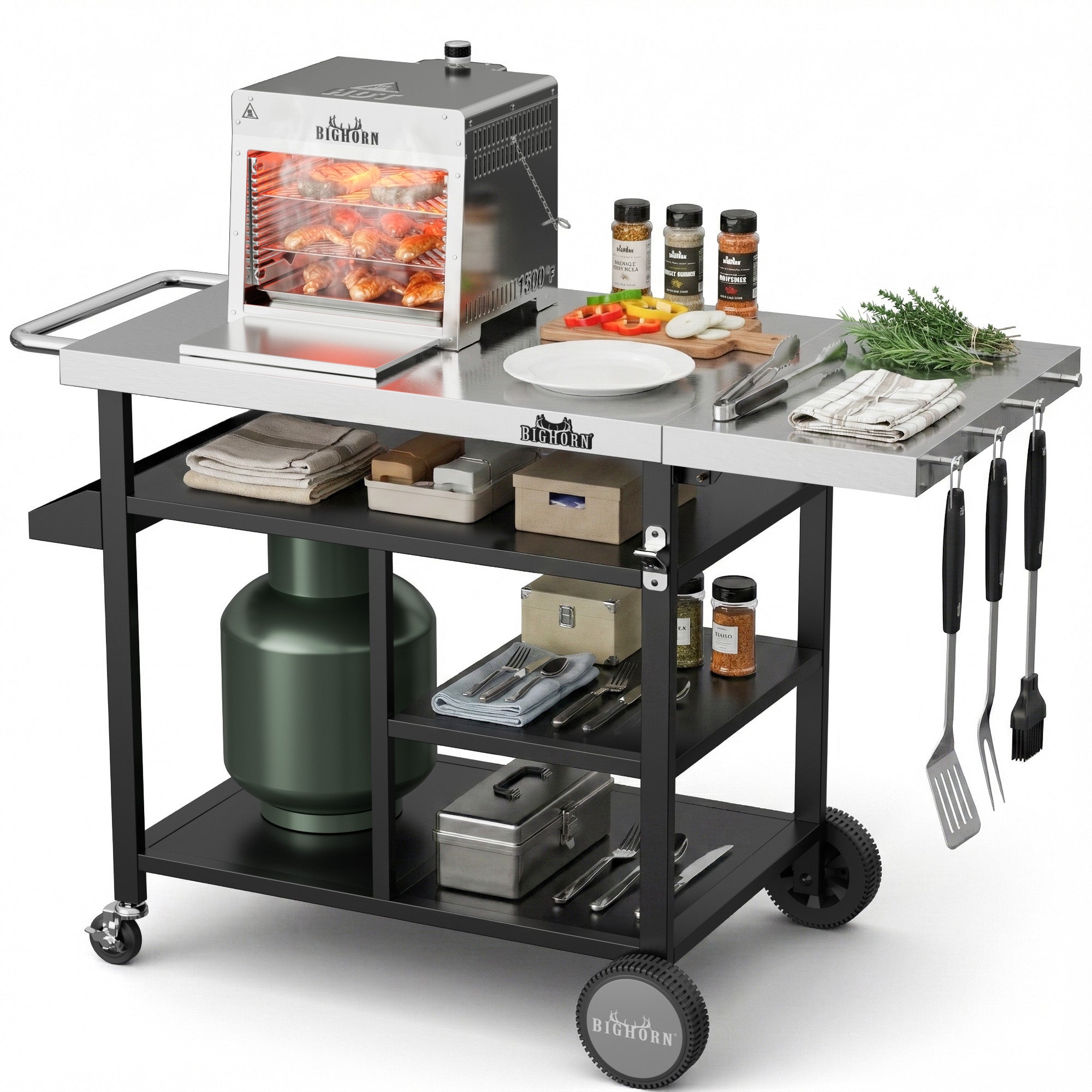
If a built-in island steals the walkway, a cart can be the more honest station. The current outdoor grill cart and pizza oven table page lists a stainless top at 48.4 inches by 24 inches, a 220 lb load rating, and lockable wheels. That is a much shorter footprint than a 108-inch-class island, and it can roll out of the daily path. It will not replace a sink-and-fridge island, and it should still sit on a level, noncombustible outdoor surface with propane kept outdoors and upright.
A cart-plus-cooker plan is a lifestyle choice, not a failed island. It is also easier to reverse if you move.
Storage and seating tradeoffs
Side yards also collect bins, bikes, and a hose reel, and those objects will still be there on cook night. Leave a reserve strip for the things that already live in the path, or you will measure a perfect aisle in the morning and lose it by afternoon. If storage must sit beside the island, keep it on the guest end, away from tank doors and the grease tray.
In a tight yard, every cabinet and every stool competes with walking space. Deep storage is useful; a row of chairs on the operator side is how people get trapped against a hot grease tray. Put seating, if you must have it, at the open end of the yard, not in the only aisle.
Do not store a propane cylinder in a decorative bin that blocks the access door. Carbon monoxide and enclosed-space rules still apply; the EPA page on carbon monoxide and indoor air quality is the reference if anyone suggests pushing the island under a tightly enclosed carport “just for this season.”
Clearance, doors, and passing space
Measure three things with the cabinet in mind: the walking lane, every door swing (grill lid, fridge, access doors), and the clearance to combustible walls or fences that the manual and local code require. A tape on an empty pad is not enough. Mock the lid with a piece of cardboard if you have to. Wind in a side yard can also funnel heat toward siding; National Weather Service wind-safety guidance is a useful weather check, not a substitute for clearance.
If those measurements fail, the honest answers are a smaller station, a cart, or putting the kitchen on a different wall of the house. Household fire basics from Ready.gov home fire pages and U.S. Fire Administration cooking-fire pages should sit beside the tape measure.
Product paths for a tight yard
Start by confirming published overall dimensions. The 6+2 listing gives you a long, shallow number to test against the fence line. Confirm the 4+2 and any 39,000 BTU island on their live pages before you call them “smaller.” If no island leaves a walkway, look at the cart and a portable cooker instead. Do not force a cabinet into a path your household uses in the dark.
Local permitting, gas, and setback rules still win. This page is a measuring plan, not an exemption.
Key takeaways
- There is no universal minimum yard width; add walkway and door swings to any published cabinet size.
- The current 6+2 page lists 108.26 by 24.8 by 49.6 inches; confirm other models on their live listings.
- A straight run usually protects a side-yard path better than a pinched L.
- A lockable cart can be the better station when a built-in island would block daily traffic.
- Anchoring is a separate guide; this page only asks whether the cabinet belongs in the yard at all.
If a side yard might only take a straight, shallow station, confirm current dimensions on the 4+2 outdoor kitchen island or the 6+2 island, and measure the walking lane with the doors open before you buy.
FAQ
How narrow can a side yard be for an outdoor kitchen island?
There is no single honest inch count that fits every house, because the island, the lid arc, door swings, and combustible-clearance rules all change the math. Start with the island’s current overall dimensions when the listing publishes them, then add walking space and the clearances in the manual and local code. If those numbers no longer leave a path, the yard is too tight for that cabinet.
Is a long, shallow island better than an L-shape in a side yard?
Often a straight, relatively shallow cabinet is easier along a fence line, because an L can steal the only passing lane at the corner. An L can still work if the yard opens at one end and the cook can stand in the corner without blocking a door. Measure the path with the doors open, not just the closed cabinet.
What if a full island will not fit?
A cart plus a smaller cooker can be the more honest station: less permanent width, and a way to roll equipment out of the path. That is a different lifestyle than a built-in island, but it is better than forcing a nine-foot-class cabinet into a walkway people need every day. Confirm cart and island measurements on the live pages.
Do I still need to anchor a small island?
Stability still matters, especially on a narrow pad where a bump is more likely. How you anchor or weight an island is a separate, already-published question. Use that guide for the mechanical side, and use this page for whether the cabinet even belongs in the side yard.
More to Read
Fireproof Grill Mat Under Pizza Ovens and Infrared Grills
Place a fireproof grill mat to catch grease and sparks under ovens and grills. Confirm the live 48-by-30-inch claims, and use a cart when you need ...
No Oven Spring on a High-Heat Pie: Dough Temp, Launch and Floor
Diagnose no oven spring on a high-heat pizza by checking dough temperature, launch handling, and floor heat before you spend another mix changing t...
Heat-Resistant BBQ Gloves: Temperature Ratings and Wet-Grip Limits
Read a 1472°F glove rating as a short, dry, instant figure. Wet or oily conditions change grip, so let long peels reach into hot ovens and grills.
