







The failure is easy to picture. Someone dumps a new bag of glass over the old rock, the ports disappear, and the pit either will not light or burns in a ragged ring that soots the glass by morning. Media choice is a buying path about look, soot, and safety, not a way to bargain a hidden BTU increase out of the same burner. If the manual does not allow the bag in your hand, the bag does not go in the pan.
Media changes look, soot and how the flame reads, not a miracle heat boost
Lava rock vs fire glass changes how a gas fire pit looks, how it soots, and how the flame sits in the pan. It does not raise listed heat output. Use only media the manual allows, at the depth it shows, so fill cannot block burner ports. Choose for appearance, not for a temperature miracle.
The listing photos for the column propane pit on this page show dark, rock-style media in a shallow bowl with a perforated burner ring visible in a close-up. That is a useful picture of the job media has to do: dress the flame without burying the hardware. It is not proof that every pit ships with the same fill, or that you should copy a depth from a photograph.

Lava rock vs fire glass: a comparison table
Compare the two as behaviors in a listed pan, not as a contest with a winner. Your manual may allow only one, or a specific size and color, in which case the table is academic.
| Point of comparison | Lava rock | Fire glass |
|---|---|---|
| Look and flame read | A darker, more traditional ember look; the flame often reads as a camp-style bed. | A brighter, more decorative sparkle; the flame is easier to see bouncing off the glass. |
| Soot and cleaning | Porous surfaces can hold dust and soot and may need periodic replacement as they crumble. | A smoother surface can show film quickly but may wash more easily if the maker allows cleaning. |
| Moisture and handling | Can hold water in pores; wet rock can pop or spit as it heats. | Can also spit if wet or if the glass was not made for fire features. |
| Heat claims | Does not, by itself, raise the burner's listed output. | Same limit: appearance is not a BTU upgrade. |
Safety: glass, moisture and a media depth that stays in the pan
Use fire glass only if it is sold for gas fire features and named or clearly allowed in the pit manual. Craft glass, unknown recycled shards, and children's vase filler are the wrong category. Keep all media inside the pan and below any wind guard the model uses, so pieces cannot roll onto a walkway or into a burner port.
Moisture is a safety issue for both materials. Let soaked media dry, or replace it, rather than blasting a wet bed with a full flame. NFPA grilling fire-safety guidance and U.S. Fire Administration cooking-fire prevention are official reminders that a fire feature is still a gas appliance, even when the argument is about decoration. Ready.gov home-fire guidance is the household backdrop if a start goes wrong.
Depth comes from the manual, not from this article. A fill that looks "full" in a photo can be too deep for your ports and for a thermocouple. If you cannot see the pattern the instructions describe, you have overfilled, not styled, the pan.
Cleaning and replacement signs
Clean on a cold, shut-down pit. Lift media out rather than hosing water into the burner. Discard rock that is crumbling into dust, glass that is cracked or mysteriously mixed with foreign pieces, and any fill that smells of contaminants you cannot identify. Soot on glass is a cleaning job; soot plus a weak, yellow, smoky flame is a burner or gas-quality job, and may need the gas-check and smart-use guide or a technician.
Replacement is due when media no longer stays in the pattern, keeps blocking ports, or has been through a standing-water week you cannot dry out. Do not run "one more season" on a bed that is already in the burner holes.
How this differs from wood-vs-propane fuel choice
Media sits inside a gas appliance. It does not convert a propane pit into a wood pit, and it does not settle whether you should have bought wood in the first place. Fuel choice, smoke, and ash live on other pages, including the chimenea versus fire pit comparison if that is the real shape question, and the fire-pit cooking and safety guides if you are still orienting around the category.
A live-fire grill versus a gas grill is also a different contrast. Charcoal and wood cooks do not get lava rock or fire glass as a flavor upgrade in a propane pan. Keep the tools in their lanes.
A swap plan if you already have lava rock
Shut the gas off, let the pit go cold, and take a photo of the current fill and the burner before you touch it. Remove the rock and inspect ports, the igniter, and any sensor for debris or corrosion. If the manual allows glass, add it in the size and pattern it specifies, often in thin layers, and stop before the ports vanish. Light a short, attended test.
If the manual does not allow glass, stop at the photo and put approved rock back, or order the listed replacement. A swap that ignores the listing is not a style refresh.
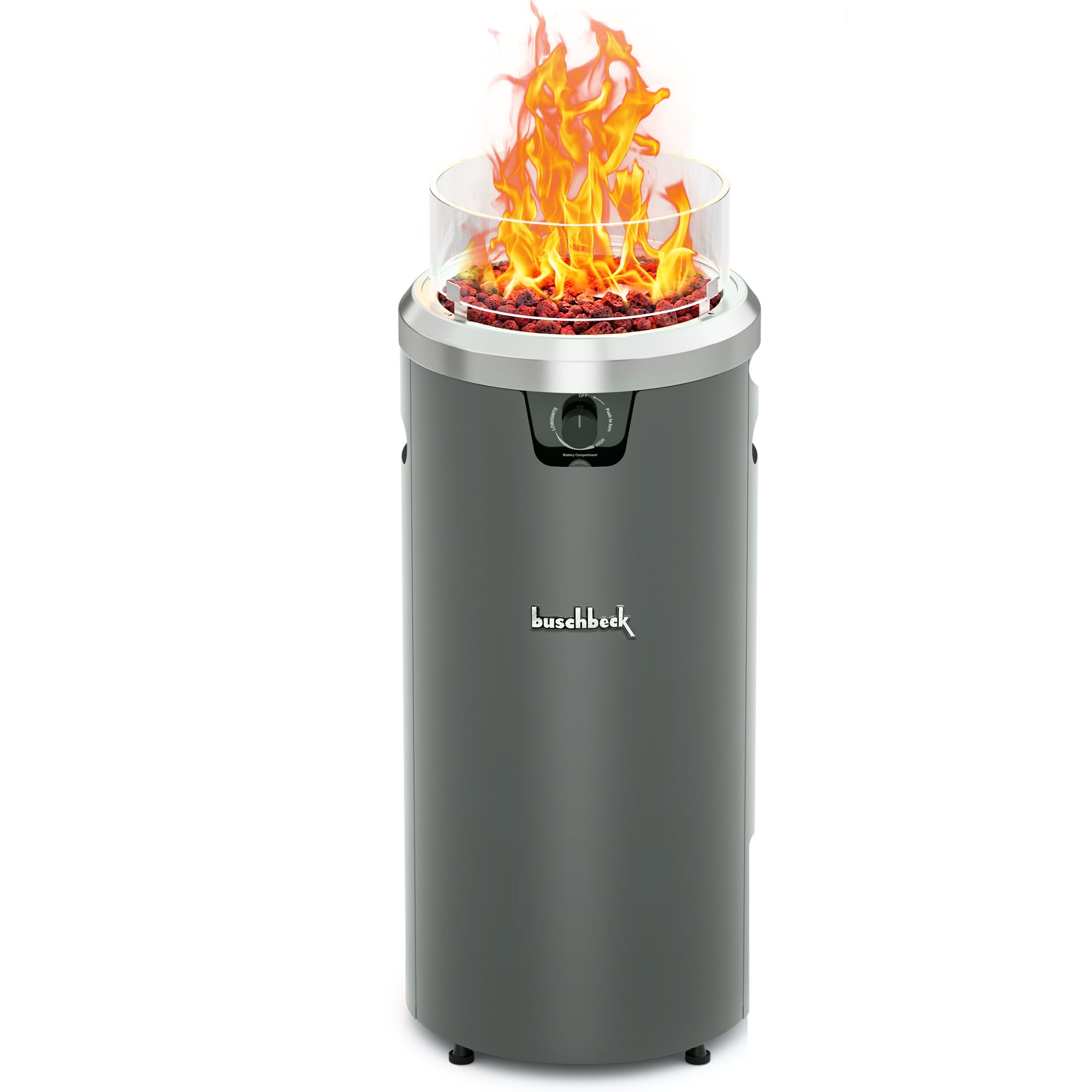
A depth and fill pattern that keeps media out of the burner ports
The practical test is visual and boring: ports and the sensor area should remain as open as the manual shows, and media should not cascade into the ring when someone bumps the pit. Wind can drift loose glass; the fire-pit wind-safety page is about whether you should light at all, and also a reason not to run a barely filled, bouncing bed in a gust.
If you have to mound media to hide the burner "for a finished look," the look is wrong. Red Cross fire guidance, EPA's carbon monoxide overview, and NFPA's home fire-safety overview will not pick your glass color, but they do underline the same limit: this is still an outdoor gas fire, burning only as listed, with nothing piled where flame and fuel need to meet.
A recap of who this method is for, and who should use a different fire feature
This comparison is for someone who already has, or is buying, a listed gas fire pit or fire table and needs to choose or replace media. It is not a wood-fuel guide, not a chimenea page, and not a way to turn a propane bowl into a grill. If you want a wood fire, buy a wood appliance and use its own start-and-shutdown method. If you want to cook, buy a cooker that is listed for a grate, not a prettier bag of glass.
If your manual names one media only, your path is short: buy that media, fill it as shown, and stop. If both rock and glass are allowed, pick the look and the cleaning habit you will actually keep, then do a cold, careful swap and a short test fire. The pit is ready when the flame reads cleanly in the pan and the ports are still visible, not when the bowl looks as full as a catalog photo.
If you are choosing media for a column propane feature such as the 15-inch column round propane fire pit, use only the fill that model's manual allows, and keep it clear of the burner ports shown in the listing photos.
FAQ
Is fire glass hotter than lava rock?
Not in a way this page can promise as a heat upgrade. Glass and lava rock change how a flame looks and how heat is reflected or absorbed at the surface, but they are not a legal way to raise a burner's listed output. If a seller claims a miracle temperature bump from a bag of media, treat that as marketing, not as a specification. Choose glass or rock for appearance, soot behavior, and whether your pit's manual approves it, then keep the fill shallow enough that ports stay clear.
Do lava rocks soot up a fire pit?
They can, especially if the flame is dirty, the media is dusty, or residue has built up over many evenings. Lava rock is porous and can hold soot and debris that glass, being smoother, may show and release differently. Soot is also a combustion and cleaning issue, not only a rock issue. If the pit burns yellow and smoky on a still night, check the burner and the gas supply rather than blaming the media alone, and replace rock that is crumbling, soaked, or packed into the ports.
Is fire glass safe in a propane fire pit?
It can be, when the glass is a product made and listed for gas fire features, the pit's manual allows it, and you place it only to the approved depth and pattern. Decorative vase gems, recycled bottle glass, or wet glass that has sat in rain are not automatic substitutes. Moisture in any media can pop or spit as it heats. If the manual names lava rock only, do not assume glass is approved. Safety here is listed media plus a clear burner, not a prettier bag from a craft aisle.
Can you replace lava rock with fire glass in an existing pit?
Only if that specific pit allows fire glass, and only after you remove the old media, inspect the burner, and refill to the manual's depth. A straight swap by volume can bury ports or change how the flame sits on the sensor. Some units want a base layer of one media and a thin top layer of another; some forbid a mix. Do the swap with the gas off, outdoors, and light a short test fire before you invite people to sit close.
