







The turkey is already in the indoor oven, or it is resting and the oven is still full of a pie, a casserole, and a tray you cannot evict. That is the decision this page starts with: which Thanksgiving sides leave the house, and which stay. One household might put potatoes and stuffing on a two-zone gas grill and keep dessert inside. Another might send only small vegetable pans to a pizza oven and leave the deep dishes alone. Both can work. Trying to move every side outside, at the same heat, usually does not.
This is an overflow plan. It is not a method for cooking the whole turkey on gas. The indoor oven remains in the story; it just stops being the only rack in the house.
The indoor oven is the bottleneck; sides can leave the house
Thanksgiving sides on the grill, or in a pizza oven, free the indoor oven; they are not a second turkey method. Move sturdy, covered sides to a two-zone gas grill, and small pans or breads to the pizza oven. Keep delicate desserts inside, then hold finished sides covered so they do not dry.
The decision path is short. If a dish needs a tight, even box and a still top, it stays indoors. If it can stand a little smoke, a foil lid, or a short high-heat pass, it can leave. If you would not trust the dish in a slightly windy driveway, do not assign it to the patio as an experiment on the holiday itself.
A compact outdoor oven, such as the current 12-inch wood-pellet pizza oven, is a small-pan station. Confirm the live listing; this page will not invent a heat-up clock or a chamber temperature. Larger foil trays usually belong on the grill grate, not crammed into a 12-inch mouth.
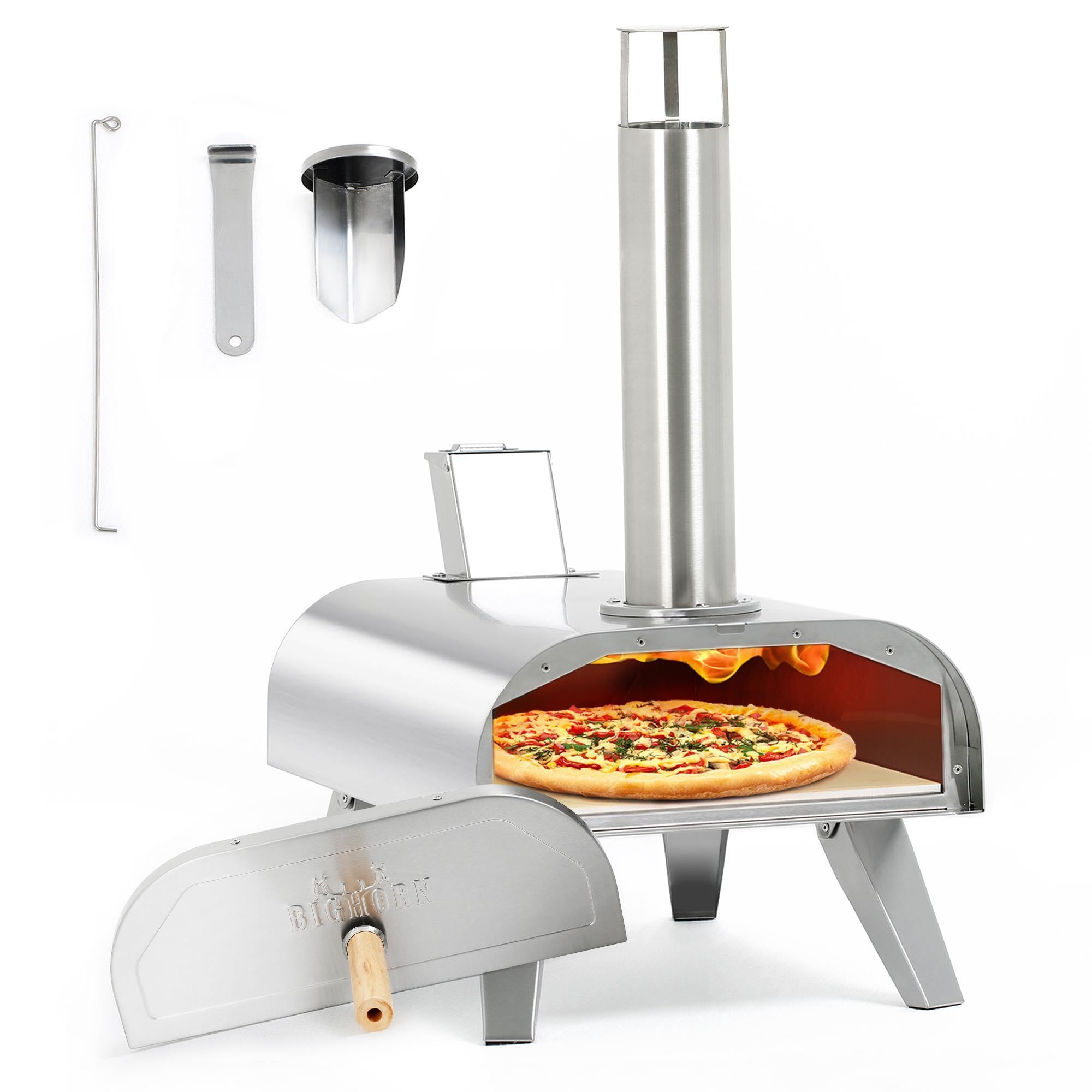
Which sides belong on a gas grill vs a pizza oven
The gas grill is the wider, more patient surface. Foil-wrapped potatoes, a covered pan of stuffing, roasted roots, and a skillet of sturdy greens can live there if you keep a cool zone and a lid or foil on the food that would otherwise dry. Indirect heat is the default. A flare-up under an open stuffing pan is a mess, not a flavor step.
The pizza oven is the short pass. Think blistered broccolini, a shallow dish of already-cooked vegetables with a breadcrumb top, dinner rolls that only need a last color, or a small pan you can turn. A page on what else you can cook in a gas pizza oven already covers roasts, bread, and fish as a category; this article only borrows the idea that the chamber can do more than pizza, then puts it on a holiday clock. If you use a dual-burner gas oven, cooking pizza, bread, and more in a dual-burner gas oven is the technique page for zones inside the chamber. Do not rebuild that lesson here.
Foil packets of carrots or a pre-baked sweet-potato dish are common grill travelers. A wet, deep green-bean bake is not automatically one of them; if you move it, keep it covered and on indirect heat. FDA guidance on selecting and serving produce safely is the wash-and-hold reference, not a roasting timer.
A timing chart for the last 90 minutes
The last 90 minutes are when the indoor oven is usually at its most crowded. Outdoor sides should already be staged: pans filled, foil cut, grill lit, oven heating only when its first pan is close. The chart is a sequence you adjust to your bird and weather, not a guaranteed minute count.
| Window | Gas grill sides | Pizza oven sides |
|---|---|---|
| 90 to 60 minutes before plates | Hold a two-zone fire. Start dense items such as foil potatoes or a covered stuffing pan on the indirect side. | Finish prep. Begin heat-up only if the first small pan or bread is nearly ready to go in. |
| 60 to 30 minutes | Turn pans, check for drying, and add a splash of stock or butter under the foil if a stuffing looks tight. Keep direct flame off the food. | Run the short queue: vegetables first, breads later so they stay crisp. |
| Last 30 minutes, turkey resting | Move finished sides to a hold: covered pan, towel-lined cooler used only for hot food, or the grill's coolest zone on low. | Last bread or shallow gratin, then shut the queue down. Do not park a finished pan in a blasting mouth. |
Food that is done early is not safer because it sits out. FDA safe-food-handling guidance and FDA advice on storing food safely are the official references for how long perishable sides can wait, and for getting leftovers into the refrigerator after the meal.
Foil, pans and a hold that does not dry the food
Foil is a lid and a wind break, not a magic seal. Leave a little headroom, and do not wrap a stuffing so tight that steam has nowhere to go, then unwrap it onto a dry, open grate. A lidded metal pan is easier to move than a loose packet, and a pizza-oven pan should be shallow enough to heat through.
The hold is where overflow cooks lose the meal. A finished side can wait in a covered pan, in a dry towel-lined insulated chest reserved for hot food, or on the grill's low, indirect side. It should not wait in a sealed plastic bag, and it should not wait uncovered on a windy counter. If the top looks dry, add moisture under the cover and take it off the direct heat. FDA kitchen food-safety guidance still applies when the "kitchen" is a patio table.

How this differs from turkey-on-gas
Turkey-on-gas is a protein method: one bird, a temperature path, and a rest. This page assumes the bird already has a home, often indoors, and that the crisis is rack space. If you did move the turkey outside, the sides still need a second surface. Do not stack a stuffing pan under a dripping bird and call it overflow cooking.
A 2026 comparison of gas grills for steaks and pizza is about choosing hardware. This article assumes you already have a grill or an oven. If you are still wondering whether a rotating stone helps a short side queue, that question lives on whether a rotating-stone gas pizza oven is worth buying.
A backup if weather shifts
Have a shorter indoor menu in your pocket before guests arrive. If wind makes the grill unusable, or rain drives water into burners or a pellet hopper, the outdoor sides come back in or come off the plan. Lightning ends the patio cook. A covered, well-ventilated patio may still be usable in light weather if the appliance manual and fire rules allow it; a closed garage is not a backup kitchen.
NFPA grilling fire-safety guidance and U.S. Fire Administration cooking-fire prevention are the outdoor-fire baselines. They do not pick your stuffing recipe, but they do rule out the "we will just pull the grill into the garage for 20 minutes" shortcut.
A platter and foil-hold map so sides do not go cold on the counter
Before the last 90 minutes, assign every outdoor side a landing place: a warmed platter, a lidded pan, or a foil-covered tray that can sit close to the table without blocking the carver. Write it down if the kitchen is crowded. A side that finishes outdoors and then sits on a cold granite counter for 20 minutes is a cooled leftover, not a served dish.
Put serving spoons out now, not after the turkey is carved. Keep raw-meat boards away from the side platters. Ready.gov food guidance is a reminder that perishable food still needs a plan if service slips; it is not an invitation to leave the stuffing out until evening football starts.
A recap of who this method is for, and who should use a different cooker
This method is for a holiday cook whose indoor oven is already spoken for, and who can run a two-zone grill or a small pizza oven without abandoning the bird. It is for sturdy sides and short oven passes, with a covered hold at the end. It is not for moving a whole turkey, a fragile custard, or a deep wet casserole into a windy, oversized flame as a first try.
If you have no outdoor cooker you trust in November weather, keep the sides indoors and cut the menu. If the bird itself is the outdoor project, use the turkey-on-gas page and treat this only as a sides overflow. Two honest stations beat one overloaded indoor rack.
If you are moving Thanksgiving sides outdoors, a compact oven such as the 12-inch wood-pellet pizza oven can take the short, high-heat pans, while the gas grill carries the larger foil trays. Confirm the live listing, and keep the indoor oven for the dishes that still need a tight box.
FAQ
Which Thanksgiving sides can I cook on a gas grill?
Sturdy sides travel well: foil-wrapped potatoes, a covered stuffing or dressing in a pan, roasted squash or carrots, and a skillet of greens. Use a two-zone fire and keep watery casseroles covered so they do not dry or catch grease. Delicate custards and desserts that need a tight, even box usually stay indoors.
Can I use a pizza oven for Thanksgiving sides?
Yes, for small pans and short, high-heat passes: blistered vegetables, a shallow gratin, dinner breads, or a tray that can be rotated or turned. A deep, wet casserole is a poor fit. Heat the chamber, work in a short queue, and move finished pans to a covered hold rather than leaving them in a blasting mouth.
How do I keep grilled sides from drying out before dinner?
Cook them just shy of done, then hold covered in a pan, in foil, or in a cooler zone of the grill. A little moisture in the pan helps; a sealed plastic bag on a hot side does not. Do not keep a finished stuffing over direct flame while you wait for the turkey to rest.
What if the weather turns while the sides are outside?
Have a backup that can finish indoors or under a legal, ventilated cover. If wind, heavy rain, or lightning makes the patio unsafe, the sides come in and the menu shrinks. A weather shift is not a reason to cook in a closed garage.
