The global demand for premium home pizza ovens is accelerating as home chefs move past standard kitchen limitations. To understand why a dedicated backyard appliance is necessary, one must look at the underlying physics of baking.
Pizza requires two synchronous methods of heat transfer working in perfect tandem: conduction and radiation.
-
Conduction is the direct transfer of energy from the baking surface to the underside of the dough, responsible for the initial oven spring, structural crispness, and crumb development.
-
Radiation is the electromagnetic wave energy moving through the dome air, melting toppings, emulsifying fats, and blistering the rim.
       [Radiant Flame Heat (Top/Sides)]
                  │
                  ▼
   ┌─────────────────────────────┐
   │  Pizza Dough & Toppings     │
   └─────────────────────────────┘
                  ▲
                  │
       [Conductive Stone Heat (Bottom)]
While standard residential indoor ovens top out at a modest 500°F (260°C) to 550°F (288°C), authentic Neapolitan pizza requires extreme temperatures approaching 900°F (482°C) to 1000°F (538°C) to achieve a charred, leopard-spotted crust in under two minutes without drying out the interior crumb. New Haven-style apizza demands coal-level heat exceeding 1,000°F, while classic New York pies thrive between 700°F and 800°F. A purpose-built outdoor oven is the only reliable way to safely achieve and sustain this intense thermal mass in a domestic setting.
Why Buyers Struggle: The Hidden Variables of Pizza Ovens
Choosing an outdoor cooking setup involves navigating complex structural trade-offs that go far beyond aesthetic appeal or baseline price points.
Fuel Type Matrix & Operational Realities
The choice of fuel fundamentally alters your learning curve, heat management, and the flavor profile of the final crust.
-
Gas (Propane / Natural Gas): Offers turnkey temperature control and rapid ignition. It is ideal for mid-week dinners where convenience is prioritized, though it requires dedicated fuel tanks or plumbed lines.
-
Wood / Pellets: Delivers an authentic smoky flavor and traditional wood-fired ambiance. However, it requires an active learning curve regarding active airflow management and consistent pellet feeding to prevent temperature drops between launches.
-
Electric: Safely allows balcony or indoor countertop use, making true high-heat baking accessible to apartment dwellers. The main trade-off is reliance on proximity to high-amperage outlets and a lack of open-flame outdoor ambiance.
The Dimension and Portability Dilemma
A 12-inch oven format provides excellent portability for camping or quick patio storage but offers tight margins when launching or turning pies. Conversely, 14-inch to 16-inch platforms accommodate larger artisanal shapes, cast-iron skillet roasting, and easier peel maneuvering, but they demand a more permanent outdoor footprint and heavier structural placement.
Stone Material and Preheating Realities
A common industry myth is that an oven is ready to cook the moment the ambient air reaches temperature (often cited as 20 minutes). In practical field tests, standard cordierite stones require at least 45 minutes of continuous heat saturation to achieve true thermal equilibrium. Premium Italian clay substrates (such as biscotto) retain and transfer heat more gently than standard refractory stones, preventing the bottom of the crust from scorching while the toppings finish cooking under intense radiant heat.
Strategic Product Analysis: Big Horn Outdoors 12" Pellet & Gas Hybrid
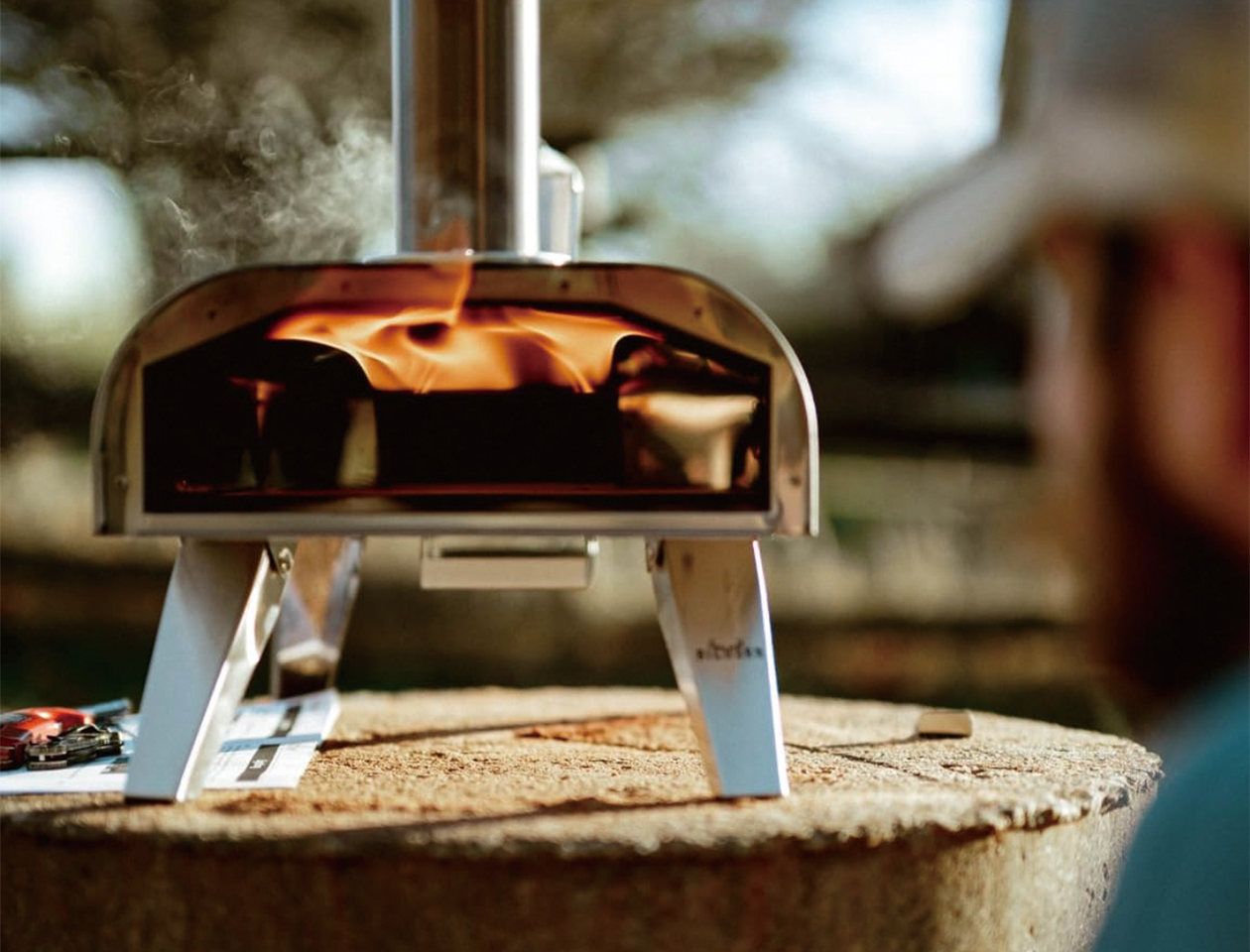
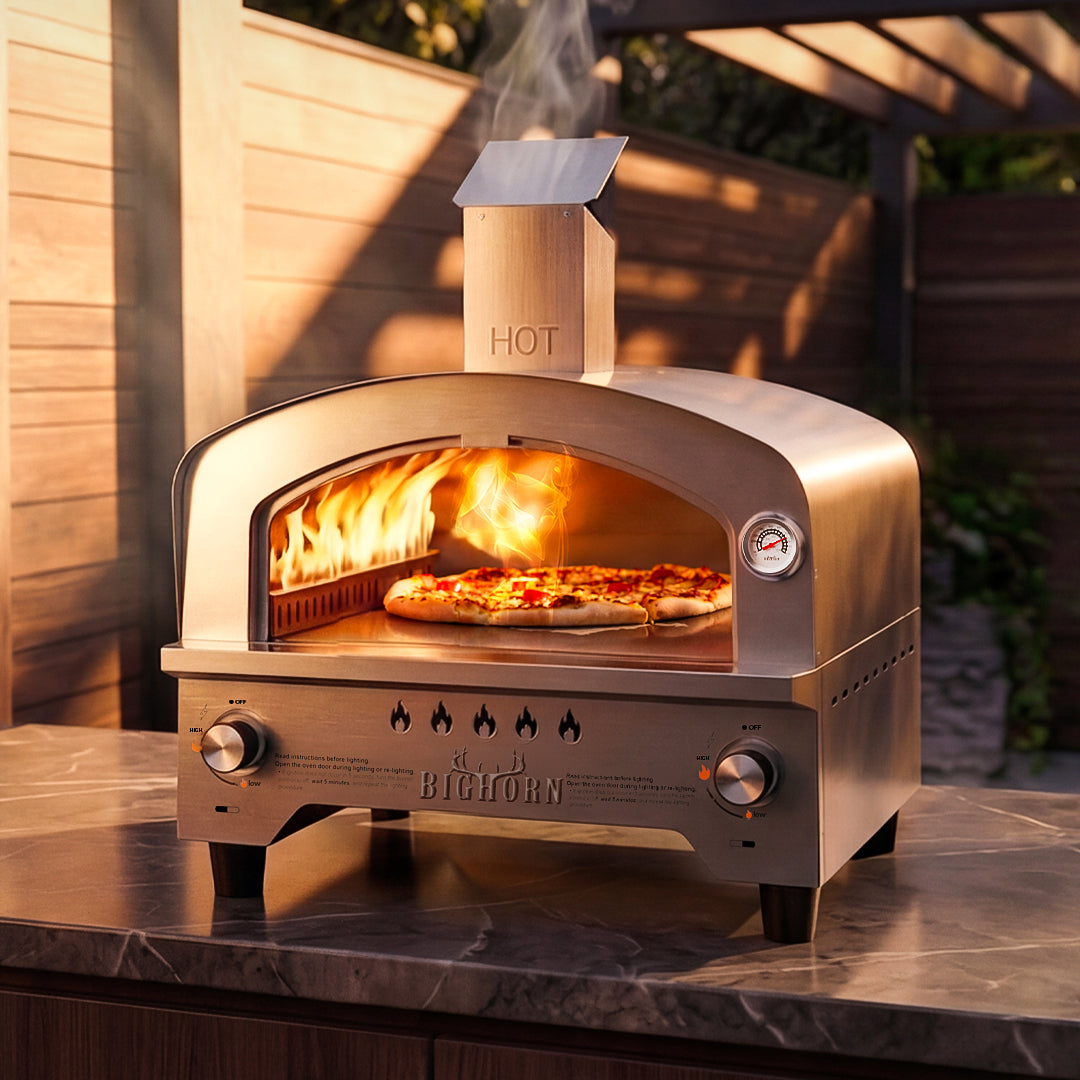
For buyers seeking a balance between convenience and authentic wood-fired experimentation, the Big Horn Outdoors 12" Pellet & Gas Pizza Oven offers an adaptable entry point. Engineered with a heavy-duty stainless steel chassis and foldable stabilization legs, this hybrid system resolves the primary friction point of single-fuel models by allowing toolless switching between gas convenience and wood pellet flavor profiles.
+----------------------------------------------------------------------------+
|                       Big Horn Outdoors 12" Hybrid                         |
+----------------------------------------------------------------------------+
|  [Stainless Steel Dome] --> Max Radiation Retention                        |
|  [12-Inch Cordierite Stone] --> High Thermal Mass Conduction               |
|  [Toolless Dual Burner System] --> Instant Gas Ignition OR Pellet Hopper    |
+----------------------------------------------------------------------------+
Core Specifications & Architectural Benefits
-
Dual-Fuel Flexibility: The integrated rear hopper accepts premium hardwood pellets for maximum aromatic smoke, while the detachable gas burner attachment connects seamlessly to standard propane tanks, reaching 350°C (662°F) in approximately 20 minutes under ideal conditions.
-
Optimized Thermal Mass: The unit includes a thick, high-density 12-inch pizza stone engineered to maximize heat retention, ensuring consistent bottom-crust browning across multiple consecutive bakes.
-
Mobility Infrastructure: The lightweight frame paired with collapsible legs makes it highly transportable for tailgating, camping, or flexible patio storage compared to permanent masonry installations.
Cross-Market Comparative Benchmarking
To guide your investment, the chart below benchmarks the Big Horn Outdoors Hybrid against the most prominent high-performance alternatives across the 2026 landscape:
| Model / Option | Target Audience | Primary Advantage | Main Trade-off | Budget Tier |
| Big Horn Outdoors 12" Hybrid | Versatile backyard cooks wanting both speed and wood flavor | Toolless switching between gas and pellets; portable | 12-inch format restricts extra-large pies | Mid-Range |
| Ooni Koda 2 Pro | High-volume outdoor hosts | Advanced wide-arc gas burners; digital live temperature display | Propane only; lacks wood-fired capability | Premium |
| Gozney Dome Gen 2 | Luxury outdoor kitchen integrations | Professional-grade thick insulation; commercial build | Heavy, non-portable structural footprint | Ultra-Luxury |
| Ooni Volt 12 | Apartment dwellers and urban cooks | Indoor-safe electric operation; hits 810°F in 21 minutes | Requires constant power outlet; no open flame | Premium |
| Solo Pi Prime | Entry-level beginners | Streamlined, user-friendly single-button propane operation | Minimal accessory ecosystem; fixed fuel | Value |
Operational Scenarios & Field Applications
Scenario A: The Weeknight Time Crunch
-
Traditional Approach: Preheating an indoor oven to 500°F for an hour, resulting in a prolonged 10-minute bake time that yields a dried, cracker-like or overly soft crust.
-
The Advanced Solution: Utilizing the Big Horn Outdoors oven on its gas setting. The quick-start ignition provides rapid heat-up, delivering a restaurant-grade Neapolitan or thin-crust style pizza in under 90 seconds after a brief preheat.
Scenario B: The Weekend Experimental Gathering
-
Traditional Approach: Serving uniform pies cooked via automated methods that lack artisan character or distinctive wood aroma.
-
The Advanced Solution: Engaging the pellet configuration on the hybrid oven. Managing the wood fuel allows the cook to craft smoky, flame-kissed profiles for guests, easily switching back to gas if a rapid recovery time is needed between cooking multiple pizzas.
Advanced Accessory Integration
A high-performance cooking ecosystem relies heavily on matching tools to manage high thermal environments safely and effectively.
                ┌──────────────────────────────┐
                │ Big Horn Outdoors Setup      │
                └──────────────┬───────────────┘
                               │
       ┌───────────────────────┼───────────────────────┐
       ▼                       ▼                       ▼
┌──────────────┐        ┌──────────────┐        ┌──────────────┐
│ Perforated   │        │ Cordierite   │        │ All-Weather  │
│ Launch Peel  │        │ Baking Stone │        │ Fabric Cover │
└──────────────┘        └──────────────┘        └──────────────┘
-
Perforated Launch Peels: Essential for shedding excess flour from the bottom of the dough before launching, preventing burnt bitter notes on the under-crust.
-
High-Density Infinitesimal Stones: Upgrading or maintaining clean cooking stones ensures immediate heat conduction and prevents moisture from compromising the bottom crispness.
-
All-Weather Structural Covers: Protects high-grade stainless steel components from moisture and elemental exposure, preserving internal ignition lines and maintaining optimal thermal efficiency over time.
Comprehensive Home Pizza Oven FAQ
What is the best home pizza oven configuration for absolute beginners?
Beginners thrive with systems that provide predictable heat control. A gas-powered option or a hybrid model set to gas allows you to focus entirely on your dough stretching, ingredient hydration, and launch technique without the added variable of managing a live wood fire.
Is a dual-fuel pellet and gas pizza oven worth the investment?
Yes. A hybrid system prevents buyer's remorse by giving you long-term flexibility. It provides the weekday convenience of gas alongside the weekend culinary artisan experience of wood pellets within a single capital investment.
How hot does an outdoor pizza oven realistically need to get?
For authentic Neapolitan pizza, the deck temperature must be at least 800°F to 850°F, with ambient air close to 900°F. For New York style, Neo-Neapolitan, or thin-and-crispy profiles, sustained temperatures between 650°F and 750°F are ideal.
Can you cook non-pizza items inside these outdoor units?
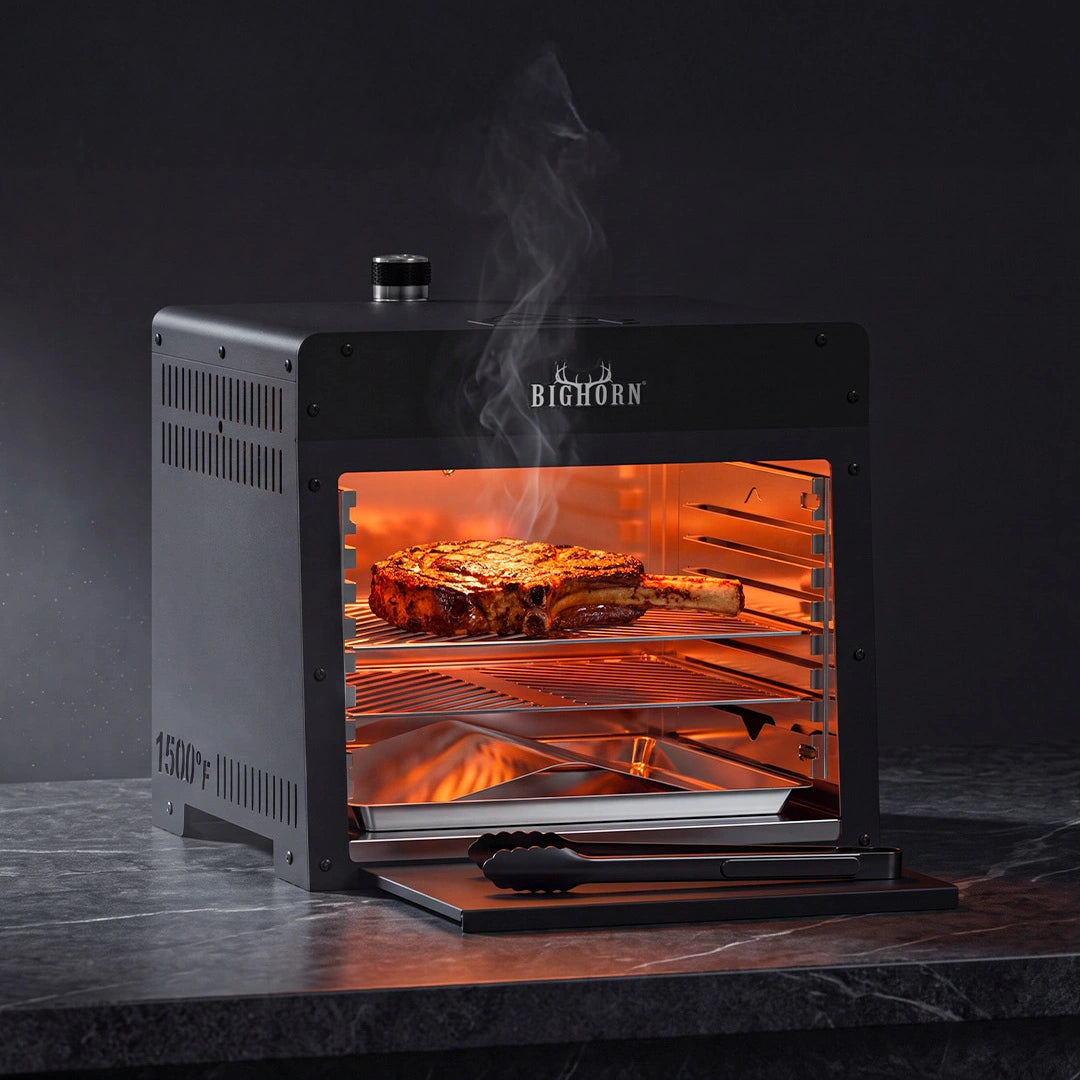
Absolutely. High-heat outdoor ovens are excellent for searing high-end ribeyes in cast-iron skillets, roasting Mediterranean vegetables at intense speeds, or baking artisanal flatbreads using the residual conductive heat of the stone after the active flame is extinguished.
Conclusion
Maximizing your backyard cooking requires an oven that manages the demanding physics of high-heat conduction and radiant flow. While single-fuel models lock users into a rigid operational style, the Big Horn Outdoors 12" Pellet & Gas Pizza Oven offers an adaptable, portable, and high-thermal-mass alternative. By pairing flexible fuel mechanics with robust accessory infrastructure, it ensures reliable, repeatable, restaurant-caliber results every time you fire up the deck.