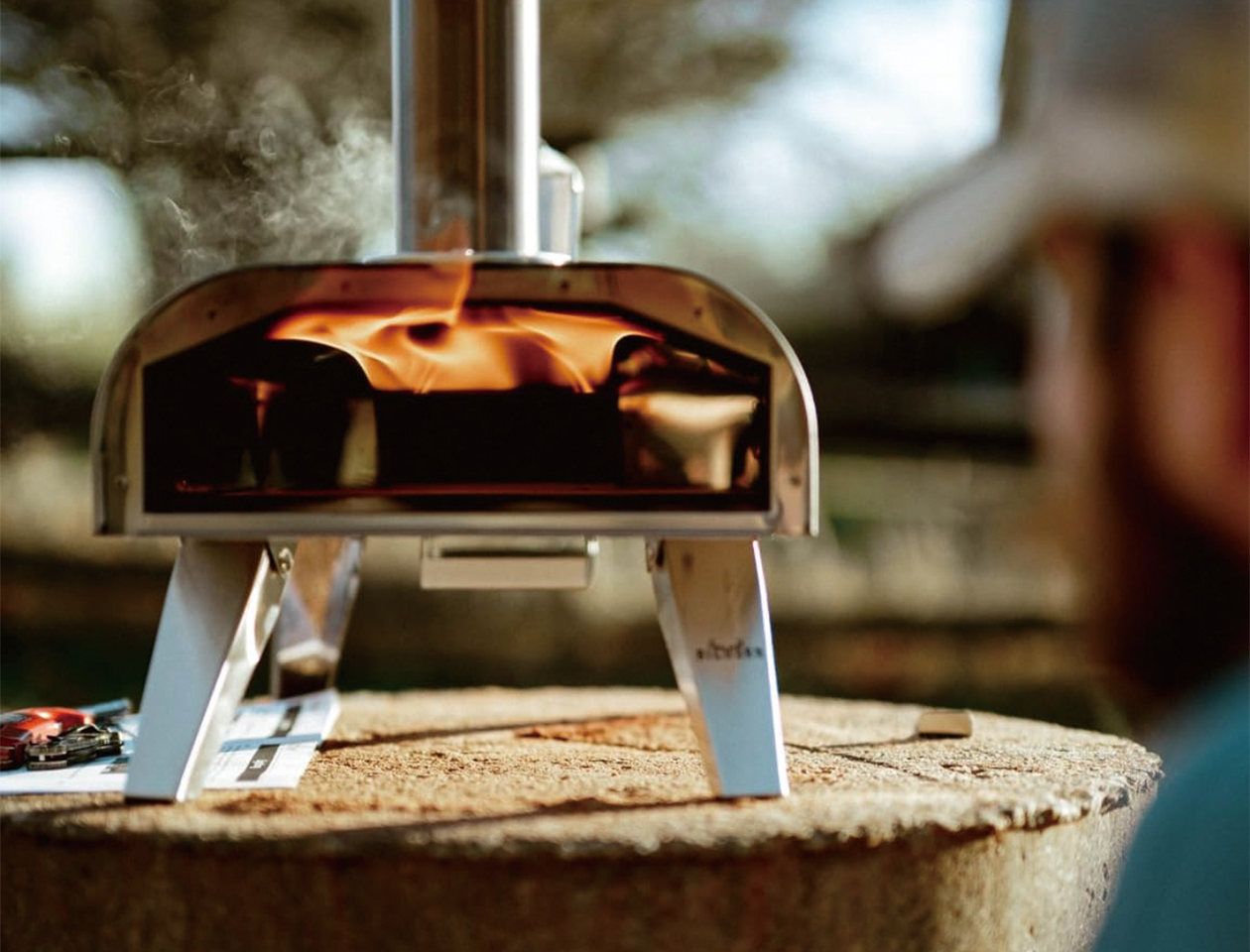
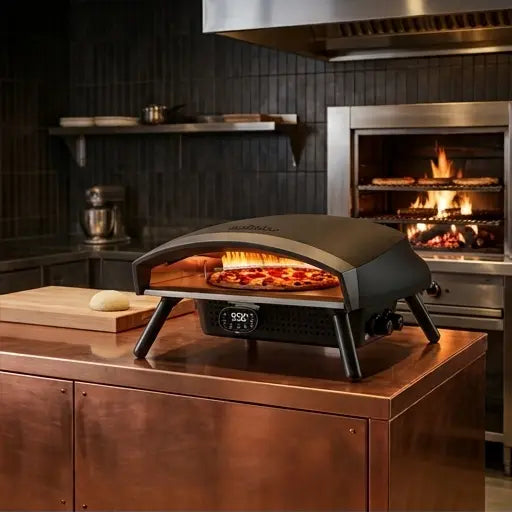
Outdoor cooking has undergone a massive paradigm shift. Backyard hosts are no longer satisfied with "special occasion" appliances; they demand restaurant-grade, live-fire execution at home. At the absolute center of this shift is the wood pellet pizza oven—a category engineered for cooks who crave authentic, wood-fired Neapolitan character without the logistical mess of traditional split-wood configurations.
However, entering the pellet pizza oven space comes with a steep learning curve. Achieving a crisp, leopard-spotted crust requires intense top-and-deck heat management, rapid thermal recovery, and a localized backyard workflow that balances prep space with fire control.
This comprehensive technical analysis diagnoses common user pain points, fuel science, product ecosystem configurations, and real-world backyard ergonomics.
Technical Specifications & Product Ecosystem Landscape
To understand how a pellet oven fits into your outdoor kitchen matrix, you must evaluate its structural material, thermal retention capacity, and fuel delivery mechanics. Below is a comparative breakdown of how different product configurations handle live-fire baking under one cohesive ecosystem.
| Oven Configuration | Fuel & Power Dynamics | Core Engineering Innovation | Thermal Capacity & Bake Time | Best Applied Scenario |
| 12" Wood Pellet Pizza Oven (Bundle Setup) | Premium food-grade hardwood pellets; gravity-fed hopper system. | Heavy-gauge stainless steel chassis paired with a matching prep table & grill cart. | Hits 900°F (482°C) in under 20 minutes; bakes a Neapolitan pie in 60–90 seconds. | Complete backyard cooking setups requiring integrated storage and workspace. |
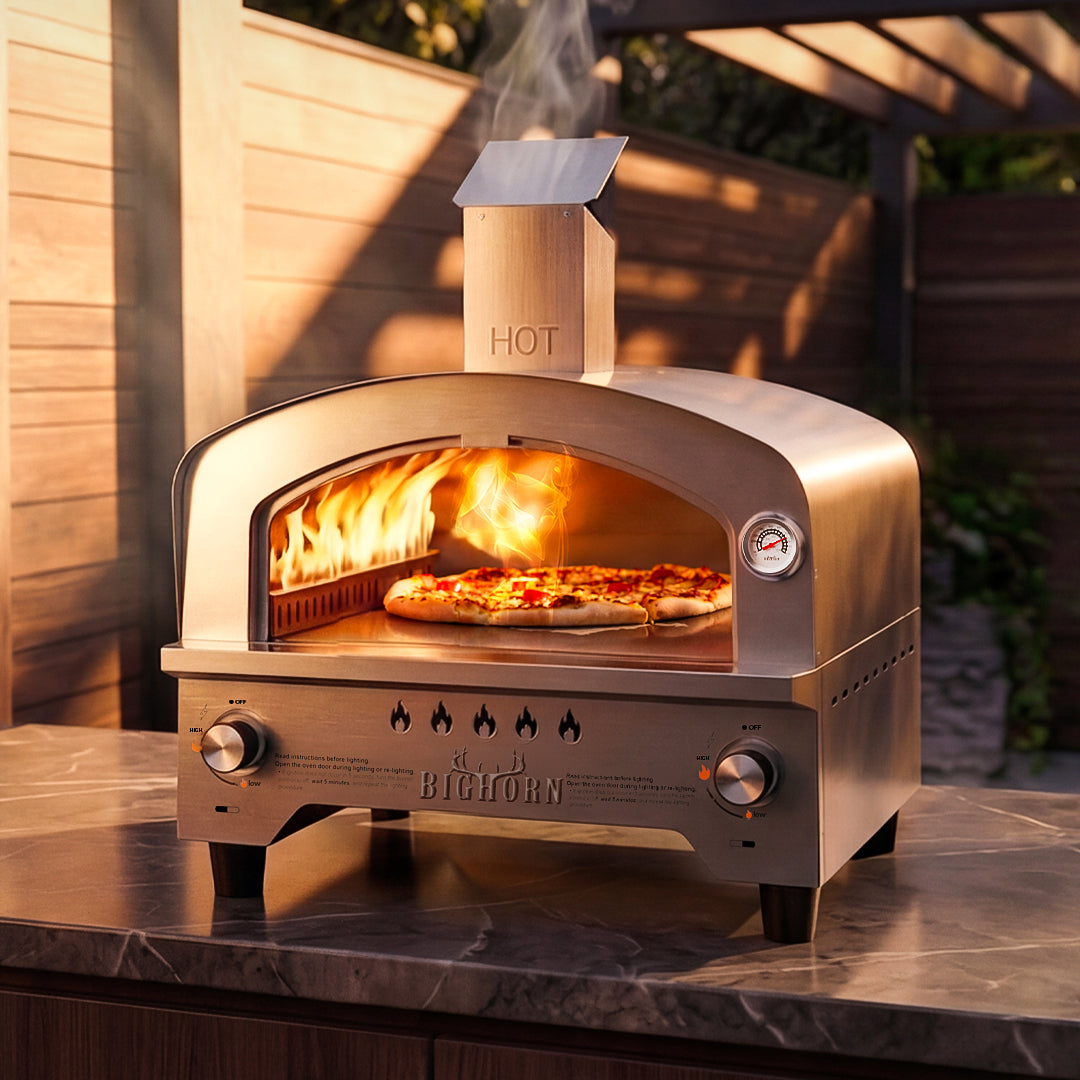
| 16" Large Capacity Pellet Oven | Optimized wood pellet burner with wide-dispersion firebox. | Integrated front-door thermometer with a high-temp visual glass viewing window. | Hits 1,000°F (540°C); expanded deck accommodates 16-inch family-sized pizzas. | Hosting large crowds and heavy-rotation backyard entertaining. |
| 12" Hybrid Pellet & Electric Oven | Dual-fuel flexibility: Wood pellets or integrated 1850W electric element. | Thick cordierite baking stone with robust insulated stainless steel body shell. | Maintains 850°F (454°C) with exceptional heat retention across changing weather. | All-weather, multi-environment cooking (patios, balconies, off-grid campsites). |
Deep-Dive Performance Insights & The Real-World Learning Curve
The Reality of Thermal Mass and Retention
Many first-time backyard cooks encounter immediate frustration: their dough is fully prepped, guests are waiting, but the oven stone refuses to cross the critical thermal threshold required for true oven spring. Standard domestic kitchen ovens top out at 500°F (260°C), yielding a pale, soft, slowly baked crust that dries out the toppings before the base crisps.
A dedicated pellet oven solves this by focusing raw, radiant energy directly onto a thick cordierite stone. However, thermal insulation layers are critical. Heavy-gauge stainless steel builds—such as the 16" high-capacity profiles or thick-stone systems—excel at raw thermal retention.
During practical field testing, a common benchmark is checking ambient chamber drop after the first launch. Inferior insulation can cause an oven to lose up to 200°F the moment the door is removed, stalling subsequent bakes. High-retention engineering ensures that even 20 minutes after active fueling ceases, the deck temperature remains above 570°F (300°C)—the ideal thermal window to throw in a pan of oiled, dimpled focaccia or artisan flatbreads using residual heat.
The Innovation of the Rotating Stone vs. Manual Turning
Traditional live-fire baking requires a highly active hands-on workflow. The cook must launch the pizza, monitor the back corner nearest the firebox, and use a turning peel to rotate the pie 180 degrees every 15 to 20 seconds. One mistimed movement can tear the delicate, highly hydrated dough, spilling raw sauce onto the stone and creating acrid smoke.
Modern iterations tackle this pain point through specialized engineering variations:
-
Motorized decks continuously spin the pie using a synchronized low-RPM internal driver. This removes human error entirely, ensuring a perfectly uniform rim color and an identical oven spring across the entire circumference.
-
Systems featuring an external turning lever allow you to rotate the internal stone without opening the front door. The critical operational trick here is ensuring the stone is heated completely evenly during the preheat phase. Because you aren't sliding a peel underneath the pizza to move it to a different zone of the stone, the deck itself must possess uniform heat saturation to avoid a raw bottom.
Fuel Dynamics: The Science of Clean Combustion
The quality of your wood pellet choice directly dictates your maximum BTU output, ash accumulation, and final flavor profile. Misunderstanding fuel moisture is the primary reason outdoor cooks fail to hit target temperatures.
Hardwood vs. Softwood Pellets
-
Extensive combustion research indicates that high-quality, sustainable softwood pellets burn hotter, ignite faster, and leave behind significantly less residual ash than standard hardwoods. For rapid preheating under 20 minutes, clean-burning softwoods are highly efficient.
-
Hardwood variants (like oak, hickory, or maple) burn at a slightly slower rate, providing a more stable, long-lasting base heat.
The ultimate live-fire setup pairs dry, sustainable hardwood kindling (measured strictly below 15% to 20% moisture to guarantee smoke-free combustion) in the fuel tray to establish a robust base thermal mass, supplemented by continuous gravity-fed softwood pellets to drive intense, high-velocity ambient flame across the top of the pizza.
Airflow and Oxygen Regulation
Fire is a simple equation: Fuel + Oxygen. To prevent heavy soot accumulation or stalling out:
-
Keep the oven door completely flush during the initial preheat phase.
-
Ensure the fuel hatch lid remains tightly sealed to force air intake through the primary front vents.
-
Keep the vertical chimney vent wide open to draw the flame horizontally across the ceiling of the cooking chamber, mimicking a commercial Neapolitan brick hearth.
-
Check the fuel hopper every 3 to 4 minutes, adding small, consistent amounts rather than overloading the tray, which chokes out oxygen flow.
Operational Scenarios: Optimizing the Backyard Workflow
The High-Velocity Family Gathering
-
Cooking indoors means the host is isolated in the kitchen, churning out individual pizzas while guests eat separately in another room.
-
By deployment of a 12" Pellet Oven integrated directly onto its specialized product table and grill cart bundle, the cooking process becomes a shared backyard performance. The dedicated prep space allows the host to construct a high-velocity assembly line: stretching dough, applying raw toppings, launching, and slicing within a self-contained 5-foot perimeter. Pizzas roll out every 90 seconds, turning dinner into a live interactive event.
Compact Patios and Structural Adaptability
-
Urban balconies or small townhome patios lack the real estate for massive, permanently installed outdoor stone kitchens.
-
The Hybrid 12" Pellet & Electric model introduces complete operational adaptability. On clear, breezy weekends, the user can run pure wood pellet fire for maximum authentic smoke flavor. If sudden rain, high winds, or local structural fire codes prohibit live-fire pellets, the user transitions seamlessly to the built-in 1850W electric heating element under a covered patio, preserving the weekend's cooking plans without sacrificing heat performance or stone recovery times.
Frequently Asked Questions
Which pellet pizza oven setup offers the best overall ecosystem value?
For a long-term outdoor cooking station layout, a 12-inch wood pellet pizza oven bundle represents the market's most pragmatic entry point. Unlike standalone units that leave you searching for third-party tables or heat-resistant surfaces, an ecosystem that pairs a high-heat structural chassis with an engineered grill cart and prep table fixes your backyard layout out of the box.
Why choose a wood pellet oven over a pure liquid propane gas (LPG) oven?
Pellet models appeal to outdoor enthusiasts who prioritize authentic, live-fire wood flavor and the active sensory experience of outdoor cooking. While gas ovens offer turn-key convenience, pellets deliver the high-velocity convective flame and micro-smoke currents that mimic true Italian wood-fired heritage.
How do you prevent a pizza from sticking to the launch peel?
Sticking is caused by excess moisture in the dough or ambient humidity on the peel. To guarantee a clean launch: use a high-quality, high-protein pizza flour (such as a specialized Tipo 00 or refined Sonata flour), ensure your peel is completely dry, dust the surface lightly with semolina flour, and build your pizza quickly so the raw dough doesn’t sit on the peel for more than 60 seconds before launching.
Can these ovens handle culinary tasks beyond pizza?
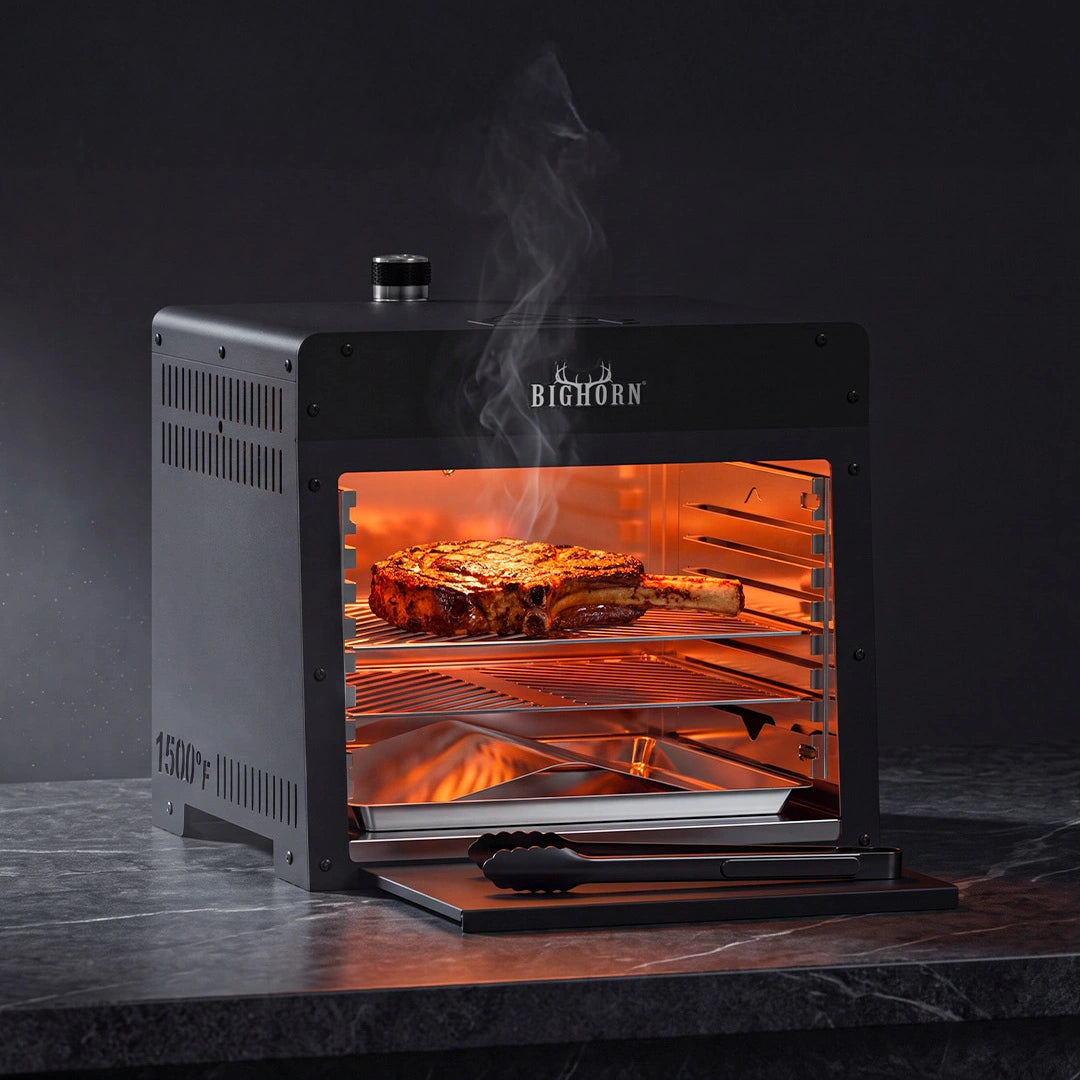
Yes. Any culinary item that thrives on intense, top-down radiant heat and heavy deck serialization can be executed flawlessly. This includes searing high-fat ribeyes in a cast-iron skillet, roasting blistered Mediterranean vegetables, baking flatbreads, or using residual stone heat for artisanal focaccia and sourdough loaves.
Final Verdict
The ideal outdoor cooking system must balance pure thermal capability with spatial and economic practicality. Rather than treating the oven as an isolated cooking tool, maximum performance is achieved by viewing the appliance as part of a holistic outdoor kitchen workflow. By combining high-heat stainless steel engineering with integrated multi-fuel versatility and dedicated modular cart bundles, a backyard cook can transform a single cooking tool into a highly efficient, high-performance culinary hub.