







Accessories & Tools
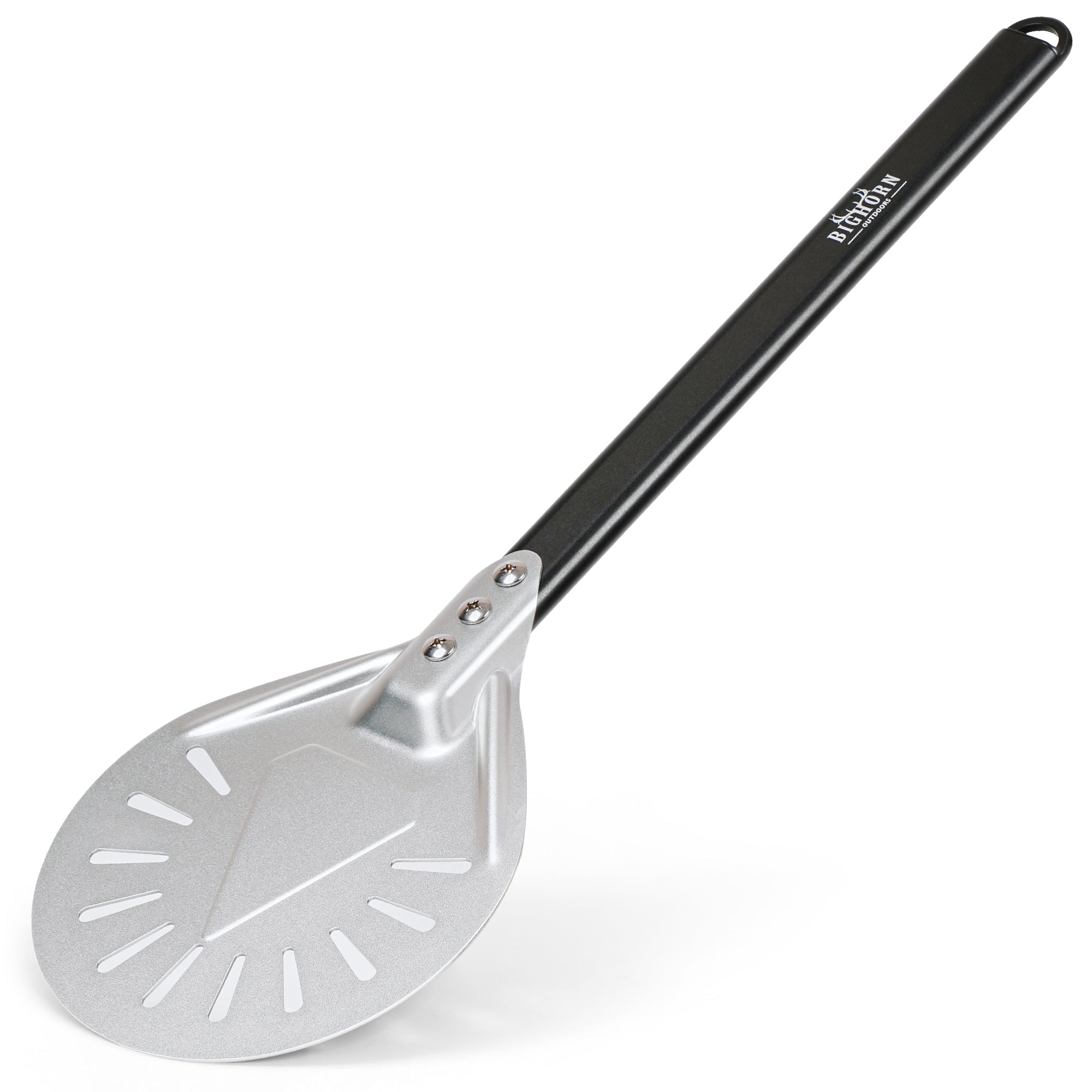
A 7-inch turning peel exists so you can rotate a pizza in a hot oven without dragging the whole pie on a wide launching blade. The small head slips under a section of the crust, lifts just enough to break friction, and turns the pie in short moves. Used that way, it protects the rim. Used like a shovel, it tears it.
This is a SKU companion for the current 7-inch turning pizza peel, not a general “which peel should I buy” rewrite. Launching versus turning already sits in the pizza peel guide to turning peels, launching peels, and size. Confirm availability on the live page; at research time this listing showed as sold out.
Why small turning peels exist
A launching peel is wide on purpose: it has to carry a raw, topped pie. That width becomes a liability once the pie is on a stone. A broad blade can hook a rim, spill sauce, or drag the whole crust into a fold. A 7-inch head is small enough to sneak under one side, turn a few degrees, and come back out.
The current listing describes a perforated turning peel with a smooth, non-stick surface, anodized aluminum construction, and a 55-centimeter black aluminum tube handle. Those are the manufacturer's listed details; recheck them on the live page. The perforation here is in service of a light, ventilated head, not a claim that this mini peel should replace a 12-inch launcher.
Indoor and outdoor ovens both justify the tool when the chamber is hot and the bake is short. The peel is a turning instrument. It is a poor cutting board, and it is a poor way to carry a fully loaded raw pie to the stone.
Turn cadence at high heat
High-heat backyard ovens can finish a thin pie quickly, especially when a product page talks about very short bake windows. The current 16-inch gas outdoor pizza oven listing describes high-heat baking, an auto-rotating stone, and short pizza times in marketing language. The current 16-inch wood-pellet pizza oven listing also describes high-heat, short bakes. Treat those times as claims to confirm on the live pages, not as a guaranteed 90-second result in your yard.
If your oven already rotates the stone, you may turn less often, or only to correct a hot spot the rotation is not evening out. If the stone is fixed, a typical cadence is a turn every 20 to 30 seconds once the crust has set enough to move — sooner if one edge is scorching, later if the pie still liquifies when you touch it. Those intervals are a starting feel, not a timed recipe. Watch the rim, not the clock.
A turning peel goes in low, under a set section of crust, and comes out as soon as the pie has moved. Lingering in a 700-to-1000-degree mouth heats the head and tempts you to lift too much. Keep your face and sleeves out of the opening, in line with NFPA grilling safety and U.S. Fire Administration cooking-fire prevention. Official food-safety pages still govern toppings such as chicken or leftover meat; FDA safe food handling and FDA food safety in your kitchen remain the temperature references for those ingredients, even when the pie looks done on the outside. Ready.gov food guidance covers holding leftovers after a backyard bake.
Pair with a launching peel
The useful pair is a launching peel for the dressed pie and this 7-inch peel for rotations. Build and launch with wood or with a 12-inch perforated blade, then switch. The pizza oven collection is full of ovens that make that two-tool habit worthwhile; the ovens do not make a single mini peel sufficient.
Do not launch a fully topped 12-inch pie on a 7-inch head. The math does not work. You will fold the far edge, or you will support only the center and tear the rest. If you own only the turning peel today, keep using whatever launcher you already have, and add this tool for the in-oven work when the listing is available.
Keep the launcher out of the chamber after the slide whenever you can. A wide metal blade left in a hot oven becomes a branding iron for the next crust, and it teaches a rushed, awkward turn.
Rim tears
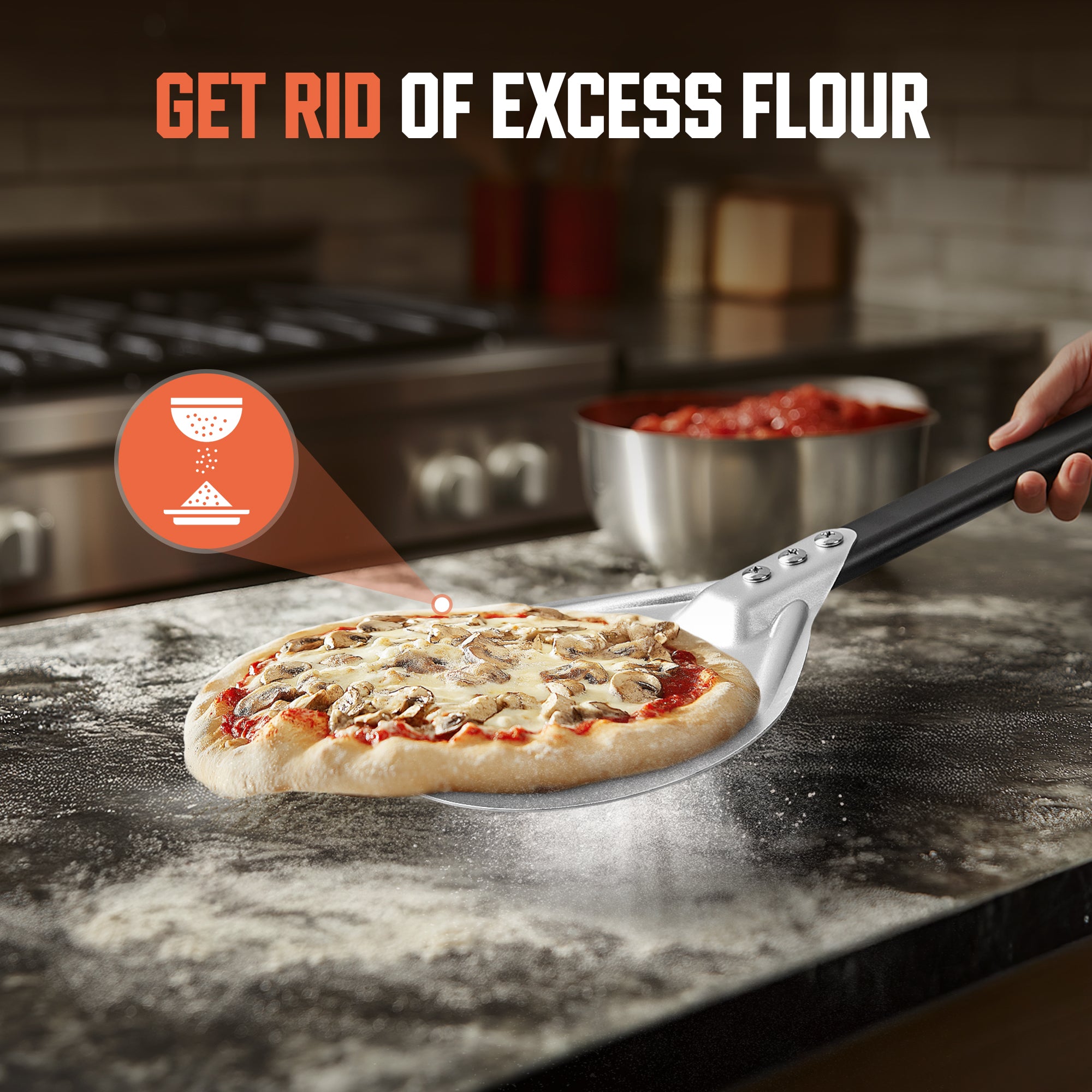
Rim tears happen when the blade is too deep, too steep, or too early. If the crust has not set, the peel should wait. If you drive the head toward the center like a pizza cutter, you cut a chord through the cornicione. Slide under a shallow section of the outer crust, lift a few millimeters, and rotate the pie on the stone rather than carrying it in the air.
Cheese overflow and wet toppings make tears more likely because they glue the crust to the stone. A little less sauce, a little more patience on the first turn, and a dry brush on the stone between pies will do more than a heavier hand on the peel.
If a rim already tore, finish the bake as calmly as you can and call it a messy pie, not a reason to pry harder. The next launch is the correction.
Material and handle length
The listed 55-centimeter handle is the safety and leverage number to confirm on the current page. It is meant to keep hands out of the mouth while remaining short enough to maneuver. A longer handle is not automatically better in a tight outdoor setup; it can catch on a table or a cover. A shorter handle is a burn risk. Measure your oven depth and your stance against that listed length rather than assuming all turning peels feel the same.
Anodized aluminum, as described on the current page, is a light, durable material for a turning head. It can still stain, and it can still warp if you lever it against a stone or quench a hot blade under a cold tap. Let it cool, then wipe it. Do not leave it resting on the oven floor between pies.
Handle care is mostly common sense: keep the tube dry, do not twist it like a crank against a stuck pie, and store the peel where the small head cannot get bent under heavier tools. If the listing remains sold out, use these notes when it returns rather than substituting an untested spatula.
A first-session drill for the 7-inch peel
Practice on a dry, un-topped round of dough or on a already-baked leftover crust before you bet a carefully dressed pie on a new motion.
| Drill | What you are learning | Stop if |
|---|---|---|
| Slide under one edge, lift a few millimeters, set it down | Shallow entry, no shovel | The blade dives toward the center or lifts the whole pie |
| Turn 45 to 90 degrees, withdraw, wait, repeat | Short cadences instead of one heroic spin | The rim wrinkles or sauce slides |
| Do the same motion with a dressed pie only after the crust has set | Patience at high heat | The undercarriage still smears when touched |
That drill is intentionally modest. The 7-inch peel is a precision tool. It rewards small, boring competence more than a flourish. Keep a clear, non-combustible landing zone around the oven, consistent with Ready.gov home fire guidance.
Key takeaways
Use a 7-inch turning peel to rotate a set crust in short moves, and keep a wider peel for launching. Confirm the live listing for the 55-centimeter handle, the perforated aluminum head, and current availability, especially if the page still shows as sold out. Watch the rim, treat oven bake times as claims to verify, and leave official food-safety temperatures on the FDA pages where they belong.
If you want a small in-oven turner, confirm availability and the listed handle length on the current 7-inch turning pizza peel page, and keep a wider launching peel for the dressed pie.
FAQ
Do I still need a launching peel if I buy a 7-inch turning peel?
Yes. A 7-inch head is too small to carry a fully dressed pie into the oven. Use a wider wood or metal peel to launch, then switch to the turning peel for rotations.
How often should I turn a pizza with a turning peel?
Once the crust has set, turn just often enough to even out the color. On a fixed stone that may be every 20 to 30 seconds; on an auto-rotating stone you may only correct a hot spot. Watch the rim rather than following a fixed clock.
Why did my pizza rim tear when I used a turning peel?
Usually the blade went in too deep, too steep, or too early, or it lifted the whole pie like a shovel. Wait until the crust can move, slide under a shallow outer section, and rotate the pie on the stone.
Is the Big Horn 7-inch turning peel in stock?
Check the current product page. At research time the listing showed as sold out, and this article will not claim present availability. When it is listed, confirm the handle length and materials on that same page.
More to Read
Fireproof Grill Mat Under Pizza Ovens and Infrared Grills
Place a fireproof grill mat to catch grease and sparks under ovens and grills. Confirm the live 48-by-30-inch claims, and use a cart when you need ...
No Oven Spring on a High-Heat Pie: Dough Temp, Launch and Floor
Diagnose no oven spring on a high-heat pizza by checking dough temperature, launch handling, and floor heat before you spend another mix changing t...
Heat-Resistant BBQ Gloves: Temperature Ratings and Wet-Grip Limits
Read a 1472°F glove rating as a short, dry, instant figure. Wet or oily conditions change grip, so let long peels reach into hot ovens and grills.
