An electric pizza oven can earn more counter space than its name suggests. Once you can control both high heat and lower baking temperatures, the same compact chamber can handle flatbreads, roasted vegetables, wings, small-pan dishes, and some breads and desserts. The trick is to stop treating every food like pizza.
Flatbreads Are the Easiest Place to Start
Flatbreads use the feature a pizza oven already does well: fast contact with a hot cooking surface. Pita-style breads, naan-inspired flatbreads, focaccia portions, and simple oil-and-herb doughs can all benefit from strong bottom heat.

Watch the first batch closely. A bread with oil, sugar, or dairy may color faster than a lean pizza dough. Once you know how quickly the underside browns, adjust the temperature or time rather than assuming the hottest setting is automatically best.
Roasted Vegetables Benefit From Concentrated Heat
A compact hot oven is particularly good at vegetables that improve with browning: peppers, onions, mushrooms, asparagus, zucchini, cauliflower, and small pieces of squash are obvious candidates.
Use a pan or tray that the oven manufacturer allows, keep the vegetables in a reasonably open layer, and avoid excess liquid. Crowding creates steam, which works against the blistered edges and caramelized surfaces that make high-heat roasting worthwhile.
For mixed vegetables, cut pieces according to cooking time rather than appearance. Dense vegetables need smaller pieces or a head start; mushrooms and thin peppers can go from browned to dry much faster.
Chicken Wings Can Work, but Treat Them as Poultry
High heat can crisp wing skin effectively, especially when the surface is dry and the pieces are not packed together. But visual crispness is not a doneness test.
Cook wings on appropriate cookware rather than directly on a pizza stone unless the manufacturer specifically permits that use, and verify safe internal doneness with a food thermometer. Sauces that contain a lot of sugar are usually better added late because they can burn quickly in a compact high-heat chamber.
Bread Needs a Different Heat Strategy From Pizza
Not every loaf wants the oven's maximum temperature. Small crusty breads and baguette-style shapes can benefit from a well-heated surface and strong initial heat, but thicker loaves need enough time for the center to bake before the crust becomes too dark.
Use Manual mode when a pizza preset is too aggressive. A pan can also change the heat path and protect the bottom of richer doughs. Think of the appliance as a small oven with unusually high heat available, not as a machine that must always run near its ceiling.
Cakes and Pies Belong at the Lower End of the Range
For cakes, fruit pies, and other sweet baking, control matters more than maximum heat. Use a suitable pan, select a lower temperature in Manual mode, and leave enough headroom for rising batter or crust.
Dark metal pans can brown faster than lighter pans, and a compact cavity places food closer to the heating elements than many full-size ovens. The first bake should be treated as calibration. Check earlier than you would in a large kitchen oven and record what worked.
Small Cast-Iron or Oven-Safe Pan Dishes Expand the Menu
If the manufacturer permits the cookware, a compact pizza oven can also finish foods that benefit from strong radiant heat: blistered tomatoes, baked cheese dishes, small portions of fish, or vegetables that need a quick char at the end.
The important question is not whether the food “fits” the oven in theory. It is whether the pan fits safely, leaves enough airflow, can be handled with appropriate tools, and matches the appliance instructions.
Use Presets for Pizza; Use Manual for Everything Else
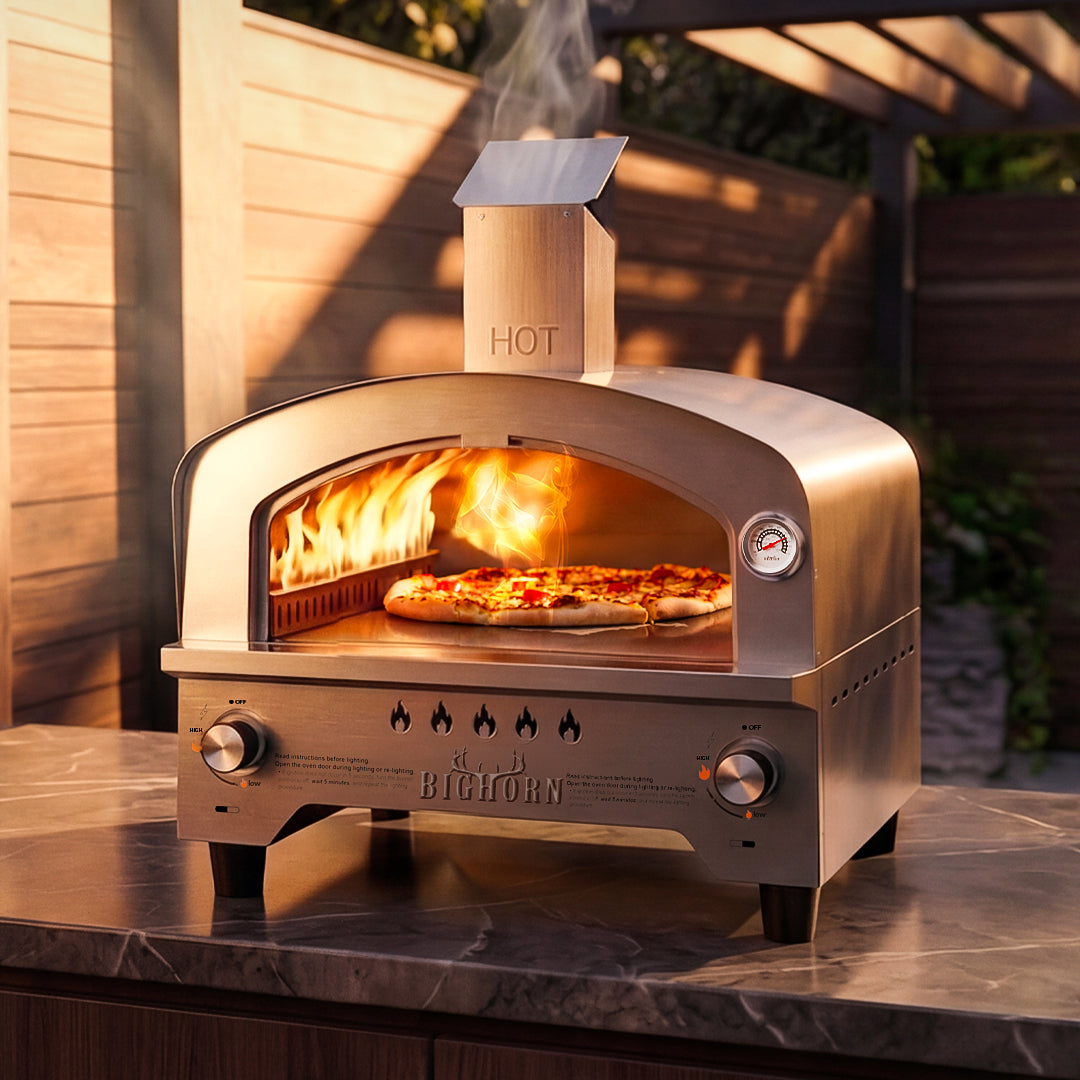
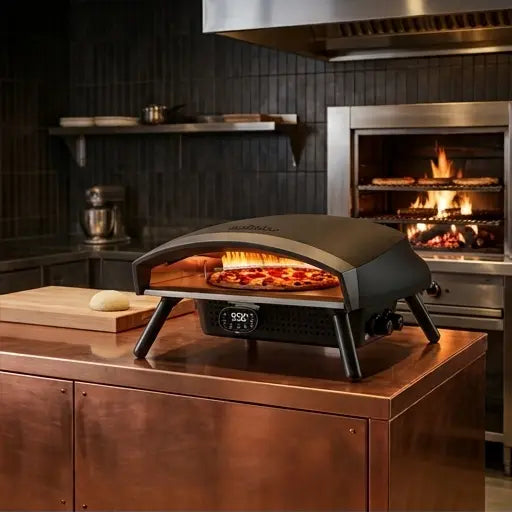
The six pizza-oriented presets on Big Horn Outdoors' 14-inch electric model are useful when the food matches the label. For non-pizza cooking, Manual is generally the more logical starting point because it lets you choose time and temperature around the food rather than around a crust style.
| Food | Useful approach | Main risk to watch |
|---|---|---|
| Flatbreads | High heat, short bake | Fast bottom browning |
| Vegetables | Hot tray, single layer | Overcrowding and steaming |
| Chicken wings | High heat on suitable cookware | Judging doneness only by color |
| Small breads | Manual temperature control | Crust darkening before center is baked |
| Cakes and pies | Lower manual setting | Over-browning near heating elements |
What Usually Goes Wrong
The most common problem is carrying pizza logic into every other food. Very high heat is useful for a thin pizza that needs rapid oven spring and browning. It is not automatically ideal for a cake, a thick loaf, or a pan full of vegetables.
The second problem is crowding. A compact oven cooks efficiently because heat is concentrated; filling every inch of a tray can block airflow and trap moisture.
The third is walking away. Small high-powered ovens react quickly. Until you know the appliance and the recipe well, stay close enough to see how the food is changing.
If you approach the oven by cooking method rather than by product name, its usefulness expands quickly. Use high heat where browning and speed are the goal, step down to Manual for longer bakes, and choose cookware that the manufacturer approves. Pizza may be the reason to buy the oven, but it does not have to be the only reason to turn it on.