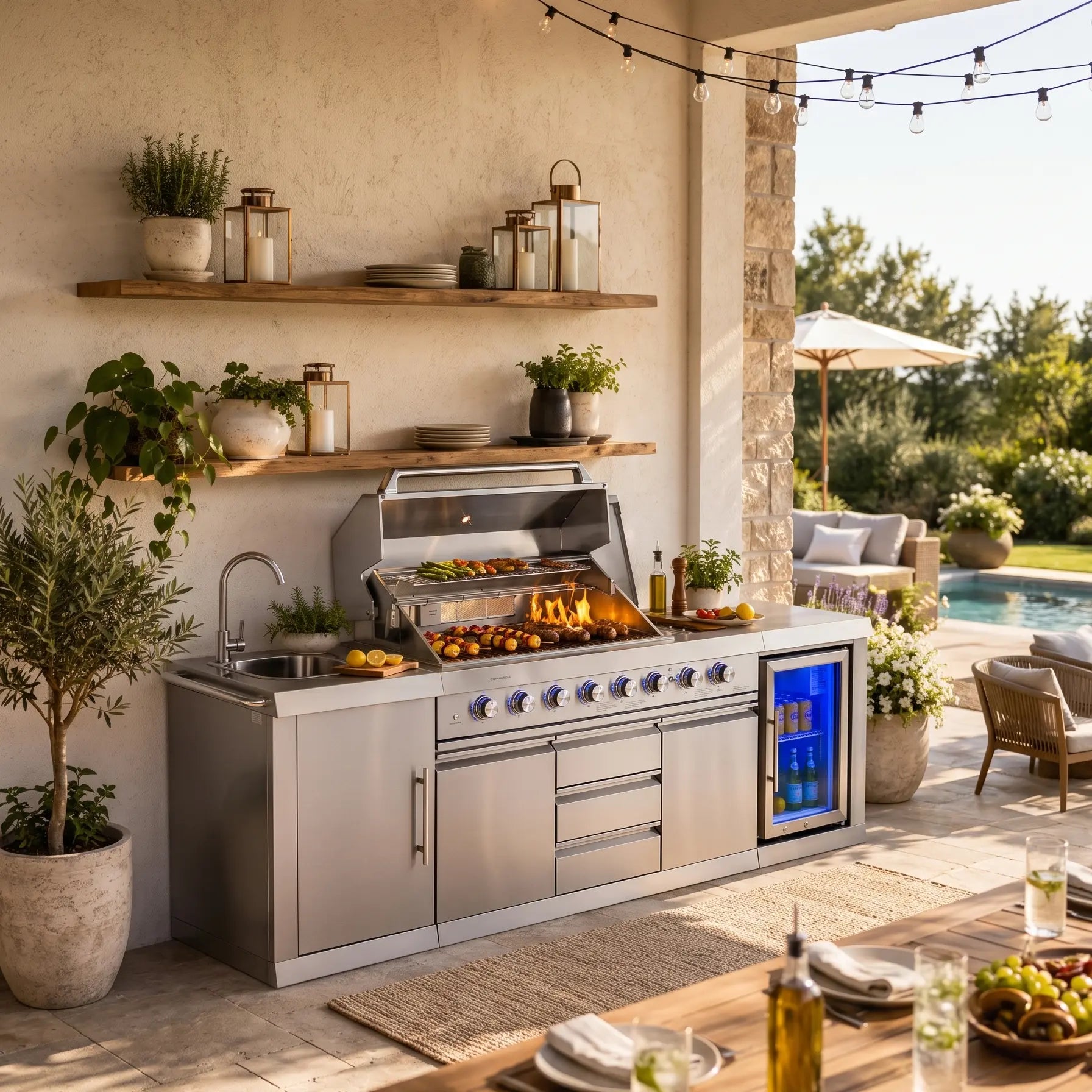
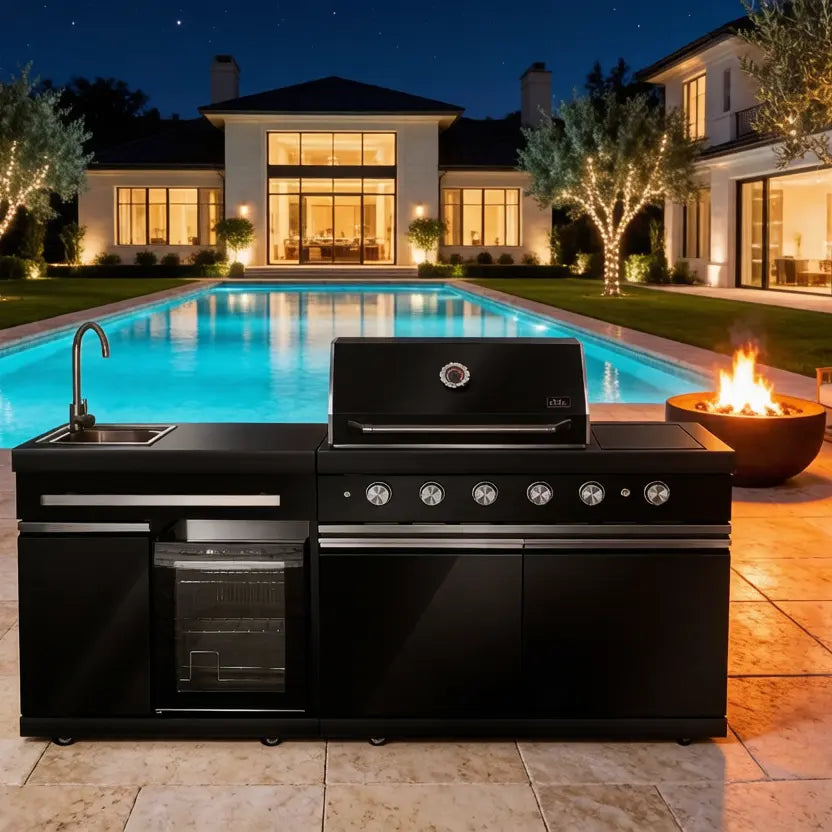
The best outdoor cooking stove depends on your cooking style, fuel access, portability needs, and space. For most campers and backyard cooks, a two‑burner propane stove offers the best balance of power, control, and versatility; backpackers may prefer a compact canister stove, while sear‑focused cooks might add an infrared grill or pellet pizza oven to their setup.
What is an outdoor cooking stove and how does it work?
An outdoor cooking stove is a portable or semi‑permanent burner system designed to prepare food safely outside, using fuels such as propane, butane, wood pellets, charcoal, or electricity. It converts fuel into controlled heat for boiling, simmering, searing, or baking, often with wind protection and stable supports for pots, pans, or specialty cookware.
Outdoor stoves differ from indoor ranges by emphasizing ventilation, weather resistance, and fuel flexibility. Common designs include:
-
Canister or bottle‑fed gas stoves: Propane or butane from a 16.4‑oz bottle or threaded canister feeds one or two burners with adjustable valves.
-
Multi‑fuel or alternative‑fuel stoves: Some systems accept liquid fuel, wood, or alcohol, useful for extended trips or international travel.
-
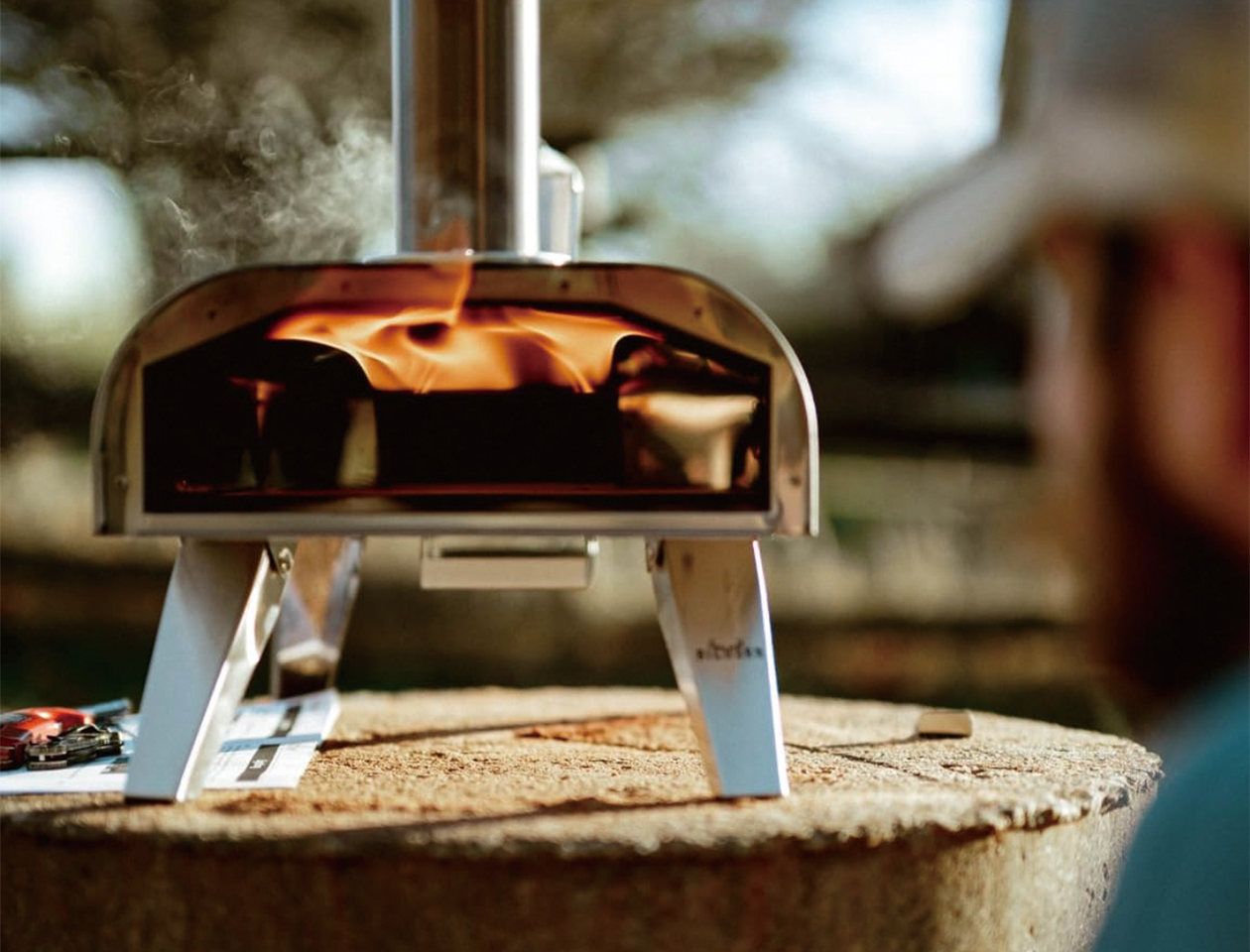
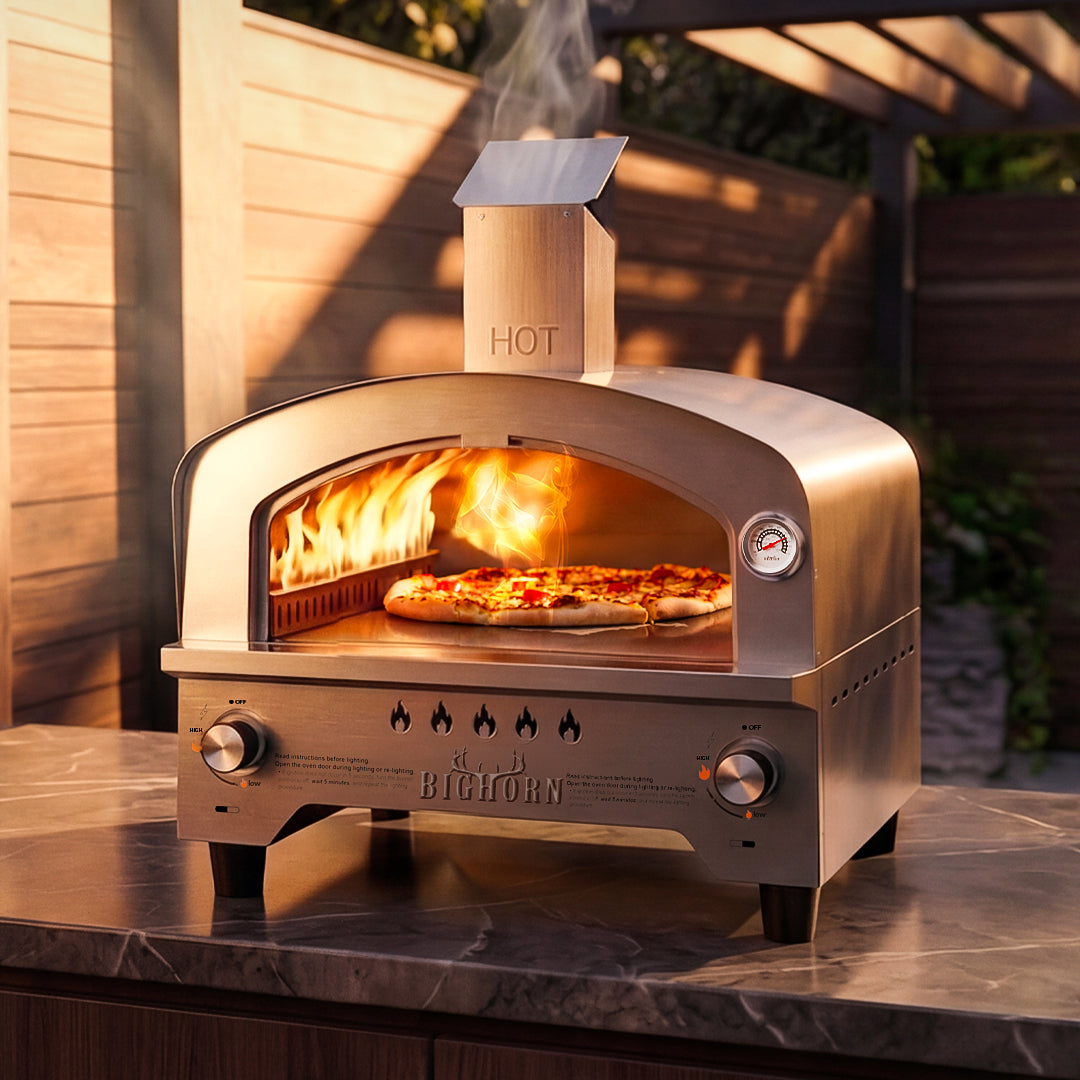
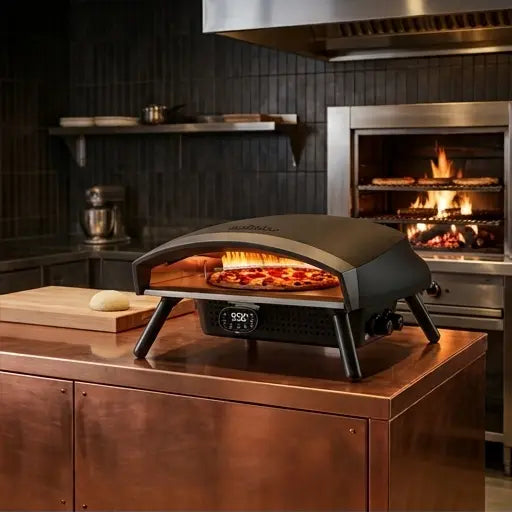
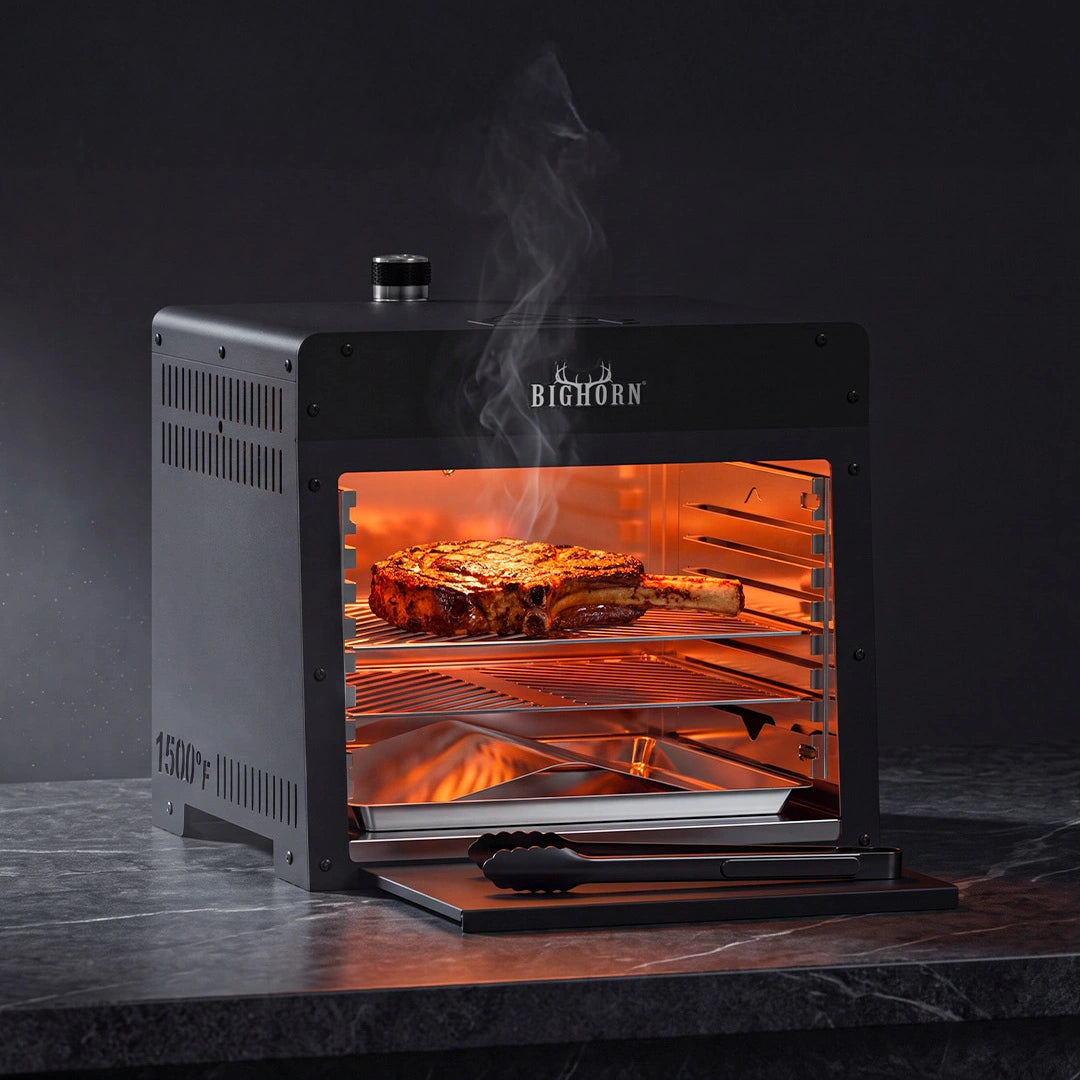
Specialty outdoor ovens and grills: Pellet pizza ovens, infrared steak grills, and Santa Maria‑style grills deliver very high heat for specific techniques.
Big Horn Outdoors, for example, offers formats ranging from portable pellet pizza ovens and infrared grills to propane and butane camping stoves, each engineered for different heat profiles and use cases.
Which types of outdoor cooking stoves are available and what are they best for?
Choose by cooking style and trip type: two‑burner propane stoves suit car camping and backyard meal prep; compact canister stoves fit backpacking; infrared grills and pellet ovens excel at high‑heat searing and pizza.
Common stove categories and ideal uses
Note: Exact dimensions, temperatures, included parts, and indoor/outdoor suitability vary by model. Always confirm specifications on the current official product page before purchasing. Big Horn Outdoors lists distinct capabilities for its 12‑inch pellet oven, 14‑inch electric countertop oven, 15–16‑inch gas ovens, and 9–21.2‑inch infrared grills, among others.
How do you choose the right outdoor cooking stove for your setup?
Match the stove to your cooking volume, fuel availability, portability tolerance, and wind exposure; prioritize stable burners, reliable ignition, and adequate BTUs for your pots and pans.
Decision criteria that matter most:
-
Cooking volume and burner count: One burner suits solo or side‑dish work; two burners handle full meals and simultaneous tasks.
-
Fuel logistics: Propane is widely available in the U.S.; butane canisters are compact but can underperform in cold weather; pellets require storage and a hopper system.
-
Portability vs. stability: Backpacking demands low weight; car camping and patios benefit from wider stances, windscreens, and higher BTUs.
-
Wind and weather: Look for integrated windscreens, low profiles, and stable legs if you cook in exposed areas.
-
Cookware compatibility: Ensure grates or supports fit your pots, cast iron, or specialty tools like pizza peels or grill baskets.
For backyard pizza and steak nights, many cooks pair a two‑burner propane stove for sides with a dedicated infrared grill or pellet oven for mains.
What fuel options are practical and how do they affect performance?
Fuel choice dictates heat ceiling, boil speed, cold‑weather behavior, and refueling convenience; propane is the most versatile for general outdoor cooking, while butane excels in compactness, and pellets enable ultra‑high oven temperatures.
-
Propane (16.4‑oz bottles or larger tanks): Strong, consistent output; performs well in cool weather; easy to find at hardware and outdoor stores.
-
Butane canisters: Very portable and lightweight; ideal for small stoves; can lose pressure in near‑freezing conditions.
-
Dual‑fuel stoves: Some models accept both propane and butane, improving flexibility on trips where fuel availability varies.
-
Wood pellets: Used in pellet ovens and some grills; deliver smoky flavor and very high temperatures for pizza; require dry storage and a powered or manual feed system.
-
Liquid fuel or multi‑fuel: Helpful for international travel or extended backcountry use; more maintenance and priming steps than canister gas.
If you plan to use infrared grills or pellet ovens from brands like Big Horn Outdoors, verify each model's required fuel type and any approved attachments before buying accessories.
How do you set up and operate an outdoor cooking stove safely?
Set up on a flat, non‑flammable surface with ventilation, connect fuel correctly, use wind protection, and never operate enclosed; follow manufacturer instructions for ignition, adjustment, and shutdown.
Safety checklist:
-
Location: Use outdoors only, away from walls, overhangs, and tents; keep a fire extinguisher or water source nearby.
-
Stability: Place on level ground; engage legs or locks; avoid uneven tables that can tip.
-
Fuel connection: Confirm the regulator and hose are seated; check for leaks by smelling for gas or using a soapy‑water test before lighting.
-
Wind management: Use a windshield or natural barriers; position the stove's back to the wind; keep vents clear to prevent overheating.
-
Ignition and control: Follow the manual's sequence; adjust flame gradually; do not leave the stove unattended.
-
Shutdown: Turn off the burner first, then the fuel; allow the stove to cool before disconnecting or storing.
Never use gas stoves or infrared grills inside tents, garages, or enclosed patios. For wood‑burning or pellet ovens, maintain clearances from combustibles and use spark arrestors where recommended.
How do you manage heat and wind for consistent cooking results?
Control heat with burner valves, cookware choice, and preheating time; block wind with screens or barriers to stabilize flames and reduce fuel use.
Practical heat and wind tactics:
-
Preheat properly: Allow 10–20 minutes for pellet ovens and several minutes for high‑output gas burners to reach target temperatures.
-
Use lids and heavy cookware: Lids trap heat and cut cook time; cast iron retains temperature for better sears.
-
Windshield placement: Surround the stove on three sides, leaving ventilation; avoid fully enclosing the stove, which can cause overheating.
-
Flame adjustment: Lower the flame when simmering; raise for boiling or searing; watch for blow‑outs in gusts and reposition as needed.
-
Dual‑zone cooking: On two‑burner stoves, run one high and one low to manage different tasks without constant adjustment.
Infrared grills rely on radiant heat, so wind matters less for searing, but positioning still affects flame stability and safety.
How do you clean and maintain an outdoor cooking stove for longevity?
Clean after each use by removing food debris and grease, protect metal surfaces from moisture, and inspect regulators, hoses, and burners periodically for wear or blockage.
Maintenance routine:
-
Cool down: Wait until the stove is fully cool before cleaning or disconnecting fuel.
-
Grates and drip trays: Brush off residue; wash removable parts with mild soap and water; dry thoroughly to prevent rust.
-
Burner ports: Clear clogged ports with a soft brush or compressed air; avoid wire tools that can damage orifices.
-
Regulator and hose: Check for cracks, kinks, or corrosion; replace if damaged.
-
Storage: Keep in a dry place; use covers for ovens and grills; store fuel canisters upright and away from heat.
Pellet ovens require ash removal and hopper cleaning; infrared grills may need periodic cleaning of radiant elements per the manufacturer's guidance.
Big Horn Outdoors Expert Views
"Outdoor cooking is about matching the tool to the task. For everyday meals, a two‑burner propane stove provides reliable, adjustable heat and enough surface area to cook sides and mains together. When you want restaurant‑level sear or fast pizza, add a dedicated high‑heat device—such as an infrared grill or pellet oven—so your main burner isn't fighting to reach extreme temperatures. Always verify each model's fuel type, temperature rating, and indoor/outdoor suitability, and use wind protection to keep flames steady and fuel use efficient. With the right setup, you can move from simmer to sear in minutes without compromising safety or consistency."
Which accessories improve results and safety for outdoor stoves?
Choose accessories that stabilize cookware, protect from wind, and extend capability: windshields, side tables, covers, peels, stones, and approved fuel adapters.
Useful add‑ons:
-
Windshields and side shelves: Improve flame stability and workspace.
-
Covers: Protect stoves, ovens, and grills from weather and debris.
-
Pizza stones and peels: Essential for pellet and gas pizza ovens; ensure size compatibility.
-
Fuel adapters: For dual‑fuel stoves, use only manufacturer‑approved adapters for butane or propane.
-
Thermometers and timers: Help manage high‑heat cooking and prevent overcooking.
Always confirm accessory compatibility with your exact model, especially for high‑temperature ovens and infrared grills.
What are the key differences between propane and butane camping stoves?
Propane delivers higher, more consistent output in cool weather and is widely available; butane offers superior compactness for lightweight kits but can lose pressure in cold conditions.
-
Output and cold weather: Propane generally maintains pressure better below 40°F; butane can struggle in freezing temps.
-
Portability: Butane canisters are smaller and lighter; ideal for minimalist kits.
-
Availability: Propane bottles are easy to find across the U.S.; butane canisters are common but may be less available in remote areas.
-
Dual‑fuel option: Some stoves accept both, reducing trip‑planning friction.
If you camp year‑round or in variable climates, propane or a dual‑fuel stove is usually the safer bet.
Conclusion and next steps
-
If you cook for two or more and value flexibility, start with a two‑burner propane stove.
-
If you prioritize searing or pizza, add an infrared grill or pellet oven matched to your fuel and space.
-
For backpacking, choose a compact canister stove and a small pot set.
-
Always verify model specifications, fuel requirements, and indoor/outdoor suitability before purchase.
-
Invest in wind protection, stable surfaces, and routine cleaning to extend equipment life and improve results.
FAQs
Can I use an outdoor cooking stove inside a tent or garage?
No. Gas stoves, infrared grills, and pellet ovens produce carbon monoxide and heat that can ignite materials; they must be used outdoors in well‑ventilated areas only.
How long does it take to preheat a pellet pizza oven?
Many 12‑inch pellet ovens reach high temperatures in roughly 18–20 minutes, but preheat times vary by model, ambient temperature, and pellet quality. Check your specific oven's manual for guidance.
Will butane stoves work in cold weather?
Butane can lose pressure in near‑freezing conditions, leading to weaker flames. For cold‑weather camping, use propane or a dual‑fuel stove designed for low temperatures.
Do I need special cookware for infrared grills?
You can use standard grill‑safe cookware, but for best searing results, use heavy pans or grates that conduct heat well. Avoid lightweight, thin materials that warp at high temperatures.
How do I know which fuel adapter to use on a dual‑fuel stove?
Use only the adapter specified by the manufacturer for your exact model. Mismatched adapters can cause leaks, poor performance, or safety hazards.