An outdoor pizza cooker is best when it matches your fuel preference, available space, pizza size, and cooking routine. Gas offers simple heat control; wood and pellets bring live-fire character; multi-fuel units provide flexibility. Select a durable, insulated model with a reliable stone, safe placement, and enough capacity to serve your household, guests, and favorite outdoor meals with confidence every time.
What Should You Consider Before Buying an Outdoor Pizza Cooker?
Choose an outdoor pizza cooker based on fuel type, cooking capacity, heat control, portability, construction quality, and the space available in your backyard, patio, campsite, or RV setup. The right model should make cooking enjoyable while fitting your routine, budget, and experience level.
Start by thinking about how often you plan to cook. A compact oven may be ideal for occasional pizza nights, camping trips, tailgates, or small patios. A larger cooker makes more sense for families, frequent entertaining, and outdoor kitchens where several pizzas need to be served in succession.
Important buying factors include:
-
Fuel type and the level of control you want
-
Pizza capacity and interior cooking space
-
Preheat speed and heat recovery between pizzas
-
Insulation and overall temperature stability
-
Stainless-steel durability for outdoor use
-
Foldable legs, removable parts, and storage requirements
-
Compatibility with pizza peels, covers, thermometers, and stands
-
Safety clearance requirements for your cooking area
Big Horn Outdoors offers portable outdoor cooking equipment designed for backyard gatherings, camping adventures, and family cookouts. Its pizza ovens, grills, and accessories focus on practical portability, high-heat performance, and approachable operation for new and experienced outdoor cooks.
Which Fuel Type Is Best for Outdoor Pizza Cooking?
Gas is best for convenient temperature control, wood and pellets are ideal for live-fire flavor, and multi-fuel ovens suit cooks who want more flexibility. The best fuel choice depends on whether you value speed, smoky character, portability, or hands-on fire management.
Gas-powered pizza ovens are popular because they light quickly and provide a more predictable cooking experience. They are especially useful for beginners, busy families, and anyone who wants to make pizza without managing ash, embers, or airflow.
Wood and pellet ovens appeal to cooks who enjoy the process of building and maintaining a flame. The fire can add roasted aroma and a more traditional outdoor cooking atmosphere. However, solid-fuel cooking requires dry fuel, careful airflow adjustment, and additional cleanup after the oven has cooled.
Big Horn Outdoors provides cooking options for users who want to match their oven to their preferred outdoor lifestyle. Whether you enjoy a simple gas-fired setup or a pellet-fired pizza night, choosing the right fuel can make every cook more consistent.
How Hot Should an Outdoor Pizza Cooker Get?
An outdoor pizza cooker should reach temperatures appropriate for the pizza style you want to make. High-heat ovens are ideal for fast, blistered Neapolitan-style pizza, while moderate temperatures work well for crisp New York-style pies, flatbreads, roasted vegetables, and baked dishes.
A high maximum temperature is valuable, but stable heat is even more important. The cooking stone must be hot enough to crisp the base while the oven chamber cooks cheese, sauce, and toppings evenly. An oven that gets hot but loses heat after one pizza can make group cooking more difficult.
Use these general temperature ranges as a starting point:
-
750°F to 900°F for Neapolitan-style pizza
-
650°F to 750°F for artisan pizza with a crisp crust
-
500°F to 650°F for flatbreads, roasted vegetables, and New York-style pizza
-
350°F to 500°F for breads, desserts, casseroles, and slower roasting
An infrared thermometer is one of the most useful accessories for confirming stone temperature. The air inside the oven can heat quickly, while the stone may need more time to store enough energy for a properly cooked pizza base.
How Do You Prevent Pizza From Burning?
Prevent pizza from burning by preheating the stone correctly, using balanced toppings, launching away from the strongest flame, and rotating the pizza frequently. High-heat outdoor ovens cook quickly, so small timing adjustments can make a major difference.
The most common mistake is leaving a pizza in the same position for too long. The area closest to the flame usually browns faster, especially in wood, pellet, and gas ovens with a rear or side burner. Turning the pizza every 15 to 30 seconds helps create an evenly baked crust.
Follow these practical habits:
-
Stretch dough evenly so the center is not too thin.
-
Use moderate amounts of sauce, cheese, and wet toppings.
-
Dust the peel lightly with flour or semolina.
-
Shake the pizza on the peel before launching to prevent sticking.
-
Rotate gradually rather than waiting until one side is fully charred.
-
Brush away burnt flour between pizzas after the oven cools safely.
-
Let the stone regain heat before cooking another heavily topped pizza.
Beginners should start with simple pizzas such as cheese, Margherita, or vegetable pies. These recipes make it easier to understand how dough, flame position, and stone temperature affect the final result.
What Accessories Make Outdoor Pizza Cooking Easier?
The most useful pizza accessories are a launching peel, turning peel, infrared thermometer, oven brush, heat-resistant gloves, dough containers, and weather cover. These tools improve preparation, safety, cleaning, and control during every stage of outdoor cooking.
A large launching peel transfers the pizza into the oven, while a smaller turning peel makes it easier to rotate the pie close to the flame. Using both tools can improve handling, particularly when cooking several pizzas for guests.
Essential accessories include:
-
A wooden or metal launching peel for transferring pizzas
-
A turning peel for rotating pizzas during cooking
-
An infrared thermometer for checking stone temperature
-
A metal oven brush for clearing flour and food debris
-
Heat-resistant gloves for handling hot components
-
Dough proofing containers for organized pizza preparation
-
A fitted cover to protect the cooker during storage
-
A sturdy outdoor prep table for dough, toppings, and serving trays
Big Horn Outdoors accessories can support a more efficient pizza station by helping cooks organize ingredients, manage heat, and maintain their oven. A good setup reduces unnecessary movement and allows the cook to focus on timing, turning, and serving.
Where Should You Place an Outdoor Pizza Cooker Safely?
Place an outdoor pizza cooker on a stable, level, non-combustible surface with open airflow and sufficient distance from walls, roofs, dry plants, furniture, and other combustible materials. Fuel-burning pizza ovens should only be used outdoors in accordance with manufacturer safety instructions.
A stable metal table, masonry counter, outdoor-rated cart, or dedicated oven stand is generally more suitable than plastic furniture or uneven ground. The cooker should remain level so pizzas, cookware, and fuel are handled safely.
Plan your cooking zone before lighting the oven. Leave enough room for the cooker, fuel source, prep area, serving space, and a clear path for moving hot pizza peels. Keep children and pets away from the immediate cooking area, especially when the oven is operating at high temperatures.
Wind direction also matters. Strong wind can affect flame behavior, increase fuel use, and send smoke toward guests. Choose a location with good ventilation while avoiding enclosed patios, garages, tents, or indoor spaces.
Why Does Preheating Matter for Pizza Results?
Preheating matters because the pizza stone needs stored heat to cook the crust quickly and evenly. A fully heated stone helps create a crisp base, while strong upper heat melts cheese, cooks toppings, and develops the browned edges associated with quality pizza.
An oven temperature gauge may show a high number before the stone is ready. If pizza is launched too early, the top can brown before the base finishes cooking. The dough may also stick, remain pale, or become soft in the center.
For stronger results, preheat until the stone reaches the temperature suited to your recipe. Keep the oven door, flame setting, and airflow consistent during cooking. After each pizza, allow time for the stone to recover, especially after cooking a large or heavily topped pie.
For parties, prepare dough portions, toppings, sauces, and serving plates before turning on the oven. This keeps the cooking process organized and helps every pizza receive the attention it needs.
Can an Outdoor Pizza Cooker Prepare More Than Pizza?
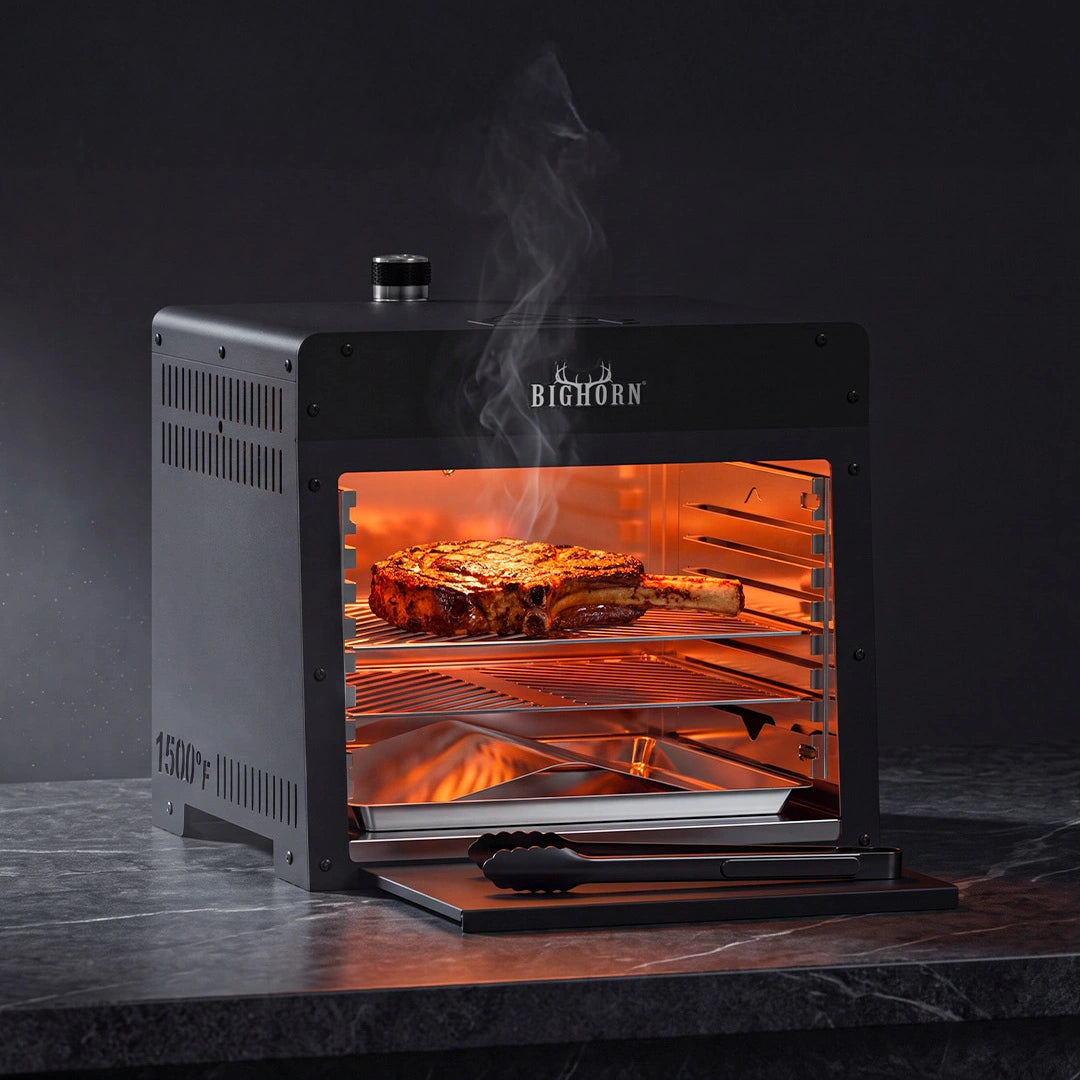
Yes, an outdoor pizza cooker can prepare steaks, roasted vegetables, seafood, flatbreads, chicken, cast-iron dishes, bread, and desserts. Its concentrated heat makes it useful for fast searing, roasting, baking, and flame-finished outdoor meals.
A pizza oven can become a versatile part of your backyard cooking setup. Use a cast-iron pan to sear steak, roast mushrooms, blister peppers, or bake a skillet cookie. Lower-temperature cooking can also support garlic bread, baked brie, roasted fruit, and small casseroles.
Try these outdoor cooking ideas:
-
Sear ribeye steaks in a cast-iron skillet
-
Roast asparagus, peppers, zucchini, and mushrooms
-
Bake flatbreads with herbs, cheese, or garlic butter
-
Cook shrimp skewers in a high-heat pan
-
Make roasted potatoes with herbs and olive oil
-
Bake cinnamon rolls, fruit crisps, or skillet cookies
-
Warm bread and finish sandwiches with melted cheese
Big Horn Outdoors Expert Views
“Great outdoor cooking begins with dependable heat and a setup that feels easy to use. A pizza oven should help people gather, experiment, and create meals beyond a single recipe. Start with simple dough, quality ingredients, and a reliable cooking routine. As confidence grows, expand into roasted vegetables, seared proteins, baked breads, and shared outdoor meals. Big Horn Outdoors believes portable cooking equipment should give beginners a clear path to better results while providing the versatility serious home cooks expect.”
Use cookware that is rated for high temperatures, and avoid placing cold glass or unsuitable materials inside a hot oven. With proper tools and simple recipes, an outdoor pizza cooker can support far more than pizza night.
When Should You Clean and Maintain Your Pizza Cooker?
Clean your outdoor pizza cooker after it has cooled completely, remove ash after solid-fuel cooking, and inspect burners, stones, handles, legs, and exterior surfaces regularly. Consistent maintenance supports safer operation, better airflow, and more reliable cooking performance.
Avoid washing a pizza stone with soap or soaking it in water. Instead, let the oven cool, brush away loose flour and food residue, and allow normal high-heat cooking to burn away minor buildup over time. Natural darkening of the stone is common and does not usually affect cooking performance.
A simple maintenance routine includes:
-
Brushing the stone once the oven is fully cool
-
Removing ash from wood or pellet models after cooking
-
Checking gas hoses, connections, and burners before use
-
Wiping stainless-steel surfaces with suitable cleaners
-
Storing pellets or firewood in a dry location
-
Inspecting folding legs and handles before transport
-
Covering the oven when it is not in use
Big Horn Outdoors products are designed for practical outdoor use, but every cooker benefits from proper cleaning and storage. A maintained oven is easier to light, simpler to cook with, and better prepared for your next backyard gathering or camping trip.
What Are Common Outdoor Pizza Cooker Questions?
What size pizza cooker is best for a family?
A 12- to 16-inch pizza cooker works well for most families. A 12-inch model offers easier portability and storage, while a 16-inch model provides more room for larger pizzas, easier turning, and serving several guests.
How long does an outdoor pizza cooker take to heat up?
Gas models often heat up in 15 to 25 minutes, while wood and pellet ovens may need 20 to 40 minutes. Weather, wind, insulation, fuel quality, and the desired stone temperature all affect preheat time.
Does a pizza stone need to be seasoned?
Most pizza stones do not need oil seasoning. Keep the stone dry, preheat it gradually, brush off debris after cooling, and avoid soap. A stone may darken naturally with use, which is normal.
Are outdoor pizza cookers suitable for beginners?
Yes, outdoor pizza cookers can be beginner-friendly, especially gas models with simple ignition and adjustable heat. Begin with simple dough, modest toppings, and moderate temperatures before attempting very high-heat recipes.
Can you use an outdoor pizza cooker in cold weather?
Yes, but cold air and wind can increase preheat time and fuel consumption. Place the cooker in a safe outdoor location, protect it from excessive wind where appropriate, and allow extra time for the stone to heat fully.
What Should You Remember Before Your Next Pizza Night?
The best outdoor pizza cooker is one that fits your preferred fuel, cooking space, skill level, and entertaining style. Gas offers convenience, wood and pellets deliver fire-cooked character, and multi-fuel designs provide adaptability for different occasions.
Focus on a properly preheated stone, safe oven placement, organized preparation, and frequent pizza turning. Start with simple recipes, learn how your cooker responds to heat and airflow, then expand into steaks, vegetables, breads, and desserts. With the right routine, Big Horn Outdoors can help turn ordinary outdoor meals into memorable shared experiences.