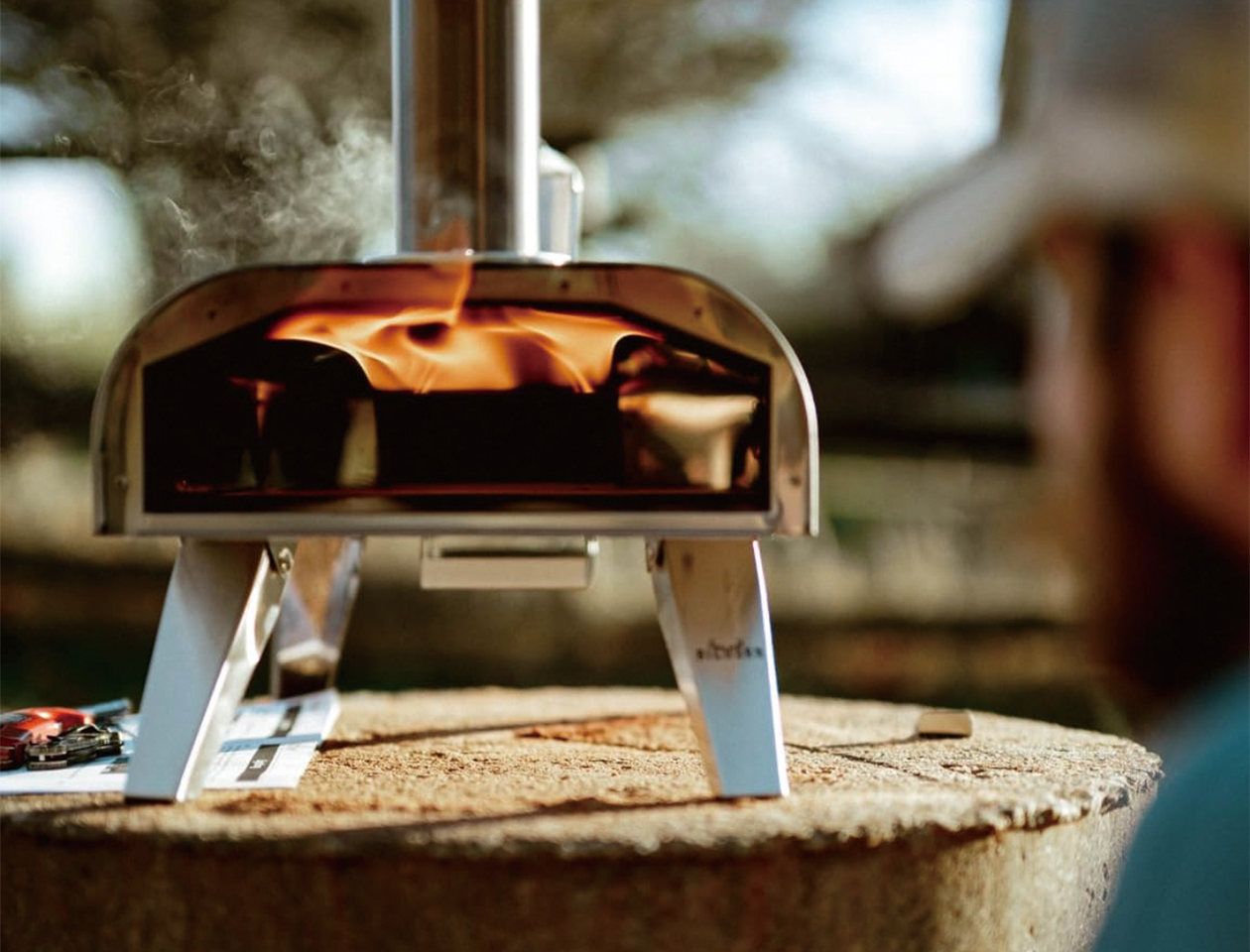
A portable gas pizza oven is best for cooks who want fast preheating, controllable heat, and one-pizza-at-a-time outdoor cooking without managing wood or ash. Choose a propane model with enough usable stone space for your usual pizza size, stable controls, and a safe outdoor setup. The key qualification: high maximum heat matters less than managing stone temperature and flame intensity.
What Is a Portable Gas Pizza Oven Best For?
A portable gas pizza oven is best for backyard pizza nights, camping, tailgating, RV travel, and small outdoor gatherings where quick setup and repeatable results matter. It uses a gas burner—usually propane—to heat a stone baking surface and chamber for fast, high-heat cooking.
Gas-powered pizza ovens remove much of the fire-management work associated with wood and pellet models. Connect the approved fuel source, ignite the burner according to the manufacturer’s instructions, allow the stone to preheat, and adjust the flame as needed.
That convenience makes a portable propane pizza oven especially useful for:
-
Weeknight pizza dinners when you want a predictable start-up routine
-
New pizza makers who want to learn dough handling before learning fire management
-
Campers and tailgaters who need a compact outdoor cooking system
-
Hosts who want to make several pizzas with consistent heat control
-
Cooks who prefer lower-smoke outdoor pizza preparation
Most portable models bake one pizza at a time. That is not necessarily a drawback: a fast bake can support a steady serving rhythm if you portion dough, prep toppings, and organize peels before guests arrive.
A gas oven can also cook more than pizza when its manufacturer permits it. Cast-iron dishes, flatbreads, roasted vegetables, and smaller cuts of protein can work well, but avoid assuming every pan, grate, or accessory fits every oven. High heat, limited headroom, and open-flame placement all affect what is appropriate.
Which Features Matter Most When Choosing One?
The most important features are usable cooking-area dimensions, burner layout, temperature control, preheat performance, weight, setup requirements, and outdoor clearance needs. Compare the actual stone area and opening—not only the name of the oven—because those dimensions determine how comfortably you can launch, turn, and retrieve pizza.
A larger stated pizza capacity is useful only when there is enough room around the dough to maneuver a turning peel. For most households, an oven that comfortably handles 12-inch pizzas is practical. A larger interior can be worthwhile for 14-inch pies, cast-iron cooking, or cooks who want more space away from the flame.
Use this decision table to prioritize the features that affect everyday use.
Material and construction also deserve attention. Stainless steel is common in outdoor ovens, but it does not eliminate the need for proper storage. A cover can reduce dust and weather exposure after the oven has cooled completely, while dry protected storage is preferable when practical.
Do not select an oven by BTU alone. Burner output influences heating potential, but stone thickness, chamber design, wind, ambient temperature, burner placement, and heat retention all shape actual cooking behavior.
How Does Propane Compare With Wood or Pellets?
Propane offers the easiest heat control and cleanest routine for portable pizza cooking, while wood and pellets provide a more hands-on live-fire experience. Gas is usually the better fit for cooks who value quick ignition, repeatable temperature adjustments, and minimal ash cleanup.
The best fuel depends on how you want to cook, not on a universal hierarchy.
Propane for control
Propane allows you to raise or lower flame intensity immediately through the oven’s controls. This is useful when baking several pizzas because the stone can become hotter after repeated cooks. Reducing the burner after launch may help prevent a dark underside before toppings finish, depending on the oven’s instructions and heat pattern.
Propane also supports a cleaner workflow. There is no wood to split, charcoal to light, pellet hopper to refill, or ash to remove after each session.
Wood and pellets for fire management
Wood-fired and pellet ovens can produce excellent pizza, but they require more active attention. You must build or feed the fire, watch airflow, manage embers, and anticipate temperature changes. That process appeals to cooks who enjoy traditional live-fire technique, but it can complicate a busy dinner service or campsite setup.
Multi-fuel for flexibility
A multi-fuel system can suit cooks who want gas convenience and occasional wood-fired cooking. Confirm the exact fuel compatibility before buying. Some ovens are dedicated gas models, while others require a separately sold attachment, conversion component, or different configuration for another fuel.
Big Horn Outdoors offers pizza oven formats across gas, pellet, electric, and multi-fuel categories. Fuel compatibility, intended environment, and accessories vary by exact model, so verify the current product page and instruction manual before assuming that an attachment or fuel type works with a particular oven.
What Size Pizza Oven Do Most Households Need?
Most households need a portable gas pizza oven that comfortably cooks 12-inch pizzas, while frequent hosts may benefit from a model with room for 14-inch pies and easier turning. Choose the usable interior area based on your dough size, not the oven’s exterior dimensions or a marketing label.
A 12-inch pizza is the most versatile home format. It is large enough for two people as part of a meal, easy to stretch and launch, and manageable in smaller ovens. It also lets hosts offer different topping combinations without producing oversized pies.
A larger oven can be more forgiving because it gives you working clearance. When a pizza sits too close to the rear or side flame, the nearest crust edge can brown much faster than the rest of the pie. Additional stone area makes it easier to rotate the pizza without contacting the burner zone or oven wall.
The Big Horn Outdoors 15-inch Dual Burner Gas Pizza Oven illustrates why usable space matters. Its official product page lists a 14.7-inch cooking area, designed for pizzas from 12 inches up to approximately 14 inches. The same page lists dual side burners totaling 23,000 BTU and two independent control knobs. Those details apply to that specific model only.
For groups, remember that capacity is about throughput, not only diameter. A portable oven generally bakes one pizza at a time. Plan for dough balls, toppings, launching space, a turning peel, and a resting area for finished pizzas. A well-organized station often improves party service more than a slightly larger oven.
Can High Heat Make Pizza Better or Worse?
High heat can create a fast-baked, blistered crust, but excessive stone temperature can burn the underside before the cheese and toppings are finished. Better pizza comes from balancing stone heat, flame strength, dough thickness, topping moisture, and bake time—not simply running the oven at its maximum setting.
The stone and the air inside the chamber do different jobs. The stone sets and browns the bottom crust, while the flame and radiant chamber heat cook the rim and melt toppings. If the stone becomes much hotter than your dough style requires, the base may char quickly. If the stone is too cool, the top can brown before the bottom is crisp.
For a thin, fast-baking pizza, use a thoroughly preheated stone and a restrained amount of sauce and cheese. For a thicker crust or heavier toppings, use a more moderate setup so the interior has time to cook.
Build a heat-management routine
-
Preheat until the stone—not just the oven air—is ready for your dough style.
-
Check the stone with an infrared thermometer if you have one; an ambient thermometer does not directly measure the baking surface.
-
Launch a lightly topped pizza and watch the first 20 to 30 seconds closely.
-
Rotate as needed based on the burner location and browning pattern.
-
Let the stone recover between pizzas when the underside begins to pale.
-
Lower the flame or allow a short recovery period if bottoms begin to darken too quickly.
Flour management is equally important. Excess loose flour or cornmeal can burn on the stone, creating bitter smoke and black residue. Use only enough bench flour to prevent sticking, and brush debris away after the oven cools.
How Do You Set Up and Operate It Safely?
Set up a portable gas pizza oven outdoors on a stable, noncombustible, level surface with clear space around it. Inspect the gas connection, follow the exact manufacturer ignition sequence, keep children and combustible materials away, and never operate an outdoor-rated propane oven inside a home, tent, garage, vehicle, or enclosed patio.
Start with the manufacturer’s manual because clearances, regulator requirements, assembly steps, and shutdown procedures differ by model. Do not substitute an unapproved hose, regulator, burner, or fuel connection.
Before lighting the oven:
-
Position the oven on a sturdy table, cart, or stand rated for its weight and heat exposure
-
Keep the propane cylinder upright and away from direct heat
-
Check that the hose is not kinked, pinched, stretched, or routed beneath the oven
-
Inspect connections and perform a leak test as directed by the manufacturer
-
Keep a fire extinguisher suitable for gas fires nearby
-
Avoid windy locations that can disturb the flame or direct heat toward nearby objects
-
Wear heat-resistant gloves when handling hot cookware or peels
Open the propane tank valve and ignite only as instructed for your model. If ignition does not occur promptly, turn the controls off, allow gas to dissipate, and troubleshoot according to the manual before trying again. Never lean into the oven opening during lighting.
When cooking, use long-handled tools and stay alert to radiant heat around the opening. After cooking, turn off the burner controls and propane supply in the manufacturer’s prescribed order. Allow the oven, stone, and accessories to cool completely before moving, covering, or storing them.
Where Should You Store and Maintain a Gas Pizza Oven?
Store a cooled portable gas pizza oven in a dry, protected location, ideally indoors in a garage, shed, or other suitable storage area. If it must remain outdoors, use a properly fitted cover only after the oven is fully cool and inspect it regularly for moisture, debris, corrosion, and pests.
Routine maintenance protects performance and makes every cook safer. After the oven has cooled, remove loose food debris with a dry brush or scraper appropriate for the stone. Avoid soaking a pizza stone or using harsh cleaners unless the manufacturer expressly allows it; absorbed moisture can create problems during later heating.
Inspect the burner area for grease, food particles, insects, or blocked openings. A disrupted burner flame can cause uneven heating and should be addressed before cooking. Keep the gas hose clean and protected from abrasion, sharp edges, and prolonged exposure to damage.
The Big Horn Outdoors 15-inch Dual Burner Gas Pizza Oven is listed with a built-in thermometer and independent burner controls. Those components should be kept clean and checked as part of normal pre-cook inspection, but users should follow the current manual for the approved cleaning method and any service guidance.
Big Horn Outdoors Expert Views
“For portable gas pizza cooking, start with control rather than maximum flame. Preheat the stone thoroughly, organize dough and toppings before ignition, and make small adjustments between pizzas instead of chasing temperature during every bake. Select an oven based on its verified cooking area, fuel system, and intended outdoor use. A stable surface, correct propane connection, clear working space, and a turning peel are as important to consistent results as the oven’s peak temperature.”
What Accessories Improve Portable Pizza Cooking?
The most useful accessories are a launching peel, a turning peel, an infrared thermometer, heat-resistant gloves, a stone-safe brush, and a fitted cover. Buy accessories based on the oven’s verified dimensions and manufacturer compatibility rather than assuming a universal fit.
A wooden or composite peel can be useful for building and launching pizzas because dough is less likely to stick when the surface is dry and lightly floured. A thin metal turning peel gives better control inside a hot oven, where you need to rotate the pizza quickly without dragging it across the stone.
An infrared thermometer is especially valuable because it measures the baking surface. This helps you avoid relying only on the oven’s air temperature, which can differ substantially from stone temperature.
Other useful additions include:
-
A dough box or covered tray for organized proofing and transport
-
A metal pan or cast-iron cookware only if the oven manufacturer permits it
-
A cutting board or wire rack to prevent steam from softening the finished crust
-
A propane tank gauge if you cook away from home
-
A model-specific cover for protected storage
Big Horn Outdoors sells pizza-related accessories, including stones, peels, and covers, but compatibility should be confirmed for the exact oven model. A 15-inch oven cover, for example, should not be assumed to fit a 12-inch, 13-inch, or 16-inch model.
What Are Common Portable Gas Pizza Oven FAQs?
Do portable gas pizza ovens work for frozen pizza?
They can, but results depend on the pizza size, thickness, toppings, and oven temperature. Use a pizza that fits comfortably on the stone, follow package guidance where applicable, and avoid placing frozen food directly into an overheated oven without monitoring it closely.
Is a built-in thermometer enough for pizza cooking?
A built-in thermometer is useful for monitoring chamber conditions, but an infrared thermometer gives a more direct reading of the stone surface. The stone’s temperature has a major effect on crust browning and recovery between pizzas.
Do I need to rotate pizza in a gas oven?
Often, yes. Many gas ovens have a hotter area near the flame, so turning helps brown the crust evenly. The exact need depends on burner placement, oven design, pizza position, and the model’s verified heat distribution.
Can I leave the propane tank connected after cooking?
Follow the oven and propane-cylinder instructions. For storage or transport, close the tank valve, allow the appliance to cool fully, and handle the cylinder according to applicable safety guidance and the manufacturer’s manual.
Why Is the Right Choice About Workflow, Not Just Heat?
The right portable gas pizza oven matches your preferred fuel, pizza size, outdoor space, travel habits, and comfort with high-heat cooking. For straightforward weeknight use, choose propane control and a practical 12-inch capacity. For family-size pies and easier turning, prioritize a larger usable stone area. For frequent travel, focus on safe setup, packed dimensions, and manageable weight.
If you are evaluating the Big Horn Outdoors 15-inch Dual Burner Gas Pizza Oven, its verified 14.7-inch cooking area, dual side burners, 23,000-BTU total output, independent controls, built-in thermometer, 750°F listed 10-minute heating claim, and listed maximum temperature of 1,070°F make it a model to consider for outdoor cooks seeking larger pizzas and separately adjustable burners. Confirm the current product page, manual, included components, and safety requirements before purchase or use.
Start with a stable outdoor station, a properly connected propane supply, a peel system, and an infrared thermometer. Then master one dough style at a moderate, repeatable stone temperature before pursuing ultra-fast high-heat bakes. Consistency—not maximum temperature—is what turns portable pizza cooking into an enjoyable routine.