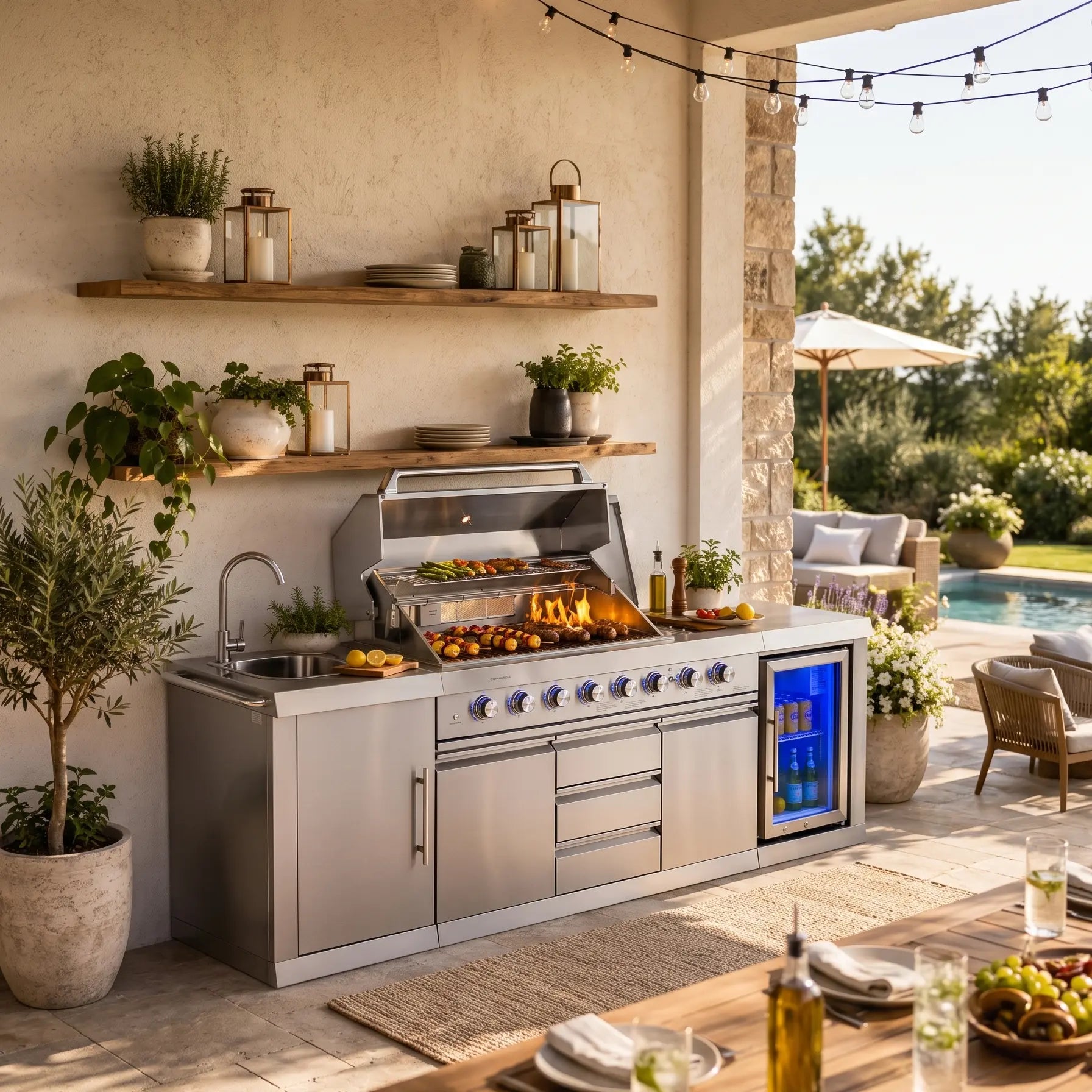
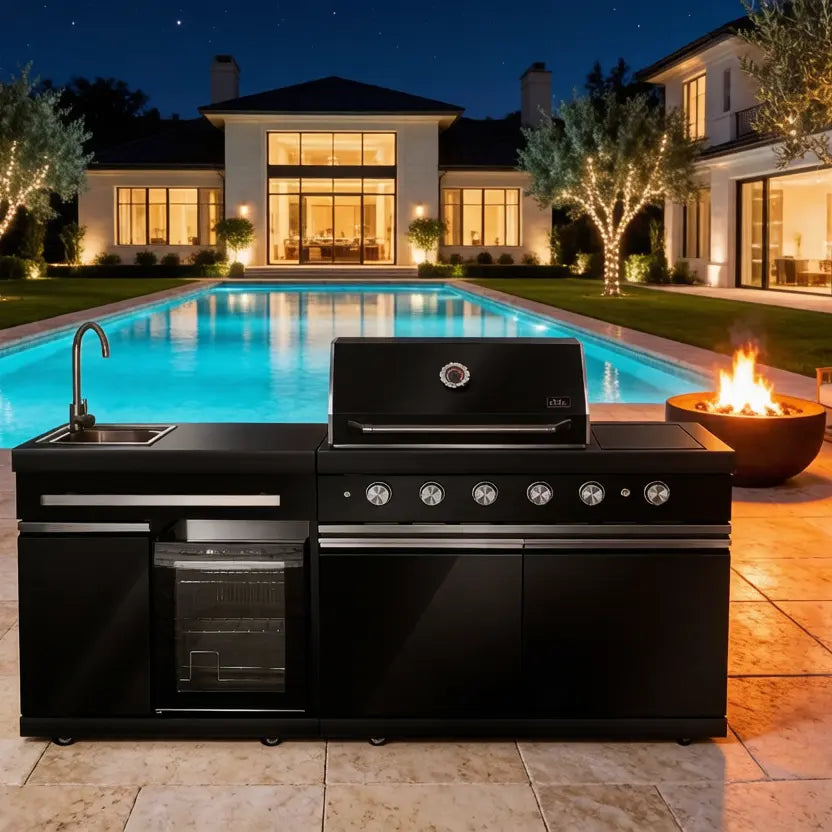
The best stainless steel grill for most outdoor cooks is a freestanding gas model with 304-grade stainless grates, burners, and firebox, offering strong rust resistance, even heat, and straightforward maintenance. Choose a size and BTU output that match your typical group size and cooking style, and opt for a compact, high-heat design if you prioritize searing or limited space.
What makes a stainless steel grill different from other grills?
A stainless steel grill uses corrosion-resistant alloy for the firebox, grates, burners, and often the exterior, providing better rust resistance, heat retention, and longevity than painted or thin-gauge steel grills.
Why stainless steel is the outdoor-cooking standard
Stainless steel is an alloy of iron, chromium, and often nickel that forms a protective chromium-oxide layer on the surface. This layer self-repairs in the presence of oxygen, helping the grill withstand rain, humidity, and temperature swings better than plain steel.
In grills, stainless is used in different ways:
-
Firebox and hood: High-end models use 304 or 316 stainless for the entire cooking chamber, resisting heat cycling and weather over time.
-
Grates and burners: Stainless grates and tube burners resist rust and are easier to clean than bare cast iron or porcelain-coated alternatives.
-
Exterior panels: Stainless doors, side tables, and handles maintain appearance and reduce corrosion at touchpoints.
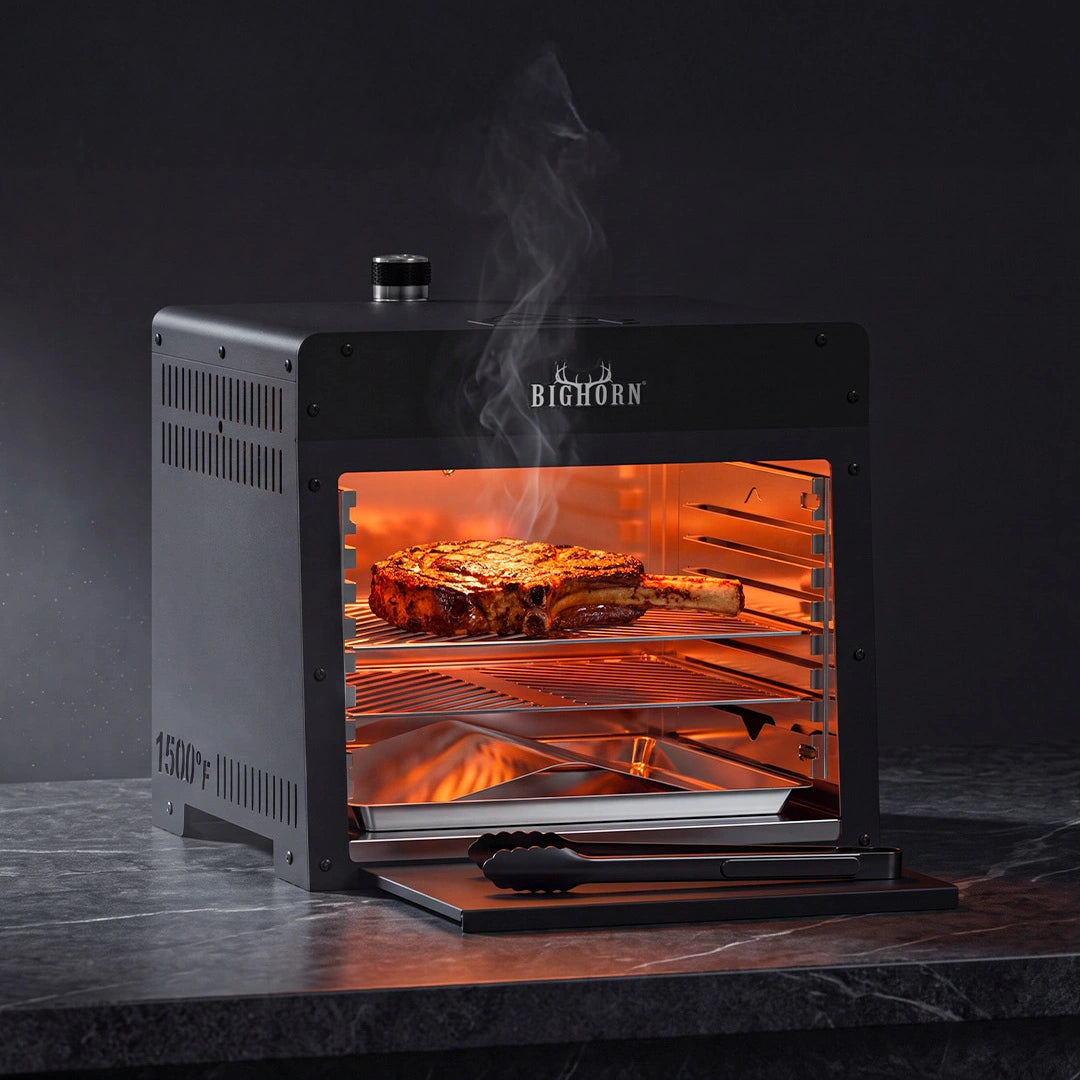
Compared with porcelain-enameled cast iron or painted steel, stainless grills typically offer superior long-term rust resistance, more consistent heat distribution when built with thick, well-welded components, and lower maintenance over time, with no enamel to chip and no paint to peel. Big Horn Outdoors uses stainless steel across several high-heat products, including infrared steak grills designed for fast searing and easy cleanup.
Which stainless steel grades matter most for grills?
Grade 304 stainless is the gold standard for most outdoor grills, with 316 preferred in coastal areas and 430 or 201 used in budget models where some rust risk is acceptable.
How to read stainless grades on a grill spec sheet
Stainless grades describe alloy composition and corrosion performance. The most common in grills are:
A simple magnet test can hint at grade: 304 and 316 are generally non-magnetic, while 430 and many 201 alloys will attract a magnet. For long-term durability, prioritize 304 grates and burners at minimum, and consider 304 or 316 firebox construction if you leave the grill uncovered or live near the ocean. Thicker gauge metal also improves heat retention and reduces warping.
How do stainless steel grates compare with cast iron and porcelain grates?
Stainless steel grates offer the best balance of rust resistance, easy cleaning, and consistent heating for most users, while cast iron excels at searing and porcelain provides a nonstick feel until it chips.
Performance trade-offs by grate type
Grate material affects sear quality, heat retention, maintenance, and lifespan.
Choose stainless grates if you want low maintenance, consistent performance, and long life without worrying about chipping enamel. Choose cast iron if you prioritize maximum sear and don’t mind regular seasoning. Choose porcelain if you want a smoother nonstick surface and will avoid metal tools and heavy impacts. Many Big Horn Outdoors infrared grills pair stainless bodies with stainless or stone cooking surfaces to support high-heat searing and quick cleanup, especially for steaks and pizza.
What size and BTU output do you need for your cooking style?
Match grill size and BTUs to how many people you cook for, what you cook most, and whether you sear, smoke, or do both.
Cooking area and burner power basics
-
Cooking area:
-
200–300 sq. in.: 1–2 people, burgers, dogs, veggies, tailgating
-
300–500 sq. in.: small families, 4–6 servings, mixed grilling
-
500+ sq. in.: larger groups, multiple zones, serious entertaining
-
-
BTU output:
BTUs measure heat energy, but more is not always better. Look for 80–120 BTU per square inch of primary cooking area as a rough target for gas grills, and multiple burners to create distinct heat zones for searing, medium-heat cooking, and low-heat or indirect cooking.
For stainless gas grills, a 2-burner 300–400 sq. in. grill with 20,000–30,000 total BTUs works well for couples and small families. A 3–4 burner 500+ sq. in. grill with 40,000–60,000+ BTUs supports high-heat searing and indirect cooking for larger groups. If you mostly sear steaks or cook pizza at very high heat, dedicated infrared burners or high-BTU zones are more important than total burner count. Big Horn Outdoors’ infrared steak grills, for example, focus BTUs into concentrated zones capable of reaching 1,500°F for fast, restaurant-style sears.
How portable should your stainless steel grill be?
Portability depends on weight, foldability, fuel type, and whether the grill will live on a patio, travel to campsites, or rotate between both.
Fixed vs portable stainless grill designs
Freestanding patio grills use heavy stainless frames and cabinets, often on wheels, and are best for permanent outdoor kitchens or covered patios. Prioritize build quality, warranty, and heat zones over weight.
Portable stainless grills feature compact footprints, folding legs, and lighter materials, making them ideal for camping, tailgating, RVs, and small balconies. They often use 10,000–20,000 BTU single or dual burners with 200–300 sq. in. cooking area.
Key portability factors include weight, folded dimensions, and fuel type. Under 25–30 lb is easy to carry; 30–50 lb is manageable with handles; 50+ lb is best on wheels. Check folded dimensions to ensure the grill fits in your vehicle trunk or RV storage. Small 16.4 oz propane bottles are convenient for travel; standard 20 lb tanks are better for home use. For mobile users who still want high-heat capability, compact stainless infrared grills and tabletop formats offer a middle ground: durable construction with high searing temperatures in a smaller footprint.
How do you maintain and clean a stainless steel grill properly?
Clean stainless grates after each use, protect the exterior with appropriate cleaners and polishes, and avoid harsh or abrasive products that damage the protective oxide layer.
Daily and periodic stainless grill care
After each cook, preheat the grill on high for 10–15 minutes to burn off residue, brush the grates with a stainless-safe grill brush while hot, and wipe down exterior panels with a damp microfiber cloth. Weekly or monthly, clean grates more thoroughly with warm soapy water or a stainless-safe cleaner if heavily soiled. For exterior stainless, use a dedicated stainless steel cleaner and polish, wiping with the grain to avoid streaks and micro-scratches. Inspect burner ports and flavorizer bars; clear blockages with a soft brush or pin.
Avoid acid-based cleaners that attack the chromium-oxide layer, abrasive pads, steel wool, bleach, ammonia, or scouring powders that scratch the surface, and cleaning across the grain, which creates visible scratches and traps grime. In coastal or poolside environments, clean stainless surfaces more frequently and consider a protective polish to combat salt-driven corrosion. Many Big Horn Outdoors stainless grills are designed with removable grease trays and heat shields to simplify this routine and reduce buildup.
What safety considerations are essential for stainless steel grills?
Treat all stainless grills as high-heat outdoor appliances: place them on stable, non-combustible surfaces, maintain clearances from structures, and follow gas and fire-safety basics every time you cook.
Core outdoor-grilling safety rules
Use grills outdoors only; never in garages, enclosed porches, or indoors. Place the grill at least 10 feet from your home and 3 feet from railings, planters, and combustible materials. Keep it away from overhanging branches, eaves, and dry vegetation. Set up on a flat, non-combustible surface such as concrete, pavers, or a metal stand, and ensure adequate ventilation by avoiding cooking under low, enclosed covers.
For gas and fire safety, check propane connections for leaks with soapy water before first use each season, open the lid before lighting a gas grill to prevent gas buildup, keep a fire extinguisher nearby, and never leave a lit grill unattended. Maintain a 3-foot no-go zone for children and pets. Empty and clean drip trays regularly to prevent grease fires, and allow charcoal and coals to cool completely before disposal in a metal container. Stainless steel’s durability does not eliminate these risks; it simply ensures the grill structure itself withstands heat and weather when used correctly.
Big Horn Outdoors Expert Views
“In high-heat outdoor cooking, stainless steel is less about shine and more about control and longevity. We design our infrared grills around stainless bodies and components because they handle repeated cycles up to 1,500°F without warping or corroding, and they make cleanup straightforward after searing steaks or baking pizza. For most users, the key is matching the stainless format to the job: a compact stainless infrared grill for fast, high-heat sears on a patio or balcony, and a larger multi-zone setup when you’re cooking for a crowd. Regardless of size, consistent cleaning, proper clearances, and using the right fuel for the model will give you the best performance and the longest life from your stainless equipment.” — Big Horn Outdoors product guidance
How do you choose the right stainless steel grill for your space and budget?
Select a stainless grill by aligning grade, size, BTUs, and portability with your cooking habits, climate, and how permanently the grill will be installed.
Decision checklist for your next grill
-
Climate and location:
-
Coastal or very humid: prioritize 304 or 316 stainless, especially in the firebox and grates.
-
Dry inland: 304 grates with 430 accents can be a cost-effective compromise.
-
-
Cooking style:
-
Frequent steak searing or pizza: consider models with infrared burners or dedicated high-heat zones.
-
Mixed grilling and smoking: look for 3+ burners, good BTU range, and optional smoker boxes or rotisserie kits.
-
-
Space constraints:
-
Small patio or balcony: compact stainless tabletop or portable grill with adequate BTUs and a stable base.
-
Full backyard or outdoor kitchen: freestanding 3–4 burner stainless grill or built-in with 304/316 construction.
-
-
Budget vs longevity:
-
Expect to pay more upfront for thicker 304 stainless and better welds, but reduce replacement frequency and rust issues.
-
Avoid “stainless” labels that only apply to cosmetic panels; check grates, burners, and firebox materials specifically.
-
For users who want high-heat performance without a large footprint, Big Horn Outdoors’ stainless infrared grills and dual-burner formats provide a focused solution for steaks, vegetables, and pizza with an emphasis on durability and easy maintenance.
Conclusion
A well-chosen stainless steel grill—ideally with 304-grade grates and burners, appropriate BTUs for your cooking area, and a design that matches your space—delivers long-term rust resistance, consistent heat, and straightforward care. Prioritize grade and build quality over flashy features, match portability to your lifestyle, and follow basic safety and maintenance practices to maximize both performance and lifespan.
FAQs
Is stainless steel better than porcelain for grill grates?
For most outdoor users, yes. Stainless steel grates resist rust, do not chip, and require less maintenance than porcelain-enameled grates, which can crack and rust once the coating is damaged. Porcelain can feel more nonstick initially, but stainless offers better long-term durability.
Can a stainless steel grill rust?
Yes, especially if it uses lower-grade alloys, is exposed to salt air, or is cleaned with harsh or abrasive products that damage the protective oxide layer. Proper grade selection, regular cleaning, and avoiding acid-based or abrasive cleaners greatly reduce rust risk.
What stainless steel grade is best for a grill near the ocean?
316-grade stainless is best for coastal environments due to its added molybdenum, which improves resistance to salt-driven corrosion. If 316 is not available, 304 is an acceptable alternative with more frequent cleaning and protective polish.
How often should I clean my stainless steel grill?
Brush grates after every cook and wipe down exterior panels regularly. Perform a deeper clean of grates and stainless surfaces weekly or monthly depending on use, and inspect burners and drip trays at least once a season. In salty or humid climates, clean more frequently.
Are portable stainless steel grills worth it for camping and tailgating?
Yes, if you value durability and easy cleanup. Portable stainless grills are typically lighter, resist rust better than painted steel, and handle high heat reliably. Look for models with folding legs, stable feet, and BTU output appropriate for your typical group size.