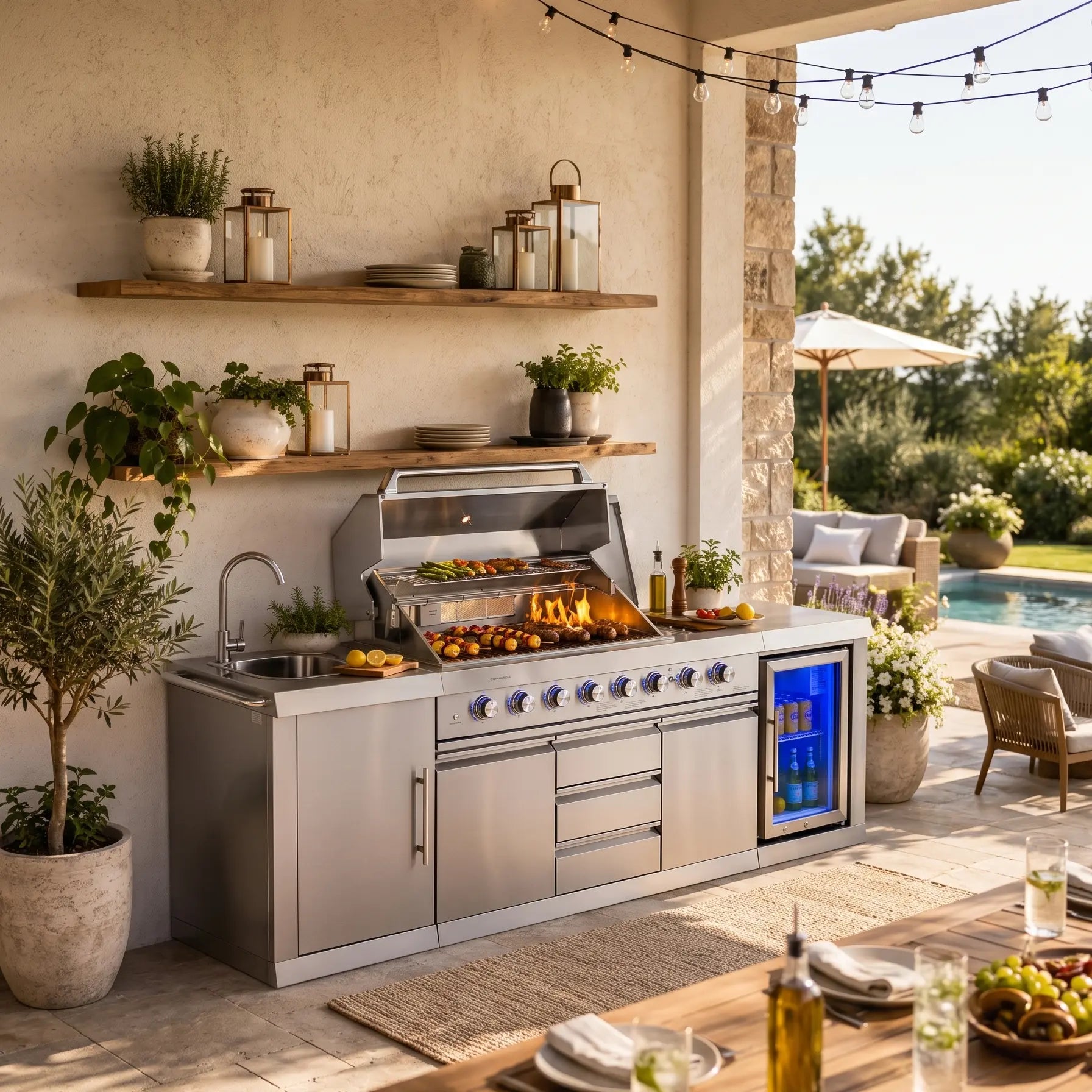
A Santa Maria grill is built for live-fire cooking over charcoal or wood with an adjustable grate, and its signature is tri-tip — seared low over the coals, then roasted high to a rosy center. Beyond tri-tip, the grill handles steaks, beef ribs, sausages, chicken, seafood, and vegetables, because the adjustable grate lets different cuts sear and roast at different heights from one fire. This guide covers the menu, the technique, and the foods that suit the format.
These are general Santa Maria cooking ideas; use a probe thermometer and cook to safe internal temperatures.
What actually matters for this decision
- Staged heat. The adjustable grate sears low and roasts high, so different foods cook at different heights.
- Live-fire flavor. Charcoal and wood add smoke that gas cannot copy.
- Cut and finish. Roasts and thicker cuts suit the sear-and-rise rhythm; delicate items sit higher.
- Fire management. A settled coal bed and steady fuel keep the staged cook consistent.
Understanding live fire before you decide
A Santa Maria grill cooks over an open fire and controls heat by raising and lowering the grate. Low over the coals sears hard; high above them roasts gently and can hold food warm. That staging is the format’s superpower — one fire becomes a cooking line where a tri-tip sears, a steak roasts, and vegetables finish, all at different grate heights. The fuel (lump charcoal or hardwood like oak) adds the smoke that defines the style.
The Santa Maria menu, by height
| Food | Grate position | Technique |
|---|---|---|
| Tri-tip | Sear low, roast high | The signature; season, sear, roast to about 130–135°F |
| Steaks (ribeye, strip) | Low to mid | Sear for a crust, finish higher |
| Beef ribs / roasts | Mid to high | Gentle roast over the fire |
| Sausages / chicken | Mid | Cook through without burning the surface |
| Seafood / vegetables | High | Radiant heat softens without charring |
Matching the choice to your situation
If you want the classic Santa Maria result, start with tri-tip — it is the dish the grill was made for and the best way to learn the sear-and-rise rhythm. For a party, stage a menu: a tri-tip or roast as the centerpiece, steaks or sausages in a middle round, and vegetables or seafood near the end at a higher grate position. The adjustable grate lets one fire handle the whole meal.
What the experts look for
Experienced live-fire cooks read the fire and the grate, not a dial: a settled bed of glowing coals, food placed at the height its cut needs, and the grate adjusted rather than the fire. They also plan the staged menu — lean and delicate items cook higher and later, while roasts sear low first. The Santa Maria rewards the cook who uses the grate to stage the cook.
Common mistakes and how to avoid them
- Cooking everything at one height. Use the grate’s range — sear low, roast high, delicate items higher.
- Skipping the coal-bed lead time. A young fire sears unevenly; wait for settled glowing coals.
- Ignoring the probe. Roasts and thick cuts need a thermometer, not a timer.
- Overloading the grate. Cook in rounds so each cut gets the height it needs.
- Forgetting the drip tray. Grease on the coals flares; manage drips during a long cook.
Realistic expectations and results
A Santa Maria grill produces live-fire flavor and a staged cook from one fire: a seared, smoky tri-tip or steak, gentle roasts, and vegetables finished high above the coals. Expect a longer, more deliberate cook than a gas grill — coal-bed lead time plus staged rounds — and a recurring fuel cost. The reward is the flavor and the staging that the adjustable grate makes possible.
The takeaway in one paragraph
Cook on a Santa Maria grill what the format does best: tri-tip as the signature, plus steaks, beef ribs, sausages, chicken, seafood, and vegetables — each placed at the grate height its cut needs, from a hard sear low over the coals to a gentle roast high above. Use the staged menu, settle the coals, and cook with a probe. The Santa Maria turns one fire into a full live-fire menu.
See the Santa Maria grills and the live-fire range. portable Santa Maria grill · grills and griddles collection
FAQ
What is a Santa Maria grill good for?
A Santa Maria grill is good for live-fire cooking with staged heat: tri-tip, steaks, beef ribs, sausages, chicken, seafood, and vegetables, each cooked at the grate height it needs. The adjustable grate lets one fire sear, roast, and hold from a single station.
How do you cook on a Santa Maria grill?
Build a charcoal or hardwood fire and let it settle to glowing coals, then use the grate’s height to control heat — sear low for a crust, raise to roast gently, and keep delicate items high. Use a probe for roasts and thick cuts.
What are some recipes for Santa Maria barbecue?
Classic Santa Maria barbecue centers on tri-tip with a garlic-pepper rub, seared and roasted over live fire, with sides like beans and grilled bread. Steaks, sausages, chicken, and vegetables round out the menu, staged at different grate heights from the same fire.
Are Santa Maria grills worth the money?
For cooks who want live-fire flavor and the adjustable-grate staging, yes — one grill replaces a staged setup and delivers wood-and-charcoal flavor. For cooks who want speed and dial control, a gas grill is the better value. The worth depends on whether the fire and ritual match your cooking.