







Accessories
The counterintuitive point is that a propane hose can "still work" and already be due for replacement. Rubber stiffens, a trip kinks a line, and a regulator can hunt long before anyone smells a dramatic leak. When to replace a propane hose and regulator is a timing decision: date codes, visible damage, and a failed test, not a wait for the fitting to fail mid-cook.
Hoses and regulators age even if they have not failed yet
Hoses and regulators age even if they have not failed yet. Replace a propane hose or regulator when the date code is missing or past the maker's guidance, when the hose is cracked, stiff, or kinked, or when a leak test fails. After a trip that crushed the line, inspect it before the next cook.
This page will not invent a legal replacement interval in years. Follow the appliance manual and any date or inspection note printed on the hose or regulator. If you cannot find a date, treat condition and testing as the decision, and replace a line you cannot trust. The path is inspect, decide, replace if needed, then test — not "it lit last weekend, so it is fine."
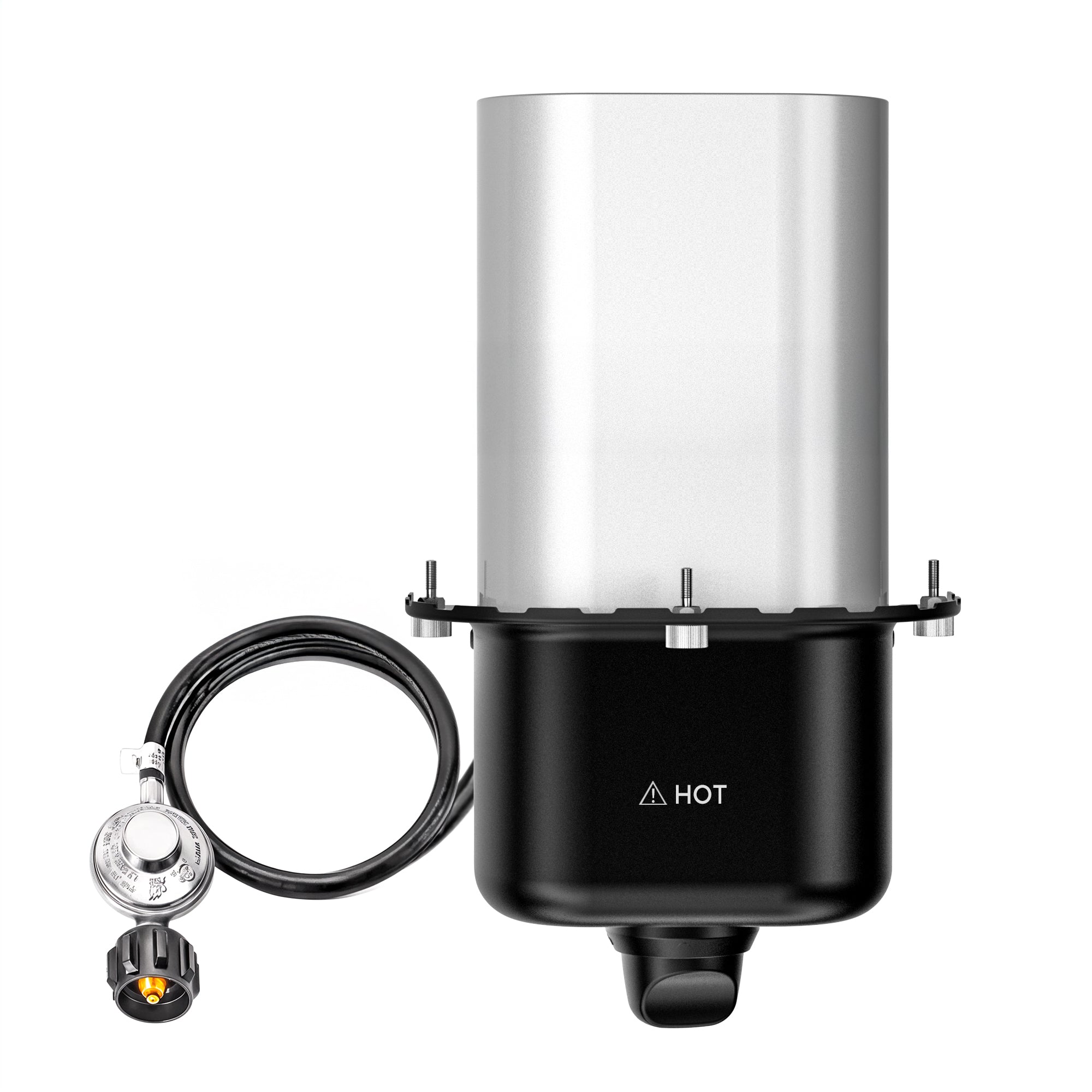
Date codes, cracks, stiffness and a trip that kinks a hose
Look for a date code or manufacture mark on the hose, fittings, or regulator body. Photograph it and write the install date on a tag when you put a new line on. A code you cannot read is information too: you have lost the clock, so condition and testing carry more weight. Do not scrape a mark off to "clean" it.
A date code is often a month and year, or another maker mark, stamped or printed on the jacket, a fitting, or the regulator body. It may be faint. Use a flashlight along the hose, not a knife. If two marks disagree, record both and follow the stricter reading in the appliance manual. This is still not a license to invent a replacement year when the manual is silent; it is a way to stop guessing later.
Cracks, weather checking, blisters, flattened spots, and a hose that stays stiff in mild air are replace-now signs, even if the burner still lights. So is a trip that folded the hose under a tire, a cooler, or an oven leg, or a regulator that took a hard knock in a truck bed. Uncoil the line and look along its full length, including the ends. NFPA grilling fire-safety guidance and U.S. Fire Administration cooking-fire prevention are the official outdoor-gas starting points for this kind of check.
A replace-now vs watch-it table
Use the table as a conservative decision path. "Watch it" still means a leak test before the next cook, not a shrug. When a row is unclear, replace the part.
| What you find | Replace now | Watch only if all of this is true |
|---|---|---|
| Date code | Unreadable, missing, or past the interval in the appliance manual. | The code is readable, still within the maker's guidance, and the hose looks sound. |
| Hose condition | Cracks, blisters, cuts, a flattened kink, stiffness, or a soft sticky patch. | The jacket is scuffed but flexible, with no crack or kink, after a passing leak test. |
| After a trip | The hose was crushed, stretched, or folded, or the regulator was struck. | The line was packed without a bend, and a full visual check plus leak test passes. |
| Regulator behavior | Hunting flame, damage to the body, icing in mild weather, or a failed test at the regulator. | The flame is steady and the body is intact after a passing leak test. |
After a leak test fails, or a regulator hunts
A failed soapy-water leak test is a replace-or-stop moment, not a "tighten it a little more and cook anyway" moment. If bubbles appear at a fitting, shut the tank off, and do not keep tightening a cracked fitting. If the leak is in the hose wall or the regulator body, that part is finished. How to run the test itself is already covered in the gas pizza oven hose leak-test checklist and in safe gas-pizza-oven setup, regulator, hose, and leak checks. This page is about what to do with the result.
A regulator that "hunts" — a flame that surges and fades with the valve otherwise steady — can also mean the regulator is failing, especially if the tank and hose have already been checked. Do not keep cooking through it. Replace the regulator with the part the appliance maker specifies. NFPA home fire-safety guidance and Ready.gov home-fire guidance support taking a doubtful gas part out of service rather than finishing the meal.
How this differs from the soapy-water leak-test and tank-storage pages
Leak-test pages tell you how to check a connection. Tank pages tell you how long a cylinder lasts, how to store it, and when to exchange or refill it, including how long a 20-lb propane tank lasts on a grill and propane tank exchange versus refill. Adapter-hose fit for a camp stove is a third job, on a camp-stove adapter hose for a 20-lb tank.
This article owns replacement timing: when the hose or regulator should come off, even if last week's test passed and the tank is still heavy. Keep the other pages for method and fuel logistics.
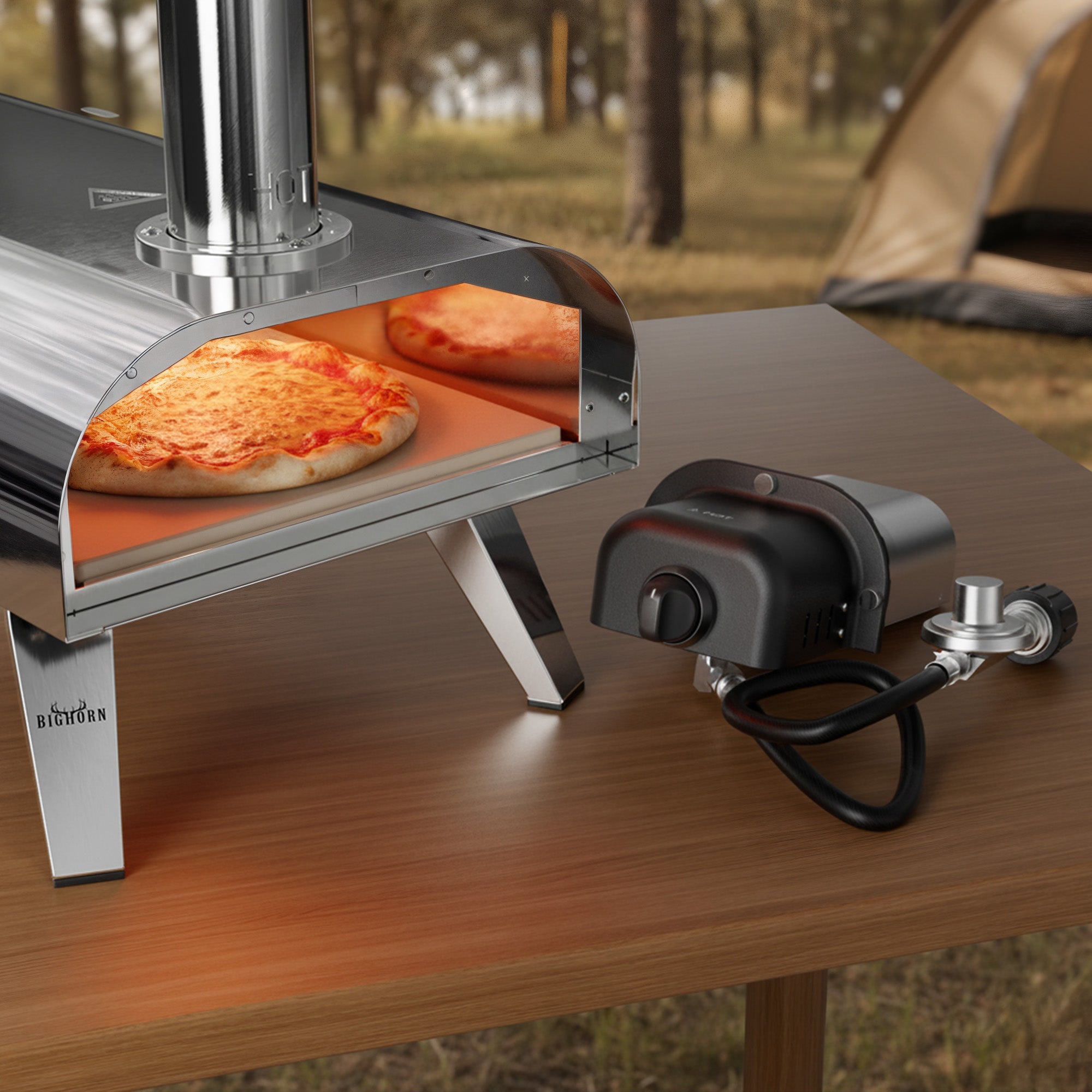
A drawer kit: spare hose, tape, and a record of dates
A small drawer kit saves a weekend. Keep the correct spare hose or regulator for your appliance, if the maker sells one, plus leak-test solution or the soap method the live leak-test page describes, and a card with date codes and install dates. Pipe-thread tape belongs in that kit only if the manufacturer says to use it on a specific joint. It is not a way to silence a leaky hose wall.
Do not buy a random hose because the connectors look similar. Propane fittings and pressures are not all the same. Match the appliance, then add the new date to the card when the part goes on. Keep the old hose until the new one is on and has passed a leak test, so you are not left mid-swap without a spare. If you travel with a grill or oven, coil the spare so it cannot crease in the same place as the hose you just retired. EPA's carbon monoxide overview is a reminder to test new connections outdoors, not in a closed garage.
After a trip, unpack the hose before you unpack the food. Look for a new fold, a scuff at a fitting, or a regulator that rode on its side under a box. A line that traveled well still gets a leak test at the new site. A line that took a hit gets replaced, even if it "might be fine for tonight."
A written install date on a tag so the next replacement is not a guess
When you install a new hose or regulator, write the date on a tag and zip-tie or tape it where you can read it later without disconnecting the line. Add the date code from the part if you can see one. The next owner of the grill or oven — including you, three summers from now — should not have to guess.
Replace the tag if it fades. Photograph it with the model of the appliance. That habit is more useful than trying to remember whether the hose "came with the grill."
A recap of who this method is for, and who should use a different cooker
This method is for owners of a grill, oven, or camp appliance that already uses a propane hose and regulator. It is a replace-now path based on dates, cracks, trip damage, hunting regulators, and failed tests. It is not a tank-recertification manual, and it is not a reason to keep lighting a scarred hose because dinner is already prepped.
If the hose or regulator fails the table, cook on a different sound appliance or change the menu. American Red Cross fire-emergency guidance will not name your fitting, but it supports the same decision: a damaged fuel path is a stop, not a delay.
If you use a propane gas burner with a regulator and hose on an outdoor oven, treat that hose as a dated, inspectable part, and leak-test it after any replacement or a hard trip.
FAQ
How do you tell if your propane regulator is bad?
Signs include a flame that hunts or will not stay steady after the tank and hose check out, a regulator that is iced over in mild weather, a hiss or gas smell at the regulator body, visible damage, or a leak test that fails at the regulator connections. Do not keep using a regulator that chatters, weeps, or has a cracked housing. Replace it with the part the appliance maker specifies, then leak-test before you cook.
How much does it cost to swap out a 20 lb propane tank?
Exchange and refill prices vary by retailer, region, and whether you own the cylinder. This page does not quote a figure. For the exchange-versus-refill decision, use the live tank page on this site rather than treating a hose or regulator replacement as a tank-price problem. A damaged hose is not fixed by swapping the tank alone.
Is a 50 year old propane tank still good?
Do not assume a 50-year-old cylinder is fine. Propane tanks have stamped dates and recertification rules. A tank that is badly rusted, damaged, or past the status a refill or exchange location will accept should be taken out of service. Have a propane professional or an exchange program evaluate it. This article is about the hose and regulator on your appliance, not a tank-age waiver.
When should you refill a propane tank?
Refill or exchange when the tank is low by weight, gauge, or cooking performance, and before a trip where you do not want to run out. Follow the cylinder's own rules and the refill location's policy. A refill does not reset the clock on an old hose. Inspect the hose and regulator at the same time you move the tank.
More to Read
Fireproof Grill Mat Under Pizza Ovens and Infrared Grills
Place a fireproof grill mat to catch grease and sparks under ovens and grills. Confirm the live 48-by-30-inch claims, and use a cart when you need ...
No Oven Spring on a High-Heat Pie: Dough Temp, Launch and Floor
Diagnose no oven spring on a high-heat pizza by checking dough temperature, launch handling, and floor heat before you spend another mix changing t...
Heat-Resistant BBQ Gloves: Temperature Ratings and Wet-Grip Limits
Read a 1472°F glove rating as a short, dry, instant figure. Wet or oily conditions change grip, so let long peels reach into hot ovens and grills.
