







Disposable 1 lb cylinders are convenient until breakfast number four. Learning to run a camp stove from a propane adapter hose for a camp stove 20 lb tank cuts cost and mid-meal swaps—if the fittings and safety steps match your stove.
This guide covers parts, a careful connection sequence, leak checks, and when tiny canisters still win. It does not assume every portable stove is rated for bulk tanks; confirm your manual first.
Why use a bigger tank (cost and runtime)
A 20 lb cylinder holds far more propane than a stack of 1 lb disposables, so the price per meal usually drops for car camping and driveway cooking.
You also spend less time hunting empty cages at the hardware store mid-trip. The trade-off is weight, bulk, and the need for a proper hose, regulator, and leak discipline.
If you only boil water once a day on backpacking legs, stick with small canisters. If you cook full meals on a portable two-burner propane camping stove, bulk fuel starts to make sense.
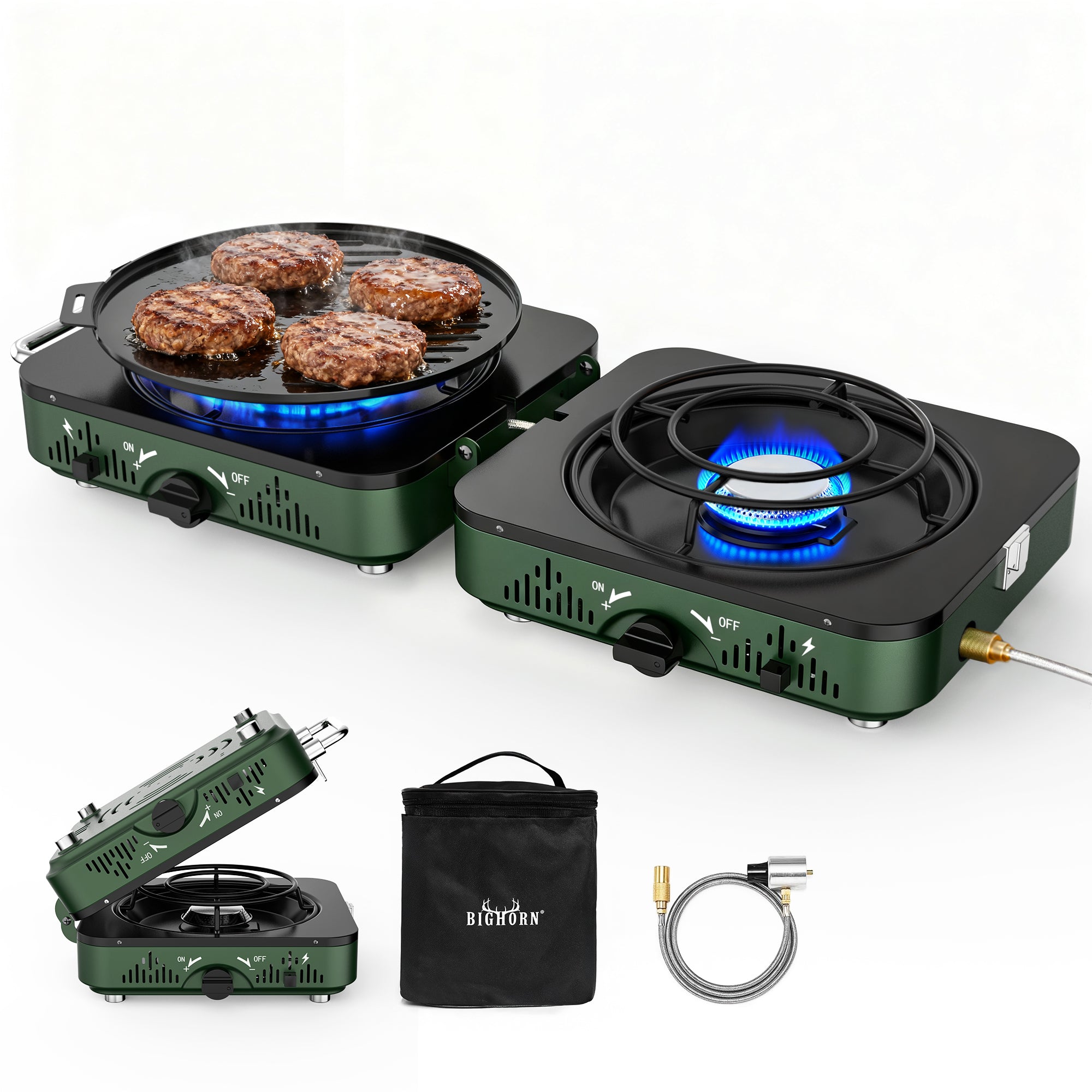
Parts: adapter hose, regulator, fittings
Most camp stoves that accept 1 lb cylinders use a specific male or appliance-side connection. A bulk-tank kit typically includes a hose, a regulator matched to appliance pressure, and a connector for the stove inlet.
POL and Type 1 (QCC) connections appear on many 20 lb cylinders sold for grills. Your hose must match the tank valve you own and the stove inlet your maker documents.
Buy listed parts from reputable outdoor or propane suppliers. Skip mystery adapters that claim to fit “everything.” When in doubt, photograph your stove inlet and tank valve before shopping. Browse propane camping stove options only after you know which fuel system you will support.
Connecting step by step
Work outdoors with the stove burners off and the tank valve closed. Set the tank upright on stable ground away from the cook zone’s open flame path.
Attach the regulator/hose to the tank hand-tight as directed by the fitting type, then connect the stove end. Open the tank valve slowly and listen/smell before lighting. Light with the stove’s normal procedure once the leak check passes.
If anything feels cross-threaded, stop. Forcing fittings damages seats and causes leaks. Keep kids and pets clear during the first light. Fire-safety awareness from NFPA grilling guidance applies anytime propane and flame share a campsite.
Leak check before the first light
Mix dish soap and water, brush it on every joint you touched, open the tank valve, and watch for bubbles. Bubbles mean gas—close the valve, ventilate, and refit or replace parts.
Never check for leaks with a flame. If you smell odorant strongly, shut the tank, leave the area, and resolve the leak before cooking.
Repeat the soapy test after any hose change or long storage. A two-minute check prevents a ruined trip. Pair this habit with broader home and outdoor fire readiness practices when you cook near tents or vehicles.
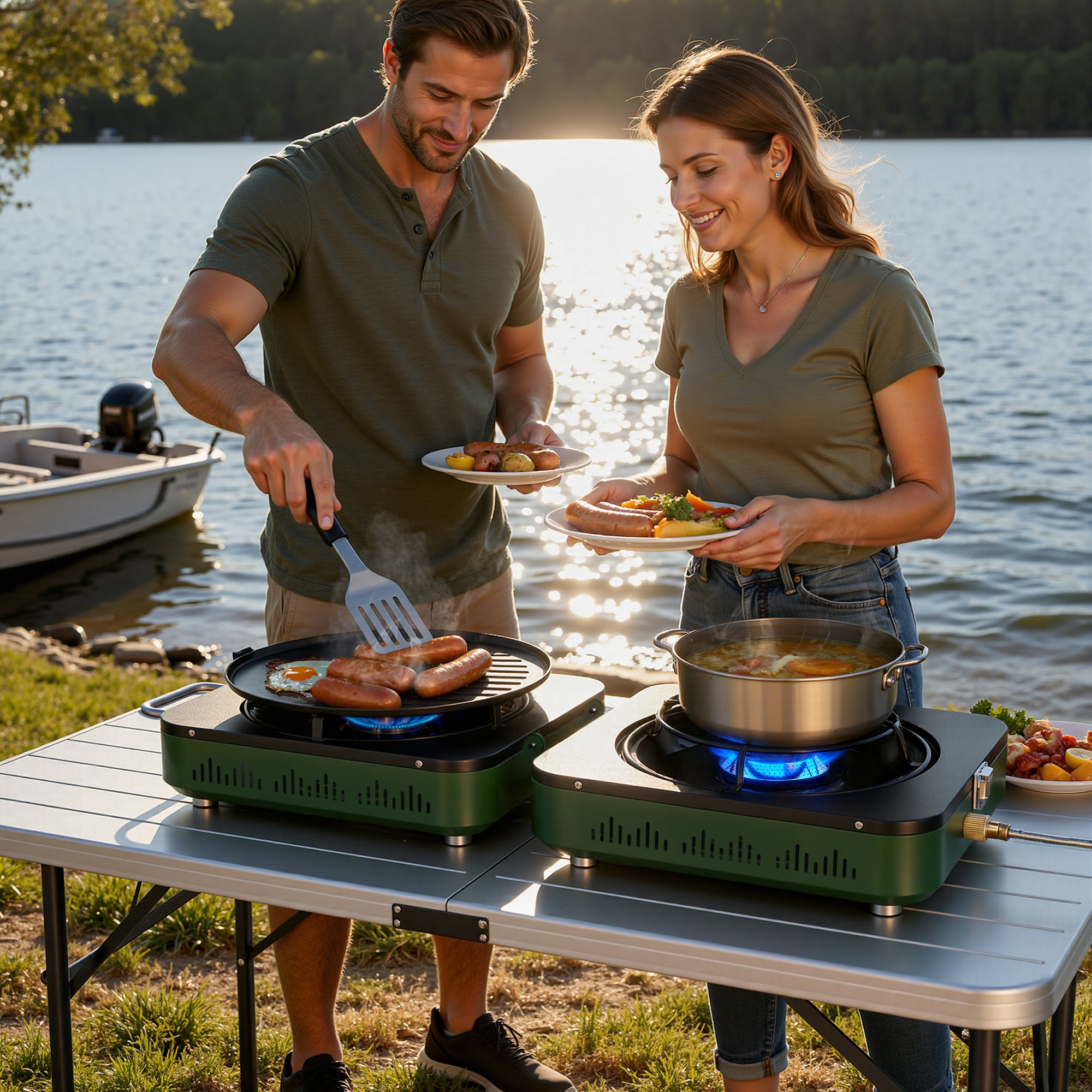
Tank placement, level and heat
Keep the 20 lb tank upright and outside the tent. Leave space so hose bends are gentle, not kinked under a cooler.
Do not place the cylinder next to the burner where radiant heat cooks the tank. Shade helps in summer; never put a cylinder on a stove grate or over coals.
On uneven ground, chock the tank so it cannot tip. A tipped tank can push liquid propane toward the regulator—bad news for appliances designed for vapor withdrawal.
Transport and storage in a vehicle
Secure tanks upright so they cannot roll. Crack a window for ventilation during transport, and remove the tank from a hot parked car when you arrive.
Close the valve and, when your equipment allows, protect the outlet. Do not leave a connected hose dangling underfoot in a truck bed full of gear.
Long-term storage belongs outdoors in a ventilated area, upright, away from exits—not in a bedroom or sealed trailer living space. Carbon monoxide and fuel safety overlap when people and combustion share tight quarters (NFPA CO guidance).
When to stay with 1 lb canisters
Stay on disposables when you fly, hike far from the car, or use a stove that has no documented bulk-tank pathway.
They also win for short picnics where dragging a 20 lb cylinder is silly. Keep a couple of sealed 1 lb cans as emergency spares even if bulk fuel is your main supply.
Compare stove styles in the camping stove collection if portability still outranks cost-per-meal.
What thread do propane tanks use?
Many U.S. grill cylinders use a Type 1 QCC fitting.
Older POL fittings still appear on some tanks and adapters; they are not interchangeable without the correct connector. Match the hose to the valve you actually have.
Camp-stove ends vary by brand. The tank-side thread conversation is separate from the stove-inlet conversation—you need both ends right. If markings are unclear, ask the propane filler or dealer to identify the valve before buying a hose. Do not force mismatched threads. For appliance gas safety context on the home side of propane use, the American Gas Association safety pages are a useful high-level reference alongside your stove manual.
What size valve does a 20 lb propane tank require?
Use a hose made for your tank’s valve type.
Most modern 20 lb exchange tanks use a Type 1 / QCC1 valve that accepts matching ACME-style connectors; older POL valves need POL nuts and tips.
Valve “size” talk online often mixes thread standards with tank capacity. Buy by valve standard and appliance pressure rating, not by a vague “20 lb hose” label alone. When exchanging tanks, confirm the replacement valve matches your regulator connection so you are not stranded at the campsite with a brand-new mismatch.
Before a long holiday weekend of driveway cooking, reread outdoor flame habits from the NFPA home fire safety hub so hose kits do not outrun common sense.
Conclusion
A 20 lb tank plus a correct hose can transform camp cooking economics—after a manual check, careful connections, and a soapy leak test. Keep the cylinder upright, cool, and outdoors, and keep 1 lb cans around for trips where bulk fuel is impractical.
Choose a car-camping stove first, then build the fuel kit around it—see Big Horn Outdoors propane camping stoves.
FAQ
Can you use a propane refill adapter on a disposable propane tank?
Disposable 1 lb cylinders are generally not designed for consumer refilling. Refill adapters that claim otherwise can be hazardous and may violate local rules. Use disposables as intended, recycle or dispose of empties properly, and reserve refilling for cylinders built and certified for that purpose.
How long will a 20 lb propane tank last on a patio heater?
Runtime depends on the heater's BTU rating and setting. A patio heater on high can empty a 20 lb tank in a single long evening, while intermittent low use stretches across many nights. Check the heater's input rating and treat online hour claims as estimates only.
What thread do propane tanks use?
Common U.S. barbecue cylinders use Type 1 (QCC) connections; some older tanks use POL. Camp stoves add another connector at the appliance end. Match both ends of the hose to the hardware you own instead of assuming one universal thread.
Is a regulator required between a 20 lb tank and a camp stove?
Most bulk-tank setups need a regulator that delivers the pressure your stove expects. Skipping regulation can over-fuel the appliance. Follow the stove manufacturer's documented kit or an equivalent listed assembly.
Explore more in the Camping Stove Guides.
Explore more in the Camp Stove Fuel & Safety Guides.
