







Foil packets are the weeknight fire-pit dinner that still feels like camping. With a hot coal bed and a few folded pouches, fire pit foil packet meals feed a family without a sink full of pans.
The trick is placement and timing—not fancy recipes. Build five reliable dinners once, then swap vegetables with whatever is in the fridge.
How foil packets cook: heat, placement and timing
Foil packets steam and roast at the same time. Moisture from meat and vegetables turns to steam inside the sealed pouch while the outside faces radiant heat from coals or a grate.
Place packets on a grate above glowing coals, not in leaping flames that scorch the foil. Flip once halfway unless the recipe is very soft. Thick proteins need more time than sliced vegetables alone.
Use heavy-duty foil, double-wrap messy sauces, and leave a little headspace so steam can circulate. A fire pit with grill grate makes packet cooking steadier than balancing pouches on uneven logs.
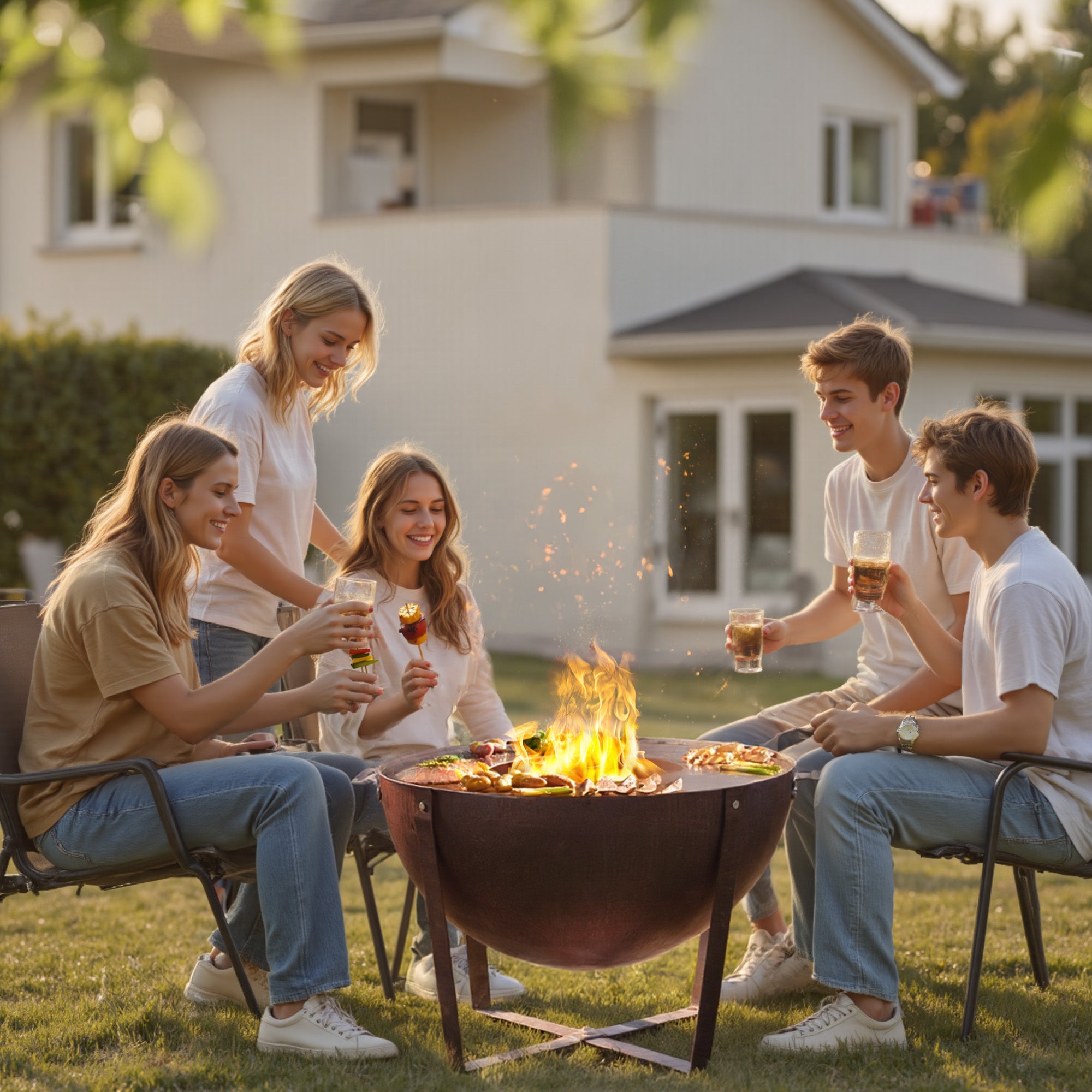
Wood coals vs propane flame
Wood coals give steady, surround heat that suits packets. Propane flames are directional and can hot-spot the foil unless you use a grate and keep the flame moderate.
If you cook over propane, preheat the grate, then set packets where the heat is even—often toward the edge rather than directly over a tall jet. Wood nights: wait for a bed of coals before the first pouch goes on.
A propane ambiance pit without a cooking grate is for marshmallows and warmth, not sealed dinners. Match the tool to the meal, or use a fireplace-style outdoor grill when you want more control.
Five dinners (chicken, sausage, salmon, veg, dessert)
These five packets cover protein nights, a meatless tray, and a shareable dessert. Season boldly; foil mutes flavors slightly.
Chicken fajita packet: sliced chicken breast, peppers, onion, oil, chili powder, salt. Cook until chicken reaches a safe internal temperature.
Sausage and potato: smoked sausage coins, baby potatoes halved, onion, oil, paprika. Potatoes must be thin enough to soften with the sausage.
Salmon and asparagus: salmon portion, asparagus spears, lemon, butter or oil, salt. Salmon cooks faster—check early.
Loaded veg: zucchini, cherry tomatoes, chickpeas, garlic, olive oil, Italian herbs. A hearty meatless option.
Campfire dessert: apple slices, cinnamon, brown sugar, butter; optional granola sprinkle after opening. Soft fruit dessert for the last coals.
Browse more outdoor meal ideas on the Big Horn Outdoors recipes blog when you want to expand beyond packets.

Timing table by protein
Times assume medium coal heat and heavy-duty foil. Always verify doneness with a thermometer for meat and poultry.
| Packet | Approx. time on coals | Doneness cue |
|---|---|---|
| Chicken fajita | 20–30 min | 165°F / 74°C in thickest piece |
| Sausage & potato | 25–35 min | Potatoes tender; sausage hot throughout |
| Salmon | 12–18 min | 145°F / 63°C or opaque and flaky |
| Vegetable / chickpea | 15–25 min | Vegetables soft, chickpeas hot |
| Apple dessert | 10–15 min | Apples soft, sugar bubbling |
Agency charts such as FoodSafety.gov safe minimum internal temperatures and USDA FSIS temperature guidance are the reference for meat and poultry—not foil color or steam alone.
Safe handling and doneness
Keep raw chicken and salmon packets separate from ready-to-eat sides until cooked. Wash hands and tongs after handling raw proteins.
Open packets carefully—steam burns. Check the center of the thickest piece with an instant-read thermometer. If under temperature, reseal and return to the heat.
Outdoor cookout hygiene tips from FoodSafety.gov cookout guidance and USDA grilling food safety still apply when dinner is wrapped in foil.
Cleanup
Let packets cool slightly, then dispose of foil once food scraps are scraped into the trash. Do not leave greasy foil in the fire pit where it can smolder unpredictably.
Wipe the grate when warm (not blazing hot) and scoop ash only when fully cold. Pack a trash bag before you start so used foil does not blow around the yard.
If grease drips onto coals, expect a brief flare; keep kids back and use long tongs. A water bucket nearby remains basic fire-pit etiquette per campfire safety practice.

Serving ideas, storage and leftovers
Serve packets in shallow bowls so juices become sauce. Add fresh toppings after opening: cilantro, sour cream, cheese, or a squeeze of lemon.
Refrigerate leftovers within two hours. Reheat until steaming hot. Potato and sausage packets reheat well; fish is best eaten the same night.
For larger groups, assemble packets indoors, label them with a marker, and cook in waves so the grate never overcrowds.
Seasoning, foil folds and batch cooking tips
Season packets more boldly than stovetop pans; foil mutes flavors. A pinch of salt, acid (lemon or vinegar), and fat (oil or butter) should all appear in almost every pouch.
Fold drugstore-style: ingredients in the center, long sides together, roll down, then crimp ends. Label packets with a marker so chicken and dessert never swap places on a dark grate.
For crowds, assemble an assembly line indoors: one person portions protein, one adds vegetables, one seals. Cook in waves of four packets so the grate stays organized and thermometers can check the thickest piece in each wave.
Conclusion
Foil packet dinners succeed when coals are ready, proteins hit safe temperatures, and you resist cooking over wild flames. Master five base packets, then rotate produce with the seasons. Dinner stays outdoors—and so does most of the mess.
Ready to cook over a stable grate? Explore the 32" corten fire pit with grill and outdoor fireplace options at Big Horn Outdoors.
FAQ
How long do foil packets take on a fire pit?
Most vegetable and fish packets finish in about 12 to 25 minutes over medium coals, while chicken and potato packets often need 20 to 35 minutes. Heat strength and packet thickness change the clock. Always confirm meat and poultry with a thermometer rather than time alone.
Do foil packets go on coals or on a grate?
A grate above glowing coals is steadier and cleaner than burying packets in ash. Direct coal contact works in a pinch if you flip carefully and watch for hot spots. Avoid tall flames that blacken foil before food cooks through.
Can you make foil packets ahead of time?
Yes. Assemble packets in the morning, keep raw meat packets refrigerated, and carry them in a cooler to the fire. Do not leave raw chicken or fish at room temperature. Add delicate herbs or cheese after cooking so they stay fresh.
What foil is best for fire pit packets?
Heavy-duty aluminum foil, often doubled for saucy recipes, holds up better than thin wrap. Seal edges tightly but leave a little room for steam. Parchment inside foil can reduce sticking for cheesy or sticky foods.
Explore more in the Fire Pit Cooking & Safety Guides.
More to Read
 Ssausage Dogs
Big Horn Outdoors® Recipe
Smoky, cheesy, and packed with big flavor — these Sausage Dogs are a quick and easy favorite, made rig...
 Jalapeño Cheese Pizza Recipe
Big Horn Outdoors® Recipe
Cranberry-jalapeño spread, double cheese, and crispy bacon on a blistered crust — sweet heat meets piz...
Sourdough Pizza Dough Recipe (Active Starter or Discard Paths)
Sourdough pizza dough recipe: sourdough pizza dough with active starter or discard paths, hydration guidance, timelines, and outdoor oven bake notes.
