







Infrared Grilling & Steak Cuts
Lobster night feels fancy until the tails turn rubbery. If you want how to grill lobster tails that stay sweet and snappy, butterfly them, baste with garlic butter, and pull them the moment the flesh turns opaque.
Keep raw seafood cold until it hits the grate, and follow safe handling tips from FDA seafood guidance and USDA seafood safety. A hot, clean grill from the infrared steak grill collection or any well-preheated backyard grill makes the short cook window easier to control.
Buying and thawing lobster tails
Choose tails that smell clean like the ocean, not ammonia. Packages should be tight with little frost bloom. Soft, mushy meat or blackened shell spots are reasons to skip that pack.
Thaw overnight in the refrigerator on a rimmed tray so drips stay contained. For a same-day cook, seal tails in a bag and submerge in cold water, changing the water every 30 minutes until the meat flexes. Never thaw on the counter where the surface warms into the danger zone while the center stays icy.
Pat dry before cutting. Water left on the shell steams instead of searing and dilutes your butter baste into a greasy puddle.
Butterflying step by step
Butterflying exposes more meat to heat and basting so the tail cooks evenly without overcooking the thin edges near the fan.
Using kitchen shears, cut lengthwise through the top shell to the tail fan, stopping before you sever the fan. Gently pry the shell open, lift the meat, and rest it on top while leaving the end attached. If the lobe is very thick, score the top lightly so heat reaches the center.
Brush meat and shell with oil or melted butter so nothing welds to the grate when you flip. Work on a stable board—slippery shells cut fingers as easily as they cut cook time.

Heat setting and shell-down timing
Medium-high heat works for most tails. Starting shell-side down lets the shell shield the meat while proteins firm up.
Small tails (about 4–5 oz each) often need roughly 4–5 minutes shell-down, then 2–4 minutes meat-side down. Larger restaurant-size tails need a few more minutes and may finish better with a brief lid-closed stretch on gas. Move to a cooler zone if butter flares.
Watch the meat, not only the clock. Wind, grate height, and how crowded the grill is can swing timing by several minutes.
The garlic butter baste
Melt butter with minced garlic, a pinch of salt, lemon zest, and chopped parsley. Keep a clean brush dedicated to cooked-side basting.
Baste after the first flip and again just before plating. Flooding the grate with butter sends flames and soot onto the shell. A thin glossy coat beats a swimming pool of dairy.
For heat, add smoked paprika or chili flake. For surf-and-turf nights, the same butter can finish a steak from the infrared grill lineup so both plates taste related.
Doneness cues and internal temperature
Lobster is done when the meat is opaque and just firm, not translucent or soft in the center. An instant-read thermometer in the thickest lobe removes most of the guesswork.
Many backyard cooks pull around 140°F in the center, then rest a minute while carryover finishes the job. Rubbery meat usually means it stayed on too long, not that you undercooked it.
Cross-check general seafood handling with FoodSafety.gov temperature charts and keep cooked tails hot only briefly before serving so they do not dry under a heat lamp.
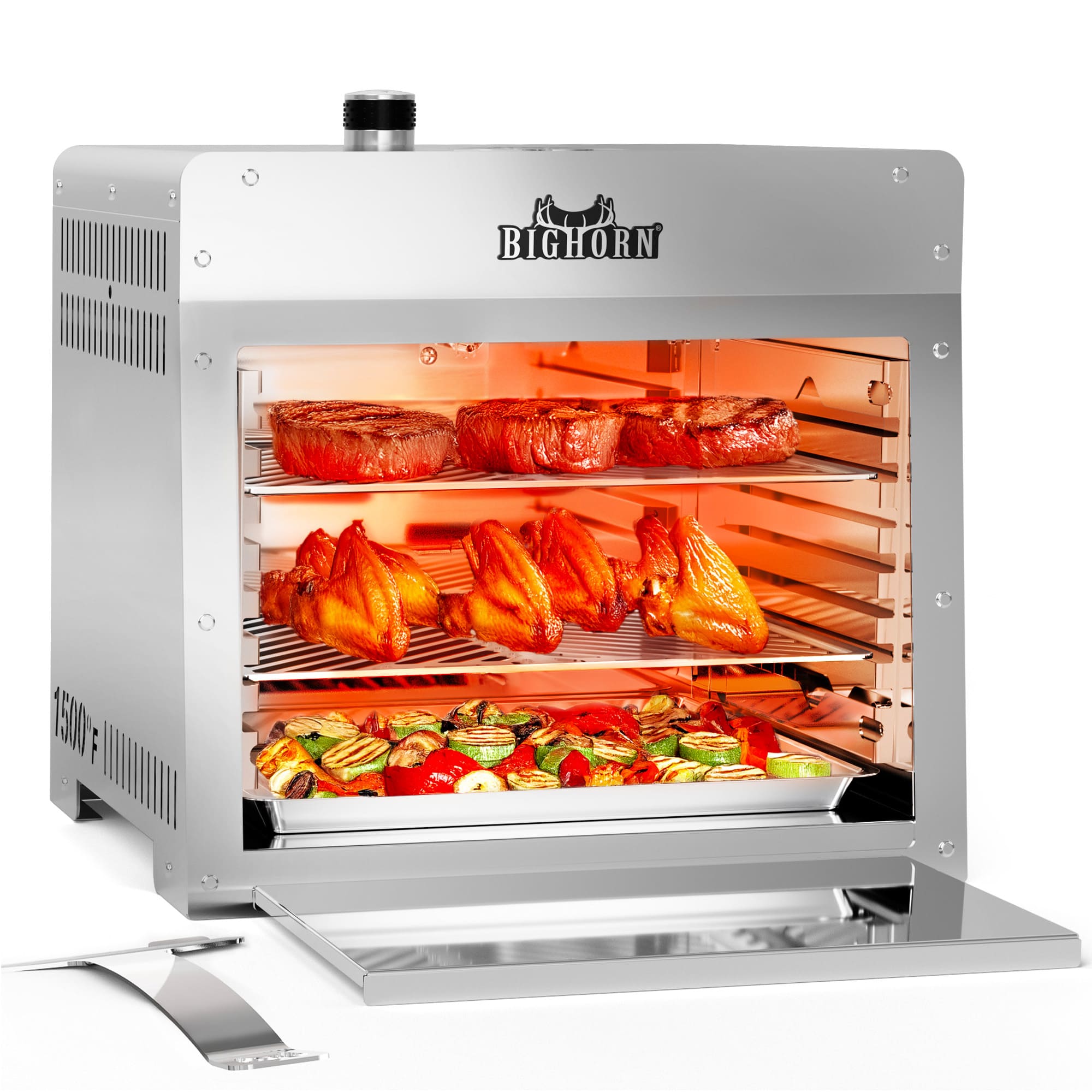
Pairing with steak for surf and turf
Cook the steak first if it needs a rest, then grill lobster in the short window while the steak sits. Reverse the order if your steak is thin and the lobster tails are jumbo.
Season simply: salt, pepper, and shared garlic butter. Crowding both proteins on one tiny grate invites steaming; give each piece space and a clean landing zone.
Browse plating ideas on the Big Horn recipes blog when you want a full holiday menu around the tails instead of a lone seafood plate.
Serving ideas, storage and leftovers
Serve with lemon wedges, grilled asparagus, and toasted bread for the butter. Chill leftovers within two hours of cooking.
Store cooked lobster up to a day in the fridge in a shallow covered container. Reheat gently in a covered pan with a spoon of butter—hard microwaving often toughens the fibers.
Leftover meat shines in rolls or a quick pasta. Avoid a second hard sear that only squeezes out moisture.
Is lobster high in cholesterol?
Lobster contains cholesterol, like many animal foods.
Exact numbers vary by portion size and how much butter you add. The baste can contribute more saturated fat than the shellfish itself. Check current labeling and FDA nutrition information resources rather than treating any single blog number as medical advice.
If you manage diet for health reasons, ask a clinician or dietitian how shellfish fits your plan. Grilling with a light baste keeps the plate simpler than deep frying in batter.
How does Gordon Ramsay cook his lobster tails?
Public demos often show butterflying, high heat, and generous butter with lemon.
Home cooks can copy that structure—open the shell, baste, and watch doneness—without needing a restaurant broiler. Your backyard grill supplies the heat; your thermometer supplies the stop point.
Skip celebrity flourishes that slow you down on a weeknight. Opaque meat and a hot, clean grate matter more than a signature garnish.
For related references while you plan, see USDA grilling guidance; CDC food-safety resources.
Conclusion
Butterfly, start shell-down, baste lightly, and pull lobster as soon as it turns opaque. That short, attentive cook beats any complicated marinade. Serve with lemon and, if you like, a rested steak on the side.
Ready for a high-heat backyard sear station? Explore the infrared steak grill collection at Big Horn Outdoors.
FAQ
How long do lobster tails take at 350?
At about 350 deg F grill temperature, expect longer than a screaming-hot sear—often closer to 8 to 12 minutes total depending on tail size, starting shell-down and finishing meat-side. Use opacity and an instant-read thermometer rather than the clock alone. Pull when the thickest meat is opaque and just firm.
How long to grill lobster at 400 degrees?
At around 400 deg F, many butterflied tails finish in roughly 6 to 10 minutes total, still starting shell-down. Watch for flare-ups from butter and move to a cooler zone if the shell chars before the center turns opaque. Timing shifts with tail weight and lid position.
Is lobster high in cholesterol?
Lobster does contain cholesterol, and rich butter sauces add fat. Nutrition needs are personal, so read labels for your portion and talk with a health professional if you follow a restricted diet. Grilling with a measured baste is a simpler preparation than frying.
How does Gordon Ramsay cook his lobster tails?
Televised methods typically butterfly the shell, cook over high heat, and finish with butter and citrus. You can use the same outline on a home grill: open the meat, baste, and stop at opaque. Focus on doneness cues more than copying every garnish.
Explore more in the Grill Recipes.
More to Read
 Ssausage Dogs
Big Horn Outdoors® Recipe
Smoky, cheesy, and packed with big flavor — these Sausage Dogs are a quick and easy favorite, made rig...
 Jalapeño Cheese Pizza Recipe
Big Horn Outdoors® Recipe
Cranberry-jalapeño spread, double cheese, and crispy bacon on a blistered crust — sweet heat meets piz...
Sourdough Pizza Dough Recipe (Active Starter or Discard Paths)
Sourdough pizza dough recipe: sourdough pizza dough with active starter or discard paths, hydration guidance, timelines, and outdoor oven bake notes.
