You can get fall-off-the-bone tender ribs using the gas grill in your backyard. To make sure your ribs are always juicy, this guide will show you how to choose the right cut, set up your grill for indirect cooking, and control the heat.
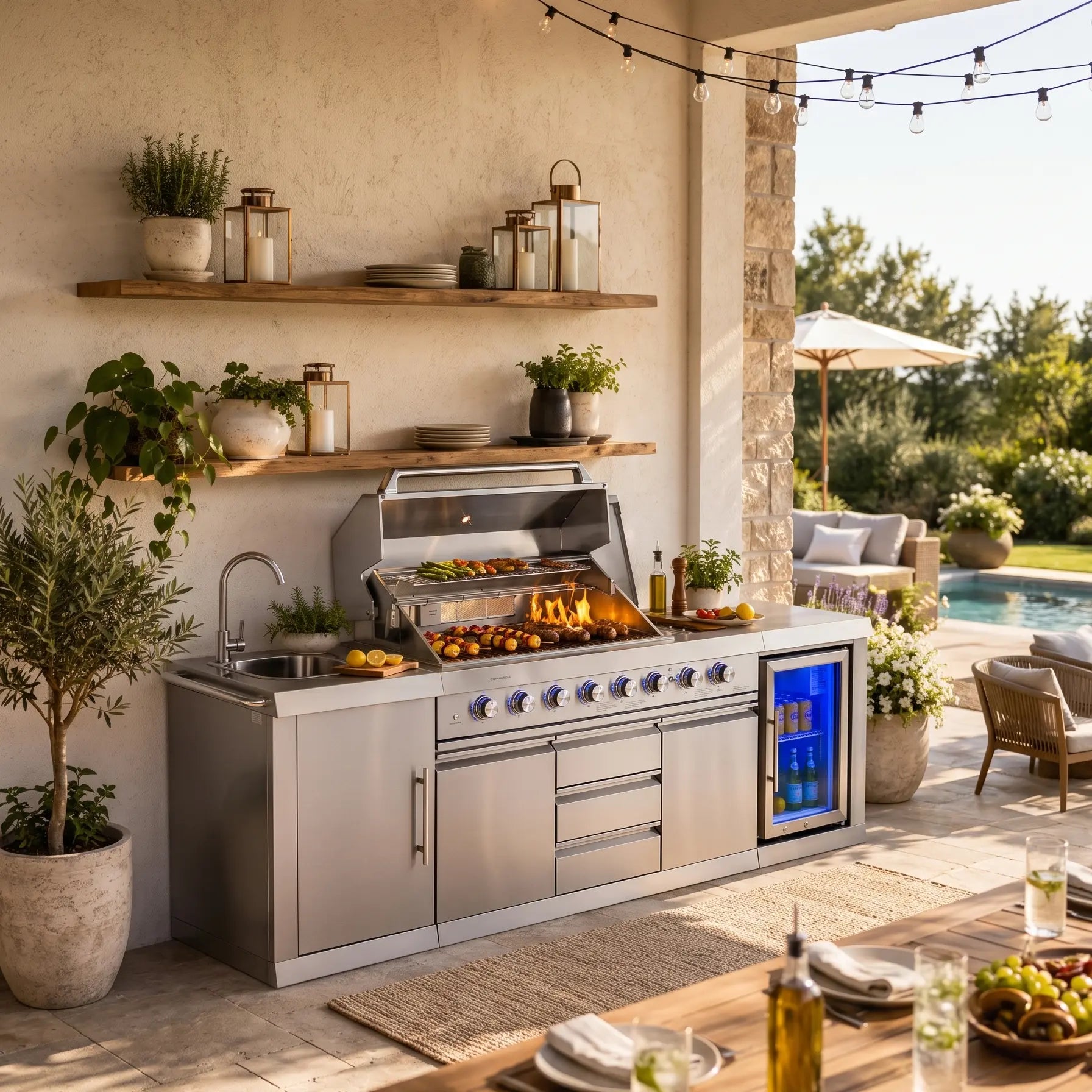
Related product: Shop 4+2 Burner Outdoor Kitchen Island.
What You Need to Get the "Off the Bone" Effect?
To get those soft, juicy, and perfect off-the-bone ribs, you'll have to:
-
Choose a High-Fat Cut: Select a cut with ample fat content for the crucial moisture insurance needed during the long cook.
-
Remove the Membrane: This critical prep step eliminates the chewy barrier on the bone side.
-
Low & Slow Cooking: Use indirect heat and cook slowly to provide the necessary time for the connective tissue to melt.
-
Target High Internal Temperature: The meat must reach 195°F or above to ensure full breakdown of tough fibers.
Start with the Perfect Cut of Ribs
The perfect rack of ribs starts with the right cut. You'll mainly find two options: Baby Back Ribs and Spare Ribs.
| Rib Type |
Source |
Key Feature |
Pro |
Con/Note |
| Baby Back Ribs |
Near the loin (upper back) |
Leaner, Curvier |
Tender, Cooks Fast |
Dries out easily; small error window |
| Spare Ribs |
From the belly section |
Fattier, Flatter, Larger |
More flavor, Self-basting (forgiving) |
Requires a longer cook time |
Our Recommendation
For the most reliable, "fall-off-the-bone" result, choose St. Louis Cut Spare Ribs.
Why?
-
Moisture Insurance: The higher fat content keeps the meat moist and flavorful during the long, slow cook.
-
Even Cooking: The cut is trimmed into a uniform, rectangular rack, ensuring every rib cooks perfectly and consistently.
The Secret to a Flavorful Dry Rub That Penetrates the Meat
A dry rub does two things for you: it creates the savory outer crust (the "bark") and seasons the meat. While you can buy pre-made rubs, making your own lets you control the flavor. A great rub balances four components.
A Fail-Proof Homemade Dry Rub Recipe:
- ½ cup packed brown sugar (Sweetness)
- ¼ cup smoked paprika (Color and smoky flavor)
- 2 tablespoons kosher salt (Savory and moisture penetration)
- 1 tablespoon coarse black pepper (Heat)
- 1 tablespoon chili powder (Depth)
- 1 tablespoon garlic powder (Aromatic)
- 1 tablespoon onion powder (Aromatic)
- 1 teaspoon cayenne pepper (Optional kick)
Combine all ingredients. This versatile blend isn't just for ribs; it adds an incredible kick when you cook the perfect hamburger on your gas grill too.
How to Prep and Apply:
- Pat the ribs dry with paper towels. This helps the rub stick.
- Remove the membrane. This is a critical step. The bone side of the ribs has a thin, tough membrane. It blocks flavor and cooks into a chewy layer. Slide a butter knife under it at one end, get a firm grip with a paper towel, and pull it off.
- Season generously. Apply the rub to every surface. Pat it on; don't rub it off.
- Let the rub work. Wrap the seasoned ribs and refrigerate them for at least 2 hours, or even overnight. The salt in the rub will pull the spices into the meat, giving you a deeper flavor.
The Secret to Tender Ribs: Slow and Gentle Cooking
Cooking ribs requires patience—you can't rush the process with a direct flame. Intense, direct heat is the enemy: it simply sears the outside and tightens the inside muscle fibers, resulting in tough, dry meat.
The solution is to use indirect heat. This method transforms your grill into a circulating oven, allowing hot air to gently wrap around the ribs and slowly break down the tough connective tissue.
Setting Up Your Two-Zone Grill:
You need to create a "Hot Zone" and a "Cool Zone" on your grill:
-
Hot Zone: The area with lit burners (for generating heat).
-
Cool Zone: The area with unlit burners (where the ribs sit).
The ribs must be placed only in the Cool Zone and will cook using the gentle, circulating heat, never touching a direct flame.
For 2- or 3-Burner Grills:
- Turn one side burner to medium-low.
- Leave the other burner(s) off.
- You will place the ribs over the unlit (cool) side.
For 4+ Burner Grills:
- Turn the two outside burners to medium-low.
- Leave the center burners off.
- This creates the ideal cool zone in the middle of your grill.
Two Add-Ons for Better Ribs:
-
Add Smoke: You can get smoke flavor without a smoker. Fill a smoker box or a foil packet (with holes poked in it) with wood chips (like apple or hickory). Place this directly over the lit burner.
-
Add Moisture: Place a disposable aluminum pan filled with water or apple juice in the cool zone, under the grate. This pan catches drippings, preventing flare-ups, and releases steam. The steam keeps the cooking environment moist and helps your ribs stay tender.
Low and Slow: The Main Cooking Phase
Patience is the single most important ingredient in achieving tender, "fall-off-the-bone" ribs.
The Setup and Temperature Target
-
Placement: Place the ribs bone-side down on the cool side (indirect heat) of the grill, preferably over your water pan.
-
Target Temperature: Close the lid and maintain a steady internal grill temperature of 225°F to 275°F.
-
Control: Use an ambient thermometer near the grate for accuracy, and adjust your lit burners as needed to hold this temperature.
The Cook and The Wait
-
Don't Peek: Every time you open the lid, you lose critical heat and moisture. Resist the urge to check the ribs for at least the first hour.
-
Cook for Tenderness, Not Time: While the total cook time is roughly 3.5 to 4.5 hours for St. Louis ribs (and 2.5 to 3.5 hours for baby backs), you must cook until they are tender. The goal is to reach a high internal temperature of 195°F to 205°F, which melts the tough collagen into moist gelatin.
The Doneness Check (How to Know They're Ready)
| Test Name |
How to Check |
What It Means |
| The Bend Test |
Lift the rack from the center with tongs. |
The rack should bend easily—almost to a 90-degree angle—and the surface meat should crack. This is the best tenderness indicator. |
| Bone Pullback |
Observe the ends of the bones. |
The meat will have shrunk and pulled back from the ends, exposing about a half-inch of bone. |
| Internal Temperature |
Use a meat thermometer in the thickest part. |
The temperature should be between 195°F to 205°F. This confirms the connective tissue is fully broken down. |
Optional: The "Texas Crutch" for Maximum Tenderness
Wrap the ribs if you really want that "fall-off-the-bone" finish though.
The ribs should have a strong mahogany color after about two to three hours of cooking. At that point, wrap the rack tightly in aluminum foil. For extra steam, you can put a little apple juice or cider vinegar inside the foil.
Then go back to the grill and put the ribs back on the indirect heat for another hour. This method steams the ribs, which makes the process of tenderizing them much faster.
How to Finish Your Ribs with a Sticky Glaze
Your ribs are tender, but the final step is to add the glaze. Do not apply sauce early in the cooking, because the sugar will burn and turn bitter.
-
Sauce at the End: Apply your barbecue sauce only during the final 20-30 minutes of cooking.
-
Set the Sauce: Brush a thin layer of sauce on the meat. Close the lid and let the indirect heat cook it for 10-15 minutes. This makes the sauce tacky and sticky.
-
Caramelize (Carefully): For a final char, you can move the ribs directly over the lit burner for just 30-60 seconds. This caramelizes the sugars. Watch them closely, as the sauce can burn in seconds.
-
Rest the Ribs: This step is mandatory. Remove the ribs from the grill and let them rest on a cutting board, tented with foil, for 10-15 minutes. This allows the juices to redistribute back into the meat, ensuring every bite is moist.
After resting, flip the rack so the bone side is up, and slice between the bones.
Fire Up Your Best Ribs
You don't need a dedicated smoker to make incredible ribs. Your gas grill is a powerful tool when you use it for low and slow, indirect cooking. You can produce perfectly tender and flavorful ribs when you choose a fatty cut, build flavor with a proper rub, and control your temperature.
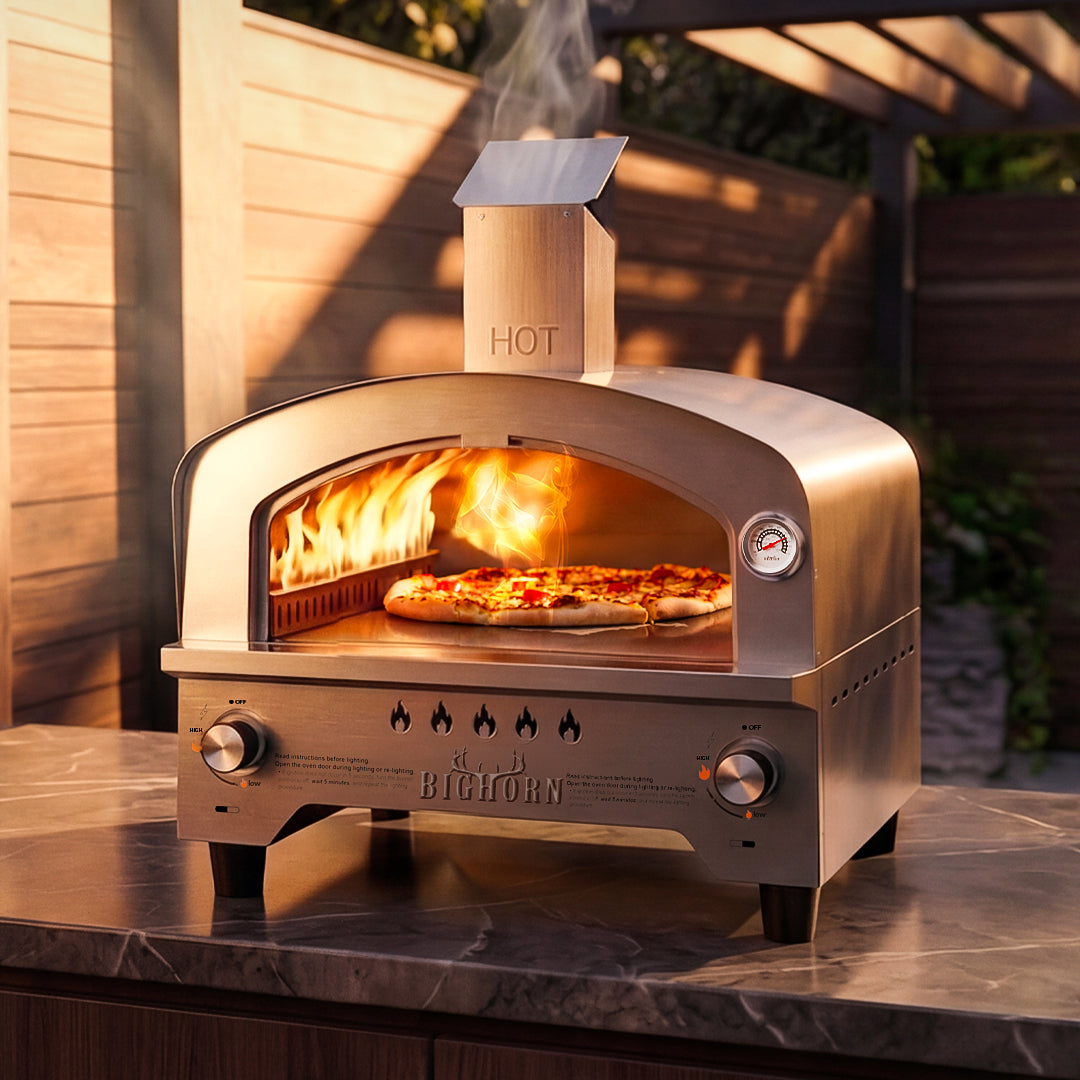
This method gives you complete control over your barbecue. When you are ready to add more high-performance tools to your backyard, check out the full line of Big Horn Outdoors® pizza ovens and infrared grills. We build our equipment to deliver the same quality and control you put into your cooking.
Explore more in the Gas Grilling Guides.


 Big Horn Outdoors® Expands Retail Presence with New Experience at Piedmont Outfitters
Big Horn Outdoors® is excited to announce a new retail destination for outdoor cooking enthusiasts. Customers can now experience the brand's popula...
Big Horn Outdoors® Expands Retail Presence with New Experience at Piedmont Outfitters
Big Horn Outdoors® is excited to announce a new retail destination for outdoor cooking enthusiasts. Customers can now experience the brand's popula...