Grills & Griddles
The Ultimate Infrared Steak Grill Guide: A Cut-by-Cut Breakdown for Perfect Searing
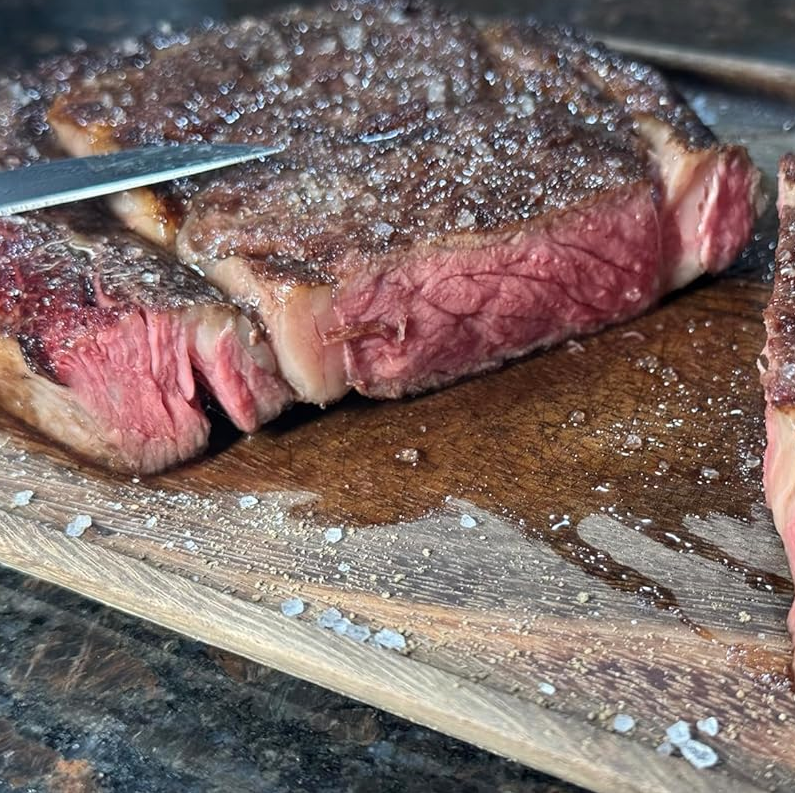
Each cut of steak responds differently to high heat. Fat content, muscle density, and thickness all change how fast the surface browns and how quickly the center rises in temperature. An infrared steak grill applies radiant heat at speeds a conventional grill cannot match, which narrows the margin for error on every cut.

The heat transfer method separates infrared from conventional grilling. That difference affects crust formation speed and how much control you have over each cut.
A standard grill heats the surrounding air, which then cooks the meat indirectly through heated air. An infrared steak grill converts the heat source into radiant energy through a ceramic or stainless steel emitter and delivers that energy directly to the meat's surface, without relying on hot air circulation.
The Maillard reaction, which creates the brown, flavorful crust, begins around 280°F and accelerates sharply at higher temperatures. Conventional grills often struggle to sustain consistent surface temperatures. Infrared systems reach searing temperatures within minutes and hold them steady, giving you a reliable crust-forming window on every cook.
| Infrared Type | Typical Temp Range | Best Application |
| Emitter panel (bottom heat) | 600–700°F | General high-heat grilling |
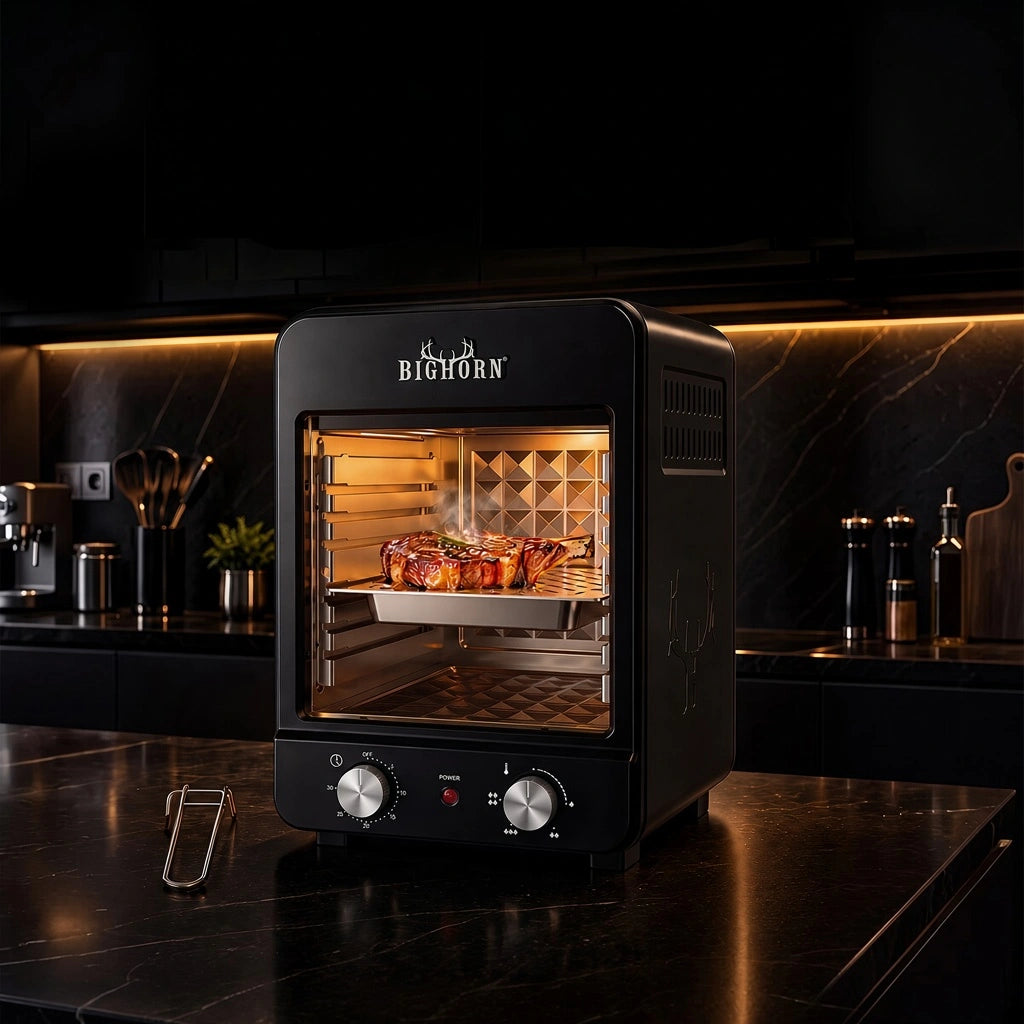
| Top-down salamander style | Up to 1,500°F | Steakhouse-level crust formation |
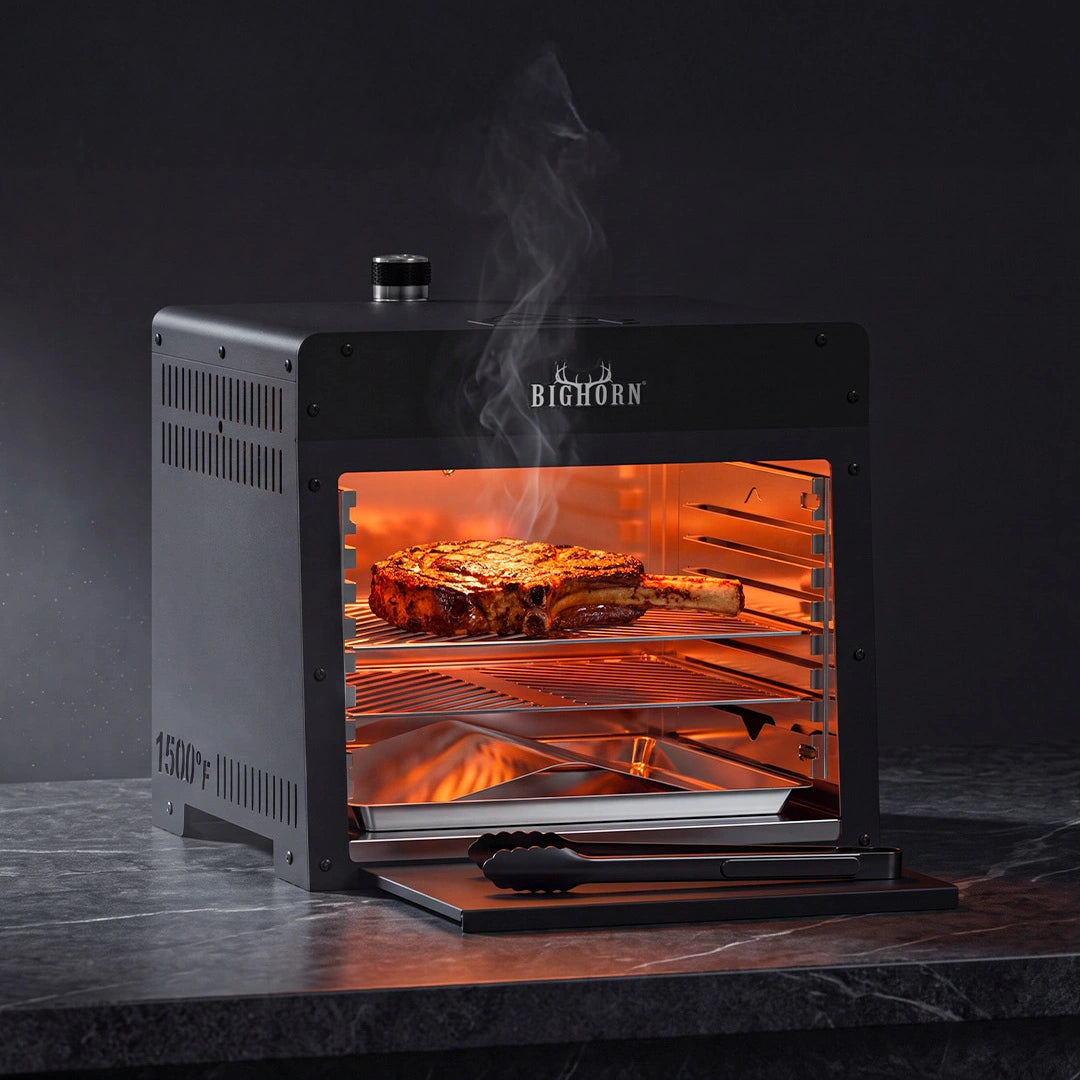
Top-down infrared units position the heat source above the steak. Dripping fat never contacts an open flame, which virtually eliminates flare-ups.
These rules apply across all cuts and thickness ranges.
Fat content, muscle density, and thickness each change how infrared heat moves through the meat and where the highest risk of error sits.
Ribeye's fat content is both its strength and its challenge at high heat. On a top-down unit, dripping fat does not reach an open flame, which keeps the sear clean. For a 1-inch ribeye, sear each side for approximately 60 to 90 seconds on direct high heat. At 1.5 inches, lower the grate to increase the distance from the heat source after the initial sear, or use a reverse sear approach for better center control.
NY Strip has a firm texture and a fat cap along one edge. Start by positioning that edge toward the heat source for approximately 30 to 45 seconds, adjusting based on fat thickness and how quickly you see the fat start to melt and sizzle. This prevents a chewy, under-rendered fat border while the flat surfaces develop a full crust.
Filet mignon is lean and cooks faster than any other common steak at infrared temperatures. A 1.5-inch filet needs only about 45 to 60 seconds per side under the infrared heat. But that short time only works if you've already brought the interior close to your target temperature first, using a low-heat oven before the sear. Placing a cold, thick filet directly under maximum heat and expecting a safe, fully cooked result in under a minute won't give you safe or reliable results. For best results with filet mignon, always start with a low-heat phase first. Use a thermometer on every cook.
T-bone and porterhouse cuts combine two muscles of different densities, separated by bone. The strip side is thicker and denser; the tenderloin side is leaner and heats faster. Check internal temperature on both sides of the bone separately, and pull when the leaner side reaches your target first.
Sirloin is flavorful but lean, which means it loses moisture faster than ribeye under extreme heat. A light coat of neutral, high-smoke-point oil, such as avocado oil or canola oil, before seasoning helps form an even crust. Keep sear time tight: approximately 60 to 75 seconds per side for a 1-inch sirloin.
A tomahawk ribeye typically runs 2 inches or more in thickness. Placing it directly under maximum infrared heat will char the exterior before the center reaches temperature. Reverse sear is the most reliable method for cuts this thick. Bring the internal temperature to within 10 to 15°F of your target using a low-heat oven or smoker first, then transfer to the infrared grill for approximately 30 to 60 seconds per side to finish the crust.

For most cuts, thickness is the primary factor in choosing a searing method.
For steaks 1 to 1.5 inches thick, apply full infrared heat to build the crust first, then lower the grate to increase the distance from the heat source and allow carry-over cooking to bring the interior to temperature. This works for ribeye, NY strip, and sirloin at standard thicknesses.
For steaks above 1.5 inches, start at around 250°F to bring the interior within 10 to 15°F of the target temperature. Then move to the infrared grill for the crust, which forms in seconds at that stage.
| Cut | Thickness | Recommended Method |
| Filet Mignon | 1–1.5 in | Reverse sear; infrared finishing only |
| NY Strip | 1–1.5 in | Forward sear; render fat cap edge first |
| Ribeye | 1 in | Forward sear |
| Ribeye | 1.5 in | Forward sear with grate adjustment, or reverse sear |
| Sirloin | 1–1.25 in | Forward sear; oil the surface first |
| T-Bone / Porterhouse | 1.25–1.5 in | Forward sear; monitor both muscles separately |
| Tomahawk | 2 in+ | Reverse sear required |
The infrared grill's role in that method is the final crust step only.
The pull temperatures below are set approximately 8°F below standard final targets to account for carry-over cooking during the rest period.
| Doneness | Standard Final Temp | Pull Temp on Infrared Grill |
| Rare | 120–125°F | 112–117°F |
| Medium-Rare | 130–135°F | 122–127°F |
| Medium | 140–145°F | 132–137°F |
| Medium-Well | 150–155°F | 142–147°F |
| Well Done | 160°F+ | 152–155°F |
USDA recommends a minimum internal temperature of 145°F for whole muscle beef, with a 3-minute rest. The temperatures above reflect common culinary practice and should be weighed against your personal food safety preferences.
Thickness determines the method. Ribeye, strip, and sirloin in the 1 to 1.5-inch range work with a direct infrared sear. Tomahawk and thick porterhouse cuts need a low-heat phase before the infrared finish. A thermometer and a dry surface are the two factors that carry over to every cut, every time.
For a top-down infrared setup that reaches 1,500°F in 3 to 5 minutes, the Big Horn® 1500°F Infrared Steak Grill delivers the infrared searing performance needed to finish every method above at home.

The steak has not finished releasing yet. At infrared temperatures, the crust naturally detaches once fully formed. Forcing it off early tears the crust and pulls moisture out of the meat. Wait 10 to 15 additional seconds and try lifting again without pressure.
Yes. Salamander-style infrared units can exceed 1,000°F at the grate surface, which burns sugar, alcohol-based marinades, and heavy dried herb coatings before they contribute any flavor. Use coarse salt, cracked black pepper, and a light layer of garlic powder applied directly on the steak. Add finishing herbs only after the steak is off the heat.
The cooking grates and drip tray are dishwasher-safe, but the ceramic infrared burner plate is not. Never use water or liquid chemicals on ceramic plates. Instead, run the grill on high for 10 minutes to burn off debris. Gently vacuum ash or clear clogged ports with toothpicks.
Infrared cooking significantly reduces flare-ups because drippings rarely hit open flames. This minimizes the production of harmful compounds found in grill smoke like polycyclic aromatic hydrocarbons (PAHs), resulting in a cleaner sear compared to traditional charcoal grilling.
Direct infrared energy can overheat digital probes or melt plastic components. Use an instant-read thermometer during brief checks or shield probe wires with aluminum foil to ensure accurate internal temperature readings.
Explore more in the Grill Recipes.
 Big Horn Outdoors® Expands Retail Presence with New Experience at Piedmont Outfitters
Big Horn Outdoors® is excited to announce a new retail destination for outdoor cooking enthusiasts. Customers can now experience the brand's popula...
Big Horn Outdoors® Expands Retail Presence with New Experience at Piedmont Outfitters
Big Horn Outdoors® is excited to announce a new retail destination for outdoor cooking enthusiasts. Customers can now experience the brand's popula...