

Detroit pizza dough is fundamentally different from standard pizza dough, and the gap starts with hydration. At 70–75% water ratio, this dough is closer to focaccia than anything you'd stretch into a round. This post covers the full Detroit pizza dough recipe, step-by-step process, fermentation timing, and why the way you bake it determines whether you get that signature crispy cheese-edged crust or something that just looks like a pan pizza.
Related product: Shop 14-inch Indoor Electric Pizza Oven.

What Makes Detroit Pizza Dough Different?
Detroit dough is a high-hydration pan dough. The water-to-flour ratio sits between 70–75%, compared to Neapolitan dough which typically runs 58–65%. That difference changes everything about how the dough feels, behaves, and bakes.
Three characteristics set it apart:
- High hydration (typically sits between 70–75%): More water means more yeast activity, larger air pockets, and a lighter, more open interior crumb once baked.
- No shaping required: You don't stretch or toss Detroit dough. It goes straight into an oiled steel pan and gradually spreads on its own during the second proof.
- Pan-dependent crust formation: The Detroit style pizza crust gets its crispy, almost fried bottom from direct contact with a well-oiled steel pan at high heat. The pan does the work.
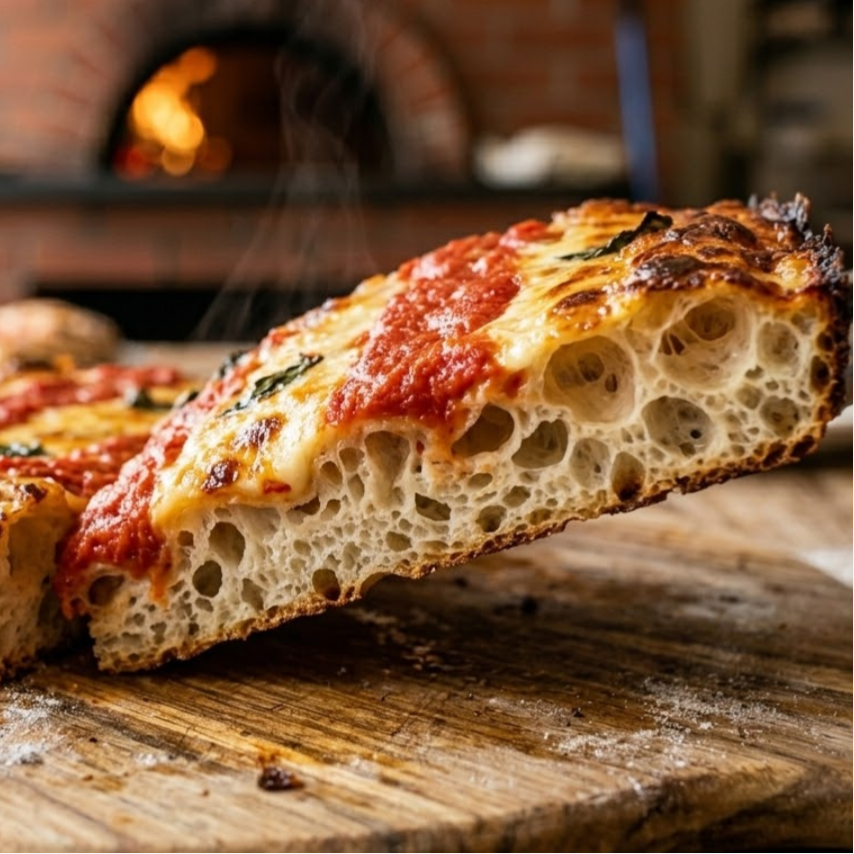
For anyone who's struggled with Neapolitan-style dough, this is genuinely easier to work with. There's no technique for stretching without tearing, no worry about shaping. You press it partway into the pan, leave it alone, and let fermentation do the rest. The result is a thick, airy interior with a bottom crust that's crisp all the way through.

What Ingredients Do You Need?
The ingredient list is short. What matters is the ratio.
Base Recipe (Baker's Percentages)
| Ingredient | Baker's % | For a 9×13" Pan |
| Bread flour | 100% | 300g |
| Water | 70–75% | 210–225g |
| Salt | 2% | 6g |
| Instant yeast | 0.5–1% | 1.5–3g |
| Olive oil | for pan + dough surface | ~3 tbsp |
- Flour: Bread flour is the better choice. Its higher protein content (around 12–13%) builds a stronger gluten structure, which is what holds a high-hydration dough together. All-purpose flour works, but the crust will be slightly softer and less structured.
- Water: Room temperature or cold. Cold water slows the fermentation process, which gives you more control and better flavor development over a longer rise.
- Yeast: Instant yeast is the most convenient option and can be mixed directly into the flour. If you're using active dry yeast, dissolve it in warm water first and let it sit for five minutes before mixing.
- Salt: Salt slows yeast activity and strengthens gluten. Don't skip it and don't add it directly on top of dry yeast before mixing, as direct contact can inhibit the yeast.
- Olive oil: Goes into the pan generously before the dough, and a thin layer on top of the dough during the second proof. The oil in the pan is what creates the crispy, almost fried bottom that Detroit pizza is known for.

Why Does Detroit Dough Look So Wet?
At 70–75% hydration, yes, this dough is supposed to feel wet and sticky. That's not a sign that something went wrong.
High hydration gives the yeast more water to move through, which means more active fermentation and more gas production. Those gas bubbles are what create the large, open air pockets inside the baked crust. Pull a slice of Detroit pizza apart and you'll see a structure that looks almost like bread, not the dense, chewy crumb of a lower-hydration dough.
A few practical notes for handling it:
- Use wet hands, not floured hands. Adding more flour changes the hydration ratio and stiffens the dough. Wetting your hands prevents sticking without altering the recipe.
- Use a bench scraper or bowl scraper. These make it much easier to fold and move the dough without it sticking to everything.
- Folding works better than kneading. Stretch and fold the dough over itself every 30 minutes for the first hour or two. This builds structure without requiring you to work with it on a floured surface.
If your dough is dry enough to roll into a ball without sticking to your hands, the hydration is too low. Detroit pizza dough made at the correct ratio will always feel wetter than you expect.
How Do You Make Detroit Pizza Dough?
The full process has four stages. None of them is complicated, but each one matters.
Step 1: Mix
Combine bread flour, salt, and instant yeast in a large bowl. Add cold or room-temperature water. Mix until no dry flour remains. The dough won't be smooth at this point, and that's fine. Cover the bowl with plastic wrap or a damp towel.
Step 2: Bulk Fermentation (First Rise)
- Room temperature option: 10–12 hours at around 70°F
- Cold fermentation option: 24–72 hours in the refrigerator
During the first 1–2 hours, perform stretch-and-fold sets every 30 minutes (3–4 sets total). After that, leave it undisturbed. Cold fermentation produces noticeably better flavor and a more open crumb structure, so if you have time, use it.
Step 3: Pan Transfer
Coat a 9×13 inch steel pan generously with olive oil, covering the bottom and sides. Transfer the dough into the pan. Use your fingertips to press it gently outward. Don't force it to fill the pan completely. If it resists and springs back, let it rest uncovered for 15–20 minutes, then try again. The gluten will relax.
Step 4: Second Proof (Final Rise)
Cover loosely and leave at room temperature for 3–5 hours. The dough should slowly spread to fill the pan and develop visible surface bubbles. This second proof is what gives the final crust its open, airy texture. Don't skip it and don't rush it.

How Long Should Detroit Dough Ferment?
The short answer: longer is better, up to a point.
Fermentation Time Comparison
| Method | Total Fermentation | Flavor | Crumb Structure |
| Same-day (4–6 hrs, room temp) | Minimum viable | Mild, yeasty | Denser, tighter crumb |
| Overnight (10–12 hrs, room temp) | Recommended baseline | Good balance | Open, light |
| Cold 24–48 hrs (fridge) | Best results | Complex, slightly tangy | Large air pockets, best texture |
| Cold 72 hrs (fridge) | Maximum useful | Very developed | Excellent, but diminishing returns after 48 hrs |
For most situations, an overnight room-temperature fermentation hits the sweet spot between flavor and convenience. When you have a day or two of lead time, cold fermentation at 24–48 hours produces a noticeably better result.
One timing note: the second proof after panning always happens at room temperature, regardless of how you handled the first rise. If your dough came out of the fridge, let it come close to room temperature before expecting it to spread and proof properly in the pan. That can take 1–2 hours on top of the 3–5 hour pan proof.

How to Bake Detroit Pizza for the Best Crust
Good dough gets you to the starting line. Baking finishes the job.
Temperature and Position
Preheat your oven to at least 500°F, and give it a full 30 minutes to fully saturate with heat. Place the pan on the lowest oven rack. The goal is maximum heat contact from below, which is what drives the crispy bottom crust.
The Parbake Method
This two-stage bake is standard in Detroit pizza for good reason:
- Parbake the dough first: Place the pan (dough only, no toppings) in the preheated oven for 5 minutes. This sets the bottom crust before cheese and sauce weigh it down.
- Add toppings and finish: Remove from oven, add cheese all the way to the edges of the pan, then add sauce in stripes on top of the cheese (Detroit style places sauce on top). Return to oven for 12–15 minutes until the cheese edges are deeply browned and the bottom is golden.
The cheese needs to reach the edges of the pan. That direct contact with the hot oiled pan is what creates the frico crust, the crispy, caramelized cheese border that defines Detroit style pizza.
Baking in a Pizza Oven
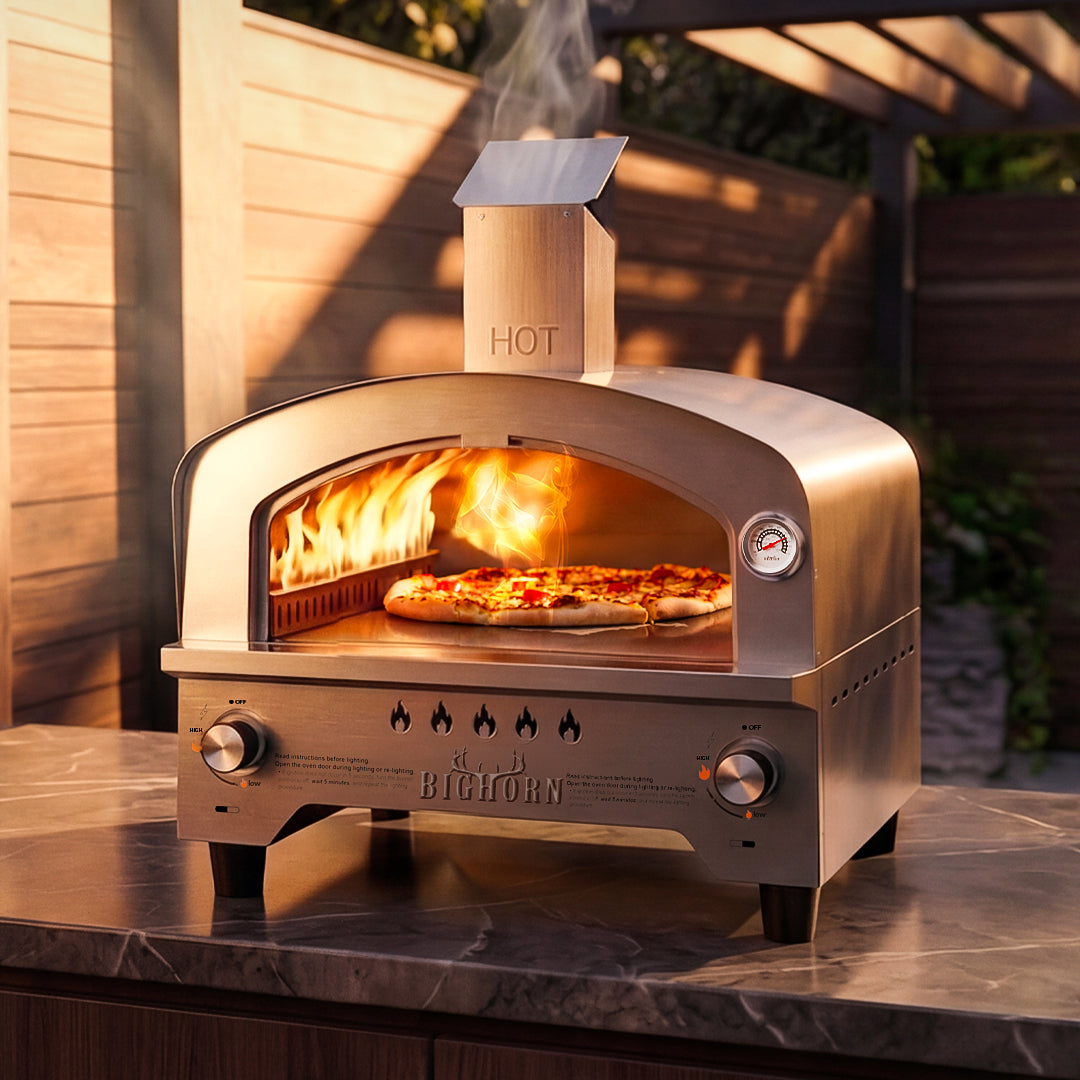
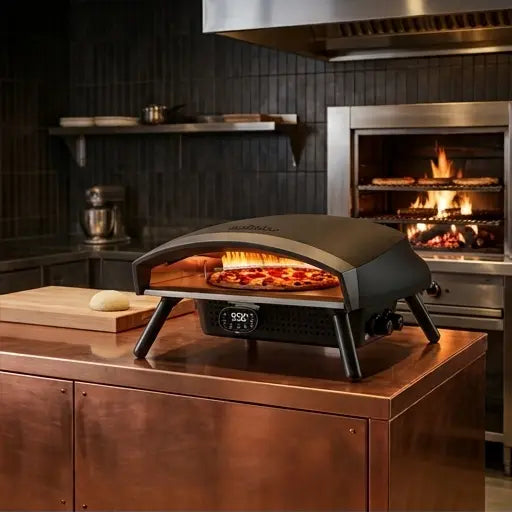
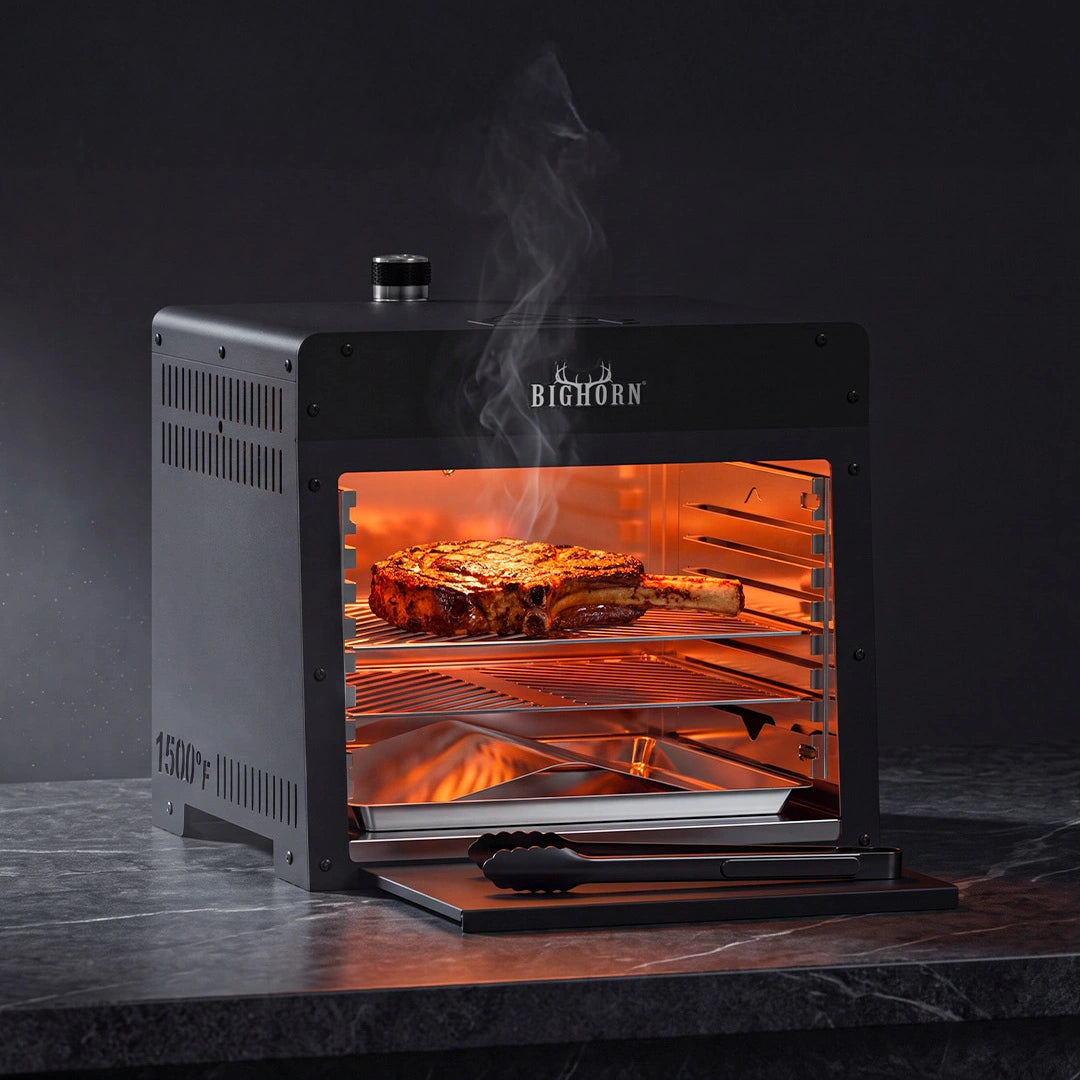
A pizza oven with a high-temperature ceiling changes the dynamics. Big Horn® pizza ovens reach up to 887°F, and that intense heat environment accelerates bottom crust formation and speeds up cheese caramelization. Detroit pizza baked in a pizza oven using a steel pan takes roughly 12–15 minutes (Detroit style requires more time than a thin-crust Neapolitan, which cooks in about 90 seconds at peak temperature). The result is a more evenly browned cheese edge and a crisper, more uniform bottom than a standard home oven typically produces.

Perfect Your Detroit Pizza Dough
Detroit pizza dough comes down to three things: high hydration, patient fermentation, and not panicking when the dough sticks to your hands. Get those right and the rest follows. Pair that dough with enough heat and an oiled steel pan, and the crust takes care of itself. For a home oven upgrade that delivers the high-temperature environment Detroit pizza benefits from, Big Horn Outdoors offers a range of high-performance pizza ovens.
Frequently Asked Questions about making Detroit pizza
Q1: What is Detroit pizza dough made of?
Bread flour, water, salt, and instant yeast, plus olive oil for the pan and dough surface. The distinguishing factor is the ratio: Detroit pizza dough hydration runs 70–75%, significantly higher than most other pizza styles.
Q2: What hydration is Detroit pizza dough?
Most recipes fall between 70–75% hydration. Some advanced recipes push to 80–83%. For comparison, Neapolitan dough typically sits at 58–65%. The higher water content is what creates the open, airy interior crumb and allows the bottom to crisp properly in an oiled pan.
Q3: Why is my Detroit pizza dough so sticky?
That's correct behavior. At 70%+ hydration, the dough will feel wet and sticky throughout mixing and shaping. Don't add extra flour, as that changes the hydration ratio and produces a denser crumb. Use wet hands, a bench scraper, and the stretch-and-fold technique instead.
Q4: How long should I let Detroit pizza dough rise?
Minimum is 4–6 hours at room temperature, which works but produces milder flavor. Overnight (10–12 hours at room temperature) is the baseline recommendation. Cold fermentation at 24–48 hours produces the best flavor and crumb structure. After transferring to the pan, a second proof of 3–5 hours at room temperature is required and cannot be skipped.
Q5: Can you make Detroit pizza in a pizza oven?
Yes. Detroit pizza is baked in a rectangular steel pan, and a pizza oven's high-heat environment works well with that setup. Big Horn® pizza ovens reach up to 887°F, which produces faster bottom-crust crisping and more even cheese caramelization compared to a standard home oven. Expect a bake time of around 12–15 minutes, not the 90 seconds associated with thin-crust Neapolitan.
Explore more in the Pizza Dough & Crust Guides.
More to Read
 Big Horn Outdoors® Expands Retail Presence with New Experience at Piedmont Outfitters
Big Horn Outdoors® is excited to announce a new retail destination for outdoor cooking enthusiasts. Customers can now experience the brand's popula...
Big Horn Outdoors® Expands Retail Presence with New Experience at Piedmont Outfitters
Big Horn Outdoors® is excited to announce a new retail destination for outdoor cooking enthusiasts. Customers can now experience the brand's popula...