

Guides & Tips

How to Plan the Perfect Outdoor Pizza Party: A Step-by-Step Guide
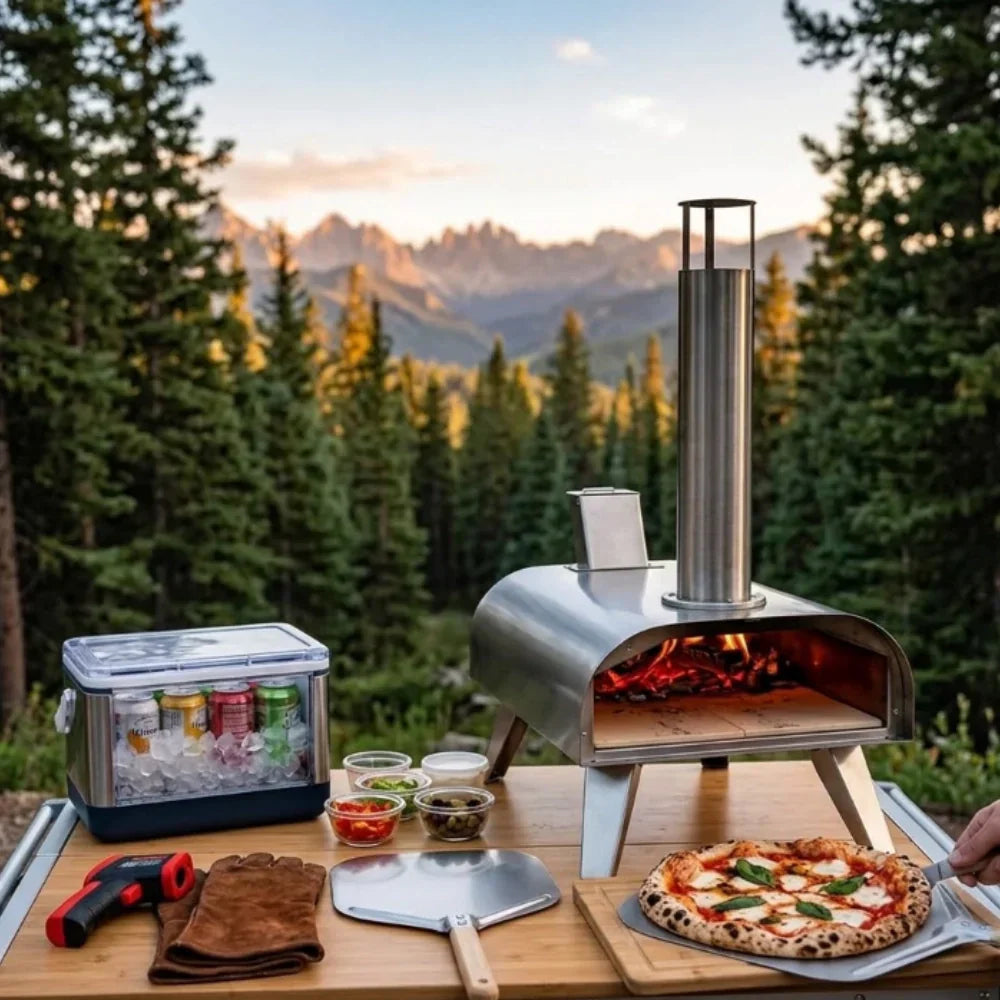
Outdoor pizza party setup at a mountain campsite with a portable pizza oven preheating on a table at golden hour.
ByShumin Liu
Host the ultimate outdoor pizza party with our simple planning guide. From choosing the right location to packing essential gear, we solve all your outdoor cooking challenges.
Share


Biting into a slice of hot, bubbling pizza with a crispy crust while surrounded by towering pines and fresh mountain air transforms a regular meal into an unforgettable adventure. Taking your pizza game off-grid works for camping, tailgating, or park gatherings—and planning a “pizza in the wild” party is easier than you think if you have the right strategy.

Step 1: Choose the Right Location

Location is everything when you take the kitchen outside. You need a safe, functional cooking zone, not just a scenic view.

What Makes a Good Outdoor Pizza Spot:

  • Flat, stable surface: Cooking with high heat requires stability. An uneven surface can tip your oven or cause toppings to slide off.
  • Natural windbreak: Look for protection from trees, rock formations, or even your vehicle. Strong gusts make temperature management difficult and can cool down your stone or disrupt the flame.
  • 10-foot clearance: Keep a safe distance from dry grass, leaves, and other flammable materials. This clearance zone is essential for fire safety.
  • Access to your vehicle: You need to carry fuel, ingredients, and equipment. Don’t pick a spot that requires a long hike from your parking area.

Avoid These Locations:

  • Slopes or uneven ground that could destabilize your oven
  • Areas with direct wind exposure and no natural barriers
  • Spots directly under low-hanging branches (fire hazard)
  • High-traffic areas where people might accidentally bump into your setup

At a campsite, choose a designated fire ring area or a sturdy picnic table. At a park, look for covered pavilions or areas with natural windbreaks.

Organized outdoor pizza station with cooler, prep table, and a portable pizza oven arranged in three zones at a campsite.

Step 2: Pack the Essential Gear

The beauty of modern outdoor cooking is portability. You don’t need to build a brick oven from scratch to get restaurant-quality results.

Your Outdoor Pizza Kit:

  • Portable pizza oven: A compact unit designed for outdoor use, like the Big Horn Outdoors® pellet or propane gas model
  • Fuel supply: Hardwood pellets or a portable propane tank (check your oven’s specifications)
  • Pizza peel: Essential for launching and retrieving your pie—metal peels work best for high heat
  • Infrared thermometer: To ensure your stone hits that magic 700°F+ range
  • Heat-resistant gloves: Safety first when handling high-temperature equipment
  • Heavy-duty folding table: If a picnic table isn’t available, bring a stable, heat-resistant surface
  • Pizza stone brush or scraper: For cleaning between cooks
  • Large cooler with ice packs: Critical for keeping dough and ingredients fresh
  • Fire extinguisher or water bucket: Always have a backup safety measure

How Much Fuel to Bring:

Oven Type Fuel Amount Coverage
Pellet ovens 5 lbs of pellets 10-12 pizzas (Allows for startup and consistent heat maintenance)
Propane ovens 2 x 1lb propane canisters ~2 hours total runtime (1 hour per canister), enough for 10+ pizzas

Pack everything in labeled bins or bags. Note that a standard 1lb propane canister lasts about 45-60 minutes on high heat, so always bring at least two canisters to ensure you don't run out of fuel mid-party.

Step 3: Transport Your Dough and Toppings

Dough is alive—yeast is actively fermenting. If it gets too warm during transport, it will over-proof and become a sticky, unmanageable mess.

Keep Dough Cold Until Cooking:

The key is controlling temperature. Your dough should stay dormant during transport and only wake up when you’re ready to cook.

  1. Portion your dough: At home, divide your dough into individual balls (250-280g for a 12" pizza).
  2. Oil the containers: Coat each dough ball lightly with olive oil to prevent sticking, then place in separate airtight containers.
  3. Pack strategically: In your cooler, place dough containers directly against ice packs. This keeps them at refrigerator temperature.
  4. Timing is everything: Remove dough from the cooler 1 hour before you plan to cook. Room temperature dough stretches easily and cooks evenly. Cold dough tears and resists shaping.

Prep Toppings at Home:

Mise en place (everything in its place) is the professional chef’s secret, and it works perfectly for outdoor cooking.

  • Pre-shred cheese: Shredded cheese stays fresh in a sealed container and is ready to sprinkle.
  • Slice vegetables: Peppers, onions, mushrooms—slice them at home and store in labeled containers.
  • Portion sauces: Use squeeze bottles for tomato sauce or pesto. No spills, easy application.
  • Keep raw meats separate: Store in leak-proof bags at the bottom of the cooler to prevent cross-contamination.

Pro Tip for Long Trips or Backpacking:

If you’re hiking to your location or have limited cooler space, consider par-baking your crusts at home:

  1. Bake crusts at 450°F for 5-6 minutes—just enough to set the structure.
  2. Cool them completely.
  3. Stack with parchment paper between each crust.
  4. Pack in a rigid container or pizza box.
  5. At the campsite, simply add toppings and finish cooking. This method eliminates dough transport issues entirely.

Step 4: Set Up Your Cooking Station

Once you arrive, your first task is creating an efficient workflow. Organization is the difference between a smooth operation and a chaotic scramble.

Create Three Zones:

Think of your outdoor kitchen like a restaurant line:

  1. Cold zone (ingredient storage): Your cooler with dough, cheese, toppings, and sauces. Keep this in the shade if possible.
  2. Prep zone (assembly station): A cutting board or portable table where you stretch dough and add toppings. Position this based on your dominant hand—to the left of the oven if you’re right-handed, to the right if you’re left-handed.
  3. Hot zone (cooking area): Your pizza oven on a stable, non-flammable surface.

This left-to-right (or right-to-left) flow allows you to stretch, top, and launch in one smooth motion without backtracking.

Safety Setup:

Safety is non-negotiable when cooking at 800°F+ in the wild.

  • Clear a 10-foot radius: Remove dry grass, leaves, pine needles, and any flammable debris around your oven.
  • Mark the hot zone: If you have kids or pets, use camping chairs or rope to create a visual boundary.
  • Keep fuel accessible but safe: Store your pellets or propane within arm’s reach of the oven but never directly next to the flames.
  • Position your fire extinguisher: Keep it visible and within a few steps of the cooking area.

Preheat Your Oven:

A proper preheat is non-negotiable. A cold stone equals a soggy, undercooked pizza.

Oven Type Preheat Time Target Temperature
Propane ovens 15-20 minutes Stone: 700°F+, Oven: 800-900°F
Pellet ovens 20-30 minutes Stone: 700°F+, Oven: 800-900°F

Use your infrared thermometer to verify the stone surface is at least 700°F. The ideal range is 700-750°F for the stone and 800-900°F for ambient oven temperature.

While the oven preheats, take your first dough ball out of the cooler to warm up. By the time the oven is ready, your dough will be at the perfect temperature for stretching.

Step 5: Cook Your Pizzas

Now comes the fun part. Cooking pizza outdoors requires attention and quick reflexes, but once you get the rhythm, it’s incredibly satisfying.

  1. Dust your peel: Sprinkle semolina flour or regular flour on your pizza peel. Semolina is coarser and helps the dough slide more easily.
  2. Stretch your dough: Do this on your prep surface, not on the peel. Stretching on the peel increases the chance of sticking. Aim for a thin, even base with a slightly thicker edge for the crust.
  3. Transfer to peel and top quickly: Once stretched, move the dough to the floured peel. Add sauce, cheese, and toppings. Work fast—the longer the dough sits on the peel, the more likely it is to stick.
  4. Shake test: Before you launch, give the peel a gentle shake. The pizza should slide back and forth freely. If it doesn’t move, lift the edge and add more flour underneath.
  5. Launch with confidence: Position the peel at the back of the oven and use a quick, forward jerking motion to slide the pizza onto the stone. Don’t hesitate—confidence prevents sticking.
    Gloved hands rotating a pizza with a metal peel inside a portable outdoor pizza oven at a campsite.
  6. Rotate frequently: In a portable oven, heat is typically concentrated at the back. Rotate your pizza every 20-30 seconds using the peel to ensure even cooking and prevent burning.
  7. Watch for doneness: Your pizza is ready when the crust is puffed and has leopard-spotted char, the cheese is fully melted and bubbling, and the bottom is crispy. This usually takes 90 seconds to 3 minutes depending on temperature.

Quick Fixes for Common Problems:

Even experienced pizza makers run into issues outdoors. Here’s how to troubleshoot on the fly:

Pizza sticks to the peel?

Stop. Don’t force it. Lift the edge of the dough and blow air underneath to create separation. Add more flour to the stuck spots. Prevention: always shake your peel before launching.

Bottom burns before the top cooks?

Your stone is too hot. Allow it to cool for 2-3 minutes, or reduce your flame/fuel slightly. You can also lift the pizza toward the dome of the oven for the last 15-20 seconds to finish the toppings without over-cooking the bottom.

Wind keeps disrupting the flame?

Position the oven so the door opening faces away from the wind. Create a windbreak using camping chairs, a tarp, or your vehicle. In very windy conditions, propane gas ovens perform better than pellet ovens.

Dough is too sticky to work with?

It got too warm. Put it back in the cooler for 15 minutes. In the meantime, use more flour on your work surface and hands. Body heat warms dough quickly, so work fast.

Oven won’t reach target temperature?

Check for ash buildup blocking airflow (especially in pellet models). Make sure the chimney isn’t obstructed. Shield the oven from wind. In cold weather, allow extra preheat time—outdoor temperatures affect performance.

Step 6: Clean Up and Leave No Trace

Food scraps attract bears, raccoons, and other wildlife, which can create dangerous situations for future campers. Oil and grease can contaminate soil and water sources. By cleaning thoroughly and packing out everything, you protect the environment and ensure these outdoor spaces remain available for the next pizza party.

After Cooking:

  1. Turn off the fuel source: Cut off propane or stop adding pellets.
  2. Allow the oven to cool naturally: Never rush this process. Your oven will remain dangerously hot for 1-2 hours. Do not pour water on the stone—thermal shock will crack it.
  3. Scrape large debris: Once the oven is cool enough to touch (but still slightly warm), use your pizza stone brush to scrape off any large food particles. The residual heat makes this easier.

Before Leaving:

  1. Ash disposal (pellet ovens only): Ensure all ash is completely cold by touching it with your bare hand. Transfer cooled ash to a metal container or designated ash bin at the campsite. Never dump ash on the ground—it can contain hidden embers that reignite hours later.
  2. Final stone cleaning: Brush the stone thoroughly to remove flour and small debris. Don’t use water or soap—only the brush.
  3. Wipe down the exterior: Use a damp cloth to remove soot, grease, and fingerprints from the outside of the oven.
  4. Pack out all waste: Collect every food scrap, no matter how small. Tiny bits of cheese and crust attract wildlife. Bag all trash and take it with you.
  5. Restore the site: Return tables, chairs, and other borrowed items to their original positions. Scatter any disturbed dirt or grass. The site should look untouched.

Start Your Outdoor Pizza Adventure

By planning your location, organizing your gear, managing your dough transport, and respecting the environment, you can master the art of pizza in the wild. The key is preparation and practice. Your first outdoor pizza party might have a few hiccups, but by your third or fourth, you’ll be slinging pies like a seasoned pizzaiolo.

Ready to take your outdoor cooking to the next level? Big Horn Outdoors® has the portable pizza oven designed to make your next adventure delicious. Check out our lineup and start planning your next outdoor feast.

FAQ about outdoor pizza parties

Q1: How long does the whole outdoor pizza party take?

Plan for approximately 3 hours from arrival to departure: 30 minutes for setup and site preparation, 20 minutes for oven preheat, 30-60 minutes for cooking (depending on how many pizzas you’re making—figure 3-5 minutes per pizza including assembly time), and at least 1-2 hours for cooldown and cleanup before packing up.

Q2: Can I use store-bought dough for an outdoor pizza party?

Absolutely. Store-bought dough is often more stable and easier to transport than homemade dough. It’s already portioned, and commercial dough typically handles temperature fluctuations better. Keep it cool in your cooler until you’re ready to stretch it, and allow it to come to room temperature for about an hour before use.

Q3: What if the oven won’t reach target temperature outdoors?

First, shield the oven from wind using camping chairs, a tarp, or your vehicle as a windbreak. Check for ash buildup that might be blocking airflow, especially around the burner grate or ventilation holes. Make sure your chimney isn’t obstructed. In cold weather (below 50°F), allow extra preheat time—outdoor temperatures significantly affect oven performance. If you’re using a pellet oven, ensure your pellets are dry; moisture reduces their heat output.

Q4: How do I keep my pizza from sticking to the peel?

Always use semolina flour or regular flour on the peel before placing your dough. Semolina works best because it’s coarser and acts like tiny ball bearings. Work quickly when topping your pizza—the longer dough sits on the peel, the more moisture it absorbs, which causes sticking. Before launching, shake the peel gently side-to-side. If the pizza doesn’t move freely, stop and add more flour underneath the stuck spots.

Q5: Is it safe to use a pizza oven on a plastic folding table?

It’s risky. While many portable pizza ovens have insulated legs that reduce heat transfer, radiant heat from the oven body can still warp or melt plastic. It is much safer to use a wooden picnic table, a metal camping table, or place a heat-resistant mat or thick wooden board under the oven if a plastic table is your only option. Always check the manufacturer’s guidelines for your specific oven model.

More to Read

A plate of juicy grilled beef tips with red wine mushroom gravy over white rice, placed in front of a Bighorn infrared grill with a glowing orange heating element. Red Wine Mushroom Gravy Beef Tips on Infrared Grill Master steakhouse-quality beef tips at home! Marinated for flavor, seared fast on an infrared grill, and topped with a rich red wine mushroom gravy. Close-up of a perfectly seared, thick-cut steak sliced and resting in juices with fresh herbs Pro Tips: Grilling Thick-Cut Steak for Maximum Flavor Master grilling thick-cut steaks at home. Learn essential prep, resting tips, and how to use 1500℉ infrared heat for a flawless, restaurant-quality... Smash burger cooking on infrared grill with melting cheese How to Make a Smash Burger on an Infrared Grill Standard grills ruin beef by losing flavor. Use a cast iron plate on an infrared grill to lock in moisture and make the perfect smash burger crispy...