Pizza Ovens
Beyond Pizza: 5 Surprising Things You Can Bake in a Pellet Oven
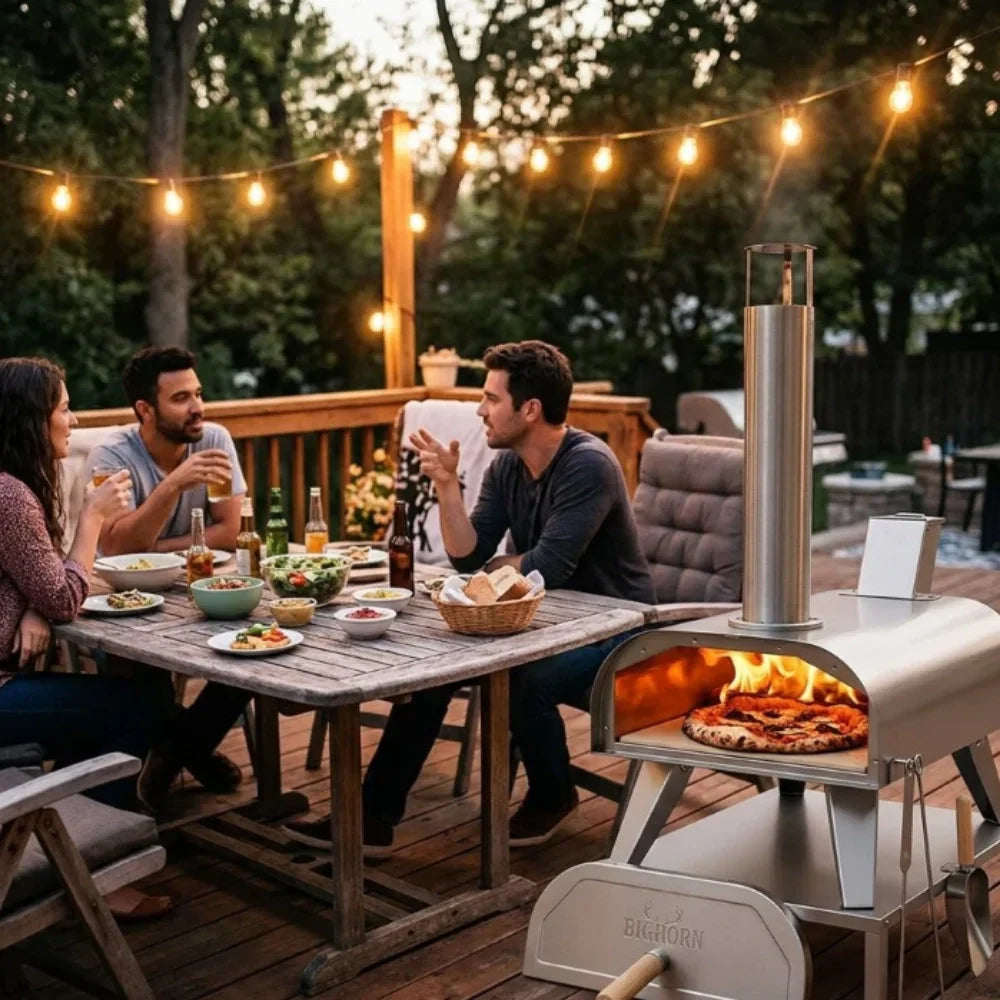
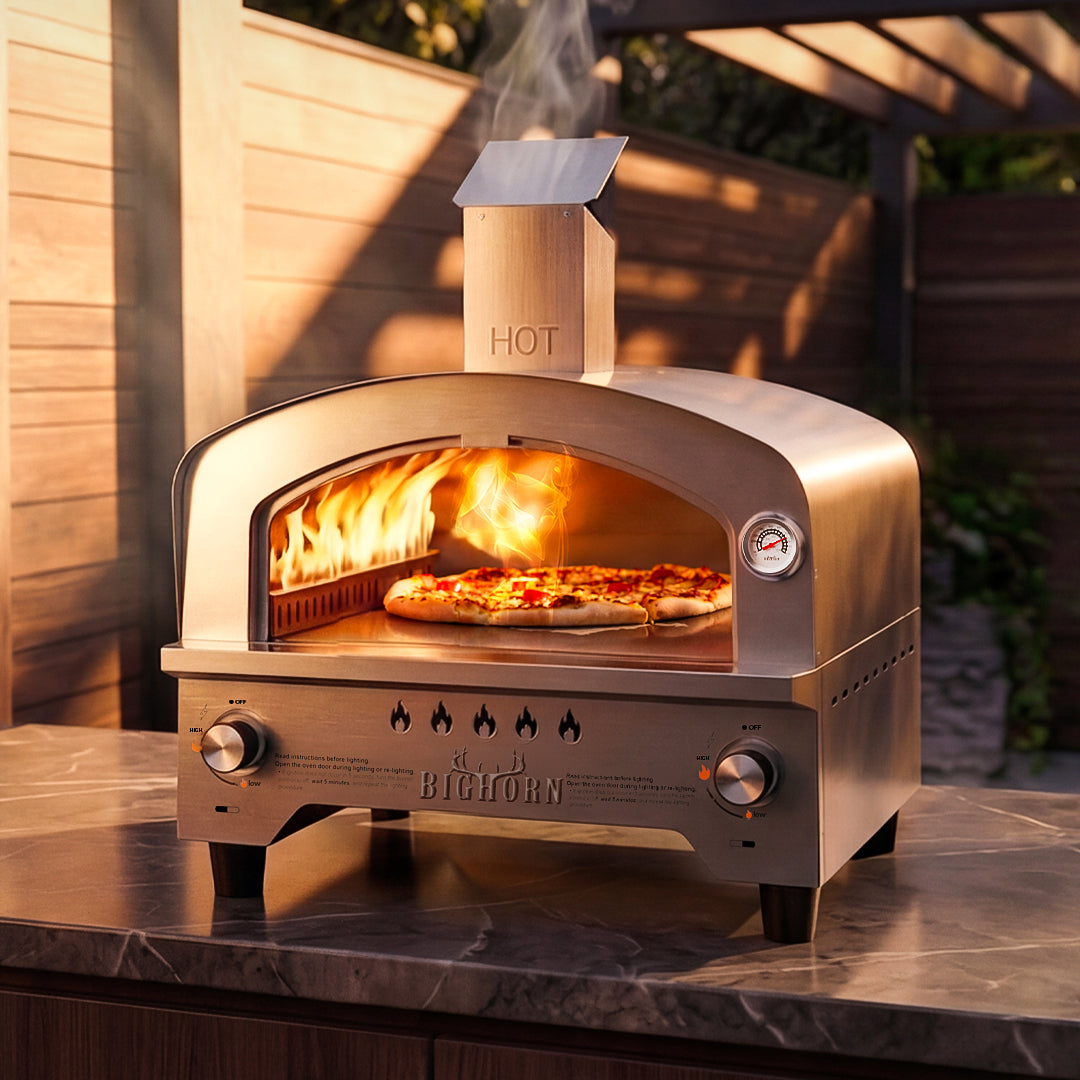
Good food brings people together, but cooking can pull the cook away from the group. A pellet pizza oven keeps the heat outdoors, so the cook stays part of the conversation.
Related product: Shop 12-inch Wood Pellet Pizza Oven.
With a Big Horn Outdoors Pellet Pizza Oven, pizza is only the start.
TL; DR: You can bake dessert, toast snacks, roast vegetables, sear seafood, and make breakfast staples, as long as you use smart heat ranges and basic food-safety steps.
Quick Temperature And Pan Cheat Sheet
Food Safety Note: This page shares general cooking ideas, not professional food-safety advice. Use a clean instant-read thermometer. Measure at the thickest point, and keep the probe tip away from bone, fat, or the pan surface.
Pizza gets the spotlight, but the same high heat can brown cookies, crisp vegetables, and sear seafood. With heavy pans and quick temperature checks, a pellet pizza oven can handle more than pizza night.
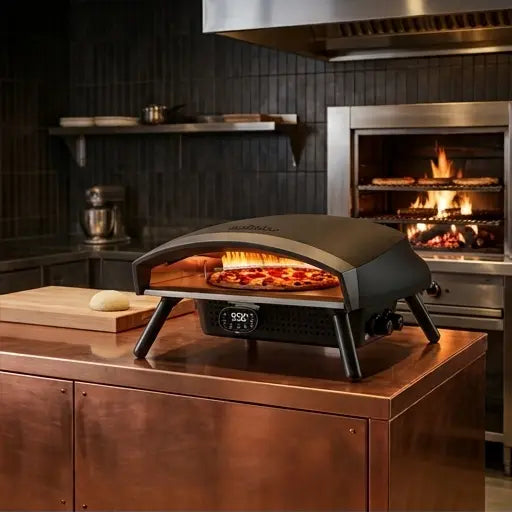
A high-heat pellet pizza oven typically preheats in about 18 minutes and reach around 662°F / 350°C, which is why it works for more than pizza. That fast, intense heat helps you brown desserts, crisp vegetables, and sear seafood without long cook times.
For consistent results, focus on what matters most: your real cooking temperature and hot spots inside the oven. Many pellet pizza ovens do not have a built-in thermometer, so an infrared thermometer is a practical way to check the stone or pan surface. Keep in mind that wind, outdoor temperature, and pellet flow can shift heat during a cook, so check more than one spot and rotate the pan if browning looks uneven.
Use an infrared thermometer for stone or pan surface temperature, and an instant-read probe for internal food temperature.
Use a cast-iron skillet for searing and thick desserts, and a heavy sheet pan for vegetables, nuts, and granola.

Once a cast-iron skillet is in play, dessert is easy outside. A skillet cookie stays soft in the middle, and the edges brown fast, so you can serve it warm right after dinner.
Use a 10–12 inch cast-iron skillet. Wipe with butter or neutral oil. Warm the empty skillet for about 2 minutes, then add the dough and return it to the oven.
Ingredients
Steps
Set the oven to 375–425°F. Bake 10–16 minutes. Pull it when the edges are browned, and the center looks set, not wet. The center keeps baking for a few minutes after it comes out.
Roasted nuts are quick, crowd-friendly, and easy to season. Moderate heat matters here, since nut oils can burn fast and leave a bitter taste during longer cooks.
Good choices: almonds, cashews, pecans, walnuts, hazelnuts. Start with raw nuts.
Toss 3 cups of nuts with 1 tbsp oil, 1–2 tsp seasoning, and 1/2 tsp salt. Spread in a single layer. Roast at 300–350°F for 10–18 minutes. Stir every 4–5 minutes.
Cool fully, then store airtight. If they soften, re-crisp at 300°F for 4–6 minutes.
Vegetables are the easiest way to use high heat without stress. Even cuts and a hot pan give crisp edges and tender centers, with a light wood-fired flavor that fits almost any main dish.
Great choices: broccoli, cauliflower, Brussels sprouts, carrots, sweet potato, zucchini, peppers, onions, and asparagus. Cut pieces to a similar thickness so they finish together.
For 1.5–2 pounds of vegetables: 1.5 tbsp oil, 1 tsp kosher salt, and pepper. Add garlic powder or chili flakes if you want.
Roast at 425–500°F for 8–18 minutes, based on thickness. Turn once halfway through. For more browning, warm the sheet pan for a few minutes, then add vegetables.
Lemon and Parmesan work well on broccoli. Chili-lime fits corn, peppers, and onions.
Seafood cooks fast, so the safest approach is simple seasoning, a hot pan, and a thermometer. This keeps the cook time short while still meeting safe internal temperatures.
Food Safety and Inspection Service lists 145°F (62.8°C) as the safe minimum internal temperature for fish and shellfish. Foodsafety.gov repeats this guidance for seafood.
Measure at the thickest point, and keep the probe tip away from bone, fat, or the pan surface.
Pat scallops dry. Season with salt and pepper. Preheat the cast iron until very hot. Add a thin film of high-heat oil, then scallops. Sear 60–90 seconds per side. Check the largest scallop; cook to 145°F internal.
Sheet pan: cook at 400–475°F for 8–15 minutes, based on thickness.
Skillet: start skin-side down in a hot cast iron, then finish until the center hits temperature.
Cook salmon to 145°F internal at the thickest point.
After high-heat cooking, granola is a calmer bake. It needs lower heat, steady stirring, and full cooling, which makes it a good weekend batch for quick breakfasts.
Mix: 4 cups rolled oats, 1 cup chopped nuts or seeds, 1 tsp cinnamon, 1/2 tsp salt.
Warm and mix: 1/3 cup maple syrup or honey, 1/3 cup neutral oil, 1 tsp vanilla.
Bake at 300–325°F for 25–40 minutes. Stir every 8–10 minutes. Press lightly after each stir if you want clusters.
Cool fully on the tray so it turns crisp. Add dried fruit or chocolate chips after cooling.
Master pellet oven heat by managing three key factors: airflow, fuel, and placement.
Adjust air vents to control burn intensity. Open vents wider for high heat (450°F+); close partially for low-and-slow cooking (250–300°F). Clean ash from vents weekly to prevent airflow blockage and temperature drops.
Pellet type affects heat output:
Use only food-grade pellets and store in a dry place—moisture significantly reduce burn efficiency.
Position on level ground, 3+ feet from walls. Shelter from wind to avoid 50°F+ temperature swings. In cold weather, preheat 5–10 minutes longer and shield the hopper from direct sunlight.
Yes. Use moderate heat (around 375–425°F), keep bake times short, and pick a mild pellet flavor. Cast iron also helps by smoothing heat swings.
No. Only use food-grade pellets rated for cooking—heating pellets contain additives that affect flavor and may release harmful chemicals.
Rotate pans halfway through cooking, move away from hot spots, and use an IR thermometer to check surface temperature in multiple spots before adding food.
Lower the oven temperature, use heavier cookware, rotate pans, and move the pan away from the hottest zone. Check surface heat with an IR thermometer and adjust early.
Explore more in the Pellet Pizza Oven Cooking Guides.
 Big Horn Outdoors® Expands Retail Presence with New Experience at Piedmont Outfitters
Big Horn Outdoors® is excited to announce a new retail destination for outdoor cooking enthusiasts. Customers can now experience the brand's popula...
Big Horn Outdoors® Expands Retail Presence with New Experience at Piedmont Outfitters
Big Horn Outdoors® is excited to announce a new retail destination for outdoor cooking enthusiasts. Customers can now experience the brand's popula...