







Two nights on the same patio can end very differently. In one, the fire "looks dead," everyone goes inside, and a hidden coal is still working in the ash. In the other, a bucket of water or a pile of sand was already sitting beside the pit before the first match, and someone stayed until the remains were cool to the touch. Starting a wood fire pit is only half the method. The shutdown is the other half, and it has to be planned first.
How to start a fire pit, and shut it down, without lighter fluid
How to start a fire pit: confirm a burn is allowed, set water or sand nearby, then light dry tinder and kindling and add wood as the fire takes. Skip liquid starter. At the end, drown, stir, and feel, or use sand or a snuffer the manual allows, and stay until the remains are cold.
Lighter fluid is a shortcut that can flare, smell, and teach a bad habit. A dry, modest fire is slower at the start and much easier to keep inside the bowl. If the wood will not catch, the wood is usually the problem, not a lack of accelerant.
This page is a start-to-shutdown path for a wood-burning pit. It is not a charcoal chimney lesson and not a smoking-pit playbook. A propane column pit, such as the one in the photos, is a useful comparison only because it is a different fuel: you still follow its manual, but you do not build a wood stack in its burner bowl.
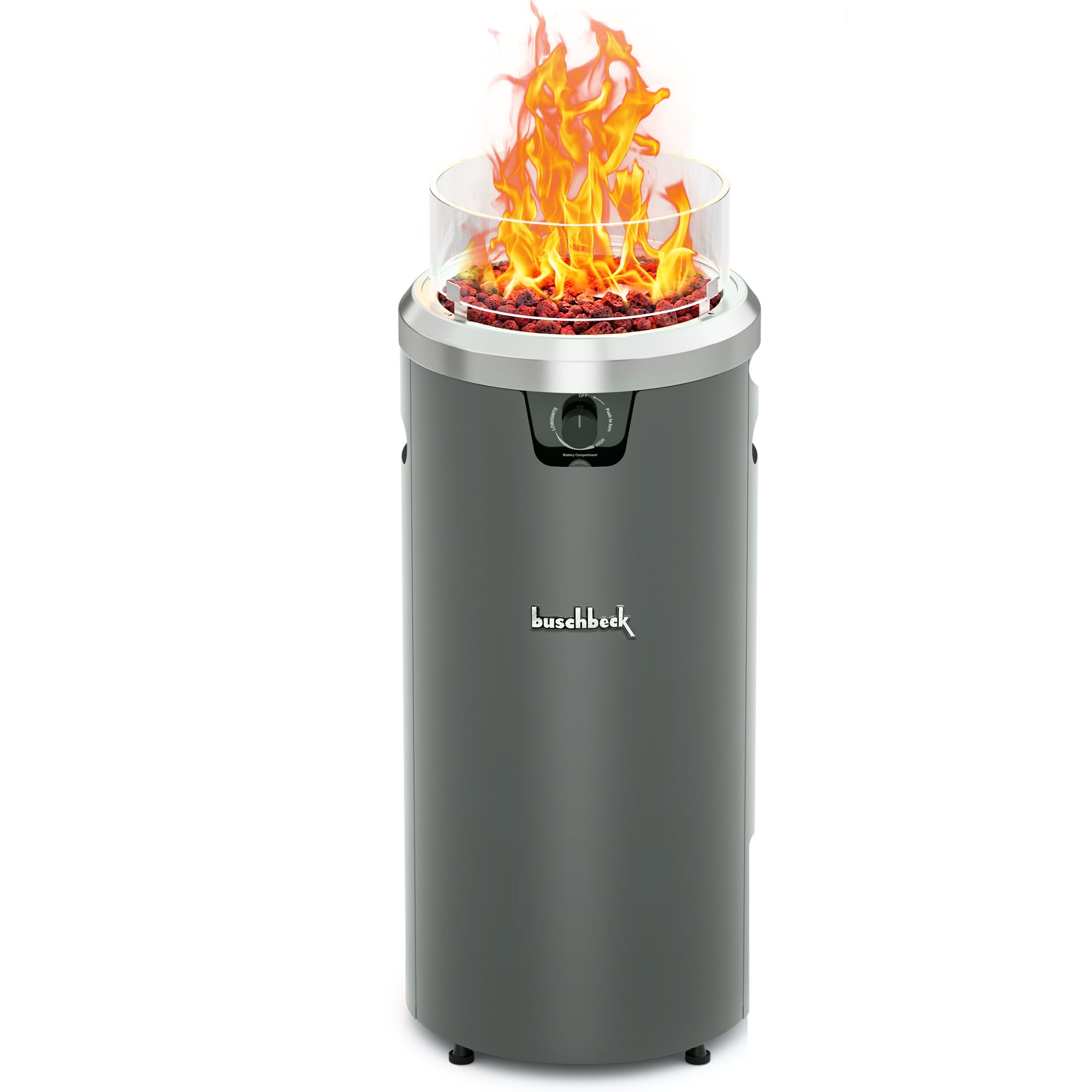
Building a small, dry fire and a safe first hour
Start smaller than the bowl can hold. A loose teepee or a small log-cabin stack of tinder and kindling, with a little air around the pieces, catches more reliably than a packed pile of logs. Add the next size of dry wood only after the kindling is actually burning, not when it is only smoking.
The first hour is for watching, not for wandering off to the kitchen. Keep the spark screen on if the pit has one and the evening is dry or windy. Seats, pets, and low branches should already be outside the area the manual and local rules require. If the fire climbs too fast, you built too big; let it burn down rather than trying to "fix" it with more wood or water in a panic.
Fuel choice is its own subject. For species, seasoning, and what to leave in the shed, use the guide to woods for a fire pit. This page only insists on dry, untreated firewood the appliance allows. Wet wood is how a "quick fire" becomes a smoke complaint, which the fire-pit smoking guide treats in more detail.
Extinguish with sand, a snuffer or water — and the trade-offs
The method that matters is the one that leaves no hidden coal, using tools you already have beside the pit. Water, sand, and a metal snuffer can all work, and they do not work the same way. Official campfire guidance is usually some form of drown, stir, and feel: add water, stir the ash, and check for heat, then repeat. Smokey Bear's campfire-safety guidance and National Park Service campfire advice are the plain-language sources for that habit, even when your "campfire" is a backyard bowl.
| Method | What it does well | Trade-off |
|---|---|---|
| Water, then stir and feel | Cools coals quickly when you use enough water and actually stir the bed. | Can make a sooty slurry and steam. Keep a safe stance, and do not assume one splash is enough. |
| Sand or dirt, then check | Smothers and is useful where water is scarce, if the material is dry and mineral, not mulch. | Can hide a coal if you do not stir and check. Do not bury a fire and walk away. |
| A fitted snuffer lid | Starves the fire of air when the lid is made for that pit and sits fully closed. | The bowl can stay hot under the lid. You still need a later check that the remains are cold. |
Follow the pit's manual if it forbids a method, for example water on certain finishes. The table is a set of trade-offs, not a reason to ignore the listing.
When a pit is actually out, and when it is only hiding coals
A fire is not out when the flames are gone. It is out when the remains are cool enough to touch with the back of a hand, after you have stirred the bed and checked more than the surface. Ash is a blanket. A black, quiet pile can still hold enough heat to start a later fire in a breeze or on a wood deck edge.
If you have to leave, you do not have a finished shutdown. Someone stays, or you do not light the pit. Ready.gov's home-fire guidance and Red Cross fire guidance are written for household fires, but the same idea applies: a fire you cannot stay with is a fire you should not start.
Kids, pets, decks and a spark screen
Treat the pit as a hot appliance for the entire evening, not only while it is pretty. Set a boundary kids and pets can understand, and keep chairs far enough that a stumble does not become a contact burn. A spark screen helps in dry or windy weather; it does not make the bowl safe to touch or safe to leave.
Decks and pavers are a placement decision you should have made before the first fire. Whether you can put a fire pit on a deck or pavers is that page. Do not use this start-up article as permission to set a wood bowl on a bare wood deck "just for tonight."
Cite fire-safety basics; local burn rules always win
Local burn bans, air-quality alerts, HOA rules, and the manufacturer's clearances always outrank a backyard habit. If the county says no recreational fires today, there is no "small" exception in this article. Check before you stack the wood, not after the neighbors call.
U.S. Fire Administration cooking-and-fire prevention and NFPA grilling fire-safety guidance are useful official starting points for outdoor fire around the home. EPA's carbon monoxide overview is the reason a wood pit, like any combustion appliance, stays outdoors and in the open air, never in a garage, tent, or enclosed porch.
If you are still choosing wood versus gas, the wood-burning versus propane fire pit comparison is the buying page. This guide assumes you already have a wood pit and need a start-to-shutdown method you can repeat.
A one-page fire-pit card
Write four lines and keep them with the tools: Is a fire allowed today? Are water or sand and a metal tool already at the pit? Is the first fire small and dry, with a screen if needed? At the end, did we drown or smother, stir, and feel until it was cold? That is the whole method, short enough to read in a headlamp.
Do not add a "just this once" line for lighter fluid or for leaving the pit when it "looks out." The card is for the night you are tired and tempted to skip a step. If you also cook in a pellet oven, that is a different fire start entirely; use the pellet-oven lighting guide for that appliance, not this pit card.
A tool and water bucket that live next to the pit before you light it
The bucket does no good in the garage. Before you light anything, set water or sand, a metal shovel or stick for stirring, and gloves or a tool for the screen next to the pit. If you have a fitted snuffer, it should be there too, not in a shed you will "get in a minute."
That placement is the implementation detail most people skip, and it is the one that makes the rest of the method real. A start-to-shutdown routine is not a speech you give after dessert. It is a bucket that was already there when the first match was struck, and a last check with the back of your hand before you close the door.
If the evening turns windy, or if a burn restriction appears after you have already stacked the wood, do not start. A method this careful still depends on a legal, manageable fire. The tools beside the pit are there to finish a fire you were right to light, not to rescue a fire that should have stayed unlit. When the remains are finally cold, put the screen back, store unused wood dry, and leave the bucket in the same place for the next time.
If you want a patio fire without the start-and-douse routine of wood, a listed propane feature such as the 15-inch column round propane fire pit is a different fuel path, with its own manual, clearances, and shutdown steps.
FAQ
How to light a campfire?
Use the same idea you should use in a backyard pit: a small stack of dry tinder and kindling, with slightly larger dry wood added once that kindling has caught, and no liquid starter. Confirm that a fire is allowed in that place and on that day. A backyard fire pit is not a campfire ring, but a messy start is the same in both: wet wood, too much smoke, and a temptation to reach for lighter fluid. Build a modest fire you can manage, then keep water or sand at hand before you strike the match.
What kills first in a fire?
In a house fire, smoke and carbon monoxide are the usual early dangers, not the visible flames. That is a household emergency fact, not a backyard technique. This page is not a home-escape guide. For a patio pit, the practical lesson is still to keep combustion outdoors and in the open, never in a tent, garage, or enclosed porch, and to treat lingering coals as a fire that has not finished. If smoke is filling a confined space, get people out and deal with the fire from a safe position.
What's the worst firewood to burn?
The wood to avoid is wet or green fuel, plus anything treated, painted, or made of trash, including construction scraps you cannot identify. Those fuels smoke, spat, or release fumes you do not want over a patio. There is no single tree species this page will crown as universally 'the worst.' Seasoned, untreated firewood that your pit's manual allows is the starting point; the separate firewood guide covers species and seasoning in more detail than this start-and-stop page can.
Can you put a fire pit directly on pavers?
Sometimes, and sometimes not. Heat can mark, crack, or discolor pavers, and a deck is a different question again. The short version is that the pit needs the clearance, the heat shield, and the surface its manual and local rules allow, not a guess that stone is automatically fireproof. Use the dedicated deck-and-paver guide for that placement decision, and do not light a first fire on a wood deck just to see what happens.
