







Pizza Oven Beyond Pizza
Once the last pie leaves the deck, the question is what to cook in a gas or pellet pizza oven after pizza. You are choosing a heat window, not finishing the night. A stone that still sits in a common pizza band, often about 700–900°F, will scorch the outside of a roast or a loaf before the center is ready. Later in the same fire, a cooler band can bake bread and pastry that would have burned an hour earlier. The decision is which food belongs in the heat you have now, not whether an outdoor oven can cook “other things” in the abstract.
If you are wondering what to cook in a gas or pellet pizza oven after pizza, this page is a falling-heat map for that hour. It is not a general besides-pizza menu, and it is not a recap of indoor electric cooking. Read the stone with a thermometer, then pick the next dish from the band you actually have.
What “heat windows” mean after the last pizza
After the last pizza, a gas or pellet oven still holds useful heat on a falling curve. Use that leftover heat in bands: a brief high window for thin vegetables or fish, a mid roast window for pan mains, then a cooler window for bread and pastry. It is not a steady indoor setpoint.
A heat window is a useful temperature band on that curve, plus the cookware that belongs in it. It is not a promise that the chamber will hold a number for a set number of minutes. Gas can often be turned down or brought back up; a pellet fire that is already falling is slower to recover and easier to overshoot. The stone lags the flame, so a glance at the fire is not a reading. For a wider gas-oven dish map, keep the live guide to what else you can cook in a gas pizza oven nearby. This page tells you when, after the last pie, those dishes actually fit.
A simple temperature-band map for mains and bread
The ranges below are common starting bands, not a lab log from one backyard oven. Confirm them with an infrared or stone thermometer on the deck you are using. Fuel, wind, and door time change how fast the same oven falls, so treat the table as a sequence, not a timer. Put mains in a pan when juices can spill. Bread can go on the stone or in a covered pan once the band has dropped. Pastry almost always wants a pan and a still-lower band.
| Window | Common starting band on the stone | What usually belongs |
|---|---|---|
| Pizza residual | About 700–900°F (370–480°C) | Wait, or only very thin, fast items you can pull in seconds |
| High roast | About 550–700°F (290–370°C) | Blistered vegetables, thin fish in a pan; watch closely |
| Roast and bake | About 450–550°F (230–290°C) | Pan roasts, thicker vegetables, some breads |
| Bread | About 400–500°F (200–260°C) | Ciabatta, rolls, a second bake in a pan or on the stone |
| Pastry and dessert | About 325–400°F (160–200°C) | Cinnamon rolls, fruit crisp, baked apples |
If the stone is still in the pizza residual band, the honest move is often to wait, not to “use the heat” on a thick roast. Waiting costs you less food than a burnt exterior and a raw center.
What still cooks well at pizza heat, and what should wait
Very hot residual heat suits food that already cooks in a short blast: thin peppers, blistered broccolini, or a thin fish fillet in a preheated pan. It is a poor match for a whole chicken, a deep pan of roots, a loaf, or cinnamon rolls. Those foods need time in a lower band so the center can catch up. If you use the high window, keep the food in cookware you can pull fast, and stay with the oven.
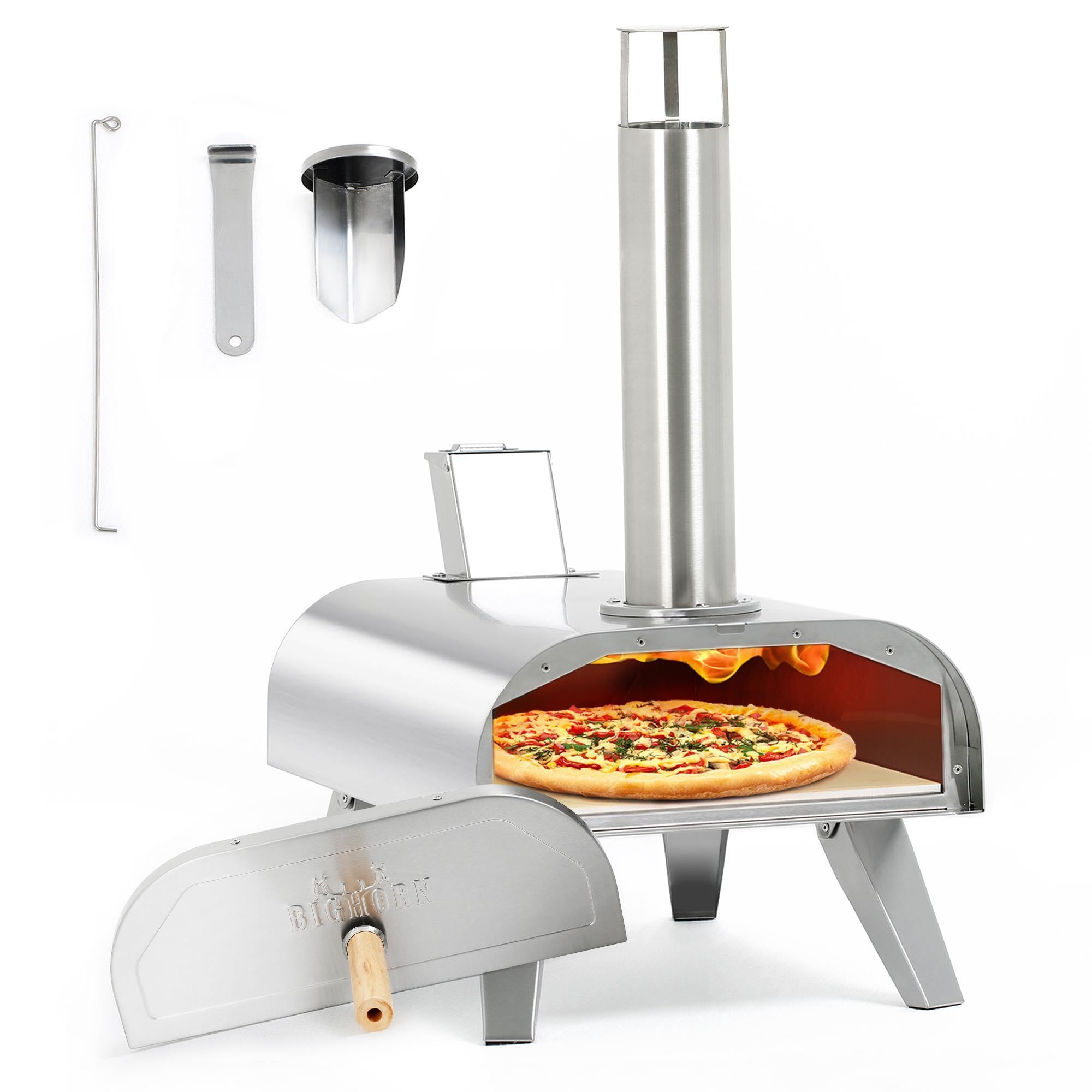
A portable pellet oven such as the current 12-inch wood-pellet pizza oven has a small deck, which helps a single pan and hurts if you try to roast and bake at once. Confirm clearances and outdoor-only use on the live listing and in the manual. Outdoor combustion still follows NFPA grilling safety and U.S. Fire Administration cooking-fire prevention: an attended appliance, a clear area, and no use in a garage. National Weather Service wind safety matters more here than it does for a one-minute pie, because wind can drop a roast window into a bread window earlier than you planned.
Roasts, vegetables and fish in a gas or pellet oven
Once the stone has entered a roast band, use a pan. Vegetables can take more direct heat if they are cut small and tossed often. A roast, a whole fish, or a tray of denser roots should sit in a pan so drips do not hit the stone. Dual-burner gas ovens can sometimes hold a more even chamber for this stage; the live note on cooking pizza, bread, and more in a dual-burner gas oven covers that hardware path without repeating this schedule.
Cook meat and fish to official doneness, not to a pizza-minute count. FDA safe food handling and FDA food safety in your kitchen still apply outdoors: 145°F with a three-minute rest for whole-muscle beef, pork, or lamb; 145°F for fish; 160°F for ground meat; and 165°F for poultry. If the outside is racing ahead, drop a gas flame, move the pan farther from a pellet fire, or wait for a lower band. A thicker roast may use most of the falling curve and will delay bread, so choose one long main or a bread course unless you are willing to wait for a later pan.
Bread, rolls and pastry as the oven falls
Bread usually wants the oven after the aggressive pizza heat is gone. A common bread band sits around 400–500°F on the stone, which is still hotter than many indoor loaf settings, so watch color early. Rolls and ciabatta can go on the deck or in a pan; a lid or a covered pot can trap steam if it is rated for the heat. Pastry and enriched doughs almost always want a still-lower band, often around 325–400°F, because sugar and butter scorch long before a lean loaf would. Finish the pizzas before you load bread. If the oven has already slid below a useful bread band, stop rather than baking a pale, dry loaf in leftover warmth.
A one-night menu that uses the fire you already built
A practical night uses the fire in order, not as a buffet that all goes in at once. The timeline below is a planning sketch, not a promise that your oven will hit each band on the clock. The useful idea is the sequence: pizza, an optional high-heat side, a pan main in the roast band, then bread, then pastry if enough heat remains.
| Stage | What to cook | Planning note |
|---|---|---|
| Pizzas | The pies you came outside for | Do not start a roast in the same window |
| High residual | Thin vegetables or a quick pan fish | Optional; skip it if the stone is already falling fast |
| Roast band | A pan main, thicker vegetables | Use a thermometer on meat or fish |
| Bread band | Ciabatta, rolls, or a second bake | Load only after the last pizza is out |
| Pastry band | A pan dessert | Only if the fire has actually dropped |
If you are feeding a group, prep later pans while the pizzas bake and keep raw meat separate from bread trays. A compact outdoor oven does this work one pan at a time.
What not to force into a pizza oven
Some foods do not earn a place in this fire. A deep, wet casserole can stay cool in the center while the rim burns. A custard wants a steady, moderate oven, not a falling outdoor chamber. An oversized raw bird in a pizza blast can char outside and remain unsafe inside. A pot that is not rated for the heat is a hazard, not a workaround. If the only way to make the dish work is to fight the oven, move it indoors or wait for a cooler window.
Link the indoor-electric “besides pizza” playbook only where it differs
An indoor electric pizza oven is a different tool. It holds a setpoint instead of offering a falling curve, and it belongs in a kitchen with that appliance’s electrical and clearance limits. For dishes in that steady indoor heat, use the live page on what you can cook in an electric pizza oven besides pizza rather than copying this outdoor schedule into the kitchen. A side-by-side of electric, gas, and pellet pizza ovens, and the beginner-focused gas, pellet, and electric comparison for first-time owners, own the purchase comparison. This page owns the hour after the last pie on a gas or pellet fire.

Cleanup and leftover heat you should not waste
Useful leftover heat is for cooking, not for holding finished food in the temperature danger zone. Once a main is done, move it to a platter or into the refrigerator on a normal leftover schedule. Ready.gov food guidance and National Center for Home Food Preservation storage guidance are the references for chilling, not a warm oven used as a holding box. When cooking is over, let the oven cool on its outdoor pad. Do not carry a hot chamber indoors, and do not drown a gas burner. Brush the stone only when it is cool enough to handle under the manufacturer’s care notes, and put cold pellet ash in a metal container.
Fuel notes: gas recovery vs a pellet fire that is already falling
Gas and pellet ovens do not fall the same way. A gas burner can often be turned down to stretch a roast band, or turned up after a long door opening, if the cylinder, hose, and regulator are in good order and the oven stays outdoors. A pellet fire that is already falling is a declining coal bed. Adding a large charge of pellets can raise the heat again, but it usually does so slowly and may climb past the bread band you wanted. If you want a long roast after pizza, gas is often easier to hold. If the pellet fire is already falling cleanly, use the curve you have, or stop. Forcing a second pizza-heat peak just to use the fuel can undo the bread window.
Either fuel still needs a level, noncombustible stand, clear space, and an attended fire. Read the current manual rather than copying a clearance number from memory. After the last pie, take a stone reading, pick the next band, and cook one pan that belongs there.
For a compact outdoor chamber that can take pizza first and a falling-heat pan later, confirm the current 12-inch wood-pellet pizza oven listing and manual before you plan the night around a specific deck size.
FAQ
What can I put in a pizza oven?
After pizza, use the falling heat for pan mains, vegetables, bread, and later pastry. Very hot residual heat only suits thin, fast items you can pull quickly. Large deep casseroles, custards, and oversized raw poultry do not belong in a pizza blast. Match the food to the band you have, not to a generic besides-pizza list.
How long does it take to cook pizza in an Ooni?
Times vary with stone heat, pie thickness, and fuel. A thin pie in a fully heated outdoor oven is often done in about one to two minutes, but that is not a guaranteed timer for every brand or model, including ovens that are not Ooni. Wait until the deck is honestly hot, then watch the pie rather than a clock.
What are some non-pizza Ooni recipes?
The useful list is less a recipe catalog than a heat-window sequence: blistered vegetables while the deck is still very hot, pan roasts and fish as the chamber falls, then bread and pastry lower still. Brand-specific Ooni recipes are not required. The same order works in a gas or pellet outdoor oven if you cook to temperature and doneness, not to a printed minute count.
Are wood fired pizza ovens worth it?
They can be, if you want flame flavor and you will also use the falling heat after pizza. They ask for more fire management than gas. If you mainly want on and off control, gas is often the simpler path, and an indoor electric oven is a different, steadier tool. Whether a wood-fired or pellet oven is worth it depends on how you cook, not on a universal ranking.
More to Read
How to Start and Safely Extinguish a Wood Fire Pit
How to start a fire pit with dry wood and no lighter fluid, then extinguish it with water, sand, or a snuffer until the coals are truly cold.
Argentine Steak Cuts on a Home Parrilla: Vacío, Entraña, Tira and Bife de Chorizo
Translate vacio, entrana, tira, and bife de chorizo at a US butcher, then salt each cut, plan grate space, and shop a four-person home asado.
Two-Zone Grilling on a Gas Grill: A Setup You Can Repeat Every Week
Set up two-zone grilling on a gas grill with burner patterns for 3-, 4-, and 6-burner grills, a lid rule, and a weekly routine you can repeat.
