







Outdoor Kitchen Systems
The implementation path is almost boring, which is why it works: count the food you actually cook at once, then measure the patio, the door path, and the utility run before you fall for a burner count. A 6+2 island buys width and the ability to run more food at the same time. It does not invent extra heat in a way that makes a smaller cook better. A 4+2 island buys a smaller footprint and is often the right first island for a household that does not host a crowd every weekend.
This page is the island-level choice between those two layouts. A generic “how many burners do you need on a gas grill” article already exists for the head-count question on a standalone grill. Use it as background. Do not treat it as a substitute for tape on the ground and a hard look at cart paths.
The extra two burners buy width and simultaneous cooks, not magic heat
A 6+2 outdoor kitchen island buys a wider main grate and more rings you can light at once. A 4+2 island keeps the same idea in a smaller footprint. The extra burners help when several items must cook together, not when you would only light half the grill.
Burner count is a capacity number, not a quality score. Six main burners can still be poorly zoned, and four can be plenty if you cook in batches or use the warming rack. What you are buying on the island is the ability to stop rotating food through a grate that is already full, at the cost of more width on the patio and more island to anchor, clean, and cover.
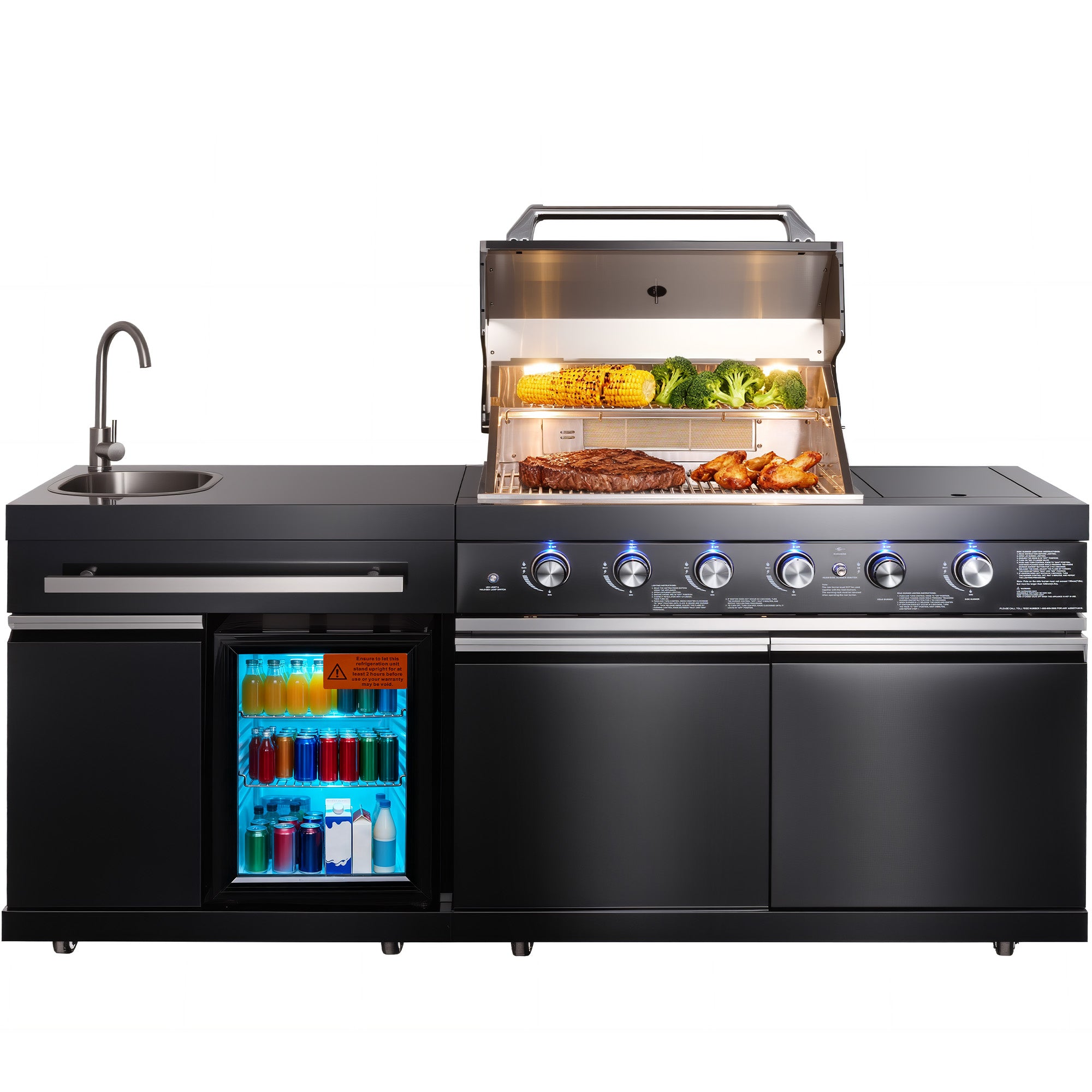
A 4+2 burner stainless outdoor kitchen island is the compact side of that trade. A 6+2 is the stretched side. Confirm each model's actual width, depth, and helper-burner layout on its product page rather than assuming the plus-two always means the same accessories.
A household-size table: weeknights, weekends, guests
Household size is a starting hint, not a law. Two adults who entertain once a month may still want a 6+2 if the entertaining is a full spread. A family of five that mostly grills on Tuesday may be happier with a 4+2 and a little patience. The table is a pattern, and you should break it when your real menu disagrees.
| How you actually cook | Often a 4+2 fit | Often a 6+2 fit | Watch-out |
|---|---|---|---|
| Weeknights, one main protein, one side | Yes, especially on a modest patio | Only if you already know you will use the extra width | Do not buy six main burners as a stand-in for better weeknight habits |
| Weekend family meals, some overlap on the grate | Yes, if you will use zones or a short second batch | Yes, if you hate batching and often run a pot at the same time | Count pans and platters, not only people |
| Regular guest cookouts, several items at once | Risk of a full grate and a crowded landing space | The usual reason to take the extra width | Guests also need a walkway; the island cannot eat the whole patio |
| Mostly indoor cooking, grill as a treat | The smaller island is usually enough | Easy to over-buy | A large unused island still needs weather care and a cover |
If your week is the first row and your year has two big parties, you can still choose 4+2 and batch, or borrow pans from the indoor kitchen, rather than size the furniture for two days a year. If those two days are the reason you want an outdoor kitchen at all, be honest about that and measure for 6+2.
Footprint, cart path and a narrow yard
The second number that matters, after burner count, is the space the island occupies once people are trying to walk past it with a tray. A 6+2 layout is typically longer. That length has to clear doors, hose bibs, downspouts, and the path from the kitchen. A narrow side yard is where many 6+2 dreams stall, not at the burner knobs.
Tape the length and depth on the ground, then open the grill lid in that outline, then walk the path with a sheet pan. If you have to turn sideways, the island is too big, or it is in the wrong place. The live guide to built-in islands versus a portable setup is worth a look if a long built island simply will not thread the yard. Anchoring, once you do commit, sits on the outdoor kitchen island anchoring page; do not skip that because you were busy comparing burner counts.
Leave room for the utilities you cannot see yet. A gas run, a drain, and an electrical outlet will steal inches. The NFPA grilling safety page is also a placement document in practice: the cooker needs a stable, outdoor spot away from structures, not a squeezed alley between a fence and a door swing.
How 4+2 and 6+2 usually split the work
On a 4+2, the main four burners usually divide into a hotter zone and a quieter zone, with the plus-two handling a pot, a sear, or a rotisserie, depending on the model. On a 6+2, you can often keep a true keep-warm third of the main grate while still searing and cooking a full load, which is the practical meaning of those extra two rings.
That split only works if you actually zone the grill. Lighting every burner on a 6+2 for two steaks is a waste of gas and a hotter island than you needed. The island burner build-and-fit page is the closer look at how burners sit in a cabinet; this page only needs you to picture the work, not the manifold.
| Job during a cookout | Typical 4+2 plan | Typical 6+2 plan |
|---|---|---|
| Sear or direct heat | One side of the main grate, or the specialty helper if the model has one | The same idea, with more leftover grate for other food |
| Indirect or slower items | The other main-burner zone, sometimes in a second batch | A dedicated stretch of the main grate at the same time |
| Pot, sauce, or kettle | The side station, if the pot fits | The side station, without evicting as much main-grate food |
| Keep-warm | A rack, a back corner, or a brief hold indoors | Often a real third zone on the main grate |
If your cookouts never need that third zone, the second table will not talk you into a wider island, and it should not.
How this differs from a generic “how many burners on a gas grill” page
The generic page, including the live how many burners do you need on a gas grill article, is about head count and grate space on a grill that may stand alone. This page is about an island, where the plus-two stations, the fridge or sink modules, and the furniture width all travel together. You can need more island than you need more grill, or the reverse.
Longevity and weather also belong to a different read, the guide on choosing an outdoor kitchen island that lasts. A 6+2 that cannot be covered or kept out of standing water is a larger object to regret. Size is not durability.
A tape-measure plan before you order
Write down the island’s listed width, depth, and height from the product page of the exact model, then tape that rectangle on the patio. Mark lid swing, door swings, and a walking lane. Measure the route from the street or side gate if the island arrives in crates. A number that fits the patio but not the gate is not a fit.
Check utilities next, not after delivery. Gas, water, and power have their own rules, and this article will not invent them. Keep the finished island in the open air; the EPA carbon monoxide page and the U.S. Fire Administration cooking-fire guidance are the reason a garage install is the wrong way to hide a large footprint.
If the taped 6+2 rectangle fails and the 4+2 rectangle works with a walkway left over, you have the answer. If both fail, change the layout, do not shave the walking lane until it is a shuffle.

A guest-count scenario: burgers plus a pot plus a keep-warm zone
Picture a mixed cookout: a run of burgers, a pot of beans or corn, and a need to hold cooked patties while buns and toppings catch up. On a 4+2, that meal often means a hot zone, a quieter zone, the side station for the pot, and a rack or a platter for the hold. It is workable if you are organized. It gets tight if the pot is large or the guest list keeps growing.
On a 6+2, the same meal can keep a keep-warm stretch on the main grate without evicting the next wave of burgers, which is the concrete meaning of the extra width. It is still not automatic. You have to assign the zones, and you still need a table or a landing board that is not the walkway.
Wind, rain, and people will shrink that working space further. The National Weather Service wind-safety page is the extreme-weather edge; even a normal breeze can make a crowded, narrow patio feel smaller. The Ready.gov home-fire page and the Red Cross fire-safety guidance are the reminder to keep guests out of the grill’s working radius, which also consumes floor space you might have counted as “island room.”
A recap of who this method is for, and who should use a different cooker
This choice is for a shopper who is already leaning toward an outdoor kitchen island and needs to decide between a 4+2 and a 6+2 layout on capacity and footprint, not on a slogan. It is also for the person who has been staring at burner counts and has not yet put tape on the patio.
It is not the right frame if you actually want a portable grill, a Santa Maria, or a small cart you can roll away. Those tools can be the more honest answer in a narrow yard. If you want the island, measure twice, buy the capacity you will use, and leave a path for people who are not cooking.
If a smaller island footprint is the constraint, look at a layout such as the 4+2 burner stainless outdoor kitchen island, tape the dimensions on your patio, and only step up to a 6+2 if the extra width still leaves a walkway.
FAQ
Is a 6+2 outdoor kitchen island worth the extra width?
It is worth the width if you regularly run more food at once than a four-burner main grate can hold, and if your patio, door path, and utility lines can actually accept the larger footprint. It is not worth it if the extra two burners would sit under a cover most weeks, or if the island would pinch a walkway, block a door, or leave no landing space for platters. Measure the site first, then buy capacity, not the other way around.
Who needs a 4+2 burner island?
A 4+2 island is usually the better fit for weeknight households, smaller patios, and cooks who want a main grate plus a helper station without occupying a full wall of the yard. It still has to match how you cook: four main burners and a side station can run a family meal, especially if you use zones instead of lighting every ring every time. If your regular party size already overflows that grate, look at 6+2 rather than forcing a smaller island to work like a larger one.
What does 4+2 or 6+2 mean on an outdoor kitchen island?
In common product language, the first number is the main grill burner count and the plus two points to extra stations, often a side burner and another specialty burner such as an infrared sear or a rear rotisserie, depending on the model. It is not a universal standard, so you still have to read that model's diagram. Do not assume every 6+2 has the same helpers, or that 4+2 is simply a shorter 6+2 with identical features.
Can I put a 6+2 island on a narrow patio or against a tight wall?
Only if the listed footprint, the door swing, the grilling lid, and the required clearances all fit after you tape them out, including room for people to pass. A narrow yard often favors a 4+2, a different layout, or a portable setup instead of a long island forced into the only walkway. This page will not invent a clearance in inches; use the product dimensions, the island-anchor and longevity guides, and local rules before you order.
More to Read
Leftover Holiday Turkey on the Grill or in the Pizza Oven: Sandwiches, Tostadas and a White Pie
Give leftover turkey a second heat, not another roast: grill sandwiches or tostadas, or bake a white pie, after a safe leftover inventory the night...
Parrilla Taco Night: Carne, Salsas and Grate Space for a Crowd
Run taco night on a parrilla as a grate-space plan: carne, a second protein, a salsa station, and tortillas held soft, without one crowded fire.
Bone-In Lamb Leg or Shoulder on a Santa Maria or Gas Grill
Grill a bone-in lamb leg or shoulder as a roast: Santa Maria height or a gas two-zone fire, a USDA safety floor, and a probe that does not touch bone.
