







Gas Grills & Griddle Cooking
Standing in front of a wall of gas grills, the question is rarely “gas or charcoal.” It is how many burners do you need on a gas grill so weeknight dinners still fit—and Saturday fajitas do not spill onto the patio table.
Burner count is really about cooking zones and guest count. More burners give you room to sear on one side and finish gently on another. Too many burners on a tiny deck just means more steel to clean and more propane to buy.
Burners vs cooking zones: what actually changes
Each burner is a heat control, not just another flame. Two burners give you a simple hot/cool split. Four burners let you run a sear zone, a medium zone, and an unlit side for indirect roasting. Six or more start to behave like a small outdoor range when you cook for a crowd.
What changes with burner count is flexibility under the lid: how many pans or protein batches you can run at once, and whether you can keep a safe cool zone so nothing scorching waits on a plate. Grate area still matters—a wide two-burner can out-cook a cramped three-burner—but independent controls are what make timing easy when sides and mains finish at different speeds.

2 burners: who it fits and what it can't do
A 2-burner grill fits couples, small households, balconies, and anyone who mostly cooks burgers, chicken pieces, or vegetables for two to four people. It is lighter, cheaper to fuel, and easier to store.
What it struggles with is true indirect roasting of large cuts while you still need a hot sear zone, or feeding a party where everything must hit the table together. You can improvise by turning one burner off, but you lose cooking real estate fast. If your menu is weeknight simple and your patio is tight, two burners are enough; if holidays mean a whole bird plus sides, plan for more.
Two-burner carts also shine for renters and RV travelers who need to roll the grill away after dinner. You will lean on batch cooking—sear the steaks, move them aside, then finish vegetables—instead of a full mixed grill in one wave. That is a rhythm, not a failure. Just be honest about whether your guests arrive hungry all at once; if they do, a four-burner grate prevents the host from becoming a short-order cook.
4 burners: the family default
Four main burners are the family default for a reason. You can sear steaks on two burners, keep a medium zone for vegetables, and leave one burner off for indirect heat—or cook two proteins at once without stacking food.
For households of about four to six people who grill a few times a week, this size covers burgers night and weekend guests without demanding an island footprint. Look at total cooking area and lid height too, not only the burner badge. A sturdy four-burner cart from a grills and griddles collection usually balances fuel use, heat control, and cleanup better than jumping straight to a commercial-looking six-burner you only fully light twice a year.
A practical test: picture your busiest regular dinner. If you need a hot zone for smash burgers, a medium zone for corn, and a cool landing spot for toasted buns, four burners give you that without floating food on a side table. If that dinner still feels cramped in your head, you are shopping the next size up. If that dinner feels empty with two burners idle every time, stay at four and spend the difference on better tongs, a cover, and a spare propane tank.
Four-burner lids also make simple roast chicken and pork loin realistic on indirect heat. Light the outer burners, leave the center off, set the meat over the unlit zone, and keep the lid closed. That pattern is harder to sustain on a tiny two-burner grate when salad and bread still need space.
6+ burners and side burners: parties and islands
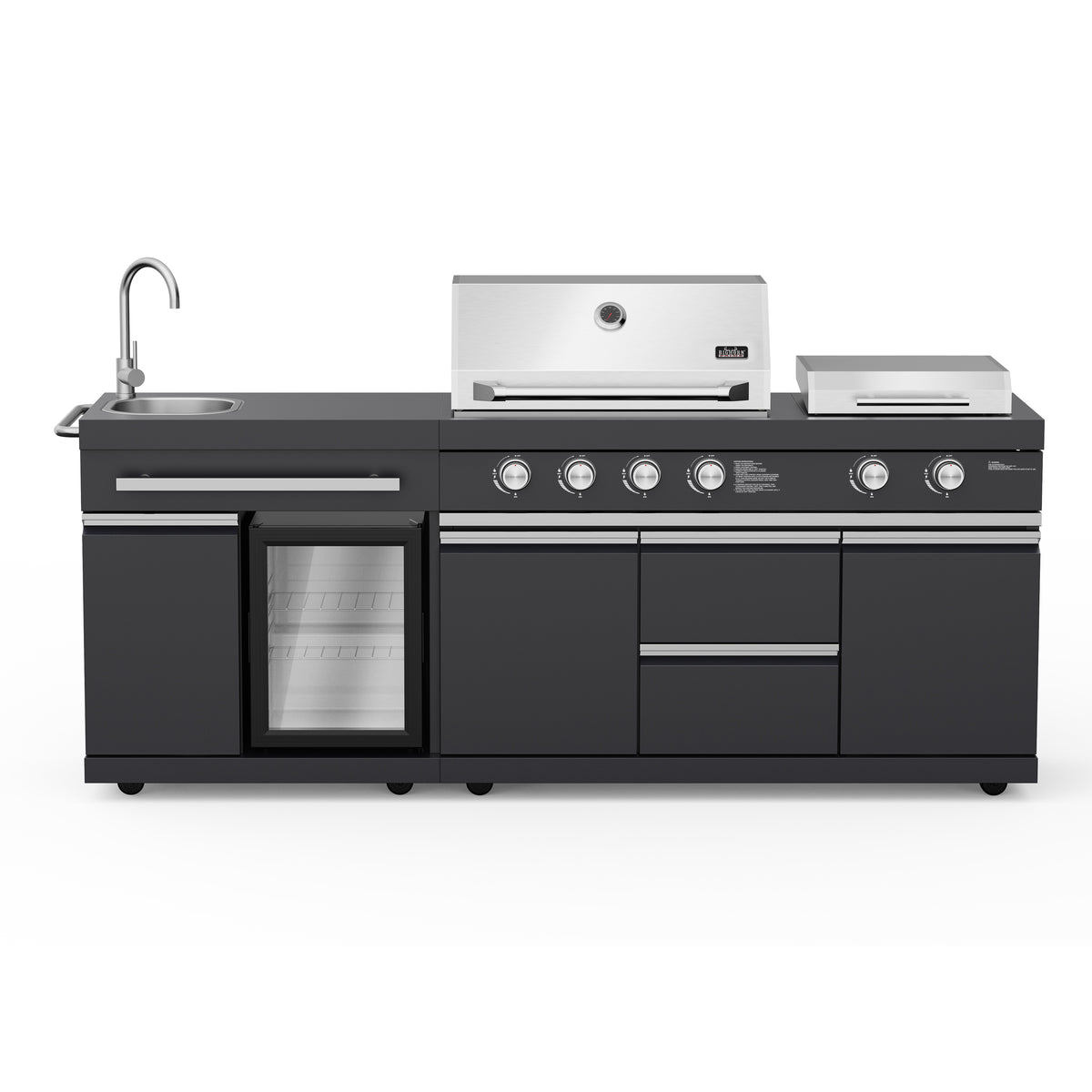
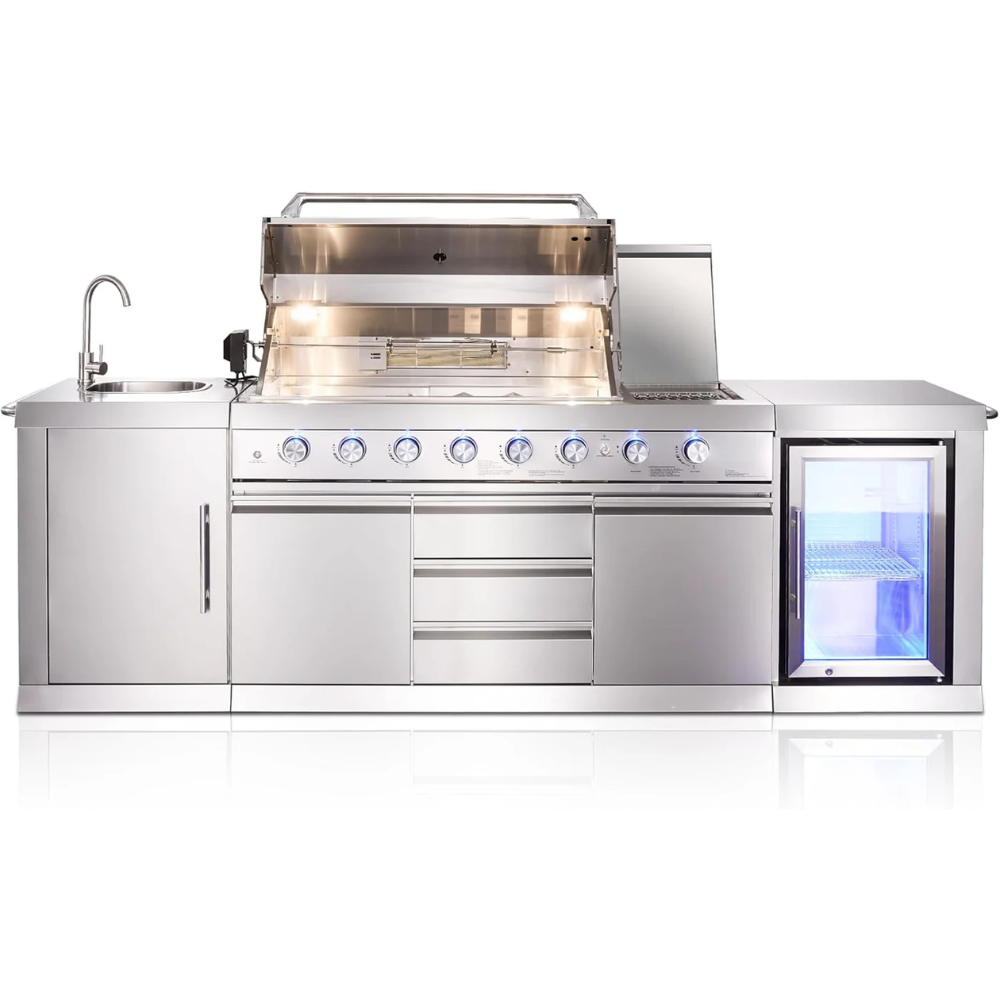
Six or more main burners shine when you host often, cook multiple courses outdoors, or want built-in island capacity. Side burners earn their keep for sauces, boiling corn, or keeping a pan of onions going while the main grate stays dedicated to meat.
Infrared side burners are a different tool: they deliver intense radiant heat for a quick sear or for finishing a steak without monopolizing the main grate. They are optional for most families and valuable for steak-focused cooks and entertainers. Explore layouts in the built-in grill island collection and the broader outdoor kitchen island collection when your patio is ready for a permanent station rather than a rolling cart.
More burners also mean more grate area to scrub and more fuel if you habitually light everything. Buy the zones you will use monthly, not the brochure photo you will use once.
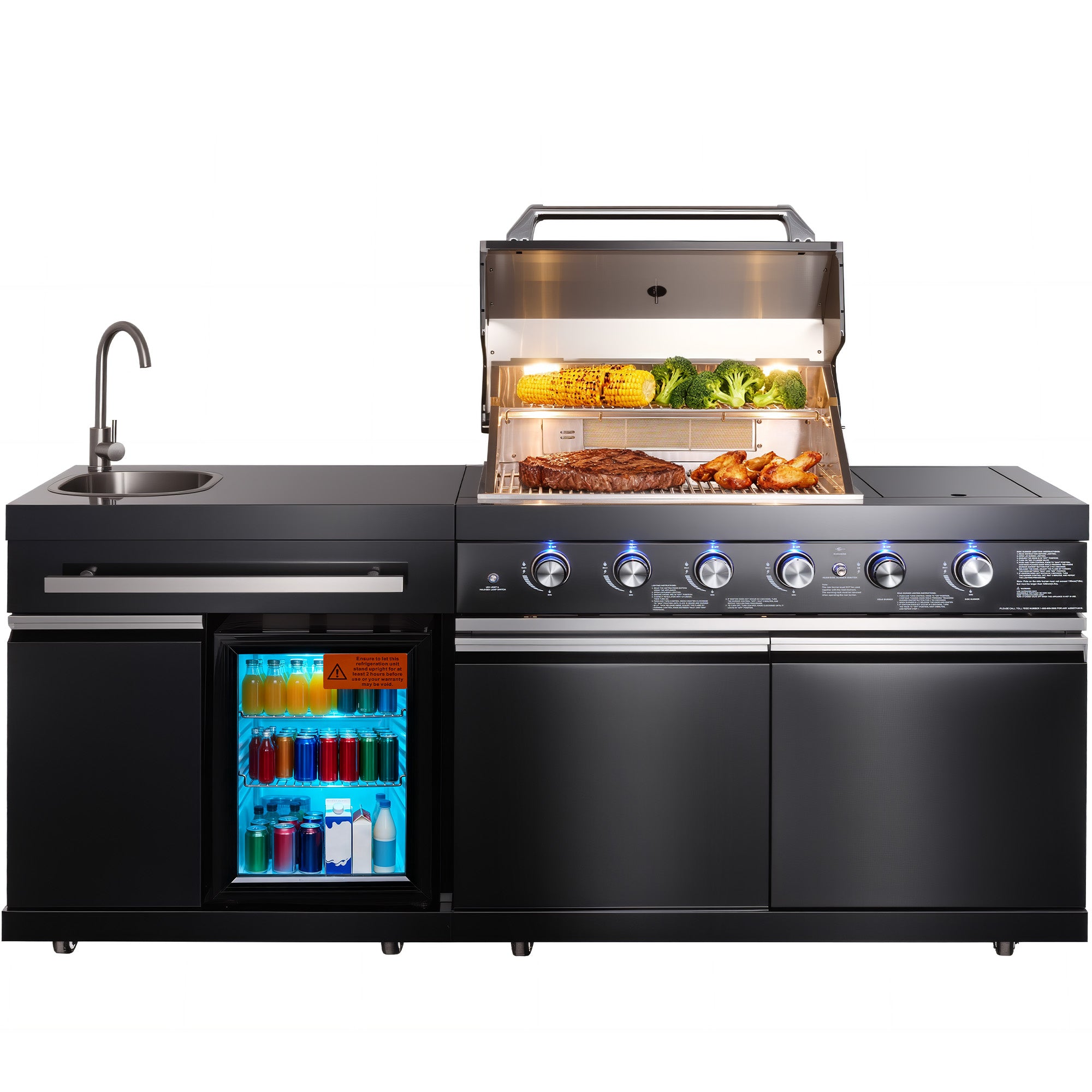
Table: household size, menu and recommended burner count
Use this matrix as a starting point, then adjust for how often you host and whether you need a side burner for pots.
| Household / guests | Typical menu | Suggested main burners | Notes |
|---|---|---|---|
| 1–2 people | Burgers, fish, veg | 2 | Balcony-friendly; limited indirect space |
| 3–4 people | Weeknight mixed grill | 3–4 | Sweet spot for most families |
| 4–6 people | Steaks + sides, occasional roast | 4 | Keep one burner off for indirect |
| 6+ / frequent parties | Multi-course outdoor meals | 6+ with side burner | Island or large cart; watch fuel use |
Space, fuel and budget trade-offs
Every extra burner asks for patio depth, a stronger cart or island base, and more propane on high-heat nights. Measure the space with the lid open and the side shelf extended before you fall in love with a wide canopy.
Fuel cost scales with how many burners you light, not with how many you own—but larger grills tempt you to preheat everything. Budget should cover a cover, a spare tank or natural-gas plan, and tools, not only the sticker price on the firebox. If your HOA or balcony rules limit open flame or tank size, confirm those constraints before you size up; some buildings push cooks toward compact carts or electric options instead.
Think in three costs: purchase, patio, and weekly use. Purchase is obvious. Patio includes a level pad, clearance from siding, and sometimes a longer hose run or natural-gas permit. Weekly use is propane or utility gas plus cleaning time. A grill that is slightly smaller but used with better zoning often cooks more food per pound of propane than a giant canopy lit on high “just in case.”
For outdoor fire safety around grills and fuel, review the NFPA grilling safety page, keep a close eye on grease buildup, and follow clearance distances in your manual. General home-fire readiness tips from Ready.gov are a useful household checklist alongside the grill manual. Consumer education hubs such as the CPSC fire-safety center reinforce why outdoor cooking belongs outdoors, away from eaves and garage interiors.
If you are comparing propane carts with a utility hookup, the American Gas Association overview of residential natural gas helps explain the fuel side at a high level; conversion details remain model-specific through the manufacturer.
Where an infrared side burner earns its place
An infrared side burner is worth the slot when you regularly sear steaks, finish thick chops, or want restaurant-style crust without crowding the main grate. It is less useful if you mostly slow-cook chicken pieces and vegetables on medium heat.
Think of it as a specialty zone: intense radiant heat for short jobs, not a replacement for even main-burner roasting. If your wish list is “better steak nights” more than “more hot dogs at once,” prioritize an infrared side or a dedicated infrared grill over a seventh conventional burner. Pairing a solid four-burner main grate with one strong sear station often beats an unused six-burner sea of medium heat.
What is the typical size of a gas grill?
Most family gas grills fall in the mid-size cart class.
Typical primary cooking areas land around the mid-200s to high-400s of square inches for everyday backyard units, with portable 2-burner models smaller and island builds larger. Width on the patio often matters more than the brochure square-inch number.
Manufacturers quote primary grate area separately from warming racks. A “typical” four-burner family grill is wide enough for a row of burgers plus a vegetable basket, with a lid tall enough for a small roast on indirect heat. Measure your doorways and the final pad location; a grill that is average on paper can still be too deep for a narrow balcony once the side shelf is up. When you compare models, match cooking area to your largest regular meal, not to a once-a-year feast.
Agency food-safety guidance still applies no matter the size: use a thermometer and safe handling practices from USDA FSIS grilling advice when cooking poultry and ground meats.
Conclusion
Choose burners for the meals you cook most weeks: two for compact living, four for most families, and six-plus with a side burner when entertaining is routine. Buy zones and grate space you will use, then confirm patio rules and fuel logistics before you upgrade.
Compare cart and island layouts in Big Horn Outdoors Grills & Griddles when you are ready to match burner count to your household.
FAQ
What is the typical size of a gas grill?
Most family gas grills offer a mid-size primary cooking area suitable for a full weeknight meal for four, with portable two-burner units smaller and outdoor kitchen islands larger. Compare primary grate square inches, not warming racks, and measure your patio with the lid and side shelf open. Choose the size that fits your largest regular meal rather than a rare holiday feast.
What type of gas for a barbecue?
Most backyard gas grills in the U.S. ship for liquid propane cylinders; some models can be converted or ordered for natural gas where a utility line exists. Use only the fuel your manual specifies, with the correct regulator and orifices. Never jury-rig a tank adapter. Confirm HOA or building rules on propane storage before you buy.
How to start a barbecue?
Outdoors only: open the lid, make sure burners are off, open the tank valve slowly, then light with the grill's igniter or a long match following the manual. If it does not light quickly, shut gas off, wait for gas to clear, and retry. Keep children and pets back, and review NFPA grilling fire-safety guidance before the season.
What is high heat for a gas grill?
High heat usually means burners on high with the lid closed until the grate is thoroughly preheated—often in a range suitable for searing steaks after a proper preheat. Exact grate temperatures vary by grill, wind, and thermometer placement. Use high for searing, then move food to a cooler zone to finish without burning the exterior.
Explore more in the Gas Grilling Guides.
More to Read
Fireproof Grill Mat Under Pizza Ovens and Infrared Grills
Place a fireproof grill mat to catch grease and sparks under ovens and grills. Confirm the live 48-by-30-inch claims, and use a cart when you need ...
No Oven Spring on a High-Heat Pie: Dough Temp, Launch and Floor
Diagnose no oven spring on a high-heat pizza by checking dough temperature, launch handling, and floor heat before you spend another mix changing t...
Heat-Resistant BBQ Gloves: Temperature Ratings and Wet-Grip Limits
Read a 1472°F glove rating as a short, dry, instant figure. Wet or oily conditions change grip, so let long peels reach into hot ovens and grills.
