
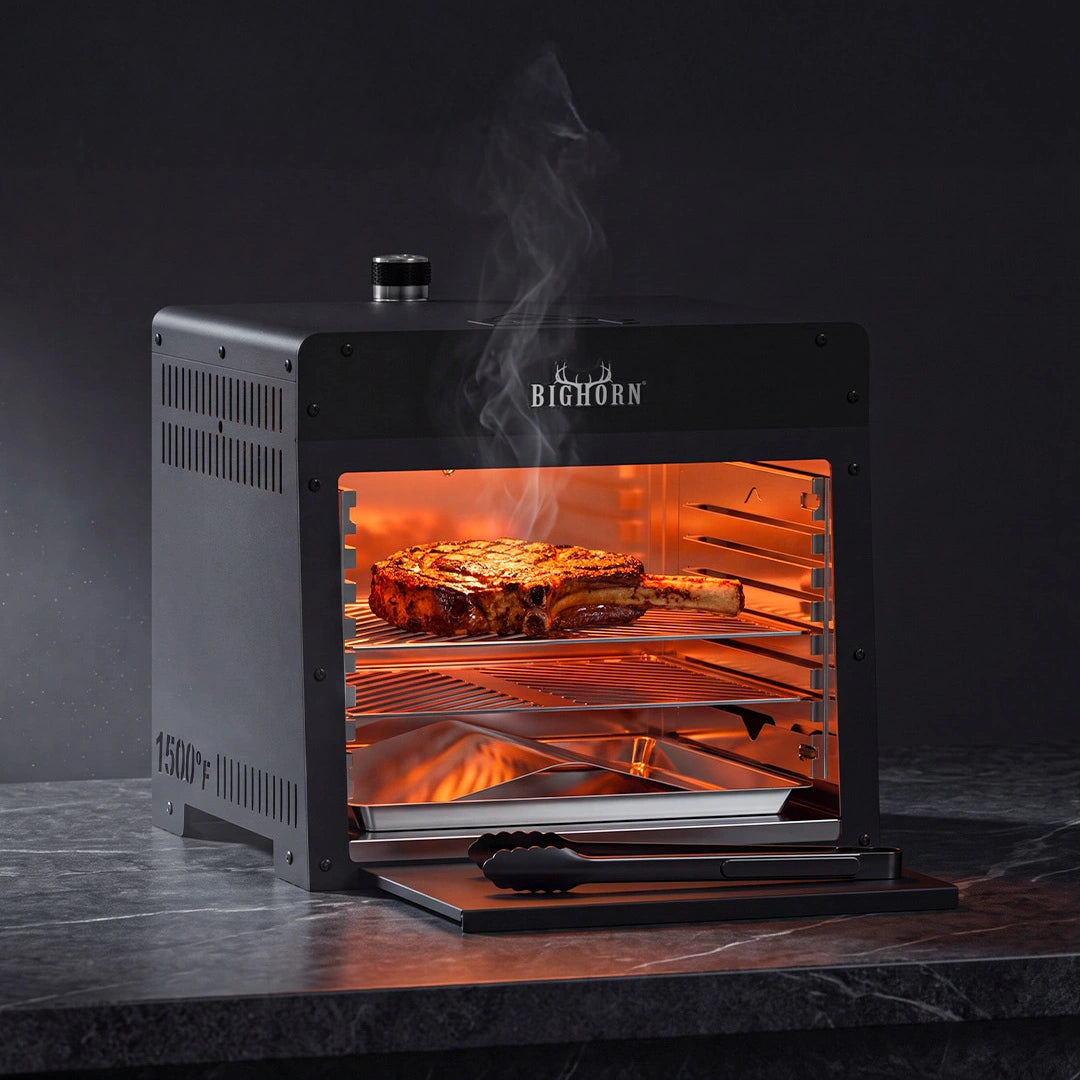

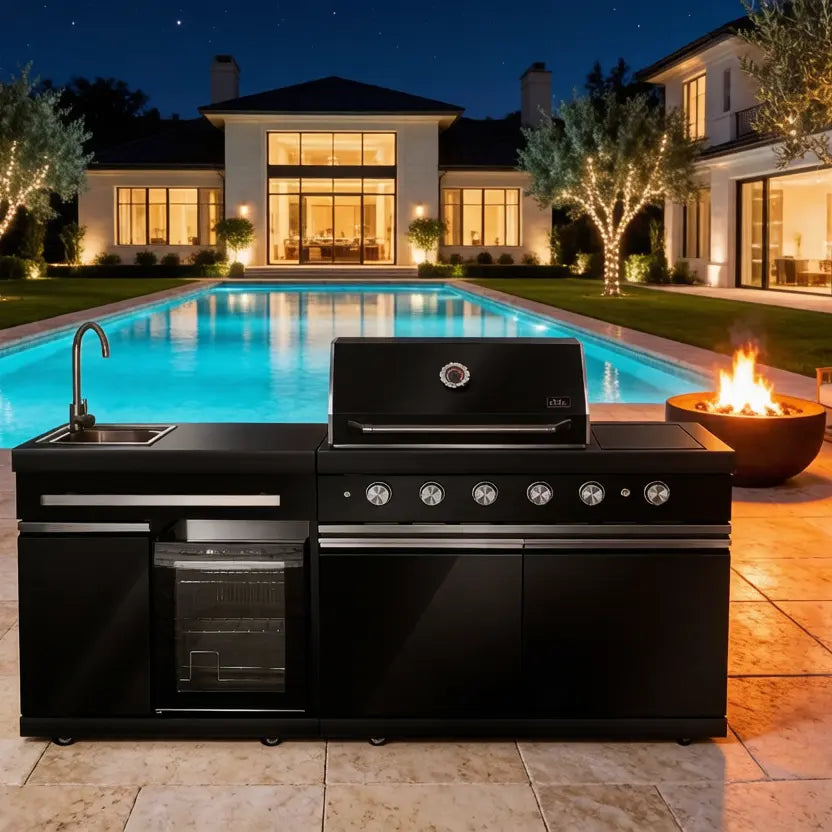
Preheat the infrared grill, season a dry ribeye, and sear it close to the burner until the crust forms. Then monitor the internal temperature and rest the steak for about 5 minutes. The Big Horn Outdoors infrared broiler reaches 1,500°F in 3 to 5 minutes and can finish a ribeye in about 5 minutes.
How to Choose a Ribeye
Choose a ribeye that is at least 1 inch thick, with even marbling and a dry, red surface. Thicker cuts sear better because they can develop a crust before the center overcooks.
Marbling, the white flecks of fat inside the muscle, is what makes ribeye flavorful and forgiving. A thicker cut gives you more time to build a crust while the center climbs toward your target temperature. Very thin steaks are harder to sear because the center cooks through before the surface browns. Look for even thickness so the steak cooks uniformly on the rack.
How to Season a Ribeye for the Grill
Pat the ribeye dry and season it generously with salt just before cooking, adding pepper if you like. A dry, well-salted surface browns faster and forms a better crust.
Salt draws moisture to the surface early on, so season shortly before grilling and pat the steak dry again if beads of water appear. Pepper can burn at very high heat, so add it either at the start in moderation or after cooking. Keep the seasoning simple; a ribeye already has plenty of fat and flavor. The dry surface matters more than the exact seasoning blend.
How Hot Should the Infrared Grill Be for Ribeye?
The grill should be as hot as possible for the sear — around 1,500°F on the Big Horn Outdoors infrared broiler. Very high heat browns the surface quickly so the center stays medium-rare.
High heat is what separates a grilled ribeye from a pan-seared one. At 1,500°F, the surface forms a dark crust in seconds, before the heat travels inward. A lower temperature forces a longer cook, which overcooks the center. Preheat fully and let the stone or grate absorb heat before the steak goes on, so the surface browns immediately rather than steaming.
How Long Do You Cook a Ribeye on an Infrared Grill?
A ribeye finishes in about 5 minutes on the Big Horn Outdoors infrared broiler, depending on thickness and rack position. Sear close to the burner, then check the internal temperature rather than relying on time alone.
Time is a rough guide, not the final word, because thickness and starting temperature change the result. Sear the first side until a crust forms, flip or adjust the rack, and keep checking the center. The listed "steak in about 5 minutes" figure assumes a typical cut under appropriate conditions. Pull the steak slightly before the target temperature, because carryover heat will raise it a few degrees during resting.
How to Check Ribeye Doneness
Check doneness with an instant-read thermometer in the thickest part of the steak, not by time or color alone. Aim for 130–135°F for medium-rare, then rest the steak.
An instant-read thermometer is the most reliable way to avoid overcooking. Insert it into the center of the thickest section and read the temperature. The table below lists common doneness targets, which are standard ranges rather than product-specific measurements.
| Doneness | Internal Temperature |
|---|---|
| Rare | 120–125°F |
| Medium-rare | 130–135°F |
| Medium | 140–145°F |
| Medium-well | 150–155°F |
How to Rest and Slice a Ribeye
Rest the ribeye for about 5 minutes before slicing, then cut against the grain. Resting keeps the juices in the steak, and slicing against the grain keeps it tender.
As the steak rests, the fibers relax and hold onto moisture, so the juices stay in the meat instead of running onto the board. The internal temperature also rises a few degrees during this time, which is why you pull the steak slightly early. When you slice, cut across the muscle fibers rather than parallel to them, which shortens the fibers and makes each bite more tender. Five minutes of resting is enough for a ribeye.
Key Facts
Big Horn Outdoors lists the following specifications at a glance.
- Time to full output: about 3 to 5 minutes (Big Horn Outdoors' listed figure)
- Maximum temperature: up to 1,500°F (listed)
- Burner output: 19,000 BTU (listed)
- Ribeye: finished in about 5 minutes (listed), targeting 130–135°F for medium-rare before a 5-minute rest
- Heat control: ten rack positions for moving the steak closer to or farther from the burner (listed)
Common Ribeye Mistakes to Avoid
The most common mistakes are cooking a wet steak, using too little heat, and skipping the rest. Each one either weakens the crust or makes the steak dry.
A wet surface steams instead of searing, so pat the steak dry before it goes on. Low heat forces a longer cook that overcooks the center before a crust forms. Skipping the rest lets the juices run out the moment you slice. Fix these three first — dry surface, high heat, and a proper rest — and the ribeye improves immediately.
Big Horn Outdoors Product Team
"Our view on ribeye is that the fat does a lot of the work, but heat and timing do the rest. The Big Horn Outdoors infrared broiler reaches 1,500°F in minutes, so a thick ribeye can form a crust before the center overshoots. We cook by internal temperature rather than the clock, and we pull slightly early so carryover finishes the job during the rest. The adjustable rack is what makes that control practical."
Conclusion
The perfect ribeye on an infrared grill comes down to a dry, well-marbled steak, very high heat, and cooking by internal temperature. The Big Horn Outdoors infrared broiler reaches 1,500°F in minutes and finishes a ribeye in about five, while the adjustable rack lets you control the sear. Aim for 130–135°F for medium-rare, rest for about five minutes, and slice against the grain.
Key Takeaways
- Start with a dry, well-marbled ribeye. Drying the surface is what allows the crust to form quickly.
- Preheat to full output. The infrared broiler hits 1,500°F in minutes and finishes a ribeye in about five.
- Use the rack to control the sear. Move the steak closer for a harder crust or lower for a gentler finish.
- Cook to temperature and rest. Target 130–135°F for medium-rare, then rest about five minutes before slicing against the grain.
Questions to Ask Before Buying
- Which cut am I cooking? Ribeye rewards high heat with a crust and a juicy, marbled center.
- Do I have an adjustable high-heat source? Rack control is what prevents burning before the center is done.
- Will I use a thermometer? Doneness comes from internal temperature, not guesswork.
FAQs
How thick should a ribeye be for infrared grilling?
At least 1 inch, so it can develop a crust before the center overcooks.
What temperature is medium-rare ribeye?
About 130–135°F in the center, measured with an instant-read thermometer.
How long do I rest a ribeye?
About 5 minutes, so the juices redistribute and the temperature settles.
Do I need to flip the ribeye?
Flipping or adjusting the rack helps even doneness, but top-down infrared heat reduces the need for constant turning.
Sources
- USDA FSIS, Safe Minimum Internal Temperature Chart — USDA FSIS, Safe Minimum Internal Temperature Chart
- NFPA, Grilling Safety — NFPA, Grilling Safety
Explore more in the Grill Recipes.