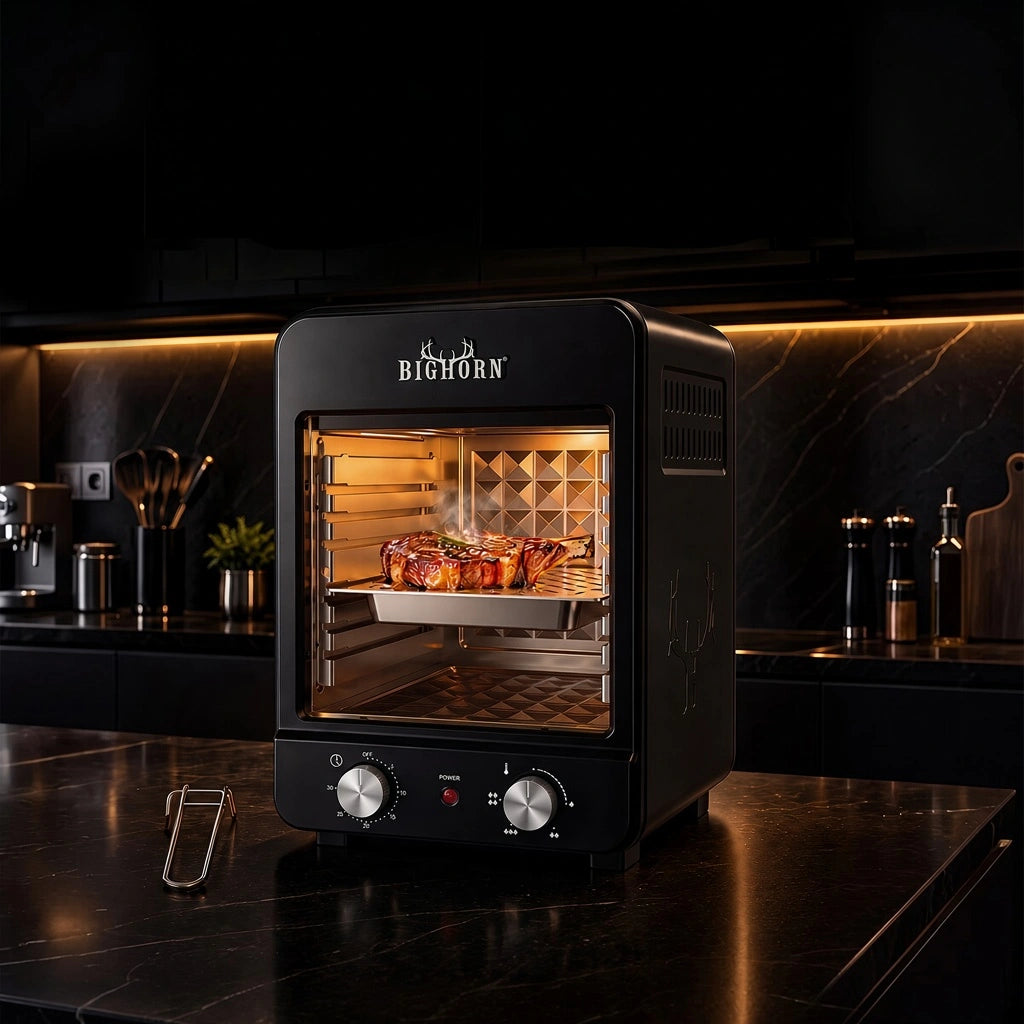



Ribeye, New York strip, and filet mignon are the best steaks for a 1500°F infrared grill. High heat suits well-marbled or thick cuts that form a crust before the center overcooks. The Big Horn Outdoors infrared broiler reaches 1,500°F in 3 to 5 minutes and finishes a steak in about 5 minutes.
What Makes a Steak Cut Good for Infrared Grilling?
A steak that is thick, well-marbled, or evenly shaped performs best on infrared heat. These qualities let the surface brown fast while the center reaches the target doneness without drying out.
Infrared heat is intense and fast, so the best cuts are those that benefit from a hard sear. Marbling — the white flecks of fat inside the muscle — bastes the meat as it renders and adds flavor. Even thickness helps the steak cook uniformly under the direct, top-down heat. A cut with good marbling and at least an inch of thickness is forgiving and rewards the high heat.
The Best Steaks for a 1500°F Infrared Grill
The best steaks are ribeye, New York strip, filet mignon, and sirloin, with flank or skirt steak as a fast, flavorful option. Each benefits from the fast crust that infrared heat provides.
Ribeye offers the most marbling and flavor. New York strip balances a firm texture with a clean beefy taste. Filet mignon is lean and tender but needs a quick sear to avoid drying out. Sirloin is leaner and more affordable, while flank and skirt are thin, fast-cooking cuts that sear in about a minute or two. The table below summarizes the cuts and how to approach them.
| Cut | Marbling | Best Doneness | Approach |
|---|---|---|---|
| Ribeye | High | Medium-rare to medium | Sear hot, then rest |
| New York strip | Medium-high | Medium-rare | Sear, lower rack to finish |
| Filet mignon | Low | Rare to medium-rare | Quick sear, watch the center |
| Sirloin | Low-medium | Medium-rare to medium | Sear hot, slice thin |
| Flank / skirt | Low | Medium-rare | Fast sear, slice against the grain |
How a Ribeye Performs on Infrared Heat
A ribeye performs very well because its high fat content bastes the meat while the intense heat forms a crust. The Big Horn Outdoors infrared broiler can finish a ribeye in about 5 minutes.
The fat in a ribeye renders during the fast sear, which keeps the interior moist and adds richness. Infrared heat browns the surface quickly, so the fat and crust develop before the center overcooks. A thicker ribeye gives more room to build that crust, which is why it is the most reliable cut on a high-heat grill.
How a New York Strip Performs
A New York strip performs well because its moderate marbling and firm texture hold up to high heat. It develops a clean, beefy crust while staying medium-rare in the center.
The strip is leaner than a ribeye, so it needs slightly more attention to avoid overcooking. Sear it close to the burner for a crust, then move it to a lower rack position if the center climbs too quickly. The strip rewards the same dry surface and high heat as a ribeye, but with a leaner result.
How to Cook Thinner Cuts Like Sirloin, Flank, or Skirt
Cook thinner cuts fast and hot, then slice them against the grain. Because they are leaner and thinner, they sear in about a minute or two and can overcook quickly.
Flank and skirt are thin, so the margin between a good sear and a dry result is small. Pat them dry, sear briefly on each side, and check the center often. Sirloin is a bit thicker but still leaner than ribeye, so aim for medium-rare and slice it thin. The adjustable rack helps here: a slightly lower position buys time without losing the crust.
Key Facts
Big Horn Outdoors lists the following specifications at a glance.
- Time to full output: about 3 to 5 minutes (Big Horn Outdoors' listed figure)
- Maximum temperature: up to 1,500°F (listed)
- Burner output: 19,000 BTU (listed)
- Steak: finished in about 5 minutes (listed), with 130–135°F as the medium-rare target
- Heat control: ten rack positions for moving food closer to or farther from the burner (listed)
How to Cook Different Steaks to the Right Doneness
Use an instant-read thermometer and pull each cut slightly before its target temperature. Rest every steak for about 5 minutes so carryover heat finishes it.
Doneness is about the center temperature, not time. A thick ribeye and a thin flank steak reach their targets at different speeds, so check each one rather than relying on the clock. Pull the steak a few degrees early and let the rest bring it up. The fast heat of infrared means the window is short, so monitoring temperature is more important than on a slower grill.
Common Mistakes When Cooking Steak on Infrared
The most common mistakes are cooking a wet steak, using a thin cut at maximum heat, and skipping the rest. Each one makes the result dry or uneven.
A wet surface steams instead of sears, so always pat the steak dry. Thin cuts at full heat can overcook before a crust forms, so use a lower rack or a shorter sear. Skipping the rest lets juices run out. Dry surface, appropriate rack position, and a proper rest fix most problems.
Big Horn Outdoors Product Team
"Our view is that the best steak for infrared grilling is the one with enough marbling and thickness to benefit from the heat. Ribeye and New York strip are the most forgiving, while leaner cuts need more attention. The Big Horn Outdoors infrared broiler reaches 1,500°F in minutes, so the margin between a great crust and an overcooked center is narrow — which is why we cook by internal temperature and use the adjustable rack for control."
Conclusion
Ribeye, New York strip, filet mignon, and sirloin are the best steaks for a 1500°F infrared grill, with flank and skirt as fast alternatives. Well-marbled, thick cuts reward the intense heat with a deep crust and a tender center. Dry the steak, choose the right rack position, and cook by internal temperature to get the most from the Big Horn Outdoors infrared broiler.
Key Takeaways
- Well-marbled, thick cuts reward infrared heat. Ribeye, New York strip, filet, and sirloin all sear well at 1,500°F.
- Flank and skirt are fast alternatives. Thinner cuts cook quickly and need close attention.
- Dry the steak and choose the right rack position. Both determine how fast the surface browns.
- Cook by internal temperature. Medium-rare is a 130–135°F preference; the USDA safe minimum for steak is 145°F.
Questions to Ask Before Buying
- Which cuts do I prefer? Choose a cut that suits intense, fast searing rather than slow braising.
- Do I want medium-rare precision? A thermometer keeps a thick steak from overshooting.
- How many am I cooking? The 16-inch broiler is best for a few steaks at a time.
FAQs
What is the best steak for an infrared grill?
Ribeye, because its marbling bastes the meat while the high heat forms a crust.
Can I cook lean cuts on infrared?
Yes, but lean cuts like filet mignon need a quick sear and close attention to avoid drying out.
How long does steak take on a 1500°F infrared grill?
About 5 minutes for a typical cut, depending on thickness and rack position.
Should I rest the steak after cooking?
Yes, rest for about 5 minutes so the juices redistribute and carryover heat finishes it.
Sources
- USDA FSIS, Safe Minimum Internal Temperature Chart — USDA FSIS, Safe Minimum Internal Temperature Chart
- NFPA, Grilling Safety — NFPA, Grilling Safety
Explore more in the Infrared Grill Buying Guides.