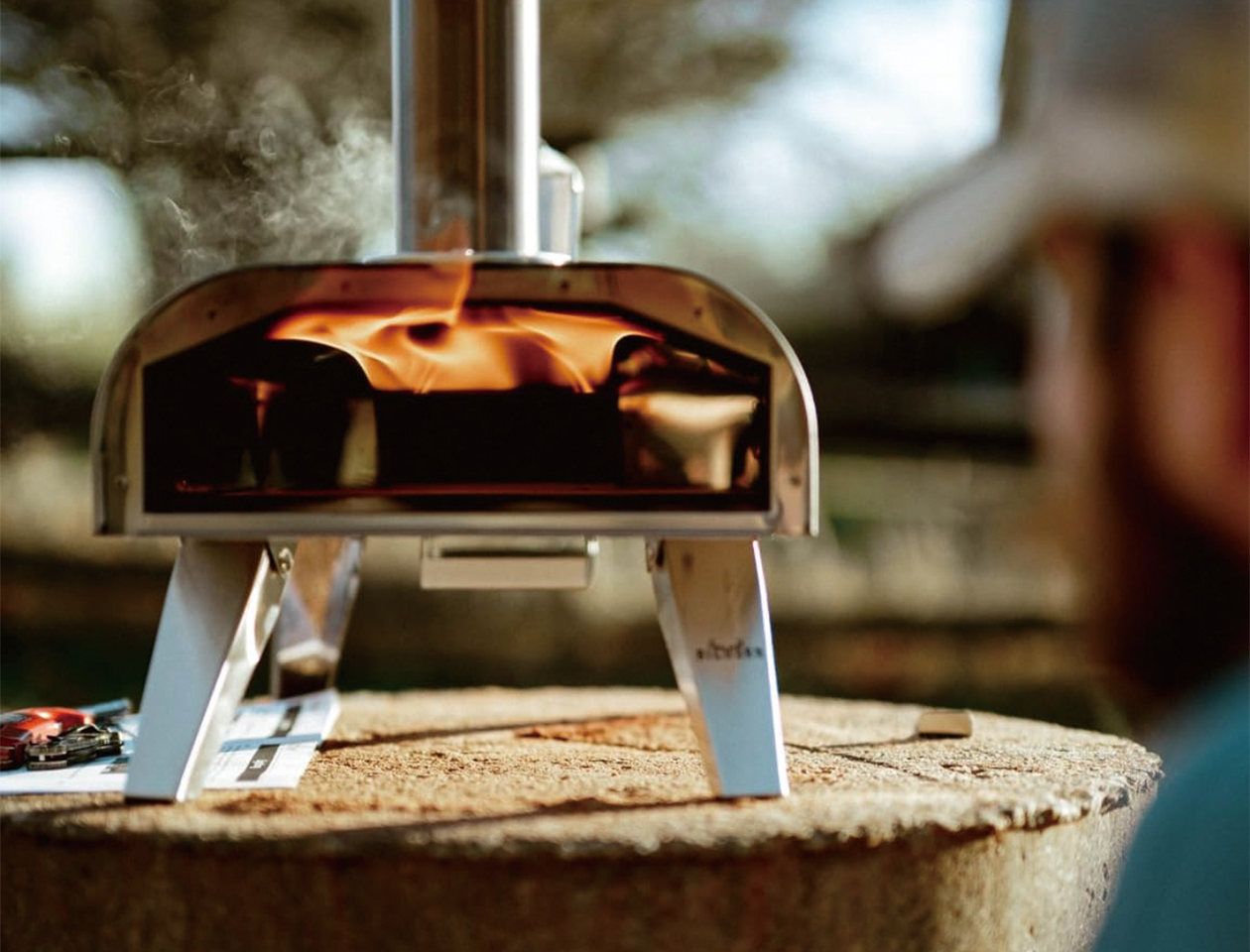
A breakfast pizza turns the morning meal into the same fast, hot bake as dinner pizza: dough on a hot stone, toppings in a careful order and a few minutes of oven time. The difference is eggs. Raw eggs on a blazing pizza stone set and overcook before the crust finishes, so breakfast pizzas need a crust strategy, cooked or quick-set eggs and a timing plan that brings the whites, yolks and cheese off the stone together. The three recipes below — bacon and egg, sausage and hash brown, and veggie with feta — are built for a high-heat pizza oven, with the egg timing explained for each.
What makes breakfast pizza different
Breakfast pizza differs from dinner pizza in three ways. The toppings are denser and wetter — eggs, potatoes and cheese hold moisture that steams a crust; the proteins are often pre-cooked, because bacon and sausage do not finish in a two-minute bake; and the egg is the timing problem, because a whole egg needs more time than the crust does and less heat than the stone delivers. The method that works treats the pizza like a layered bake: the crust gets a head start, the cooked toppings go on next and the eggs go on late enough to set without overcooking.
The good news is that a pizza oven's heat can produce a genuinely great breakfast pizza — crisp crust, bubbling cheese and an egg with a set white and a soft yolk — when the layers are timed. Think of the pizza as an assembly line where every ingredient is ready for its stage: the bacon is crisp before it meets the dough, the potatoes are cooked before they hit the stone and the eggs are added at the moment when a short blast will set them. Breakfast pizza rewards preparation more than any dinner pizza, because the morning does not wait for a second attempt.
Dough strategy for morning bakes
Use a dough that bakes fast and sturdy: the same base as your dinner pizza, stretched a little thicker so it can hold eggs and potatoes without tearing. A thicker rim gives the pizza structure and a handle for the egg yolk that may run; a paper-thin center will go soggy under moist breakfast toppings. Make the dough the night before if you can — cold-fermented dough stretches easily in the morning — or buy dough and let it come to room temperature before stretching. Dust the peel well, because the first launch of the day deserves the same care as the last pizza of the night.
Pre-bake the base for the breakfasts with wet toppings. A short base bake — just until the crust sets and begins to color — gives the dough a head start before the eggs and potatoes add their moisture, and it is the single most reliable fix for a soggy breakfast pizza. If your oven runs very hot, the base bake may be all the crust needs, with the toppings finishing in the residual heat or a brief second blast. The recipes below each state whether they use a pre-baked base, because the egg timing depends on it.

Recipe 1: classic bacon and egg
Cook the bacon until crisp before the pizza goes anywhere near the oven — crispy bacon holds up in the bake, while soft bacon turns chewy and greasy. Stretch the dough, brush the base lightly with olive oil or bacon fat, and scatter a moderate layer of shredded cheese and the crisp bacon over it. Bake the base with the cheese and bacon until the crust is set and the cheese begins to melt, then pull the pizza, crack eggs onto the surface — one per slice area, keeping them spaced — and return it to the oven just long enough for the whites to set while the yolks stay soft. Pull it the moment the whites are set; if you prefer firm yolks, give it a few seconds more, and if you prefer no runny yolk, cook the eggs separately and add them at the end.
Egg timing is the whole recipe: eggs added too early overcook and toughen; eggs added too late leave raw whites. The reliable pattern is to add the eggs after the crust and cheese have had their bake, then finish with a short blast that sets the whites. Season the eggs with salt and pepper before they go in, and serve the pizza immediately — a breakfast pizza waits for no one, and the eggs are at their best the moment they come off the stone.
Recipe 2: sausage and hash brown
Brown the sausage and crisp the hash browns before assembly, because neither finishes in the oven and both release moisture as they cook. Stretch the dough and give it a short base bake if your toppings are wet; then layer the cooked sausage, crispy hash browns and cheese over the base, and bake until the cheese melts and the crust is golden. For the egg element, either crack eggs on top in the last minute of the bake or serve the pizza with a fried egg on each slice — the second version is easier to time and gives every slice a fresh yolk. A drizzle of hot sauce or a sprinkle of chives finishes it.
This recipe is the heartiest of the three and the most forgiving, because everything except the cheese is already cooked — the oven only has to melt, brown and set. Keep the hash browns in small pieces so they crisp rather than steam, and drain the cooked sausage well so the pizza does not sit in grease. If the pizza needs a little more time for the crust after the cheese melts, move it to the cooler part of the stone rather than leaving it in the hot center, where the cheese would burn before the base finished.
Recipe 3: veggie and feta
For a lighter breakfast pizza, cook the vegetables before they meet the dough: sauté mushrooms, peppers and spinach briefly to drive off their moisture, because raw vegetables release water on the stone and steam the crust. Stretch the dough, brush the base with olive oil, and scatter the cooked vegetables with crumbled feta and a little mozzarella. Bake until the crust is golden and the cheese browns at the edges, then finish with eggs the same way as the other recipes — cracked on top for the last minute, or served as a fried egg per slice. Finish with fresh herbs and black pepper.
The veggie pizza proves the breakfast method scales to any topping: pre-cook the wet ingredients, give the crust its bake and time the eggs last. Feta browns beautifully at pizza-oven heat, but it also salts the pizza, so season lightly before the feta goes on. If you want the eggs fully cooked for a group, whisk them with a little milk and pour the mixture into a ring of the crust near the end of the bake, letting it set like a frittata in the pizza's center — a neat way to feed several people from one pie with no runny-yolk debate.

Timing and oven notes
The timing notes apply across all three recipes because they share the same structure. Preheat the oven fully before the first pizza, and keep the dough and toppings staged so the bake is a sequence, not a scramble. The base bake for a breakfast pizza is usually short — just enough to set the crust before the wet toppings arrive; the final bake after the eggs is shorter still, measured in the seconds it takes the whites to set. Watch the pizza rather than the clock, because a hot stone and a cold morning can shift the timing by more than a minute.
Cook breakfast pizzas one at a time and serve each immediately, the way you would serve an omelet. If you are feeding a group, pre-bake several bases, keep them on a tray, and finish each with its toppings and eggs as the oven cycles — the bases hold while the finished pizzas go straight to the table. The oven's heat does the work; the cook's job is the order, and the order is always the same: crust first, cooked toppings next, eggs last, pull at the set whites. Big Horn's 15-inch dual burner gas pizza oven and 12-inch wood pellet oven both handle the morning bake, and the pizza oven collection shows the full range.
Breakfast pizza is the oven's proof that it is not a one-trick appliance: the same stone that baked last night's dinner bakes this morning's eggs, bacon and cheese with the same speed and heat. Pre-cook the wet toppings, pre-bake the base when it helps and time the eggs last — then breakfast becomes the meal that makes the pizza oven worth firing up twice in one day.
These recipes and cook guides are editorial guidance from the Big Horn Outdoors team. Cooking results vary with equipment, fuel, ingredient temperature and weather, so rely on doneness signals and an instant-read thermometer instead of exact times. The equipment shown reflects official Big Horn Outdoors listings reviewed September 5, 2026; prices and availability can change at checkout.