







Feeding twelve hungry campers is not the same as doubling a two-person menu. Camping meals for a large group succeed when you plan around burners, coolers, and safe holding—not around Pinterest plating.
This planner covers menus for roughly 12–20 people, quantity tables, stove strategy, water, and cleanup so the cook crew sleeps too.
Plan the meal around burners, not recipes
Count active burners before you fall in love with a recipe. A single two-burner propane camping stove can feed a crowd if one pot simmers while another sears, but it cannot run three sauté pans at once.
Choose meals with staggered heat: boil pasta water first, hold sauce warm, finish protein last. Or cook in waves and send trays to a holding cooler or insulated bin that stays out of the danger zone.
Assign roles—fire/fuel, chopping, runner, dishwasher—so six helpers are not hovering over two knobs. If pizza night is on the table for a base-camp crowd, the pizza calculator helps portion dough and toppings before you leave home.
Three menus: breakfast, lunch, dinner for 12-20
Build each menu around one hero pot or griddle sequence and a make-ahead element.
Breakfast: big-batch scrambled eggs or breakfast burritos, pre-cooked bacon reheated, fruit, and coffee/tea water on a dedicated burner. Tortillas wrap eggs so late risers can eat without a second scramble.
Lunch: deli sandwich bar or tortilla wraps packed from the cooler, plus a thermos of soup if mornings allow a simmer. Keep mayonnaise-based salads iced.
Dinner: chili or taco bar (protein in one pot, toppings cold), or foil-tray nachos finished in batches; serve with a huge salad kit. Dessert can be foil-packet fruit or store-bought cookies to spare burners.
Rotate cuisines across nights so shopping lists reuse onions, oil, spices, and tortillas. More outdoor recipe sparks live on the Big Horn recipes blog.

Quantity table per person
Use these starting portions for active campers, then adjust for kids and big appetites. Buy a little extra staple carbs; they keep well.
| Item | Per person (approx.) | For 16 people |
|---|---|---|
| Protein (chili, taco meat, chicken) | 5–6 oz cooked | 5–6 lb |
| Eggs (breakfast scramble) | 2 eggs | 32 eggs |
| Tortillas / bread | 2 pieces | 32+ |
| Dry pasta or rice (side) | 3–4 oz dry | 3–4 lb |
| Salad greens | 1.5–2 cups | 2–3 large kits |
| Snacks (trail mix, bars) | 1–2 handfuls | Large shared bin |
Coffee water volume surprises people—plan multiple kettle cycles or a dedicated urn if your site allows. Fuel planning for the stove itself pairs with canister guidance elsewhere; pack spare propane before the first dinner, not after.
Batch cooking and holding food safely
Cook proteins fully, then hold hot foods hot and cold foods cold. The danger zone between refrigerator-cold and steaming-hot is where crowds get into trouble.
Use shallow containers so leftovers chill faster in coolers with plenty of ice. Reheat leftovers to a rolling hot temperature before serving again. Follow cookout hygiene from FoodSafety.gov outdoor event guidance and confirm meat temperatures with safe minimum internal temperature charts.
Label allergen pots (peanut sauces, shellfish) clearly. Hand-wash stations matter as much as recipes when sixteen hands touch serving spoons.
Two-burner vs multiple-stove setups
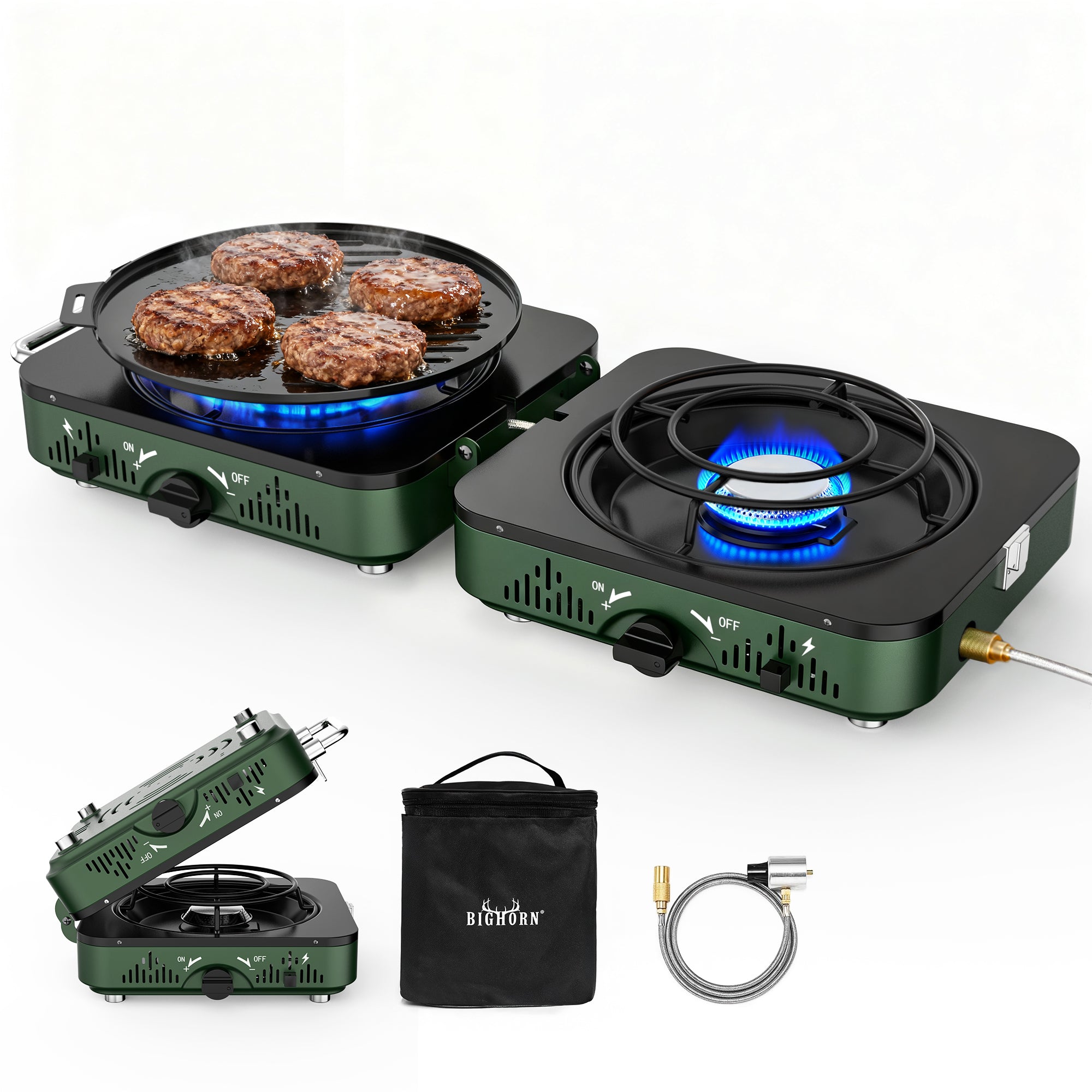
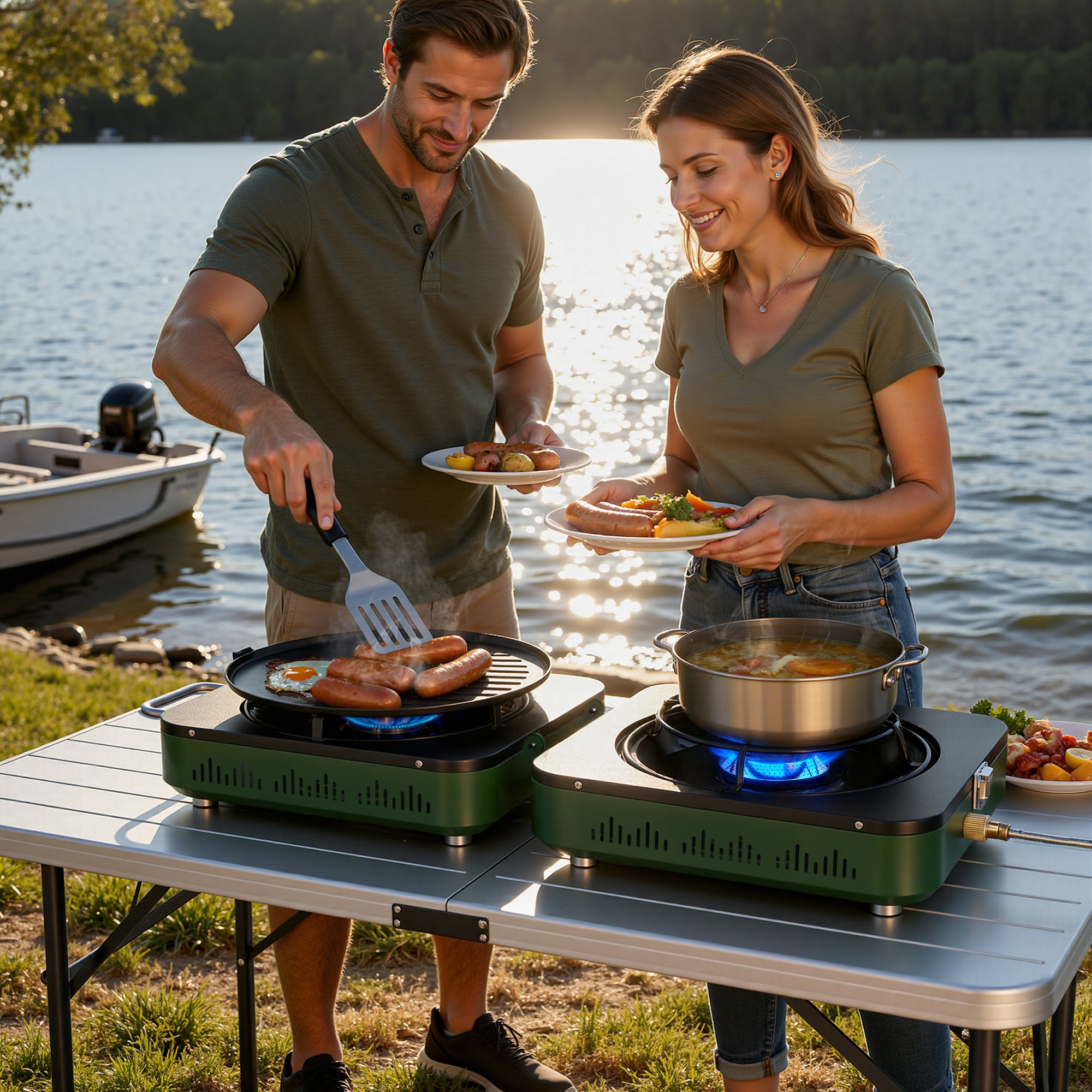
One two-burner stove is enough for disciplined menus. Two stoves unlock parallel boiling and sautéing—worth it for 20 people or short dinner windows after sundown.
If you add a griddle or second stove, appoint one lead cook to call timing so both stations do not peak simultaneously and empty the fuel. Keep stove spacing safe and hoses untangled.
Browse additional burners in the camping stove collection when your reunion has outgrown a single compact unit. Tailgate-style groups may also look at tailgating stove setups for parking-lot logistics.
Cleanup stations and water
Set a three-bin wash: scrape, wash, rinse. Greywater rules vary by campground—know them before you dump pasta water.
Estimate water high: drinking, cooking, coffee, and dish wash add up faster than cooler ice melt. Assign a water team with jugs so cooks are not hiking to the spigot mid-sear.
Trash and recycling bags hung before dinner prevent raccoons from scoring the taco bar. Wipe stove surfaces after grease nights so tomorrow’s breakfast does not taste like onions.
Shopping and packing list
Shop in layers: shelf-stable carbs and spices first, cooler proteins second, fresh herbs and greens last. Pre-chop at home when knife work would bottleneck the campsite.
Pack a shared spice kit, oil, salt, foil, trash bags, thermometer, tongs, and a marker for labels. Include spare propane, lighter, and a basic first-aid kit near the cook line—not buried in a tent.
Print the dinner timeline and tape it to a cooler lid. When thunderheads roll in, the list matters more than memory. Weather and fire restrictions can also change open-flame plans; check local alerts similar in spirit to wildfire readiness updates when camping in dry seasons.
What is the cheapest meal to make for a crowd?
Pot-based carb-and-bean meals usually win.
Chili, rice-and-beans, pasta with jar sauce, or oatmeal breakfasts stretch protein further than individual steaks while using one burner for long stretches.
Cheap does not mean unsafe or bland. Bloom spices in oil, add onions and garlic, and finish with fresh toppings so bowls feel generous. Buy store-brand staples and spend the saved money on ice and trash bags—the unglamorous items that keep group camping pleasant. If you want one nicer night, upgrade a single dinner rather than every meal.
Role cards for the cook crew
Print four role cards: Fuel Lead (propane, lighter, stove leveling), Prep Lead (knives, cutting board, trash), Heat Lead (burner timing, thermometer checks), and Wash Lead (water, bins, sanitizer). Rotate roles nightly so nobody burns out.
Heat Lead calls when a pot may start so Prep Lead is not still chopping onions. Wash Lead sets bins before dinner, not after the first sticky pan appears. Fuel Lead announces remaining canister or tank status at lunch so dinner is not a surprise.
Role cards sound corporate until the first rainy dinner with twenty people. Then they feel like kindness. Keep cards in a zipper bag with Sharpies and spare trash bags.
Rain plan and no-cook backups
Pack a no-cook dinner that still feels like a meal: rotisserie chicken from the last town stop, sturdy bread, hard cheese, cucumbers, and hummus. When lightning closes the cook window, you still eat together under the tarp.
Breakfast backups include yogurt, granola, and fruit. Lunch backups include peanut butter wraps if allergies allow. Label allergen backups clearly.
Rain plans also include stove placement under a dry, ventilated cook fly—never inside a sealed tent with sleeping people. Keep extinguishing water available even for “just a quick boil.”
Leftover strategy that prevents waste
Cook slightly under the dream amount of the richest protein and over on carbs that reheat well. Leftover chili becomes next-day nachos or baked potato toppings if your site has a second heat window.
Freeze a block of ice dedicated to leftovers so the drink cooler does not warm the food cooler. Shallow containers chill faster than deep stockpots shoved into ice.
Send leftover dry goods home with volunteers rather than abandoning half-used spice jars at camp. Group trips stay cheaper when staples travel to the next event.
Fuel math for 12–20 eaters
Assume more burner-minutes than a family of four by a wide margin. Dual breakfast burners and a long chili simmer can empty small canisters before dinner on day two.
Car campers should prefer a documented 20 lb tank setup when the stove allows it; otherwise pack disposables with a written count and a 50% buffer. Weigh empties to recalibrate the next trip.
Put Fuel Lead in charge of announcing remaining fuel at lunch. Surprise empty cylinders are a leadership failure, not bad luck.
Allergens and dietary lanes
Survey the group before shopping: peanuts, tree nuts, shellfish, gluten, vegetarian counts. Cook allergen proteins on foil or a dedicated pan when cross-contact matters.
Serve sauces on the side. Label serving spoons. Keep a simple ingredient list taped to the cooler lid for hosts who did not shop.
Dietary respect keeps reunions pleasant. The best chili recipe still fails if two cousins cannot touch the ladle safely.
When the group includes both car campers and tent campers, centralize cooking at one kitchen tarp so fuel and water logistics stay single-threaded. Split sleeping, not dinner, unless you intentionally run two complete cook systems with two Fuel Leads.
End each night with a ten-minute reset: trash sealed, dishes drying, tomorrow’s breakfast ingredients staged on one cooler shelf. Mornings feel human when dinner’s chaos is already boxed.
Confirm poultry and ground-meat temperatures with USDA FSIS temperature guidance when big-batch chili or taco meat sits on the stove line.
Campfire-adjacent open flames still deserve Smokey Bear prevention habits even when the main cook is on a propane stove.
Conclusion
Large-group camp cooking is logistics with a spatula. Match menus to burners, portion with a table, hold food safely, and staff cleanup like it is part of dinner. Do that, and twenty people eat on time without burning through morale—or every propane cylinder you packed.
Need more burner space for the next reunion? Explore Big Horn Outdoors camping stoves and portable two-burner propane models.
FAQ
What is a great camping meal?
Great camp meals are make-ahead friendly, cook in one or two pots, and survive a cooler delay. Chili, taco bars, breakfast burritos, and pasta with a sturdy sauce are reliable for groups. Build in toppings so people can customize without extra burners.
What is the cheapest meal to make for a crowd?
Bean chili, rice bowls, and pasta with sauce usually cost the least per serving while filling active campers. Buy staples in bulk, keep meat as a flavor accent, and use fresh toppings for lift. Avoid per-person steaks unless the budget is intentionally high.
Where to put food when camping?
Keep raw proteins in a closed cooler with plenty of ice, ready-to-eat foods separate from raw juices, and smellables secured per campground bear or wildlife rules. Do not leave food unattended on tables overnight. A dedicated drink cooler reduces how often the food cooler is opened.
What are camping meals called?
People casually say camp meals, trail meals, or foil-packet dinners depending on style. Backpackers talk about dehydrated or freeze-dried rations; car campers often mean full cooler cooking. Use whatever label helps your group plan—just match the meal to your stove and cooling capacity.
Explore more in the Camping Stove Guides.
