







Accessories
Flames climbing out of the grease tray are not a “high heat” setting. Knowing what to do if a grease fire starts on a grill in the first sixty seconds—and what never to do—keeps a cookout from becoming an emergency call.
This page follows agency-style fire response: shut fuel off when safe, smother, keep water away from grease, and call for help early.
The first 60 seconds: step-by-step
If flames are manageable and you can reach controls safely: turn off burners and the propane tank valve, or stop adding charcoal oxygen by closing vents/lid as appropriate for your fuel. Keep the lid closed on a gas grill to help starve oxygen if the manual and situation allow.
Step back if heat is too intense. Use a Class B extinguisher aimed at the base of the fire from a safe distance, or smother small tray fires with baking soda—not flour.
Get people away from the grill. Have someone call 911 if flames leave the unit or you cannot shut fuel off. Review home fire actions via Ready.gov and grilling fire prevention from the NFPA.

What never to do (water, moving the grill)
Never throw water on a grease fire. Water can vaporize and spread burning grease. Never carry a flaming grill through a doorway.
Do not spray a hose stream into a grease tray. Do not empty a flaming pan of grease onto the lawn while it is still burning.
Skip “just a little water” experiments. If you are not trained with an extinguisher, prioritize evacuation and a 911 call. American Red Cross fire guidance emphasizes getting out and staying out when fires grow beyond control.
Gas vs charcoal fire response
Gas: shut burners and tank when reachable without leaning into flames. Lid closed can help. If the hose is involved, do not stand over it—evacuate and call for help.
Charcoal: close lid and vents to limit oxygen when safe. Do not dump flaming coals. Keep a metal bucket of sand or an extinguisher nearby for outdoor charcoal setups.
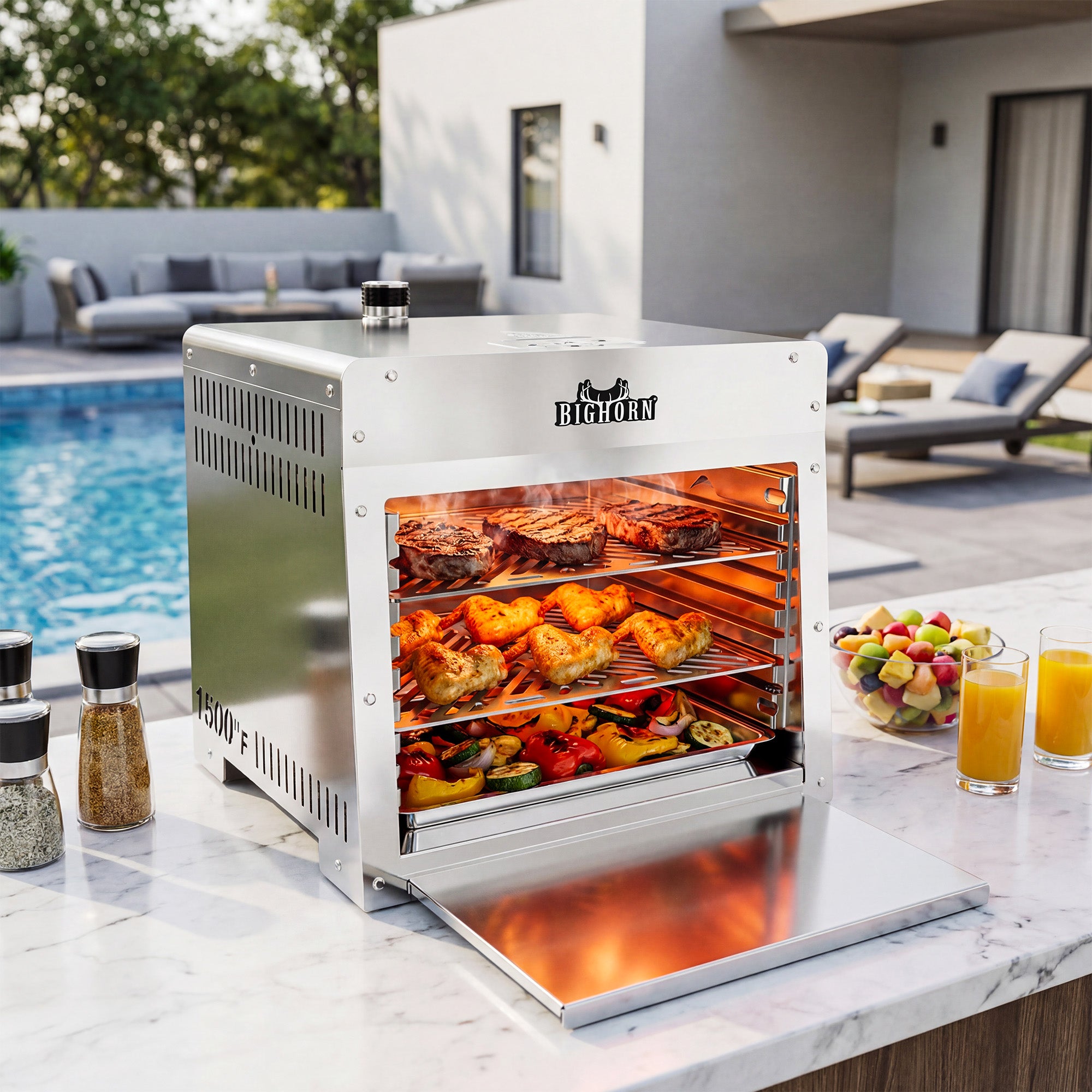
Infrared and specialty grills in the infrared grill collection still follow the same fuel-shutoff logic—know your valve locations before the party starts.
When to call 911
Call when flames leave the grill, threaten structures, involve the propane cylinder abnormally, or when anyone is hurt. Call when you cannot reach shutoffs safely.
Give the dispatcher your address and note that it is a grill/propane situation if relevant. Do not re-enter a smoke-filled porch to save burgers.
Even after flames look out, have responders advise if structural damage or a tank was involved. Pride is cheaper than a rekindle at 2 a.m.
Prevention: cleaning and trimming
Empty grease trays, trim oversized fat caps, and avoid sauce sugar bombs dripping onto open flames. Sudden flare-ups are often grease meeting fire.
Do not overcrowd fatty foods on a screaming-hot grate without a safe drip plan. Keep a clear zone around the grill free of towels and bags.
Routine cleaning of grills and griddles prevents the tray fire you never wanted to practice. Accessories like mats and scrapers in the accessories collection help only if you actually use them.
Gear to keep nearby (extinguisher, gloves)
Keep a listed extinguisher rated for grease/flammable liquids within reach outdoors—not buried in a kitchen drawer behind the stand mixer.
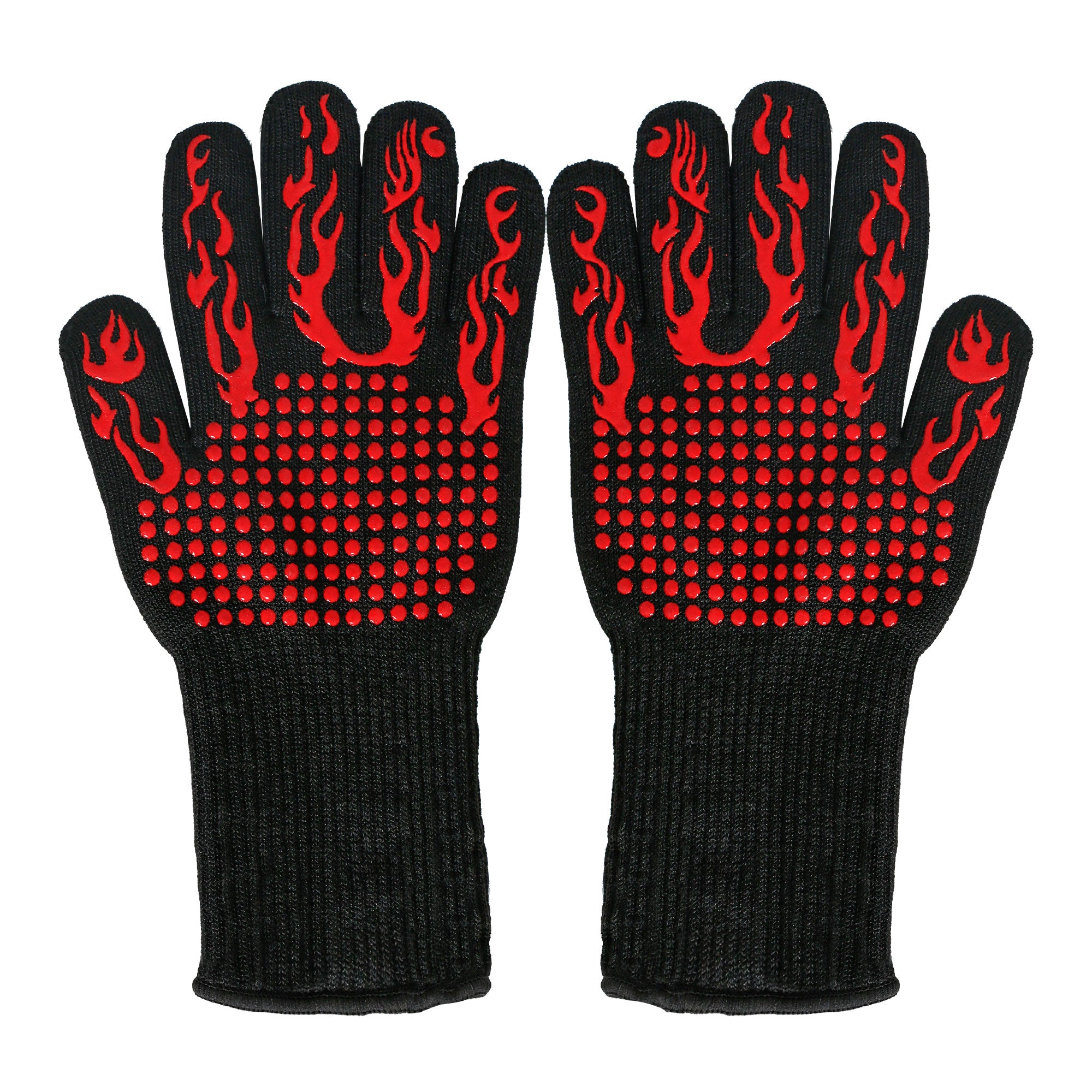
Heat-resistant gloves help you close lids and move hot tools, not pick up flaming pans casually. See BBQ gloves for hand protection during normal high-heat work; they are not a substitute for an extinguisher.
Know how to pull the pin and aim an extinguisher before you need it. A five-minute family drill beats reading instructions mid-flame.
Quick-reference safety checklist
Before cooking: grease tray empty, extinguisher present, kids/pets clear, tank upright, hose intact. During: trim fat, manage sauces, never leave active flames unattended. After: cool down fully, recheck tray, store tools.
Post on the inside of a cabinet if you host often. Share the checklist with anyone who borrows your patio.
Prevention habits align with NFPA home fire safety themes: working smoke alarms indoors, outdoor awareness, and early calls for help.
What breaks down grease on a grill?
Hot soapy water and degreasers made for grills.
Mechanical scraping plus dish soap emulsify much of the cooked-on grease; specialized grill degreasers help on cool surfaces when labeled for that use.
Enzymatic cleaners and baking soda pastes assist on trays after they cool. Avoid dumping liquid grease into drains. For fire response, remember that chemical cleaners are for cold cleanup—not for throwing on an active blaze. Keep firefighting and cleaning as separate toolkits.
Run a two-minute family drill
With the grill cold, have everyone point to the tank valve, the extinguisher, and the safe muster spot away from the house. Practice the words: “I shut the tank” and “I call 911.”
Drills feel silly until they feel automatic. Automatic is what you want when adrenaline narrows vision.
Update the drill when you buy a new grill with valves in new places. Muscle memory should match hardware.
After any significant grill fire, have the unit inspected before reuse and keep household exit planning aligned with NFPA home fire safety advice.
Prevention cleaning habits support the same outdoor cooking safety story told by USDA grilling food-safety pages—less grease on the tray means less fuel for a flare.
Conclusion
In a grease fire, shut fuel off when safe, smother or extinguish properly, never use water, and call 911 early if control is doubtful. Prevention—clean trays, trimmed fat, ready extinguisher—beats heroics. Practice where your valves are while the grill is cold.
Keep the cookout boring in the best way—maintain your Big Horn Outdoors grill and stock basics from accessories.
FAQ
Will a grease fire ruin a grill?
It can melt knobs, damage hoses, warp lids, or worse if the fire grows. Many small tray flares leave only a mess if shut down quickly. Inspect gas paths and electrical igniters before using the grill again after any significant fire.
Will a grease fire burn out on its own?
Do not wait and hope. Shut off fuel when safe and use proper extinguishing methods. Unattended grease fires can spread to decks and siding. Treat any growing flame as an emergency.
What neutralizes a grease fire?
Removing heat and oxygen and using a Class B extinguisher or appropriate smothering agents are the practical answers. Water is the wrong tool for grease. Baking soda can help on very small pan-scale fires; it is not a plan for a roaring grill.
What breaks down grease on a grill?
After the grill is cool, hot soapy water, plastic scrapers, and grill-safe degreasers break down residue. Clean trays regularly so grease never becomes fuel. Keep cleaners far away from active flames.
Explore more in the Grill Buying Guides.
More to Read
Fireproof Grill Mat Under Pizza Ovens and Infrared Grills
Place a fireproof grill mat to catch grease and sparks under ovens and grills. Confirm the live 48-by-30-inch claims, and use a cart when you need ...
No Oven Spring on a High-Heat Pie: Dough Temp, Launch and Floor
Diagnose no oven spring on a high-heat pizza by checking dough temperature, launch handling, and floor heat before you spend another mix changing t...
Heat-Resistant BBQ Gloves: Temperature Ratings and Wet-Grip Limits
Read a 1472°F glove rating as a short, dry, instant figure. Wet or oily conditions change grip, so let long peels reach into hot ovens and grills.
