







Camping Stoves & Fuel
A yellow or sooty flame is a field checklist, not a mystery. You look at the obvious things first: is the stove level, is the wind blowing the flame, is the jet dirty, is the cartridge or tank in poor shape? The useful observations are simple and visible. You do not need a meter reading to decide that a tall yellow flame and a black pot are a stop-cook problem.
A yellow or sooty flame is incomplete combustion until proven otherwise
A camping stove yellow flame, or a sooty one, is incomplete combustion until you prove otherwise. Check that the stove is level, sheltered from wind, and using a sound cartridge, then look at the jets. A tall yellow flame or soot on the pot is a reason to stop.
Incomplete combustion means the fuel is not burning cleanly. It can be a draft, a clog, a tilt, or a fuel problem, and it can also be a stove that needs service. EPA's carbon monoxide overview is the reason you treat any off-looking flame as an outdoor, open-air issue, never as a reason to move the stove into a tent "to get it out of the wind." A mostly blue, steady flame at a moderate setting is the usual healthy picture. You are looking for a clear departure from that, not for a laboratory color chart.
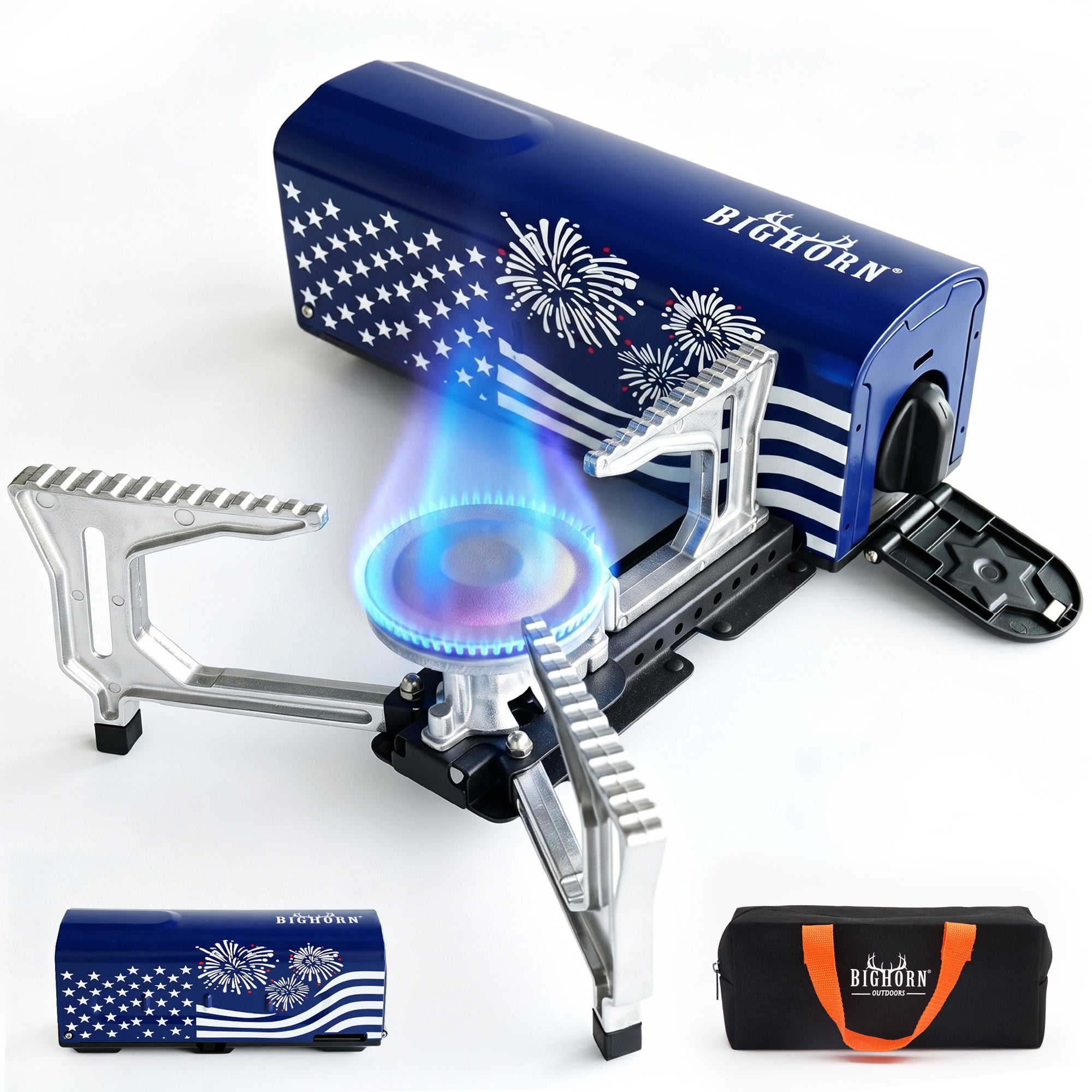
Jets, wind, a cheap cartridge and a tilted stove
Those four causes cover most camp-stove yellow flames. A clogged jet starves the burner of a clean mix. Wind bends the flame and can pull it off the burner or make it burn dirty. A cartridge that is nearly empty, poorly seated, or in poor condition can feed the stove badly. A stove sitting on a slope or a soft table tilts the burner and the pot.
"Cheap" here means a cartridge you cannot identify, one that will not seat, or one that has been stored badly, not a brand insult. Fuel choice still matters for cold and pack size; butane versus propane camping stoves and propane versus butane and which to choose cover that decision. This page only asks whether the can or tank on the stove right now is sound and compatible.
A diagnostic path that starts with the obvious
Work in this order, outdoors, with people and tents clear of the stove. First, shut the valve if the flame looks dangerously tall, sooty, or unstable, or if you smell gas that does not belong. Then, when it is safe to continue, set the stove level and move it out of the direct wind, using only a shelter the site and the manual allow, with open sides. Check that the cartridge or hose is seated as the maker shows. If the flame improves, you may have found the cause.
If it does not, let the stove cool, disconnect the fuel, and inspect the jet and burner as a cleaning job, without poking a hot orifice. Then test with a second, known-good cartridge if you have one, which is its own later step. The point of the path is to avoid skipping the obvious in favor of a teardown at a picnic table. NFPA grilling fire-safety guidance and U.S. Fire Administration cooking-and-fire prevention are the official outdoor-gas starting points while you do this.
| What you see | Try first | Stop and rethink if |
|---|---|---|
| A little yellow at the tips in a breeze | Level the stove and take it out of the direct wind. | The flame stays tall and yellow after the stove is sheltered and level. |
| Soot on the pot, or a lazy, sooty flame | Cool, disconnect, and inspect the jet and burner; check the cartridge seat. | Soot continues on a clean, level, sheltered stove with a known-good can or tank. |
| Gas smell, lifting flame, or odd color such as green | Shut the stove off and get people away from the fuel. | You are tempted to keep cooking to "see what happens." Do not. |
When a yellow flame is a stop-cook safety issue
Stop cooking when the flame is large and yellow, when soot builds quickly, when the flame lifts off the burner, or when you smell gas that is not the brief moment of lighting. Those are not "watch it for a minute" conditions. Shut the valve, let the stove cool, and only then inspect. A camp stove in a closed space is always a stop, yellow flame or not.
Ready.gov home-fire guidance and NFPA home fire-safety guidance support the same idea at home; in camp, the rule is even plainer. Ready.gov food guidance does not tell you how to tune a jet, but it does not ask you to cook on an unsafe flame either.
How this differs from cleaning and pizza-oven yellow-flame pages
Grease and a clogged jet after a fatty cook are a cleaning sequence. That is a different article on this site's plan, and it is worth doing when the stove is visibly dirty. This page is the diagnosis when the color or the soot is the main clue, including on a stove you already wiped down.
A gas pizza oven is a different appliance with a different chamber and a different yellow-flame write-up, gas pizza oven yellow flame causes and checks. Do not copy an oven fix onto a camp stove, or the other way around. If you also travel with a pizza oven, camping with a gas pizza oven and propane versus natural gas in a pizza oven stay in that lane.
A field fix vs a trip home
A field fix is a level table, a wind break that still ventilates, a reseated cartridge, or a cool, manual-legal jet clear. A trip home is a damaged valve, a flame that will not settle after those checks, a repeated gas smell, or a stove you cannot inspect safely at the site. There is no shame in packing the stove and cooking a no-cook meal.
Do not invent a repair with foil, a bigger jet opening, or a cartridge the stove was not made to take. Those are how a field fix becomes a harder problem.
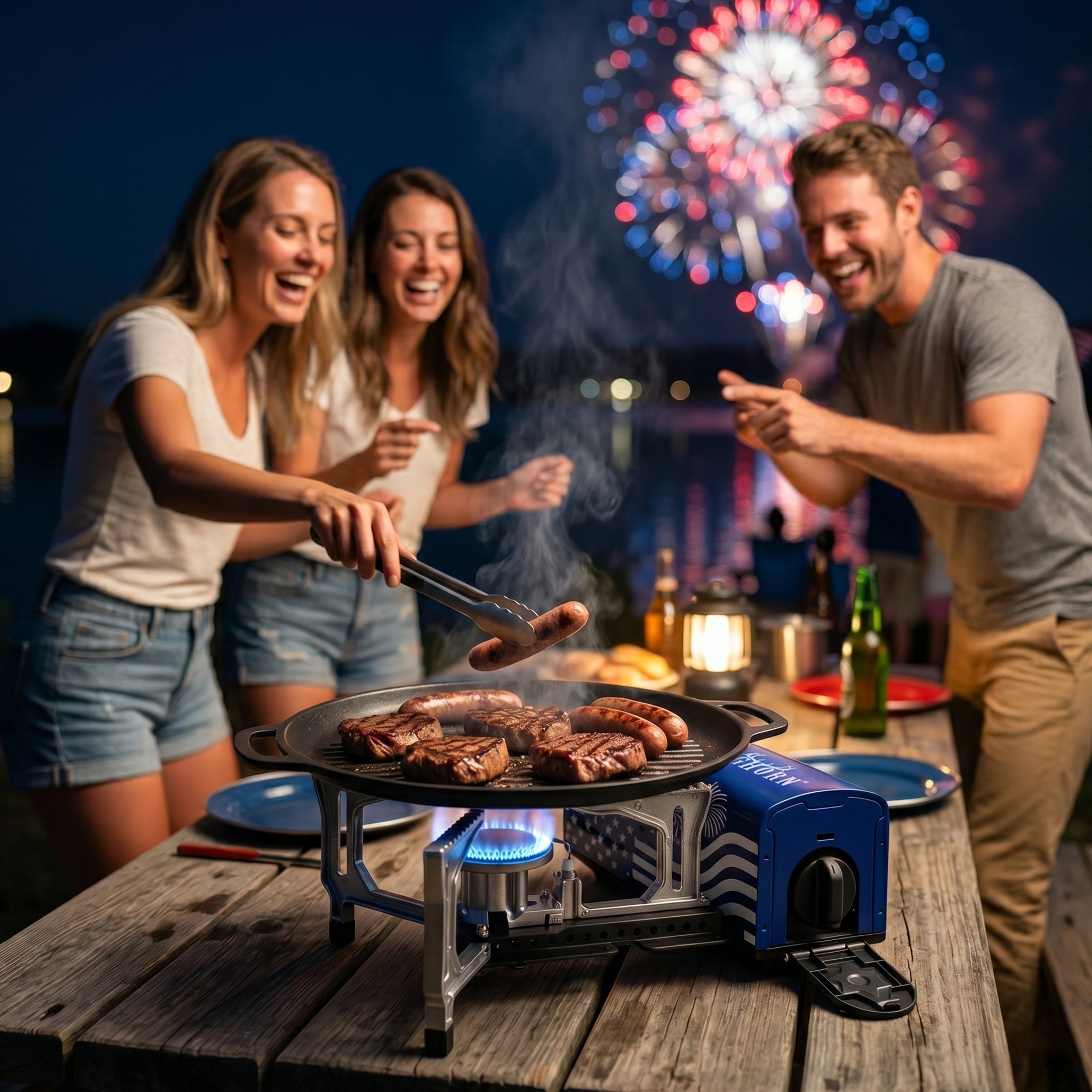
A second cartridge test so you do not mis-blame the stove
If you have a second, better-stored cartridge of the correct type, swap it in after the stove has been shut down safely and the connection looks sound. If the flame improves, the first can may have been the problem. If it does not, look again at the stove, the jet, and the site, or end the cook.
One test is not a laboratory proof, and a single good can does not make a damaged stove safe. It only keeps you from throwing away a stove because the last cartridge in the bin had a bad day. Use the test outdoors, and never by forcing an ill-fitting can onto the valve.
A recap of who this method is for, and who should use a different cooker
This method is for a camp-stove owner who sees a yellow or sooty flame and needs a visible, ordered checklist. It is not a pizza-oven diagnosis, not a home-range adjustment guide, and not a reason to cook in a tent.
If the stove will not hold a mostly clean, stable flame after the obvious checks, stop and use a different cooker or a no-cook plan. A blue-looking flame on a level, sheltered, compatible fuel setup is the goal. Anything else is a pause, not a challenge to keep going.
The photos show a folding butane camping stove, which is one common place to see a yellow or sooty flame in the field. Use the same outdoor checks on a propane camp stove, and stop if the flame will not settle.
FAQ
Why is the gas stove flame yellow?
On a camping stove, a yellow flame usually means the fuel is not burning as completely as it should. Common causes are a clogged jet, wind across the burner, a tilted stove, or a weak or poor-quality cartridge or tank. A little yellow at the tip in a breeze can be ordinary. A tall yellow flame, soot on the pot, or a gas smell is a reason to shut the stove down and work through the checks on this page, outdoors and in the open.
Why are there black soot on my pots from my gas stove?
Black soot on a pot is a sign the flame is throwing unburned carbon, which often goes with a yellow or lazy flame. On a camp stove, look first at wind, a clogged jet, a tilted burner, and the cartridge or tank. Clean only after the stove is cool and the fuel is off. If soot continues on a clean, level, sheltered stove, stop cooking and use the maker's service path rather than turning the flame higher.
How to adjust a gas stove for a blue flame?
A camping stove may have only a simple valve, not a home-range air shutter you can tune. Start with a level stove, a sound cartridge or tank, a clear jet, and a site that is not blowing the flame sideways. Then set the valve to a moderate, stable height. If the flame will not settle to a mostly blue look after those checks, do not keep adjusting in search of a perfect color. Stop and inspect the stove or the fuel.
What is a green flame in a stove?
A green flame is not a normal camp-stove color, and this page will not invent a chemical explanation for your unit. It can be a sign of contamination or of something on the burner that does not belong there. Shut the stove off, let it cool, and inspect it outdoors. Do not keep cooking to "see if it goes away." If the color remains after a cool, careful look, stop using the stove and follow the maker's service advice.
More to Read
Leftover Holiday Turkey on the Grill or in the Pizza Oven: Sandwiches, Tostadas and a White Pie
Give leftover turkey a second heat, not another roast: grill sandwiches or tostadas, or bake a white pie, after a safe leftover inventory the night...
Parrilla Taco Night: Carne, Salsas and Grate Space for a Crowd
Run taco night on a parrilla as a grate-space plan: carne, a second protein, a salsa station, and tortillas held soft, without one crowded fire.
Bone-In Lamb Leg or Shoulder on a Santa Maria or Gas Grill
Grill a bone-in lamb leg or shoulder as a roast: Santa Maria height or a gas two-zone fire, a USDA safety floor, and a probe that does not touch bone.
