







Pizza Styles & Recipes
Detroit-style pizza in an outdoor oven is a rectangular, pan-baked pie with a thick, airy crumb, a crisp fried-cheese wall at the edge, and sauce often finished on top of the cheese. It is not a Chicago deep-dish, and it is not a launched Neapolitan.
The backyard version succeeds when the pan, the dough proof, and the oven heat work together, not when you try to reproduce a bakery bake time from memory. This article is a first outdoor Detroit bake, not a dough-recipe clone. If you need a starting dough, use the existing Detroit pizza dough recipe. Chicago deep-dish already has its own home in the Chicago-style deep-dish pizza recipe.
What defines Detroit style
A Detroit pie is baked in a pan, usually a well-oiled rectangular pan, with dough that rises in the pan, cheese that reaches the edges and browns into a lacy wall, and sauce that is often spooned in stripes or ladles on top after the cheese, or near the end of the bake. The crumb is thicker than a thin New York slice and more focaccia-like than a Neapolitan disk. The pleasure is the contrast: a soft interior, a fried-cheese corner, and a bright sauce on top.
If your dough is a thin, launched pie, you are not baking Detroit. If it is a tall, buttery pie in a round cake pan with sauce under a layer of cheese and a long, covered bake, you are closer to Chicago. Keep those styles in their own guides so the outdoor Detroit session stays honest.
Official food temperatures do not change because the cheese is on the edge. FDA safe food handling and FDA food safety in your kitchen still apply to sausage, pepperoni, and leftovers. National Center for Home Food Preservation storage guidance is the canning and holding reference if you are working from sauce you put up yourself.
Pan, cheese walls, and sauce on top
Oil the pan generously, press the dough in, and give it time to relax into the corners rather than tearing it to fit. Cheese at the edge is the wall: it should reach the sides so it can fry against the pan. A brick-style or other good melting cheese is traditional in many kitchens; use what you can buy and what will brown without turning into a greasy flood. Sauce on top is part of the look and keeps the cheese from steaming under a heavy layer of tomato, but you can still add a little sauce under the cheese if that is how you like it. The defining move is still the edge and the pan.
Do not guess at a pan size from memory. Measure the pan you have, and make a dough amount that will fill it after a proof, not a dough that sits as a thin smear or a dough that overflows. The pizza calculator can help you scale once you know the dough you like.
Outdoor-oven heat placement
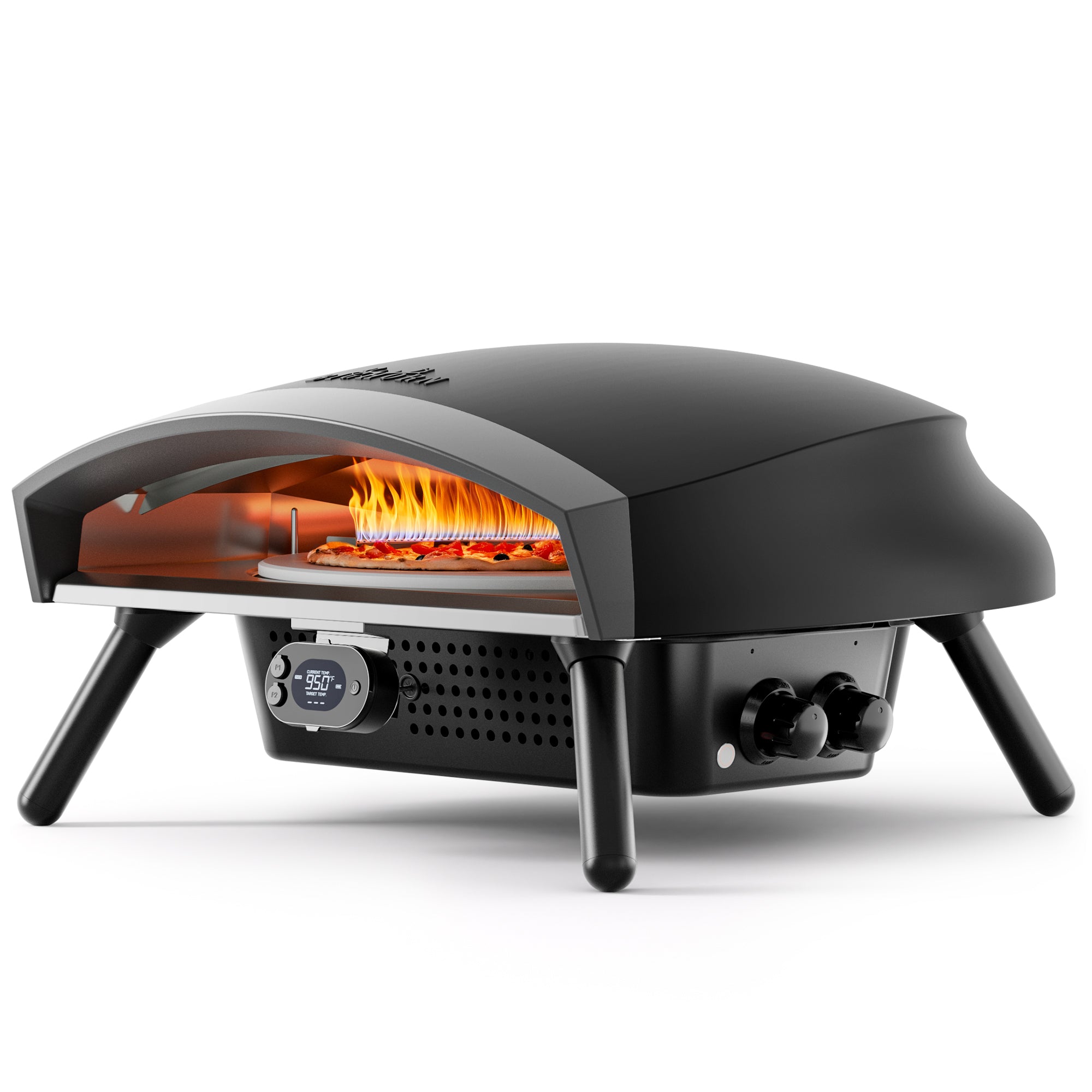
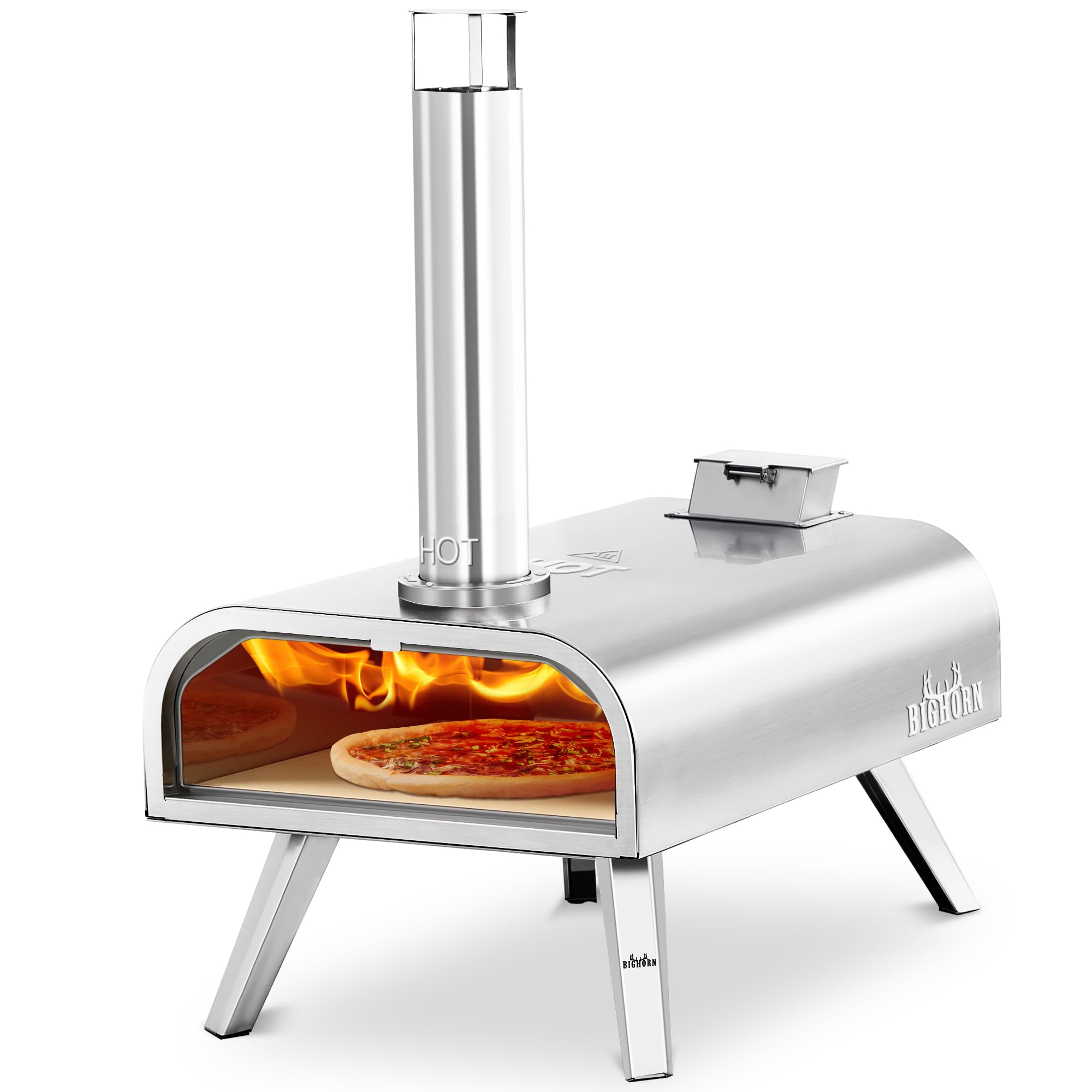
A pan pie wants a more even, slightly more patient heat than a 90-second launched pie. A deck that is fiercely one-sided can scorch the cheese wall on one end while the center is still pale. Give the oven a full preheat, and be ready to rotate the pan. An electric chamber from the electric pizza oven collection can be a calmer tool for an even pan bake; a gas oven from the gas pizza oven collection, or another chamber in the pizza oven collection, can still do the job if you manage the hot spot and do not treat the pie like a Neapolitan launch.
There is no guaranteed outdoor bake time. Watch the cheese wall, the underside (if you can lift a corner safely), and the crumb. If the top is dark and the middle is raw, the heat was too fierce or the dough was under-proofed. If the bottom is pale and the wall is not crisp, the pan may need more time or a slightly lower, longer finish, not a blast that burns the sauce.
Keep the oven outdoors, with clearance. NFPA grilling safety, U.S. Fire Administration cooking-fire prevention, and EPA carbon monoxide information remain the official fire and CO pages. A pan full of oil and cheese is a grease-fire risk if it overflows; do not walk away from it, and do not try to move a blazing pan without gloves and a plan.
Proofing in the pan
Detroit dough usually needs a real proof in the oiled pan until it looks lively and fills the corners. A cold dough pressed straight into a pan and rushed into a hot oven often bakes up tight and pale in the center. Cover the pan so the surface does not dry, and keep the proof in a reasonable kitchen temperature, not on the housing of a running outdoor oven.
If you cold-ferment the dough first, let it come back toward a pressable temperature before you make it fill the pan. The dough should be relaxed, not fighting you, and not so fermented that it collapses when you dimple it.
Common misses
A dry pan will stick and will not fry a cheese wall. Too little dough makes a thin bar pie that is not what most people mean by Detroit. Sauce under a heavy blanket, with no cheese at the edge, will give you a pan pizza, but not the defining wall. Opening the oven every minute will drop the heat and can leave the center pale. And treating the bake like a launched pie, with a 90-second marketing window, is the fastest way to scorch the rim and underbake the crumb.
Pepperoni cups and other toppings should still be handled as perishable food. Ready.gov food guidance is the leftover reference if a pan comes off the oven and sits out too long at the party.
A first Detroit bake outdoors
Walk through the first outdoor Detroit bake in order, and watch the pan, the proof, and the cheese wall rather than a copied minute count.
| Step | What to watch |
|---|---|
| Oil the pan and press in relaxed dough | Corners fill without tearing; the dough has room to rise |
| Proof in the pan, covered | The dough looks lively, not tight and not collapsed |
| Cheese to the edges, sauce on top or in stripes | The wall can fry; the sauce is not drowning the center |
| Bake on a ready, more even heat, and rotate | The wall browns, the crumb sets, and no side becomes a scorch |
Use the existing dough recipe if you need grams and a starting hydration. This session is about the pan, the wall, and the outdoor oven, not about rewriting that formula.
Key takeaways
Detroit in an outdoor oven is a pan pie with a cheese wall and sauce often on top, baked with more even heat than a launched Neapolitan. Proof in the pan, oil it well, rotate as needed, and do not invent a guaranteed bake time. Keep Chicago and the existing Detroit dough recipe in their own pages, and keep official food-safety and fire-safety guidance next to the pan.
For a starting dough, use the existing Detroit pizza dough recipe, and preheat a more even chamber from the electric pizza oven collection or the gas pizza oven collection rather than treating the pie like a 90-second launch.
FAQ
Is Detroit-style pizza the same as Chicago deep-dish?
No. Detroit is a rectangular pan pie with a fried-cheese wall and sauce often finished on top. Chicago deep-dish is a different, taller construction and already has its own recipe page.
Do I need brick cheese to make Detroit pizza?
Brick-style cheese is traditional in many kitchens, but a good melting cheese that can brown at the edge will still make a wall. Use what you can buy and what will not turn into a greasy flood.
Can I bake Detroit pizza in 90 seconds in an outdoor oven?
That is the wrong heat story. A pan pie wants a more even, more patient bake than a launched Neapolitan. Watch the cheese wall and the crumb, not a marketing minute count.
Should I press cold dough into the pan and bake immediately?
Usually not. Give the dough time to relax and proof in the oiled pan so it can fill the corners and bake up airy rather than tight.
More to Read
Al Pastor Pizza: Marinade, Pineapple Balance and High-Heat Timing
Make al pastor pizza at high heat with thin, safely cooked pork and drained pineapple. Finish with salsa after the bake, and do not invent taco cal...
Mixed Vegetables on a Gas Grill: Baskets, Skewers and Direct Heat
Grill mixed vegetables on a gas grill with a path for baskets, skewers, or a bare grate, plus oil, salt timing, and a cut-size rule so pieces finis...
Pizza al Taglio (Roman Tray Pizza) at Home Outdoors
Make pizza al taglio at home as a Roman tray pie: oil the pan, dimple relaxed dough, top modestly, bake thoroughly outdoors, and cut it into squares.
