







A fire-pit grill grate can cook a real dinner — steaks, chops, vegetables, and bread — if you treat it as an open, lid-less heat source and not as a packet steamer. Direct heat means the food sits on the grate over coals, picks up flare and smoke at the surface, and finishes by temperature, not by a covered bake. Foil packs still have a job; they are just not the only job.
This menu is for owners who already have a grate, especially the current 32-inch corten steel fire pit with grill or a fireplace grate such as the 36.6"H concrete outdoor fireplace with grill. Packet cooking already has its own page in fire-pit foil-packet meals; this article will not redo those folds.
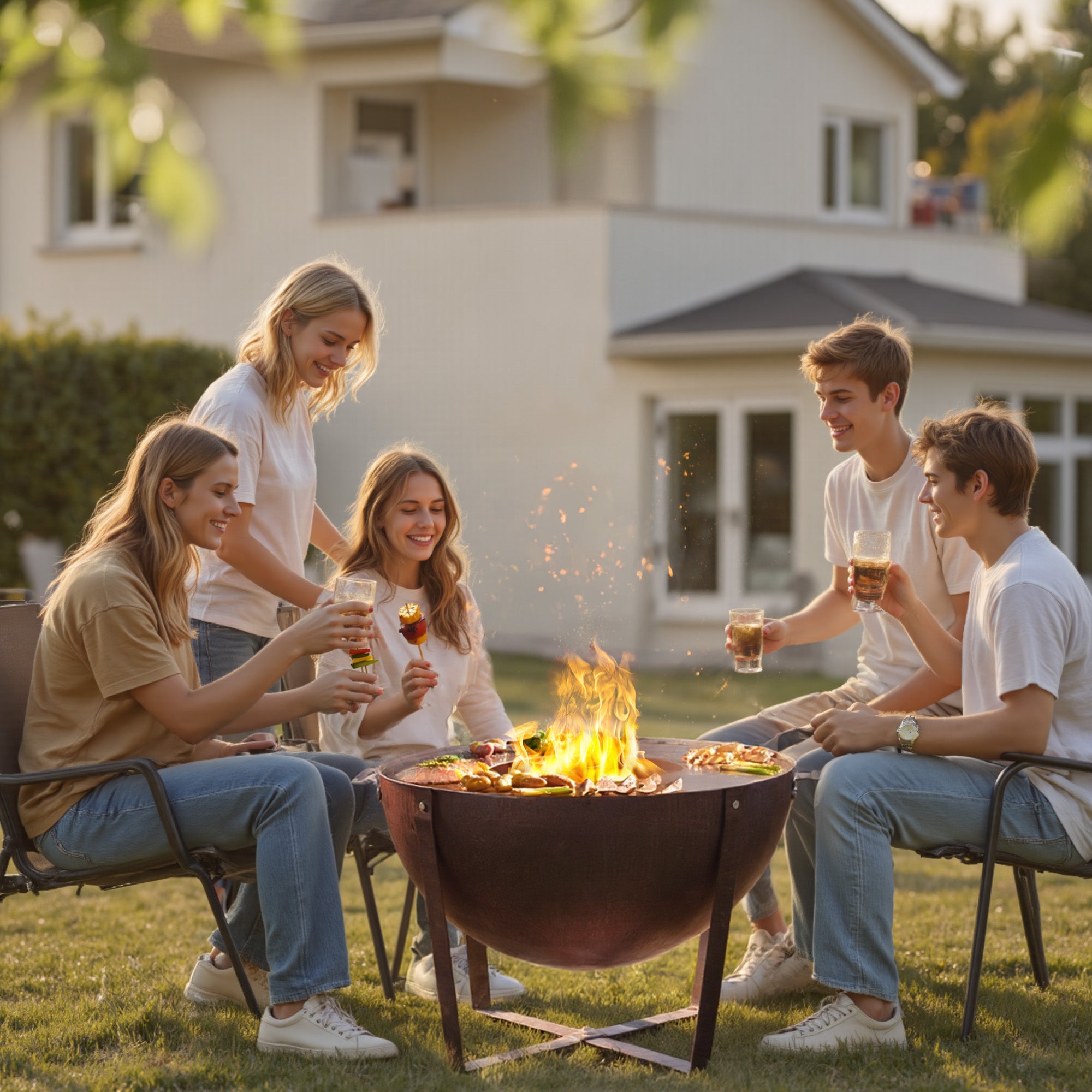
Direct-heat mains
Start with cuts that like a hot grate and a short stay: steaks, pork chops, lamb loin, burgers, and sausage. Build a coal bed first — charcoal or well-burned wood coals — and put the grate on only when the flame has settled. The current corten listing describes enclosed areas on the ring for smaller foods and open grates for larger cuts; use that split so a steak can sear while vegetables do not fall through.
Season simply, oil the food, and leave the first side alone long enough to release. Then flip once or twice, not constantly. Measure doneness the official way: FDA safe food handling and FDA food safety in your kitchen still call for 145°F plus a three-minute rest on steaks and 165°F on poultry. A fire pit does not change those numbers, and it does not give you a trustworthy cook-time chart. A thermometer does.
Chicken is the usual trouble. Bone-in pieces can char before they are done because there is no lid to finish them gently. Use a cooler edge of the grate, or cook them on a fireplace grate with a little more distance, or accept that some poultry is happier in a packet or in the kitchen oven after a grate sear. Do not invent a mid-rare chicken.
Vegetables and bread
Vegetables that work on an open grate are the sturdy ones: peppers, onions, zucchini, mushroom caps, corn, and thick wedges of cabbage or sweet potato. Cut them large enough that they cannot slip through. A light oil and salt is enough; sugar-heavy sauces burn before the center softens. Move pieces as the hot spots shift, because an open pit has no even “medium” zone you can set and forget.
Bread is the sleeper course. A sliced baguette, pita, or flatbread toasted at the edge of the grate, after the meat comes off, picks up smoke and fat in a way a toaster never will. Watch it. One inattentive minute is the difference between a useful toast and a cinder. If you are cooking on a fireplace grate, the existing outdoor fireplace grill cooking guide is the better place for hearth-specific rake and grate habits.
Keep a clean landing zone. A sheet pan or a board on a side table is enough. Do not stack cooked meat back on the raw plate. National Center for Home Food Preservation storage guidance and Ready.gov food guidance are the official leftovers-and-holding references if dinner stretches into a long fire.
Flare and ash flavor
Flare is not automatically a flaw. A lick of flame can baste a steak in its own fat. A sustained grease fire is a different thing: it coats food in soot, scorches the surface, and can leave the patio in a worse mood. If fat drips and erupts, slide the food to a cooler section, or lift it for a few seconds, rather than spraying water into burning grease. NFPA grilling safety and U.S. Fire Administration cooking-fire prevention are the official outdoor-cooking safety pages for that habit.
Ash flavor shows up when a rusty, ashy grate prints itself onto food, or when a gust dumps fine ash over the plate. Brush the grate when it is hot, keep the coal bed from overfilling the bowl, and do not flip food into a falling ash cloud. A little wood-coal aroma is welcome; grit is not.
Wind makes both problems worse. On a gusty evening, it is fair to skip the grate and enjoy the fire instead. A lid-less pit does not give you a still oven on a windy night.

Timing without a lid
Without a lid, you cannot trap heat and walk away. Timing is visual and thermal: coals ready, grate hot, first sear set, flip, check temperature, rest. Build a slightly larger coal bed than you think you need for a short steak dinner, because you cannot close a dome to recover heat. You can, however, ruin a dinner by feeding raw logs under a nearly finished steak and burying it in flame.
Rest meat off the grate, not on it. The FDA three-minute rest for steaks is a food-safety step as well as a juice step. Tent loosely if the night is cold, and use that window to toast the bread and pull the vegetables together.
If the fire was built with wood, keep the fuel dry and lawful. EPA Burn Wise and Smokey Bear prevention how-tos still govern the fire itself, including a complete, cold-out finish after the plates are in the house.
When foil packs still belong on the menu
Foil packs are the right tool for wetter mixtures, small pieces, and foods that would fall through or dry out on an open grate: saucy vegetables, delicate fish, or a camp-style mix you want to steam in its own juices. They are also the better call when the wind is up or the coal bed is uneven. Link out, rather than rewriting them: the foil-packet meal page already has that method.
A practical dinner can use both. Sear the steaks on the open grate, and park a vegetable pack on a cooler edge so the sides finish without burning. That is a menu, not a rule that one method must win.
| Food | Open-grate move | When to switch to foil or another tool |
|---|---|---|
| Steaks, chops, burgers | Hot grate, one or two flips, thermometer to 145°F plus a rest | If flare will not quit, or the cut is too thick to finish without a lid |
| Chicken pieces | Cooler edge, patient turning, 165°F in the thickest part | If the skin is dark and the center is still low, finish off the direct flame |
| Sturdy vegetables, bread | Large pieces, light oil, constant watching | Small dice, wet sauces, or long softens belong in a pack or a pan |
A simple fire-pit dinner sequence
Light the fuel well before you are hungry. When you have a coal bed, set the grate, preheat, and start the meat. Use the first rest to toast bread and finish vegetables. Bring everything to the table in one movement, then let the fire become a fire again. Empty cold ash later, not while you are still carrying plates. The sequence is ordinary on purpose; the pit already supplies the drama.
Key takeaways
Direct-heat mains on a fire-pit grate are open-fire cooking: coals first, a hot clean grate, thermometer doneness, and respect for flare. Vegetables and bread work when they are cut to stay put and watched closely. Keep foil packs in the plan for the foods that need them, and keep official fire-safety and food-safety pages in the plan for everything else.
If you want a wider grate for direct-heat mains, confirm the current 32-inch corten fire pit with grill or 36.6"H fireplace with grill listing, and keep foil packs for the foods that still need them.
FAQ
Can I cook a steak directly on a fire-pit grill grate?
Yes, if you have a stable grate over a settled coal bed, not over raw flame. Sear, flip, and cook to 145°F with a three-minute rest, following FDA food-safety guidance. A lid-less pit will not give you a reliable minute chart.
How is this different from fire-pit foil-packet meals?
Direct-heat cooking puts food on the grate so it can brown and pick up flame flavor. Foil packs enclose food and steam it in its juices, which is better for small pieces and wetter mixes. You can use both in the same dinner.
Do I need a lid to cook dinner on a fire pit?
No, but you do need a coal bed, patience, and a thermometer. Without a lid you cannot trap heat to finish thick cuts as gently, so poultry and very thick roasts may need a cooler zone or a second tool.
What should I do about flare-ups on a fire-pit grate?
Move the food, do not spray water into burning grease, and keep a safe clearance around the pit. NFPA and U.S. Fire Administration cooking-fire pages are the official safety references for outdoor grilling habits.
