







The fault scene is familiar in December: the garage was the "cold proof," guests are due, and the dough balls are still tight, chalky-cold, and unwilling to stretch. Someone turns up the oven and hopes heat will fix the dough. It will not, not in time. Yeast and time follow temperature. A cold garage is a slower clock, sometimes a stalled one, and that is a scheduling rule you can work with if you check it the day before and again in the morning, not at the door.
This is a holiday dough schedule for an outdoor pizza night. It is not a general hosting-queue page, and it will not re-teach winter oven heat and wind. Those already have a home; this page only starts the dough early enough that the oven can do its job later.
A cold garage changes dough time more than it changes toppings
A winter holiday pizza party dough schedule should start the day before, because a cold garage changes dough time more than it changes toppings. Mix, give the dough a cold rest, then check the space in the morning and temper the balls indoors before guests arrive. Stretch only when the dough feels relaxed.
Toppings can be prepped on a normal indoor clock. Dough cannot. Fermentation slows as the dough cools; that is ordinary baking science, not a brand test. Bakerpedia's overview of fermentation and a method page such as King Arthur Baking's pizza crust recipe are useful references for yeast activity and dough handling. They are not a promise that your garage will match a test kitchen.
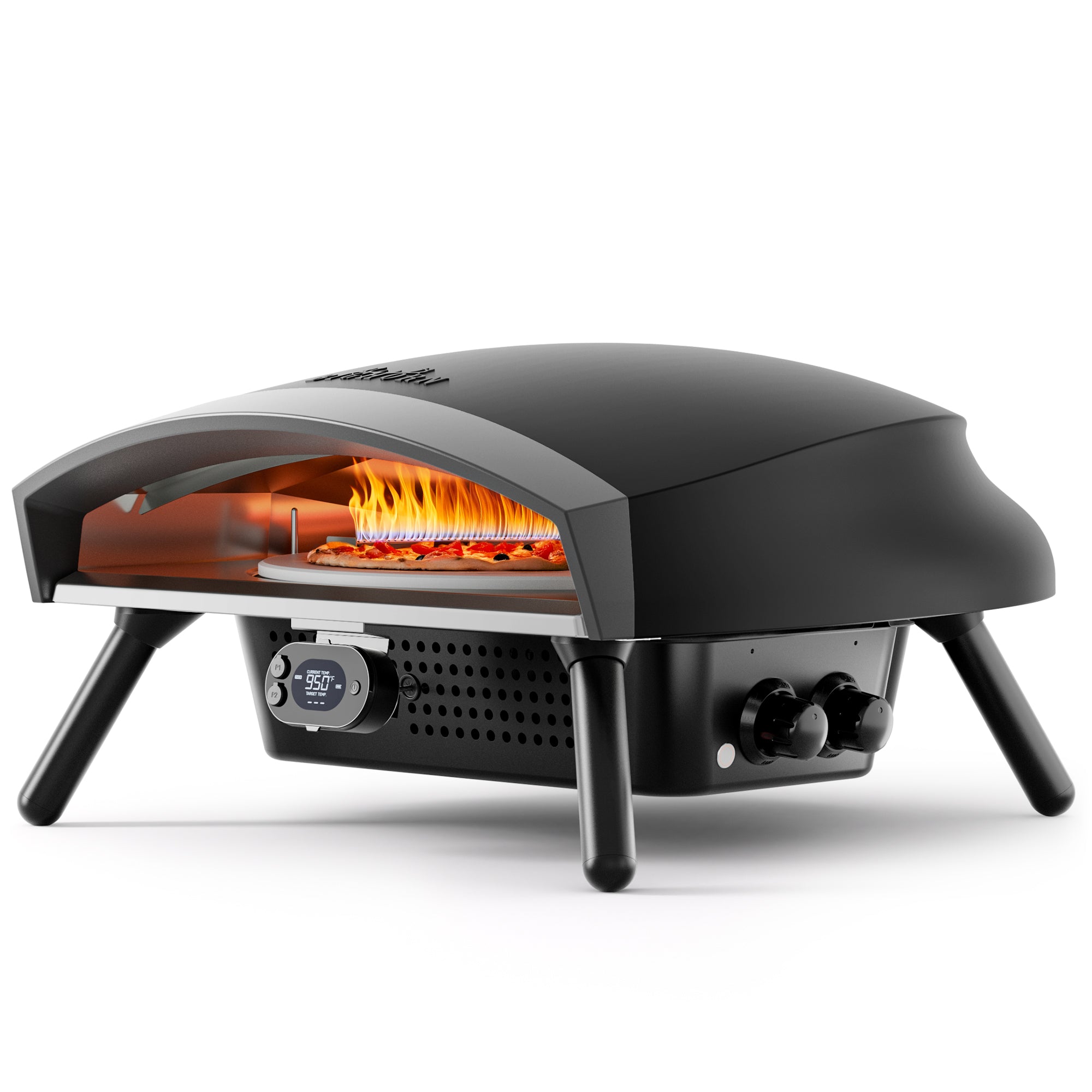
A backyard gas oven, such as the current 16-inch gas outdoor pizza oven, still needs a dough it can launch. Confirm the live listing; this article will not invent a heat-up time or a chamber temperature. How long a gas oven takes to heat already lives on how long a gas pizza oven takes to heat up — use that page, and do not re-teach it here.
A holiday dough schedule that starts the day before
The day before, mix, divide if that is your method, and get the dough into the cold rest you actually have — a refrigerator is more predictable than a garage that swings with the weather. A garage can be the overflow cold space if it stays cold and does not freeze, but it is not a set-it-and-forget-it proofing box. Lightly oil or cover the containers so the surface does not dry out overnight.
| When | Dough task | What you are checking |
|---|---|---|
| The day before | Mix, divide, and start the cold rest in a covered container. | That you have enough balls for the guest count, plus a couple of extras, and a real cold place that is not a freezer. |
| Morning of the party | Open the garage or fridge and feel a ball, not just the air. | Whether the dough has any life, or is still dense, icy, and tight. Move it if the space was colder than you thought. |
| Afternoon, before guests | Temper balls in a cool indoor room, still covered. | Whether a ball stretches instead of snapping back or tearing. If it fights you, give it more time, not more oven. |
| Service | Launch a short queue, and keep a few balls back so the last pies are not rushed. | That leftover dough goes back into the cold, not onto a hot counter for hours. |
The table is a schedule derived from temperature and feel, not from a single hour count. A warmer house, a colder snap, and a leaner dough will all move the windows. If you already time dough around breakfast pies, the page on breakfast pizzas, dough, eggs, and timing is a different meal with the same need to respect the dough clock.
Tempering balls before guests arrive
Tempering means bringing a cold ball up to a stretchable state in a milder room, still covered, without rushing it on a radiator or in a hot oven. A ball that is still refrigerator-cold in the center will tear, snap back, or bake into a tight, dense crust even if the oven is ready. Start this step with hours in mind when the garage was very cold, and check more than once.
Do not leave uncovered balls next to a heating vent, and do not stack them in a sunny window where the bottoms warm and the tops dry. A cool kitchen counter is usually enough. If the dough still feels lifeless after a long temper, the ferment may have been too cold for too long; have a backup bread or a simpler flatbread rather than forcing a launch.
Oven heat-up in winter
Start earlier than you would on a mild night. Wind, a cold stone, and a cold chamber all stretch the wait. The method and the usual caveats belong on the heat-up page linked above, not in a second explanation here. Seasonal placement and wind already live on the outdoor pellet pizza oven yard-layout page; a gas oven in a driveway or on a patio follows the same outdoor logic, even if the fuel is different.
National Weather Service cold-weather safety and Ready.gov winter-weather guidance are the official references for people standing outside in winter, not for dough. NFPA grilling fire-safety guidance and U.S. Fire Administration cooking-fire prevention still apply to a holiday oven: it stays outdoors, attended, and out of a closed garage. A workstation plan, if you need one, is on how to design an outdoor gas pizza oven workstation.
A guest flow that still feels like a party
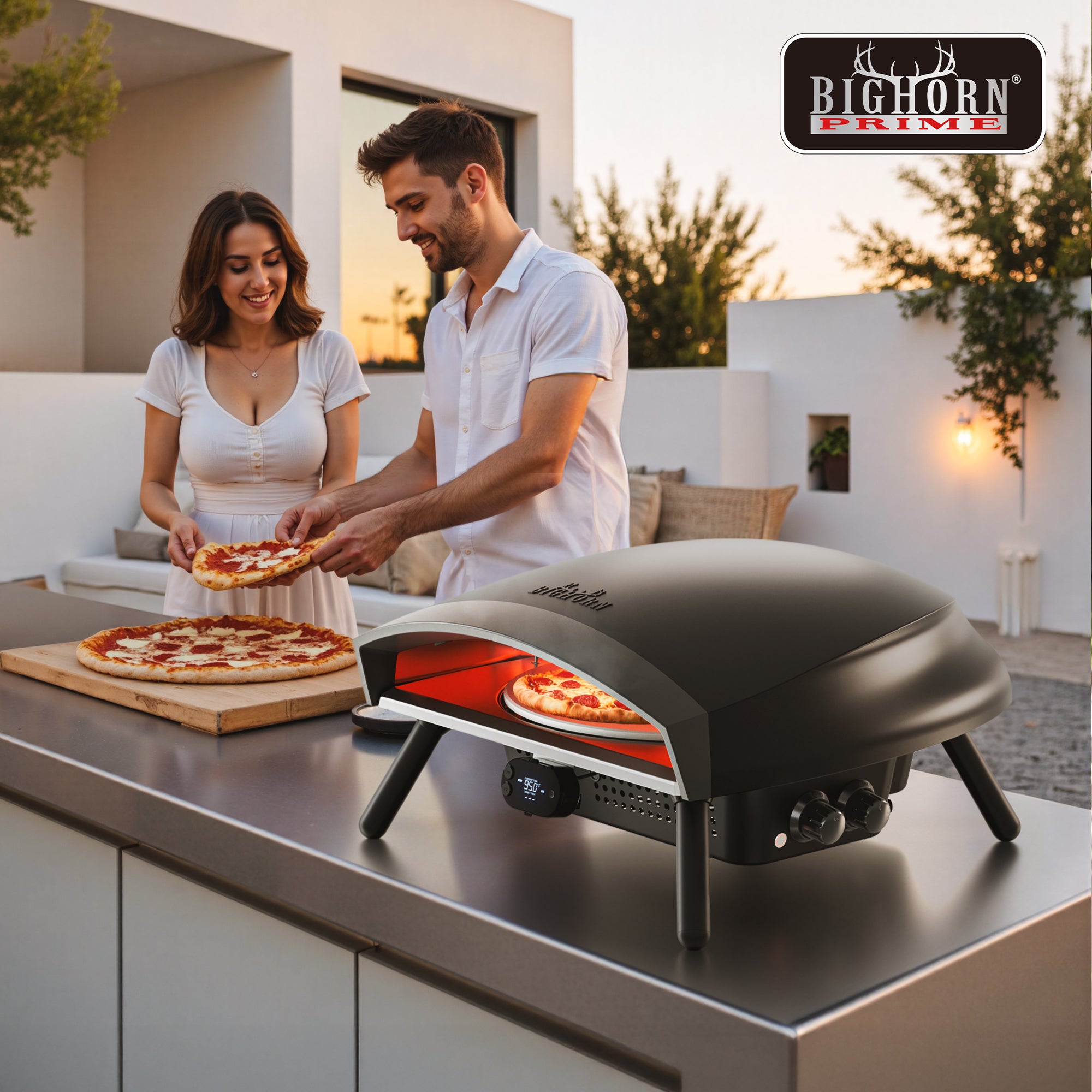
Do not make guests stand in a coat line behind a peel while you wrestle a cold ball. Have the first few balls tempered and shaped, or nearly shaped, so the opening pies come out while people are still taking off coats and pouring drinks. Then run a short queue, not an endless one, so you can leave the mouth.
This is not a general hosting-queue article. Those pages already cover how to take orders and how to keep a line moving. The holiday difference is only that the dough was on a slower clock, so the first stretch has to be finished before the doorbell, not during it.
How this differs from general hosting-queue pages
A hosting-queue page assumes the dough is already friendly. This page exists because a cold garage can make that assumption false. If you skip the morning check, no amount of polite order-taking will stretch a tight ball. Use a queue page for guest traffic, and use this schedule for the dough that has been sitting in the cold.
A portable gas pizza oven for backyard cooking can be the chamber if that is what you have; the dough schedule does not change just because the oven can move. The garage was the storage and ferment problem, not the oven's brand story.
A shopping and make-ahead list
Shop the dough ingredients the day before you mix, not the afternoon of the party. Make sauces, grate cheese, and wash produce on a normal indoor clock. FDA safe-food-handling guidance and FDA kitchen food-safety guidance still apply to toppings that sit out during a long, cold party. Keep perishable toppings cold until they are close to launch, even if the dough is already on the counter.
Add a backup: extra dough you trust, or a simple flatbread, in case one batch never relaxes. Add covers for the balls, a thermometer for the room if you have one, and a plan for leftover dough to go back into the refrigerator rather than sit out until midnight.
A garage temperature check the morning of the party
In the morning, open the space and check both the air and a dough ball. A garage that felt cool at 9 p.m. may have dropped hard overnight. If you see frost, a stiff, icy center, or dough that has not moved at all, bring the containers inside immediately and start the temper. If the garage is only moderately cold and the dough has some life, you still need a temper, just a shorter one.
Write down what you felt if you will do this again next year. The useful record is "the unheated garage stalled the dough after a clear, freezing night," not a made-up hour-per-degree formula. The morning check is the whole habit. Miss it, and the holiday clock belongs to the dough, not to you.
If the holiday pizza night runs on a backyard gas oven, confirm the current 16-inch gas outdoor pizza oven listing, and build the dough schedule around a morning temperature check, not around a mild-weather clock.
FAQ
How do I schedule dough for a holiday pizza party in winter?
Mix the day before, give the dough a cold rest, then check the garage or storage temperature the morning of the party. If the balls are still tight and icy-cold, move them to a cooler indoor spot to temper before guests arrive. Do not count on a freezing garage to follow a mild-weather timeline.
Can I ferment pizza dough in a cold garage?
Yes, if the space stays cold but not a hard freeze, and you check the dough rather than the clock alone. Cold slows fermentation. A garage that drops below freezing can stall the dough or damage it. Bring balls in to temper before you try to stretch them.
How long should I temper dough balls before an outdoor pizza night?
Until they feel relaxed enough to stretch without snapping back or tearing, which often takes a good stretch of time in a cool indoor room when the balls came out of a very cold garage. There is no single minute count that fits every garage and every dough. Start checking in the morning, not when the first guest rings the bell.
How does a cold night change oven heat-up?
It usually stretches it. Wind and a cold stone or a cold chamber mean you should start earlier than you would on a mild evening. Use a dedicated heat-up page for the method, and treat any marketing window as a claim to recheck, not as a holiday timer.
