







Accessories
Orange freckles on stainless look alarming, yet many are surface stains—not a ruined grill. Knowing how to clean a stainless steel grill and prevent rust spots keeps the jacket bright without sanding it into a worse mess.
Work with the grain, skip chlorine drama, and control moisture with covers and airflow.
What the spots are (surface rust vs tea staining)
Outdoor stainless can show tea staining—brownish discoloration from chlorides, pollution, or sitting water—without structural failure. True scale rust that pits deeply is less common but more serious.
Magnet tests and grade labels help identify alloys, but you do not need a metallurgy degree to clean carefully. If panels are paper-thin and perforated with holes, that is beyond cosmetic care.
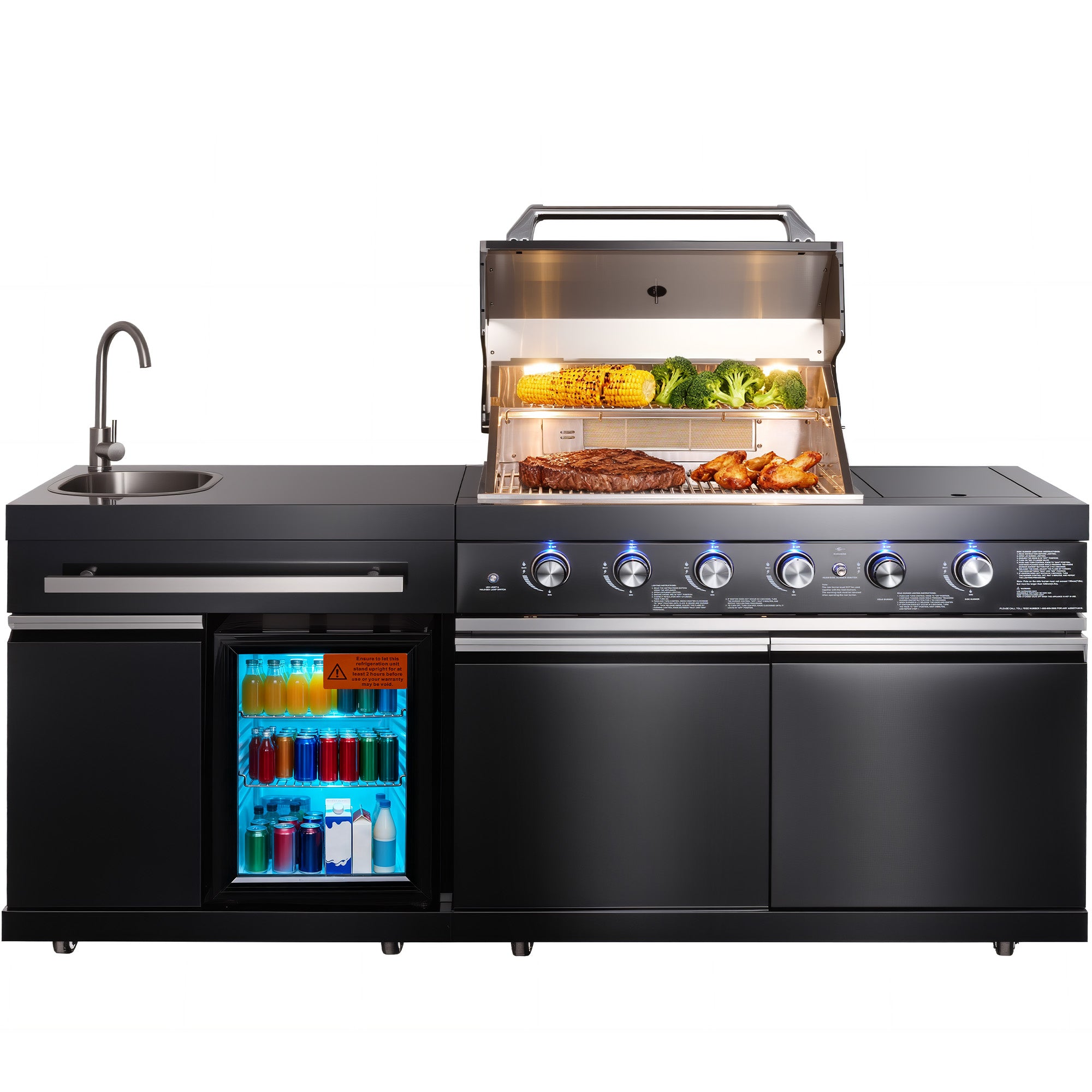
Big Horn Outdoors sells stainless outdoor kitchens and grills in the outdoor kitchen island and grills and griddles collections; treat any grade claims as model-specific and check the product page rather than assuming one alloy across the catalog.
Gentle cleaning with the grain
Wash with mild dish soap, warm water, and a soft cloth following the brush direction of the steel. Rinse and dry completely—water left in seams becomes tomorrow’s spots.
Fingerprints respond to stainless cleaners labeled food-equipment safe. Avoid swirling motions that leave halo scratches in light.
Clean after salty coastal air or poolside splash days sooner than you would inland. Chlorides are stainless’s backyard nemesis.
Removing rust spots step by step
Start mild: baking soda paste or a non-scratch cookware cleaner, rubbing with the grain. Rinse and dry. Repeat before escalating.
Specialized stainless rust removers exist; choose products that specify outdoor grill or food-equipment use and follow labels. Bar keeper-style powders are popular on appliances—test a small area first.
If metal is pitted deeply, cosmetic pads will not restore integrity. Evaluate whether a panel or grate needs replacement instead of endless polishing.

What not to use (chlorine, steel wool)
Skip chlorine bleach, muriatic acid adventures, and steel wool that embeds carbon steel particles—those particles rust and stain the stainless around them.
Skip abrasive driveway cleaners and mystery solvents. If a chemical is harsh enough for concrete, it does not belong on your grill jacket.
Pressure washers can drive water into burners and ignition parts; prefer controlled hand washing unless the manufacturer explicitly allows otherwise.
Covers, ventilation and moisture traps
A breathable cover sheds rain while allowing some airflow. A plastic tarp sealed to the patio can trap condensation and worsen staining.
Leave a slight vent path if your cover design allows, and never cover a grill that is still hot or wet inside. Clean grease trays so rancid moisture is not sealed in.
Infrared units and carts in the infrared grill collection still benefit from dry storage habits between cooks. For dedicated covers, see choosing guidance alongside the infrared grill cover product when fit matters.
Protective wipes and oils
After cleaning, a thin stainless polish or food-safe mineral oil wipe can slow water spotting on exterior panels. Keep polishes off cooking grates unless the product is explicitly grate-safe.
Less product, more dry cloth. Sticky polish attracts dust that becomes mud in the next rain.
Schedule a monthly wipe in humid climates and after winter storms. Small routines beat spring restoration projects.
When it signals real damage
Deep pits, flaking metal, seized hinges, or rust inside burner tubes deserve more than polish. Inspect burner ports and under-hood cavities when you deep clean.
Gas equipment with compromised parts should be serviced or replaced—cosmetic kits do not fix leaks. If you smell gas, stop and leak-test rather than buffing steel (AGA gas safety overview and NFPA grilling safety are better companions than sandpaper).
Document warranty questions with photos and your order details; after-sales contact for site purchases is listed on Big Horn Outdoors policy and contact pages.
Monthly stainless walk-around
Once a month, walk around the grill with a damp microfiber and a dry towel. Wipe lids, side shelves, and cart tubes with the grain, then dry. Spot-treat freckles early while they are still stains.
Check under handles and around thermometer holes where water sits. Clear debris from lid channels so storms do not leave puddles.
Photograph anything that looks like deep pitting. Photos help warranty or parts conversations later and keep you honest about whether polish is enough.
Coastal and poolside special care
Salt air and chlorine mist accelerate tea staining. Rinse stainless with fresh water more often, dry thoroughly, and cover after the grill is cool and dry.
Do not store wet pool towels on the grill cart. Move chemical bottles away from steel panels.
If you live inland but use ice melt near the patio, keep those chlorides off the grill base as diligently as beach homeowners do with salt spray.
Stainless grates vs stainless jackets
Cleaning logic splits: cooking grates need food-safe methods and heat cycles, while jackets and carts need cosmetic care with the grain. Do not scrub exterior polish onto the grate and then cook on it without a wash.
If grates are cast iron sitting inside a stainless shell, season the iron and wipe the shell differently. Mixed-material grills punish one-size cleaning routines.
When replacing grates, match the material your manual specifies so brackets and heat distribution still work.
Gas grills with stained jackets still need leak awareness—shiny steel does not prove a sound hose. Keep AGA gas safety and NFPA grilling tips in your season-start routine.
When rust cleanup produces oily rags, dispose of them carefully away from ignition sources per ordinary home fire prevention sense.
Also pair stainless care day with a soapy leak check habit inspired by common natural gas safety education themes, even when your grill runs on propane cylinders.
After polishing, keep oily cloths out of spontaneous-combustion piles—Red Cross fire guidance is a blunt reminder that small ignition sources start large problems.
Conclusion
Most stainless freckles are surface stories about water and chlorides. Clean with the grain, dry thoroughly, avoid chlorine and steel wool, and cover in a way that still breathes. Escalate to removers only after mild methods, and replace parts when rust becomes structural.
Keep stainless outdoor kitchens looking tended—explore Big Horn Outdoors outdoor kitchen islands and grills.
FAQ
How to get surface rust off of stainless steel grill?
Wash, then rub a baking soda paste or a stainless-safe cleaner with the grain. Rinse and dry completely. Repeat before using stronger rust removers, and stop if you expose deep pitting that needs part replacement.
What should you not use to clean stainless steel?
Avoid chlorine bleach, steel wool, and harsh concrete acids. They can stain, embed rusting particles, or attack the surface. Soft cloths, mild soap, and stainless-specific cleaners are safer starting points.
Can a rusty grill be saved?
Surface staining often polishes away. Deep structural rust on critical panels, carts, or burners may not be worth saving for safe gas use. Inspect burners and gas paths carefully before declaring victory based on shiny lids alone.
How to clean stainless steel grates?
If grates are stainless, use heat-and-scrape methods and nylon or stainless-safe pads, then dry and oil lightly if appropriate. Removable grates can soak in hot soapy water. Confirm coatings before using aggressive powders.
Explore more in the Grill Buying Guides.
More to Read
Fireproof Grill Mat Under Pizza Ovens and Infrared Grills
Place a fireproof grill mat to catch grease and sparks under ovens and grills. Confirm the live 48-by-30-inch claims, and use a cart when you need ...
No Oven Spring on a High-Heat Pie: Dough Temp, Launch and Floor
Diagnose no oven spring on a high-heat pizza by checking dough temperature, launch handling, and floor heat before you spend another mix changing t...
Heat-Resistant BBQ Gloves: Temperature Ratings and Wet-Grip Limits
Read a 1472°F glove rating as a short, dry, instant figure. Wet or oily conditions change grip, so let long peels reach into hot ovens and grills.
