







Gas Grill Techniques
The expensive part of grilled salmon is not the marinade. It is the fillet that welds to a lukewarm grate and then comes up in ragged flakes, leaving a gray film of protein behind. That is a weeknight cost you can see: one piece of fish, a scraper session, and a dinner that looks finished before it is cooked. Learning how to grill salmon on a gas grill is mostly about avoiding that mess, not about a secret glaze.
A propane grill can cook salmon cleanly if the grate is hot, the fish is dry, and you wait for a release before you flip. The method below is for a conventional gas grill with metal grates. High-heat infrared seafood searing is a different cooker and a different page.
Why salmon sticks — and the short fix
Salmon sticks on a gas grill when the fillet is wet, the grates are cool, or you flip too soon. Preheat with the lid closed, dry the fish, oil the fillet and a clean grate, start skin-side down if the skin is on, and wait for a clean release before turning.
The bond is mechanical, not mysterious. Cool, damp protein hits metal, sets, and then tears when you force a spatula under it. A hot, lightly oiled grate lets the surface set and then let go. That is cheaper than buying a second fillet to replace the one you shredded.
Keep the lid work simple at this stage. Close it to preheat and to finish a thicker piece. Open it to oil, place, and check for release. Standing there with the lid up the whole time just cools the bars you just heated.
Skin on or off, thickness and a dry surface
Skin-on fillets are the more forgiving choice on a gas grill because the skin is a barrier between the flake and the grate. Start skin-side down and leave that side alone until the color has climbed most of the way up the sides. Skin-off pieces can still work, but they need a drier surface, a hotter grate, and a thinner, wider spatula.
Thickness matters more than a brand name on the package. A three-quarter-inch weeknight fillet and a thick center cut will not share a clock. If one end is a thin tail, tuck it or move it to a cooler part of the grate so it does not overcook while the thick end finishes.
Dry the fish on paper towels, including the skin, until it no longer looks wet. A damp marinade that is still dripping will steam and stick. If you want a glaze, brush it on late, after the first side has already released. For handling raw seafood before it hits the grate, follow published advice such as the FDA page on selecting and serving fresh and frozen seafood rather than leaving fish out on a warm deck.
Preheat, oil and grate condition
Preheat with the lid closed until the grates are genuinely hot, not just until the knob picture looks busy. A common closed-lid wait on a gas grill is on the order of ten to fifteen minutes in mild weather, and longer if the grill is cold, windy, or coated in old residue. This is a typical range, not a stopwatch test of one model.
Clean the grates after they are hot, then oil. A brush on a cold, greasy grate just smears yesterday’s dinner. When the bars are hot, scrape, then wipe or brush a high-smoke oil onto the grate or onto the fish — a thin film, not a puddle that will flare. For grease and flare-up attention while you work, keep ordinary outdoor-cooking cautions in mind, including NFPA grilling safety and U.S. Fire Administration cooking-fire prevention.
If the grill has a cooler side, that is a useful landing zone if a flare starts or a thin tail is cooking too fast. You do not need a special fish grate, though a thin fish basket can help with skin-off pieces. The ordinary bars will do the job if they are hot, clean, and lightly oiled.

A timing chart for common fillet sizes
Times below are common ranges for a preheated medium-high gas grill, not laboratory measurements. Start checking early. The thermometer and the release test beat any printed minute count, and the FDA safe food-handling chart lists 145°F as the doneness temperature for fin fish.
| Fillet | A common first-side window | Second side and doneness |
|---|---|---|
| Skin-on, about 3/4 inch | Often about 6–8 minutes, lid as needed to hold heat | Often 1–3 minutes after a clean release; confirm 145°F in the thickest part |
| Skin-on, about 1 inch | Often about 8–10 minutes | A slightly longer second side; do not rush the release |
| Skin-off center cut | Similar first-side time, but more sensitive to a cool grate | Use a wide spatula; the second side is still shorter than the first |
| Thin tail pieces | A shorter first side; they may finish almost entirely in one pass | Flip only if you need color; move them if the grate is too aggressive |
If you are cooking several pieces, give each one space. Crowding is how a timing chart falls apart: the grate temperature drops and every fillet starts to stick at once.
Flip or not: a rule that prevents tearing
Flip once, and only after the fish tells you it is ready. Slide a thin spatula at the edge. If the fillet still feels glued, wait. When the surface has set, the spatula will slip under with little force. That is the rule. It prevents the tear that people then blame on “fish being delicate.”
Skin-on fillets often need only a brief second side, or sometimes no more than a tilt to color the flesh. Skin-off fillets usually need a short flip so both faces see the grate. Repeated flipping is how you lift half the crust off and leave the rest behind.
If a piece truly will not release after a fair first-side window, the grate was probably not hot enough or the fish was still wet. Do not saw at it. Close the lid for another minute, then try the edge again.
How this differs from infrared seafood searing
An infrared unit cooks from a very hot, close heat source and often uses a rack rather than a broad gas-grill grate. The live page on how to sear salmon and seafood on an infrared grill owns that method. Do not copy its short, intense window onto a conventional propane grill and expect the same timing.
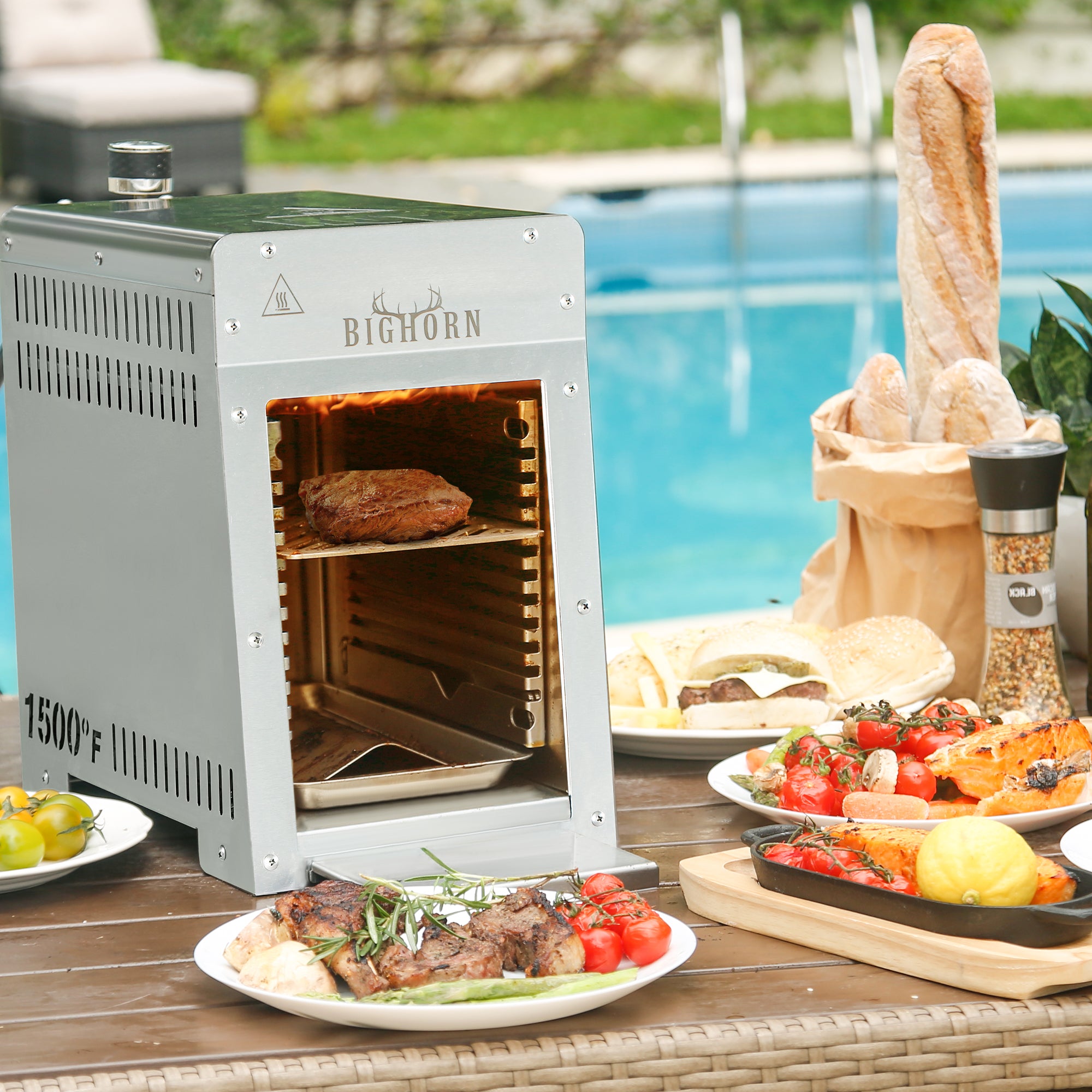
A portable infrared cooker such as the 9-inch stainless steel portable infrared steak grill is useful when you want that concentrated sear, not when you are trying to solve a sticking problem on a backyard gas grate. If you are choosing between cooker styles, the comparison on infrared versus a conventional gas grill is the place for that decision. A product-level look such as the portable propane infrared grill overview and the infrared gas and propane grill review can help you see the hardware; they are not a substitute for the grate technique on this page.
Doneness and carryover for fish
Probe the thickest part of the fillet from the side, not through a thin edge. The FDA chart already mentioned lists 145°F for fin fish. Carryover heat on a typical fillet is modest compared with a thick roast, so do not pull the fish far below that published temperature and hope a long rest will finish it.
A brief rest, a couple of minutes off the grate, lets the surface settle so you can plate without smearing the crust. It is not a long steak rest. If you need kitchen-side handling reminders for raw and cooked seafood, the FDA food-safety-in-your-kitchen page is a practical companion to the temperature chart.
Color alone is a weak signal. Some farmed fillets stay a deeper pink when they are already at temperature; some wild pieces look paler sooner. Trust the thermometer, then the flake at the thickest point.
A spatula test and a second-side rule that prevents a stall on the grate
The spatula test is your stall prevention. If the first side has released and the thickest part is close to temperature, the second side is only a finish, not a second cook. Leave it there just long enough to mark or to close the last few degrees. A long second-side sit is how the fish dries out while you wait for grill marks that will not improve the dinner.
If the first side released but the center is still clearly under, you can close the lid or slide the fillet to a slightly calmer zone rather than parking it on a blasting grate. That is the gas-grill version of patience. It is not the same play as a reverse sear for steak on an infrared grill, which is built for a thick cut and a different heat source.
When the fish comes off, get it onto a clean plate or platter, not back onto a cutting board that held the raw fillet. Keep the grease path on the grill in mind as you shut down, and do not walk away from a flare. The method is short. The attention should match it.
Dietary Guidelines for Americans treat seafood as part of a broader eating pattern; use that context if you came here wondering about the plate, and use the grate rules above if you came here because last night’s salmon stuck.
If you want the short, rack-based seafood sear instead of this gas-grate method, look at the 9-inch portable infrared steak grill and the infrared salmon page linked above, and keep the two techniques on their own cookers.
FAQ
When you cook salmon on the grill?
Cook salmon on a gas grill after the grates are fully preheated and the surface of the fish is dry. A common window for a typical weeknight fillet is several minutes on the first side, usually skin-side down if the skin is on, then a shorter second side until the thickest part reaches the 145°F fin-fish temperature listed on the FDA safe food-handling chart. Start sooner than you would for a thick steak, because salmon is leaner at the surface and does not need a long hard sear to finish.
What is the biggest mistake when cooking salmon?
The usual failure is moving the fillet too early. Wet fish on a grate that is not fully hot bonds to the metal, and a rushed flip tears the flake and leaves a layer behind. A close second is overcrowding, which drops grate heat and makes every piece more likely to stick. Dry the fish, preheat with the lid closed, oil lightly, and wait for a clean release before you turn it.
How many minutes per side for salmon?
There is no single number that fits every fillet. A common range for a skin-on piece about three-quarters of an inch thick is roughly six to eight minutes on the first side and one to three minutes on the second, over a medium-high, fully preheated gas grill. Thicker center cuts need more time; thin tail pieces need less and may barely need a flip. Use the release test and a thermometer, not the clock alone.
Is grilled salmon healthy?
Salmon is a protein-rich fish, and seafood is part of the pattern described in the Dietary Guidelines for Americans. Grilling it does not automatically make a plate a health food, and this page is not medical advice. What you add, how dark you let the surface go, and the portion still matter. For buying and handling guidance, use the FDA pages on selecting and serving seafood, and keep leftovers refrigerated on a normal safe-food timeline.
More to Read
Al Pastor Pizza: Marinade, Pineapple Balance and High-Heat Timing
Make al pastor pizza at high heat with thin, safely cooked pork and drained pineapple. Finish with salsa after the bake, and do not invent taco cal...
Mixed Vegetables on a Gas Grill: Baskets, Skewers and Direct Heat
Grill mixed vegetables on a gas grill with a path for baskets, skewers, or a bare grate, plus oil, salt timing, and a cut-size rule so pieces finis...
Pizza al Taglio (Roman Tray Pizza) at Home Outdoors
Make pizza al taglio at home as a Roman tray pie: oil the pan, dimple relaxed dough, top modestly, bake thoroughly outdoors, and cut it into squares.
