A high-temperature electric pizza oven is worth considering if you want faster, more controlled pizza baking than a conventional home oven usually provides. Its value depends on more than its maximum temperature: balanced top and bottom heat, a fully preheated stone, safe indoor placement, and enough capacity for your typical pizza night all determine whether it fits your kitchen and cooking style.
What Makes an Electric Pizza Oven High Temperature?
A high-temperature electric pizza oven combines powerful heating elements, insulation, and a heat-retaining pizza stone to produce the intense heat needed for crisp crust and well-browned toppings. It can bake pizza faster than a standard oven, but temperature control matters as much as maximum heat.
Most residential ovens operate at lower temperatures than dedicated pizza ovens. That does not make a standard oven unsuitable for pizza; it can produce excellent pan pizza, New York-style pizza, and baked flatbreads. A dedicated electric pizza oven is designed to create more concentrated heat in a compact chamber, which can improve browning and reduce bake time.
High heat affects several parts of the bake at once:
-
The dough expands quickly before the crust sets.
-
The stone transfers heat into the base of the pizza.
-
Upper heating elements brown the cheese and rim.
-
A shorter bake can help retain moisture in the crust.
However, the hottest available setting is not automatically the right choice. A lightly topped, thin pizza may benefit from very high heat, while a thicker crust or a heavily topped pizza often needs a lower temperature and more time. The goal is an evenly cooked pizza with a crisp base, browned edges, and fully melted toppings.
How Does Heat Control Affect Pizza Results?
Heat control determines whether the bottom crust, rim, cheese, and toppings finish at the same time. A pizza oven needs adequate stone heat for the base and enough upper heat to brown toppings without burning the crust.
Pizza cooks through two primary heat-transfer methods. The pizza stone applies direct conductive heat to the bottom, while the upper heating elements provide radiant heat to the cheese, crust edge, and toppings. When these two sources are out of balance, the pizza can burn underneath before the top is ready or brown too quickly while the center remains underbaked.
Use the finished pizza to guide adjustments:
An infrared thermometer can help assess the stone surface before cooking. The oven’s control panel may indicate the chamber temperature, but the baking surface can be hotter or cooler depending on preheat time and recent use. Check the stone before the first pizza and give it time to recover between pizzas.
Which Features Matter Most in an Electric Pizza Oven?
The most useful features are a practical cooking capacity, adjustable heat, a quality pizza stone, safe indoor suitability, manageable countertop dimensions, and controls that match your experience level. Presets can simplify routine cooking, while manual settings provide more flexibility for homemade dough and different pizza styles.
Start with the usable pizza diameter. A chamber designed for a 12-inch or 14-inch pizza should still leave enough space to launch, rotate, and retrieve the pie. The largest stated diameter is not always the easiest pizza size to handle, especially if the opening is narrow.
Heating Elements and Controls
Dual heating elements can support a more balanced bake by heating the pizza from above and below. Independent control of upper and lower heat is useful for cooks who want to fine-tune crust color, cheese browning, and stone performance.
Preset programs are helpful for frozen pizza, thin crust, and common pizza styles. They should not replace observation. Dough hydration, topping quantity, flour type, and room temperature can all affect baking behavior.
Stone and Recovery Time
A stone stores heat and transfers it to the pizza base. A removable stone can make cleanup more convenient, but it should be handled only after it has cooled completely. For frequent pizza nights, consider how well the oven restores stone heat between consecutive pizzas.
Counter Space and Door Clearance
Measure the oven’s full footprint rather than focusing only on the pizza size. Leave workspace for a peel, dough preparation, turning, and safe pizza removal. Also check that opening the door does not interfere with cabinets, walls, or nearby appliances.
What Should You Know About Big Horn Outdoors Electric Pizza Ovens?
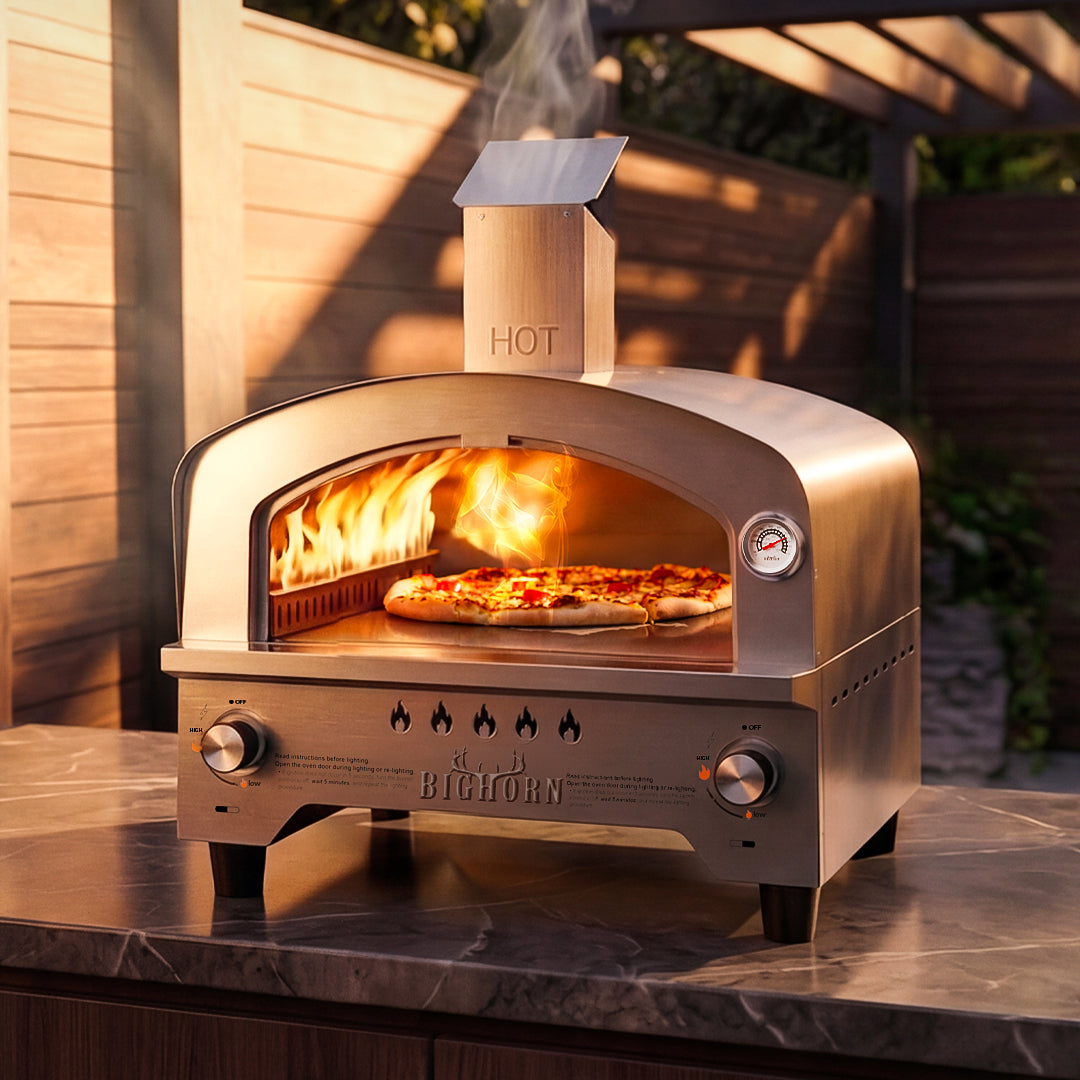
Big Horn Outdoors offers electric countertop pizza oven options alongside pellet, gas, and multi-fuel pizza ovens. Product specifications vary by model, so buyers should confirm the exact oven’s fuel type, temperature range, included accessories, cooking capacity, and indoor or outdoor suitability before relying on any product claim.
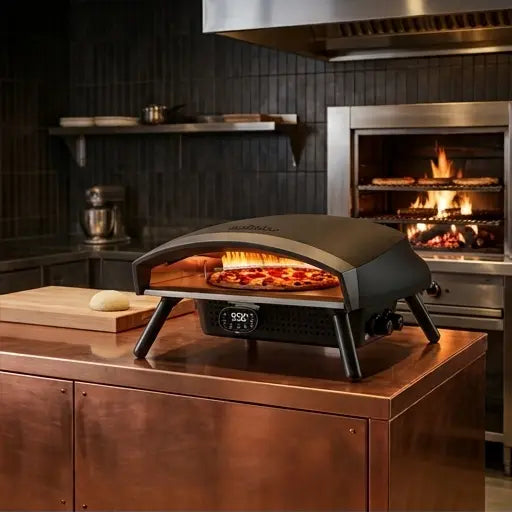
One official Big Horn Outdoors 14-inch indoor electric countertop pizza oven model is designed for 14-inch pizzas and includes six preset cooking modes, a removable pizza stone, dual heating tubes, and a pizza peel. Its listed temperature range is 220°F to 800°F, and the manufacturer states a 20- to 30-minute preheat period.
The six preset modes are intended for frozen pizza, wood-fired-style pizza, New York-style pizza, Margherita pizza, thin and crispy pizza, and Flammkuchen. These modes can offer a useful starting point, particularly for newer home pizza makers, but they do not eliminate the need to monitor the crust and toppings.
Big Horn Outdoors also sells models that use pellets, gas, or multiple fuel systems. Their temperatures, preheat times, cooking locations, accessories, and portability features should not be applied to the 14-inch indoor electric model. For example, the brand’s 12-inch pellet-and-electric pizza oven is a different product with different construction, fuel capability, and operating requirements.
How Do You Choose the Right Capacity and Counter Space?
Choose capacity according to the pizza size you make most often, the number of people you serve, and the space needed to operate the oven safely. A larger chamber can make handling easier, while a smaller countertop oven may be more practical for compact kitchens and occasional pizza nights.
A 12-inch pizza is often suitable for one or two people, depending on appetite and side dishes. A 14-inch format provides more room for a shared pizza and can be useful for family meals. Capacity also affects how much room you have to rotate the pizza during a high-heat bake.
Consider these factors before choosing an oven:
-
The maximum pizza diameter and usable interior space.
-
The opening width and clearance for a pizza peel.
-
The size and weight of the unit when stored or moved.
-
The amount of counter space available around the oven.
-
The expected number of pizzas in each cooking session.
-
The time needed for the stone to regain heat between pizzas.
Electric countertop pizza ovens are generally best suited to a stable indoor cooking area with appropriate electrical access. They are not automatically suitable for patios, campsites, RV travel, or wet conditions. If frequent outdoor portability is your priority, compare electric, gas, pellet, and multi-fuel options based on the actual environment where you intend to cook.
Can You Use a High-Temperature Electric Pizza Oven Safely Indoors?
You can use an electric pizza oven indoors only when the exact model is intended for indoor use and operated according to its instructions. Safe use requires a stable heat-resistant surface, adequate clearance, a suitable electrical outlet, regular cleaning, and supervision throughout preheating and cooking.
Plug the appliance directly into a properly grounded wall outlet unless the manufacturer specifically permits another setup. Avoid using an extension cord unless the product instructions clearly allow it and identify the necessary electrical rating. Do not overload the same circuit with multiple high-power appliances.
Place the oven on a flat, dry, heat-resistant counter. Keep paper products, curtains, food packaging, aerosol cans, cooking oils, and other combustible materials away from the appliance. Check the manufacturer’s requirements for clearance above, behind, and beside the oven.
Flour, cheese, and sauce can burn at high temperatures. Use only enough flour or semolina to prevent sticking, and remove loose debris after the oven has cooled. Ventilation can help manage ordinary cooking odors and smoke from spilled toppings, but it does not make an outdoor-only oven appropriate for indoor use.
Keep children and pets away from the cooking area. The stone, door, oven exterior, steam, and pizza peel can all become hot enough to cause burns. Let the oven cool fully before cleaning, relocating it, or storing it.
How Can You Improve Your First Electric Pizza Bake?
Improve your first bake by preheating thoroughly, using lightly topped dough, checking that the pizza moves freely on the peel, and rotating it as needed. Focus on an even bake before attempting very fast cooking times or heavily loaded pizzas.
Bring dough close to room temperature before stretching. Cold dough can be difficult to shape and may bake unevenly. Stretch the dough on a lightly floured surface, then transfer it to the peel shortly before launching to reduce the chance of sticking.
Use modest amounts of sauce, cheese, and vegetables. Wet toppings create steam and can leave the center soft. Drain fresh mozzarella, avoid overly watery sauces, and cut vegetables thinly enough to cook during the bake.
Before launching, shake the peel gently. The pizza should slide easily. If it sticks, lift the edge and add a small amount of flour beneath the affected area. Excess flour can scorch on the stone, so use it sparingly.
Rotate the pizza when one side begins to brown faster than the other. Turning is especially important in compact high-temperature ovens because heat can vary across the stone and near the opening.
Why Does Cleaning Help an Electric Pizza Oven Perform Better?
Cleaning helps prevent burnt flour, smoke, off-flavors, and residue that can interfere with consistent pizza baking. Regular inspection also helps you identify damage to the stone, cord, door, controls, or heating area before using the oven again.
Allow the oven and stone to cool completely before cleaning. Brush away loose flour, crumbs, and food debris with a dry brush or soft cloth. If the stone is removable, remove it carefully only after it has reached room temperature.
Do not soak a pizza stone or expose it to abrupt temperature changes unless the manufacturer specifically instructs you to do so. Porous stones can absorb moisture, and rapid temperature changes may cause damage.
Clean exterior surfaces according to the product manual. Avoid abrasive pads or harsh cleaners that could damage finishes, control markings, glass, or coatings. Remove baked-on cheese and sugary spills after cooldown before they become increasingly difficult to clean.
Big Horn Outdoors electric pizza oven owners should follow the cleaning and maintenance instructions provided for their exact model. This is particularly important because removable stones, heating systems, doors, and control layouts can differ across the brand’s product range.
What Are Big Horn Outdoors Expert Views?
Big Horn Outdoors emphasizes practical heat management over pursuing the highest available temperature for every pizza. The brand’s approach supports choosing an oven that fits the intended cooking environment, pizza size, available workspace, and preferred fuel source.
“A high-temperature pizza oven works best when heat, dough, toppings, and cooking space are considered together. Fully preheat the stone, use restrained toppings, and adjust the bake according to the finished crust rather than relying on one setting for every recipe. For indoor cooking, use only an oven designed for that environment and follow its operating, clearance, and electrical instructions.”
For indoor pizza making, an electric countertop oven can offer a controlled alternative to live-fire cooking. The 14-inch Big Horn Outdoors indoor electric model provides a defined temperature range, preset modes, a removable stone, and dual heating tubes for cooks who want a plug-in pizza setup.
A beginner may benefit most from clear controls and a manageable chamber size. More experienced cooks may prioritize manual temperature adjustment, stone recovery, and the ability to adapt the heat balance for different dough formulas.
What Questions Do Buyers Often Ask?
Can an electric pizza oven cook frozen pizza?
Yes, provided the exact oven supports frozen pizza use. A lower or moderate setting may work better than maximum heat because frozen toppings and thicker crusts need time to heat through without burning the outside.
Does an electric pizza oven need a dedicated circuit?
Follow the manufacturer’s instructions and your home’s electrical requirements. High-power countertop appliances should be connected to a properly grounded outlet and should not share an overloaded circuit with other heat-producing appliances.
What accessories are useful for electric pizza ovens?
A launching peel, turning peel, infrared thermometer, dough scraper, heat-resistant gloves, and dry oven brush are useful tools. Confirm that any pan, rack, or accessory is suitable for the oven’s temperature range and interior dimensions.
Can you bake more than pizza in an electric pizza oven?
Many electric pizza ovens can cook flatbreads and other foods when the exact model and temperature setting are appropriate. Check the product instructions before using cookware, baking pans, or recipes that require longer cooking times.
How Should You Choose Your Next Pizza Oven?
Choose an electric pizza oven if you want indoor convenience, predictable heat control, and a dedicated countertop setup. Choose gas, pellet, or multi-fuel equipment only if your preferred cooking environment, portability needs, and fuel preferences support those formats.
For occasional indoor pizza nights, prioritize safe indoor use, a practical pizza diameter, simple controls, and manageable storage. For frequent family meals, focus on usable capacity, stone recovery, and workspace around the oven. For cooks who want to experiment with thin crust, New York-style pizza, or other dough styles, manual heat control can be more valuable than a single maximum temperature claim.
A high-temperature electric pizza oven can produce excellent results when it is properly preheated, used with balanced toppings, and maintained carefully. Confirm the specifications for the exact Big Horn Outdoors model or any other model under consideration, match it to your counter space and cooking habits, and begin with simple pizzas before moving on to faster or more demanding recipes.