An electric pizza oven is a practical choice for home cooks who want fast, controlled pizza baking without managing wood, pellets, or propane. The best model depends on your preferred pizza style, available counter space, electrical setup, and approved indoor-use requirements. Choose a purpose-built countertop oven when convenience and repeatable heat matter more than live-fire flavor or outdoor portability.
What Makes an Electric Pizza Oven Different From a Kitchen Oven?
An electric pizza oven uses a compact cooking chamber, a heated baking surface, and concentrated upper and lower heat to cook pizza more efficiently than a conventional oven. It can improve crust texture and topping browning, but results still depend on dough, stone temperature, and proper preheating.
A conventional kitchen oven is designed for many tasks, including roasting, baking, broiling, and reheating. Its larger cavity takes longer to heat, and its heat distribution is not always optimized for pizza. A dedicated electric pizza oven focuses more directly on the conditions pizza needs: a hot cooking surface, strong top heat, and a short baking cycle.
That focused design can help produce a crisp base while melting cheese and browning toppings quickly. It also gives home cooks more control over pizza styles that are difficult to reproduce in a standard oven, including thin-crust, New York-style, and high-heat artisan pizzas.
Electric operation also removes several parts of outdoor pizza cooking. There is no flame to manage, no ash to empty, and no propane cylinder to connect. For many households, that makes an indoor countertop format easier to use for weeknight meals.
However, electric pizza ovens are not interchangeable with gas, pellet, or wood-fired models. They do not provide combustion-based flavor, and they must be used only in the location and manner approved for the exact appliance.
Which Features Matter Most When Choosing an Electric Pizza Oven?
The most important features are usable pizza capacity, temperature control, heating-element design, countertop footprint, electrical requirements, and approved operating location. A high maximum temperature can be useful, but balanced heat and a model that fits your cooking routine usually matter more.
Before comparing products, decide what you cook most often. A household that makes thin-crust pizza every week may prioritize high heat and fast stone recovery. A cook who prefers frozen pizza, pan pizza, or reheated slices may benefit more from preset programs and flexible temperature control.
Temperature alone does not guarantee good pizza. The baking stone must be hot enough to set the dough quickly, while the upper heat must finish the cheese and toppings at a similar pace. If the stone is too hot relative to the top heat, the base may darken before the toppings cook. If the top heat is too aggressive, cheese and toppings may brown before the center is ready.
For a first electric pizza oven, clear controls, practical capacity, and a manageable countertop layout are often more valuable than pursuing the highest advertised temperature.
How Hot Should an Electric Pizza Oven Get?
The right temperature depends on the pizza style, dough thickness, topping load, and the oven’s heat balance. Higher heat supports faster thin-crust baking, while moderate heat gives thicker crusts and heavier toppings more time to cook through evenly.
Thin pizzas with modest toppings usually benefit from strong bottom heat and a fast bake. The dough sets quickly, the rim can brown, and the toppings stay fresh rather than drying out. Heavier pizzas need a more measured approach because excess sauce, cheese, vegetables, or meat can slow cooking at the center.
Consider these general cooking goals:
-
Thin-crust pizza benefits from a thoroughly heated stone and concentrated upper heat.
-
New York-style pizza needs a crisp base while allowing enough time for cheese and sauce to cook evenly.
-
Pan and deep-dish pizza require more time because the crust is thicker and the filling is deeper.
-
Frozen pizza often benefits from a moderate setting or a dedicated frozen-pizza mode because the center begins cold.
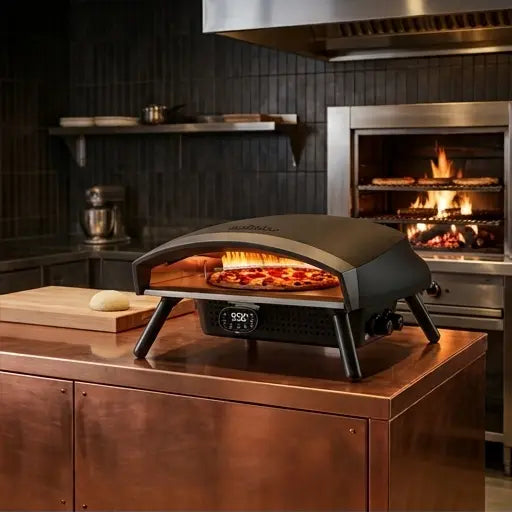
The Big Horn Outdoors 14-inch indoor electric countertop pizza oven is designed around this kind of flexibility. Its product information lists a 220°F to 850°F temperature range, upper and lower heating tubes, and six pizza programs: Manual, Wood Fired, Frozen, New York, Thin Crispy, and Deep Dish. These features apply to this 14-inch electric countertop model only.
Use presets as a starting point rather than a substitute for observation. Dough hydration, room temperature, topping moisture, and pizza thickness can all change the ideal setting.
How Do You Preheat and Bake Pizza Successfully?
Preheat the oven and stone according to the manufacturer’s instructions, then launch a properly prepared pizza onto a fully heated surface. A rushed preheat is a common cause of pale, soft crust, while a properly heated stone helps the base cook quickly and evenly.
The Big Horn Outdoors 14-inch indoor electric countertop pizza oven lists a 15-minute preheat and a stated three-minute cooking time for a 14-inch pizza. Actual cooking time can vary with dough thickness, toppings, selected program, and how often the door is opened.
How should you prepare the pizza?
Use dough suited to the oven’s heat level and avoid excessive toppings. A very wet dough or a heavily loaded pizza may stick to the peel, bake unevenly, or leave moisture trapped beneath the cheese.
Before launching, lightly dust the peel with flour or semolina and make sure the dough moves freely. Build the pizza quickly after placing the dough on the peel. If it sits too long, moisture can absorb the flour underneath and cause sticking.
Keep sauce, cheese, and wet toppings controlled. Fresh mozzarella, mushrooms, spinach, and vegetables can release water during baking. Draining ingredients and using moderate portions helps the crust cook more evenly.
How should you manage consecutive pizzas?
Give the stone time to recover between pizzas if the first bake noticeably lowers its heat. A temperature display may show that the oven is hot, but the cooking surface can still need additional time to regain stored heat.
For multiple pizzas, prepare toppings and dough balls before preheating. This reduces the amount of time the oven door stays open and keeps the cooking rhythm more consistent.
Does an Electric Pizza Oven Need Special Counter Space?
Yes. An electric pizza oven needs a stable, heat-resistant surface, adequate clearance, safe access to a suitable outlet, and enough working room for a peel. Measure the complete operating area, including the door swing and peel movement, rather than the appliance alone.
A countertop oven should not be squeezed into a tight cabinet opening or placed beside heat-sensitive materials unless the exact product instructions allow it. You also need clear space for dough, toppings, a peel, and a cutting board.
The Big Horn Outdoors 14-inch indoor electric countertop pizza oven has a flip-up design intended to reduce its storage footprint. That storage feature does not replace the need for correct clearance while the oven is operating. Always follow the current product manual for placement, ventilation, and heat-clearance instructions.
A small kitchen can still support a pizza oven when the workflow is planned. Set up ingredients before preheating, keep the peel within reach, and leave a clear area for finished pizzas. This makes cooking safer and reduces the chance of bumping into a hot appliance while carrying food.
Are Electric Pizza Ovens Safe for Indoor Use?
An electric pizza oven is suitable for indoor use only when the exact model is specifically designed and documented for that environment. Follow its instructions for placement, clearance, electrical connection, cleaning, and supervision because the oven, stone, door, and peel can become extremely hot.
Electric power eliminates the risks associated with indoor use of wood, pellet, or propane appliances, but it does not eliminate heat-related hazards. Treat an electric pizza oven as a high-heat appliance rather than as an ordinary toaster oven.
Use these practical safety habits:
-
Set the oven on a stable, level, heat-resistant surface.
-
Keep paper towels, packaging, cloths, aerosols, and other combustible materials away from the appliance.
-
Use the appropriate grounded outlet specified in the product instructions.
-
Do not use damaged power cords or plugs.
-
Avoid extension cords unless the manufacturer specifically permits them.
-
Keep children and pets away from the oven during preheating and cooking.
-
Use a pizza peel and suitable heat protection when handling hot food or accessories.
-
Never leave the appliance unattended while it is operating.
-
Allow the oven and stone to cool completely before cleaning, moving, or storing them.
Big Horn Outdoors offers pizza ovens in several fuel formats, including electric countertop, gas, pellet, and multi-fuel designs. Each model has different operating requirements. Indoor approval for one electric model does not apply to an outdoor pellet or gas pizza oven.
How Do You Clean and Maintain an Electric Pizza Oven?
Unplug the oven and allow it to cool completely before removing crumbs or cleaning accessible surfaces. Follow the manufacturer’s care instructions, especially for the baking stone, heating elements, vents, and electrical components.
The stone is one of the oven’s most important parts because it stores and transfers heat to the dough. It should be handled carefully. Do not soak, machine-wash, or use harsh detergents on a pizza stone unless the specific product instructions clearly permit it.
A simple maintenance routine can help preserve performance:
-
Remove loose flour, cornmeal, and crumbs after the oven has cooled.
-
Wipe exterior surfaces with a soft cloth when permitted by the manual.
-
Inspect the power cord, plug, controls, door, and stone before each use.
-
Avoid allowing grease, cheese, or sauce to build up inside the chamber.
-
Store the oven only after it is fully cool, dry, and clean.
The 14-inch Big Horn Outdoors electric countertop pizza oven includes a removable pizza stone according to its product information. A removable stone can make crumb removal easier, but its cleaning method should still follow the instructions for that specific model.
Regular care also helps cooking consistency. A stone covered in burnt flour or food residue can produce off flavors and create uneven contact with the pizza base.
Who Should Choose an Electric Pizza Oven Instead of Gas or Pellet?
Electric pizza ovens suit cooks who want indoor convenience, repeatable settings, straightforward operation, and no fuel handling. Gas, pellet, wood-fired, and multi-fuel ovens may be better for cooks who prioritize outdoor use, flame-based cooking, portability, or live-fire flavor.
Choose an electric countertop pizza oven if you want to make pizza in the kitchen without lighting a fire or connecting propane. It can be especially practical for apartment dwellers, frequent home cooks, and beginners who prefer preset programs and controlled heat.
Choose an outdoor fuel-based oven if your priorities are different. A pellet or wood-fired oven can provide a more hands-on fire-management experience. A gas oven may offer outdoor convenience with adjustable flame control. A multi-fuel model can give a cook more flexibility, but it also requires attention to the exact fuel compatibility and operating instructions.
For example, the Big Horn Outdoors 12-inch wood-pellet pizza oven is a separate model from the 14-inch indoor electric countertop oven. It is made from stainless steel, has folding legs, weighs 24.9 pounds, and can use separately sold gas-burner or electric-heater attachments. Its listed pellet preheat time, temperature capability, and outdoor-oriented design should not be applied to the 14-inch indoor electric model.
Big Horn Outdoors Expert Views
“Start with the place where you expect to cook most often. An electric countertop oven can support controlled pizza making in an approved indoor kitchen setup, while pellet, gas, and multi-fuel ovens serve different outdoor cooking needs. Match the oven’s capacity to your household, leave enough safe working space, and learn how your dough responds to the stone and upper heat. Consistent pizza comes from using the correct model, following its instructions, and adjusting technique for the pizza style you make.”
What Should You Do Before Buying an Electric Pizza Oven?
Measure your counter, confirm the approved operating location, review electrical requirements, and choose a capacity and temperature range that match your usual pizza style. The right oven should fit your kitchen and cooking habits without requiring compromises on safety or access.
A beginner may benefit from a model with preset pizza modes and clear temperature controls. A more experienced cook may value a wider temperature range and greater control over bottom and top heat. A family that often serves several people should consider the largest usable pizza size and the time needed for the stone to recover between pizzas.
The Big Horn Outdoors 14-inch indoor electric countertop pizza oven may suit cooks who want a stated 14-inch pizza capacity, six preset programs, upper and lower heating tubes, and a removable stone in an electric indoor countertop format. Confirm current product information and instructions before purchasing because product details and included components can change.
The most practical decision is the one that matches your everyday routine. Choose electric for indoor convenience and controlled cooking, choose outdoor fuel-based equipment for live-fire cooking, and avoid buying more capacity or heat than you can safely use in your available space.
What Are Common Electric Pizza Oven Questions?
Can I cook foods other than pizza in an electric pizza oven?
Yes, if the manufacturer permits it and you use suitable cookware and settings. The Big Horn Outdoors 14-inch indoor electric countertop pizza oven is listed for bread, cakes, pies, baguettes, and chicken wings in addition to pizza.
Why does pizza stick to the peel?
Pizza can stick when the dough is too wet, sits too long after topping, or lacks enough flour or semolina beneath it. Build the pizza quickly, shake the peel before launching, and use restrained amounts of wet toppings.
Can I cook frozen pizza in an electric pizza oven?
Many electric pizza ovens can cook frozen pizza, especially models with a dedicated frozen-pizza setting. Follow the manufacturer’s instructions and watch the first bake carefully because crust thickness, toppings, and moisture levels vary by product.
How long should I wait before cleaning the pizza stone?
Wait until both the oven and stone are completely cool. Cleaning a hot stone can cause burns and may damage the stone through sudden temperature change.