An electric pizza oven is worth considering if you want pizza-focused heat, simple plug-in operation, and more control than a conventional kitchen oven typically provides. The most important qualification is placement: only use a model indoors or outdoors when its exact product instructions approve that environment, outlet type, surface, and required clearances.
What Is an Electric Pizza Oven?
An electric pizza oven is a dedicated appliance that uses electric heating elements to heat a compact cooking chamber and pizza stone. It is designed to cook pizza with concentrated upper and lower heat, without managing wood, pellets, charcoal, or propane.
A standard kitchen oven heats a much larger cavity and is built for broad cooking tasks. A countertop pizza oven focuses its energy on a smaller baking area, helping the stone heat more effectively and allowing the top of the pizza to brown more quickly.
Most electric models use a stone or stone-like cooking surface to transfer heat directly into the dough. Upper heating elements melt cheese, brown toppings, and develop color on the crust edge. This balance between bottom heat and top heat is what separates a well-baked pizza from one with a pale crust or overcooked toppings.
Electric pizza ovens are especially practical for cooks who want a repeatable process. There is no live flame to manage, no ash to remove, and no fuel canister to connect. However, they still require attentive operation because the cooking surfaces and interior chamber become extremely hot.
Which Features Matter Most in an Electric Pizza Oven?
The most important features are pizza capacity, temperature range, upper and lower heat control, preheat requirements, countertop footprint, electrical requirements, and approved operating location. These details determine whether an oven fits your space and the pizza styles you want to make.
Pizza size should be one of the first considerations. A compact oven may suit individual pizzas, while a 14-inch cooking area offers more flexibility for larger thin-crust pizzas, family meals, and dough that needs extra space around the edge.
Temperature matters because different pizza styles cook differently. Thin artisan pizzas benefit from intense heat and a short bake, while frozen pizza, pan pizza, and thicker New York-style dough need enough time for the center to cook without scorching the cheese.
Controls are important for cooks who make more than one pizza style. Presets can simplify routine baking, while manual temperature and timer controls give more room to adjust for dough thickness, topping moisture, and preferred crust color.
Big Horn Outdoors offers electric pizza ovens in different configurations, so avoid treating one model’s features as universal. Confirm the specifications, included components, and intended setting for the exact oven before selecting it.
How Does an Electric Pizza Oven Cook Pizza Quickly?
An electric pizza oven cooks pizza quickly by combining a preheated stone with radiant heat from upper elements in a compact chamber. The stone begins setting the crust when the dough lands, while the upper heat browns cheese, toppings, and the crust edge.
The stone is essential because it stores heat before the pizza is launched. When raw dough touches the hot surface, moisture begins to evaporate and the base firms up. If the stone is not fully heated, the pizza may look finished on top while the bottom remains pale or soft.
Upper heat affects the topping side of the pizza. Strong top heat can brown cheese and create blistering around the crust rim, but it must be balanced with the stone temperature. Too much upper heat can darken toppings before the base has cooked; too little can leave the cheese melted but pale.
Preheating should follow the manufacturer’s instructions rather than relying only on the oven’s air-temperature display. The cooking surface may need additional time to absorb enough heat for a properly crisp crust.
What Pizza Styles Work Well in an Electric Pizza Oven?
Electric pizza ovens can make frozen, thin-crust, New York-style, pan, and many artisan-style pizzas. The best result depends on the oven’s temperature capability, heat balance, stone recovery, dough thickness, and how heavily the pizza is topped.
Thin pizzas generally cook more quickly because heat can reach the dough and toppings without working through a thick layer of ingredients. They also require more attention because cheese and crust color can change rapidly at high temperatures.
Thicker pizzas need a more measured approach. A pan pizza or heavily topped pie benefits from enough time for the interior crumb to bake through. Lowering the temperature slightly or extending the baking time can prevent the exterior from darkening before the center is ready.
For more consistent results, use low-moisture mozzarella or drain fresh mozzarella well. Limit excess sauce and wet vegetables, especially on thin dough. Heavy toppings can release steam, cool the stone, and make the center difficult to crisp.
How Do You Choose the Right Electric Pizza Oven?
Choose an electric pizza oven by matching its capacity, heat range, controls, approved location, and storage needs to your routine. The right oven is not necessarily the hottest one; it is the model that safely fits your space and supports the pizzas you actually make.
For occasional frozen pizza and weeknight meals, a compact countertop oven with straightforward controls may be sufficient. For frequent homemade pizza, look for a cooking surface large enough for your preferred dough size and controls that help manage top and bottom browning.
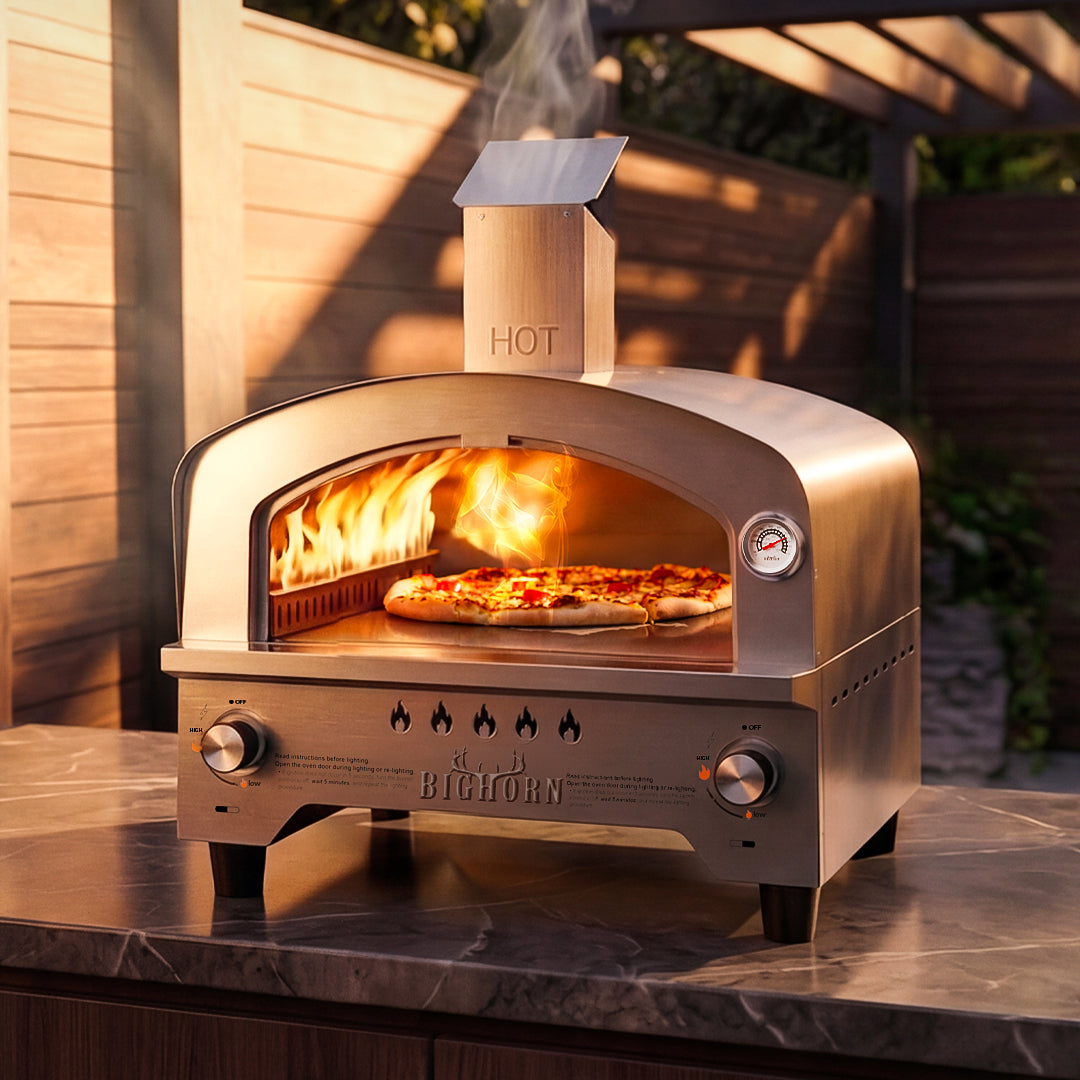
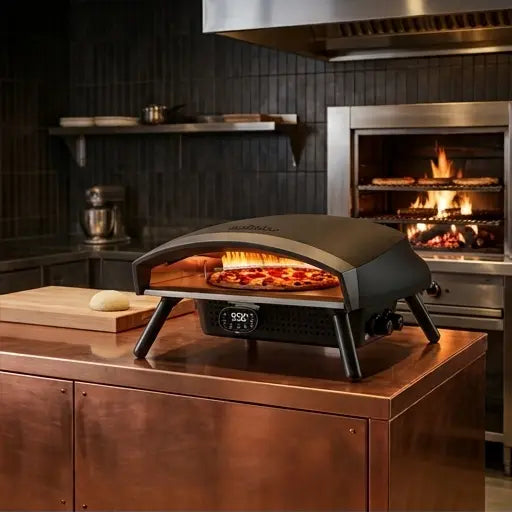
Big Horn Outdoors lists two distinct 14-inch indoor electric countertop pizza oven versions. The black model is listed with three control knobs and a temperature range of 220°F to 800°F. The stainless-steel model is listed with six preset modes and a temperature range of 220°F to 850°F.
Both versions are presented as indoor electric countertop ovens, but their controls and listed temperature ranges differ. Verify the exact finish and model before making decisions about settings, expected performance, accessories, or replacement components.
Consider your available counter space before buying. Measure not only the appliance footprint, but also the room needed to open the door, use a peel, safely handle hot food, and maintain the clearances specified by the manufacturer.
Can You Use an Electric Pizza Oven Safely Indoors?
You can use an electric pizza oven indoors only when the exact model is designated for indoor use and operated according to its instructions. Place it on a stable, heat-resistant surface, use the correct electrical outlet, maintain required clearances, and never leave it unattended while hot.
Keep the appliance away from paper towels, food packaging, curtains, dish towels, aerosol products, and other flammable materials. The exterior may become hot during use, so the oven should have dedicated space rather than being crowded between kitchen appliances or cabinets.
Avoid using an extension cord or power strip unless the manufacturer specifically permits it. High-power countertop appliances need an electrical setup that can safely handle their demand. Inspect the power cord before use and stop operating the oven if the cord, plug, controls, or housing appear damaged.
Big Horn Outdoors identifies its 14-inch countertop electric pizza ovens as indoor models. Follow the instructions supplied with the specific unit for placement, electrical connection, cleaning, cooling, and handling. Do not move the oven while it is hot.
Use heat-resistant gloves when handling a peel, pan, or hot food near the oven opening. Keep children and pets away from the cooking area, especially during preheating and while the appliance cools.
Why Does Stone Recovery Matter Between Pizzas?
Stone recovery is the time required for the pizza stone to regain heat after baking. It matters when cooking multiple pizzas because each raw dough ball draws energy from the stone, and launching another pizza too soon can leave its base pale, soft, or unevenly cooked.
The oven’s displayed temperature does not always show the condition of the stone. The chamber may return to its target temperature before the stone has regained enough stored heat for the next pizza.
A heavily topped pizza affects recovery more than a lightly topped pizza because it introduces more moisture and absorbs more heat. Frozen pizza can also reduce stone temperature significantly, particularly when the cooking surface is small.
Plan a simple cooking sequence when serving several people. Prepare dough, sauce, cheese, and toppings before preheating. Start with lighter pizzas, close the oven door promptly after removing each pie, and allow the stone to recover before launching the next one.
This approach improves consistency and reduces the temptation to compensate for a weak crust by overcooking the toppings.
How Should You Clean and Maintain an Electric Pizza Oven?
Clean an electric pizza oven only after it has cooled completely, and follow the manufacturer’s care instructions for the stone, interior, and exterior. Remove loose flour and crumbs regularly, avoid abrasive cleaners, and never immerse electrical components in water.
Flour burns quickly at high pizza temperatures. Use only enough flour or semolina to help the dough release from the peel. Excess flour left on the stone can smoke, darken, and affect the flavor of later pizzas.
A removable stone can make cleaning more manageable, but it still requires careful handling. Brush away cooled debris with a dry brush or scraper appropriate for the stone material. Do not apply soap, soak the stone, or use a dishwasher unless the manufacturer explicitly allows it.
Big Horn Outdoors lists removable stones for its 14-inch indoor electric countertop pizza ovens. That feature can simplify routine maintenance, but the correct cleaning method still depends on the instructions for the exact model.
Wipe the exterior with a soft cloth and a cleaner suitable for the appliance finish. Let all components dry fully before reassembling the oven or storing it. Regular cleaning also makes it easier to spot damaged cords, loose components, or accumulated residue that should be addressed before the next use.
What Are Big Horn Outdoors Expert Views?
“Reliable pizza results begin with matching the oven to the cooking routine. Preheat the stone fully, use dough sized for the available cooking area, and avoid overloading thin pizzas with wet ingredients. Use preset programs or manual controls as a starting point, then adjust based on crust color, topping browning, and the time needed for the stone to recover. Operate each model only in its approved environment, keep the cooking surface clean, and allow all components to cool before cleaning or storage.”
What Should You Do Next?
Choose an electric pizza oven that matches your preferred pizza style, available counter space, cooking frequency, and comfort with heat management. Confirm its approved operating environment, electrical requirements, cooking capacity, and cleaning instructions before bringing it home.
Choose a straightforward countertop model if you want plug-in convenience, repeatable frozen pizza, or easy weeknight thin crust. Choose a model with more heat control and capacity if you plan to make handmade dough regularly or serve several people.
If portability is your priority, compare the product’s actual dimensions, weight, and approved operating location rather than assuming every electric pizza oven is easy to move. If you prefer wood smoke, live flame, or outdoor cooking, an electric model may not match your preferred process even if it offers simpler operation.
For Big Horn Outdoors electric countertop models, select the black or stainless-steel version based on the controls and listed temperature range that suit your cooking habits. Confirm all model-specific details before purchasing accessories or planning your cooking space.
What Are Common Electric Pizza Oven Questions?
Can an electric pizza oven replace a regular oven?
An electric pizza oven can handle pizza and certain small baked dishes, but it does not replace a full-size oven for large pans, multi-rack cooking, or batch meals. Its compact chamber is designed primarily for focused, high-heat cooking.
Do you need a pizza peel?
A pizza peel makes it easier to launch, turn, and remove pizza without touching the hot stone. Choose a peel that fits the oven opening and pizza size, and confirm whether one is included with the exact model.
Can you cook frozen pizza directly on the stone?
Many electric pizza ovens can cook frozen pizza directly on the stone when the manufacturer permits it. Follow the model’s recommended setting or temperature guidance, and monitor the bake because cheese and crust may brown at different speeds.
Should you use parchment paper in an electric pizza oven?
Use parchment paper only when the manufacturer allows it. Keep it trimmed close to the pizza so loose edges cannot scorch or contact high-heat surfaces. For high-temperature baking, a properly floured peel is often the more practical option.
How long should the oven cool before cleaning?
Allow the oven and stone to cool completely before cleaning, moving, or storing the appliance. Cooling time varies by model, operating temperature, and stone thickness, so follow the instructions for the specific oven.