Choosing a pizza oven comes down to three practical decisions: where you will use it (indoor countertop vs. outdoor patio), which fuel you prefer (wood pellet, gas, electric, or multi‑fuel), and what pizza size and workflow fit your cooking style. Big Horn Outdoors designs its ovens around those choices so you can match equipment to your space, flavor goals, and safety requirements without overbuying or underperforming.
What Is a Pizza Oven?
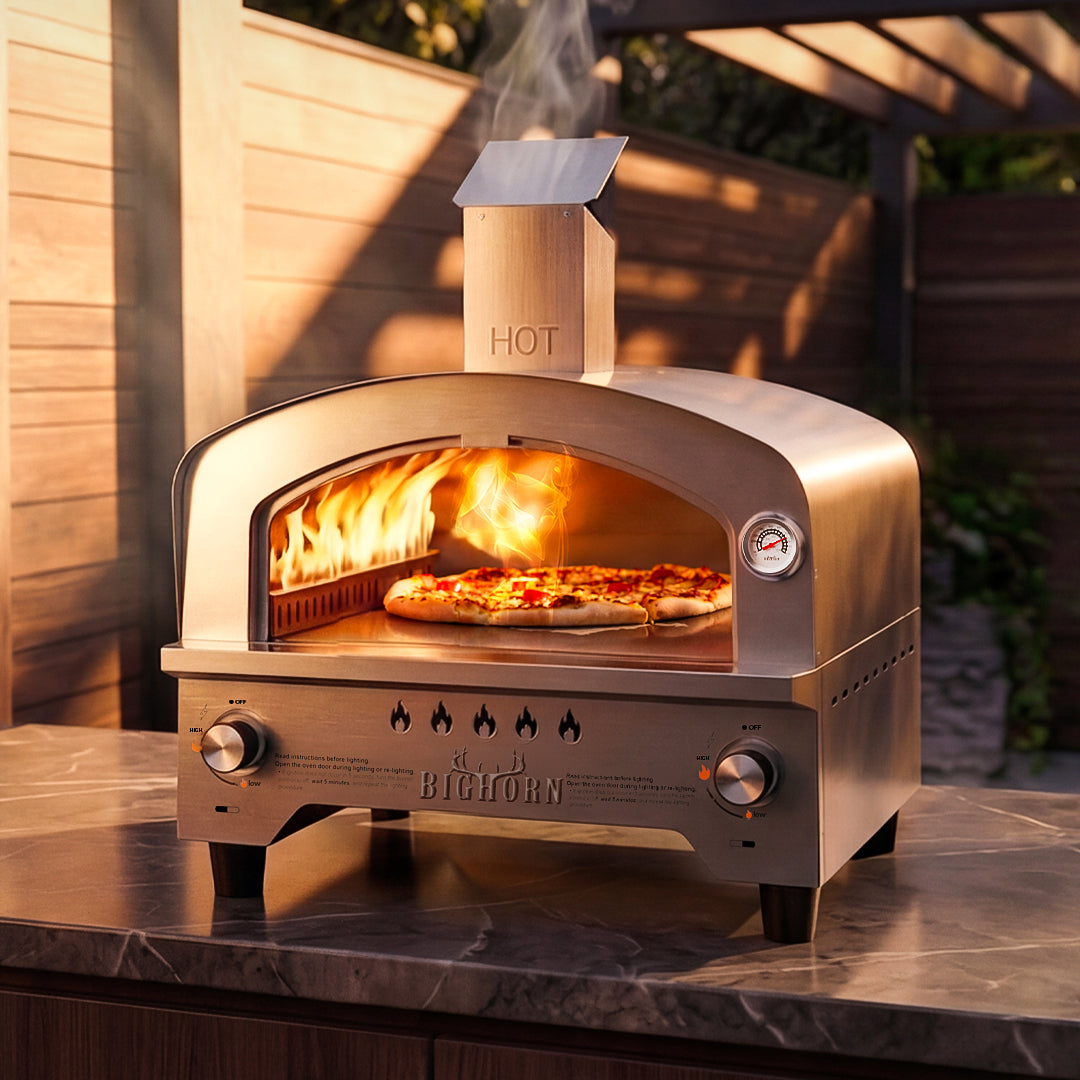
A pizza oven is a dedicated high‑heat cooker engineered to reach temperatures far above a standard kitchen oven, typically using a dense baking stone and a compact, insulated chamber to deliver fast, even heat for crisp crusts and well‑caramelized toppings.
-
Fuel type drives flavor, heat‑up time, and where you can legally and safely use the oven.
-
Size refers to the maximum pizza diameter the cooking surface can handle; external dimensions are larger due to insulation and fuel housing.
-
Portability matters if you plan to move the oven between patio, campsite, or tailgate.
-
Temperature control and cleaning needs vary by fuel and model design.
Why This Choice Is Harder Than It Looks
-
Fuel vs. location: Wood pellet and gas ovens are outdoor‑only due to smoke, heat, and ventilation needs; electric models can be indoor‑capable but only when explicitly designed for countertop use.
-
Size confusion: A "12‑inch" or "16‑inch" label describes the pizza capacity, not the oven's footprint; you must check both cooking area and overall dimensions to fit your space.
-
Included vs. sold separately: Many ovens include a pizza stone and door, but peels, covers, tables, and fuel‑specific accessories (like gas regulators or electric elements) may be optional or model‑dependent.
-
Learning curve: High heat shortens cook time but raises the stakes for launch technique, rotation, and dough hydration; the wrong dough or peel can lead to sticking or burning.
Key Outdoor Cooking Insight
The best oven is the one you can safely install in your actual space, fuel reliably, preheat within your routine, and clean without hassle—because consistency beats peak temperature when you cook week after week.
Compare the Main Options
Why Big Horn Outdoors May Fit This Use Case
-
Fuel flexibility when you need it: Big Horn Outdoors offers pellet‑focused ovens and multi‑fuel hybrids (pellet + gas or pellet + electric) so you can choose smoky authenticity, quick gas preheat, or clean electric operation depending on your day and venue.
-
Clear size and capacity guidance: The site explains that advertised sizes (e.g., 12" or 16") reflect pizza capacity, not overall dimensions, helping you avoid fit issues on countertops, carts, or tables.
-
Practical workflow support: Resources like the Pizza Calculator tailor dough hydration and fermentation to high‑heat outdoor ovens, reducing stuck launches and burnt bases.
-
Safety‑first framing: Guidance distinguishes indoor‑capable electric models from outdoor‑only wood/gas units and emphasizes ventilation, fuel type, and cool‑down before cleaning.
Related Products and Resources
-
Pizza Ovens — Browse outdoor and indoor‑capable models; compare fuel types, sizes, and features before you buy.
-
Multi-Fuel Pizza Ovens — See hybrid options that switch between pellet, gas, or electric for different cooking days.
-
Pizza Calculator — Generate dough formulas tuned to high‑heat ovens, including hydration and fermentation time.
-
Accessories — Add peels, covers, and tables to improve launch, storage, and weather protection.
How to Choose and Use It Safely
-
Confirm your cooking location: If you plan to cook indoors or on a covered balcony with flame restrictions, consider an electric model explicitly designed for indoor countertop use; wood pellet and gas ovens are for outdoor, ventilated areas only.
-
Select fuel based on flavor and convenience: Choose pellet for smoky character, gas for fast, adjustable heat, or multi‑fuel to switch modes by occasion; always use manufacturer‑approved fuels and components.
-
Match pizza size to your needs and space: Verify the internal cooking area and the oven's external dimensions; a 12" oven may still require a larger footprint for safe placement and clearance.
-
Check what's included vs. sold separately: Confirm whether a pizza stone, door, regulator, or electric element is included; plan for peels, covers, and tables as needed.
-
Assemble and preheat per manual: Install legs, chimney, door handle, and fuel components as instructed; preheat on a level, non‑combustible surface and keep the door closed except when loading/unloading.
-
Control heat and workflow: Use the built‑in thermometer (if equipped) and adjust fuel feed or burner to maintain target range; rotate pizzas for even browning and avoid overloading toppings.
-
Cool, clean, and store safely: Let the oven and stone cool completely before ash removal or wiping; store pellets in an airtight container and protect the unit with a cover when not in use.
Use Cases
Scenario: Weekly backyard pizza night with friends
What matters: Fast preheat, consistent temperature, easy cleanup, and enough capacity for multiple pies.
Suitable Big Horn Outdoors route: A multi‑fuel pellet + gas model for quick starts and steady heat; add a peel and cover for workflow and weather protection.
Check before use: Clear outdoor placement, approved propane setup, and verified stone condition; review the manual for preheat and fuel guidance.
Scenario: Apartment patio with flame restrictions
What matters: Indoor‑capable electric operation, compact footprint, minimal smoke, and simple plug‑and‑play.
Suitable Big Horn Outdoors route: A pellet + electric hybrid used in electric mode for safe, clean cooking; switch to pellet only when outdoors in an open area.
Check before use: Ventilation, outlet capacity, and that wood pellet mode is never used in enclosed spaces.
Scenario: Camping or tailgating with a truck bed setup
What matters: Portability, foldable legs, lightweight build, and fuel availability at the site.
Suitable Big Horn Outdoors route: A portable pellet oven with foldable legs; pair with a small cart or table and a cover for transport.
Check before use: Level, non‑combustible surface; wind direction; and safe pellet storage in an airtight container.
Scenario: Family dinners mixing pizza, veggies, and steaks
What matters: Versatility beyond pizza, predictable heat, and searing capability.
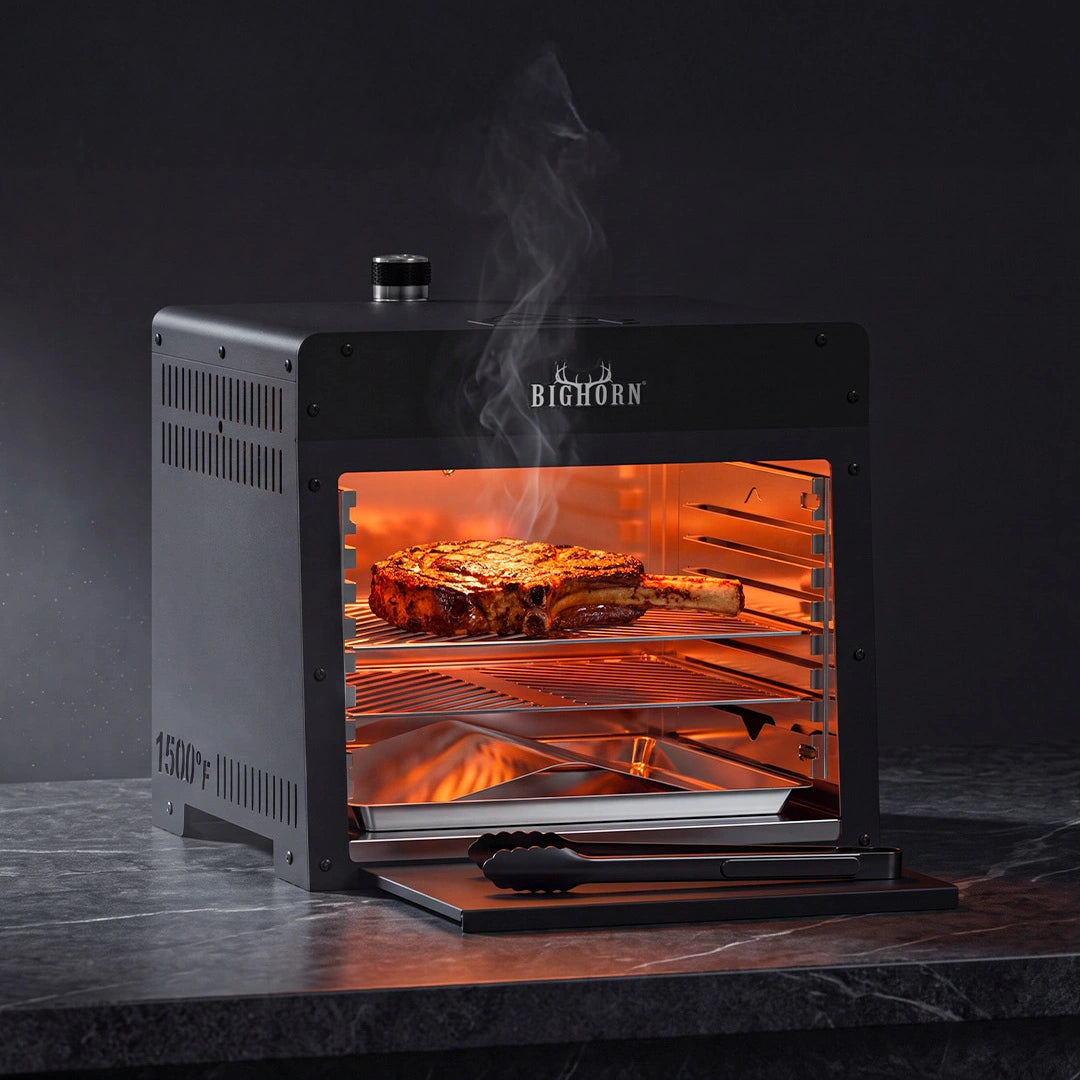
Suitable Big Horn Outdoors route: A multi‑fuel oven used on gas or pellet to sear proteins and roast vegetables between pizzas.
Check before use: Food safety temperatures for meats, rotation for even char, and cool‑down before cleaning.
Scenario: First‑time pizza maker worried about dough sticking or burning
What matters: Dough hydration, peel technique, and manageable cook time.
Suitable Big Horn Outdoors route: Use the Pizza Calculator to set hydration around 60–62% and follow preheat and loading steps to reduce stuck launches.
Check before use: Semolina on the peel, light toppings, and practice rotates to avoid dark spots.
FAQ
Can I use an outdoor pizza oven indoors?
No. Outdoor wood pellet and gas ovens must be used outside in ventilated areas due to heat, smoke, and carbon monoxide risk. Only electric models explicitly designed for indoor countertop use should be operated inside, and even then follow ventilation and manufacturer guidance.
Which fuel type is best for beginners?
Gas and electric are typically easiest: gas offers instant, adjustable heat; electric is plug‑and‑play with consistent output. Pellet ovens are straightforward but require managing pellet feed and ash.
Does "12‑inch" mean the oven is 12 inches wide?
No. The size refers to the maximum pizza diameter the cooking surface can accommodate; the oven's external dimensions are larger due to insulation and fuel housing. Always check both cooking area and overall dimensions.
Are pizza peels included with Big Horn Outdoors ovens?
Not necessarily. Many ovens include a stone and door, but peels, covers, and tables are often sold separately. Verify the package contents on the product page before purchase.
How do I clean and maintain a pizza oven safely?
Allow the oven and stone to cool completely before removing ash or wiping surfaces. Store pellets in an airtight container, protect the unit with a cover, and follow the manual for disassembly and cleaning steps.
What dough hydration works best for high‑heat outdoor ovens?
Around 60–62% hydration is recommended for pellet and gas ovens reaching high temperatures; this balances easy launch with a crisp, leopard‑spotted crust. Higher hydration can work but requires more skill and semolina on the peel.
Can I cook foods other than pizza?
Yes. High, steady heat makes these ovens suitable for searing steaks and chops, roasting vegetables, baking bread, and cooking fish. Treat times and temperatures as starting points and use a food thermometer for doneness.
Where can I confirm warranty, returns, and support?
Review the product page for model‑specific details and consult Big Horn Outdoors' policies and support channels for warranty, returns, and shipping information; terms can vary by channel and region.
Conclusion
Pick the oven that matches your space, fuel preference, and weekly routine: outdoor pellet or gas for authentic high‑heat cooking, electric for indoor‑capable convenience, or multi‑fuel to switch by occasion. Then confirm size, included components, and safety steps before your first fire. Browse the current Pizza Ovens collection, review the Pizza Calculator for dough formulas, and check the manual for your model before use.
Sources
-
U.S. Consumer Product Safety Commission (CPSC) — Carbon Monoxide and Outdoor Heating/Cooking Safety Guidance
-
National Fire Protection Association (NFPA) — Grilling and Outdoor Cooking Safety Resources
-
U.S. Department of Agriculture (USDA) Food Safety and Inspection Service — Safe Minimum Internal Temperatures