







Camping Stoves & Fuel
The failure usually shows up at breakfast. One burner is holding coffee. The skillet is waiting. Someone wants hot water for cocoa, and the folding stove you packed because it was small cannot do two jobs at once. Family car-camp is not a backpacking trip. The stove decision is propane versus butane in the context of pot count, simmer, and weather, not the lightest possible kit.
Family car-camp is a fuel and pot-count decision, not a backpacking one
For family car camping, propane versus butane is about pot count, simmer, and cold, not pack weight. Propane with two burners can run coffee and a skillet at once and may use a larger tank. Folding butane packs small but is limited by cartridge and wind. Choose by the meals you will actually cook.
The car already accepted the weight of chairs, coolers, and bins. Saving a few pounds on the stove is rarely the constraint. Running out of burner space on the first morning is. If you already compared 2-burner and single-burner layouts, the car-camping stove page on 2-burner versus single-burner is that layout question. This page is the fuel-type question that sits beside it.
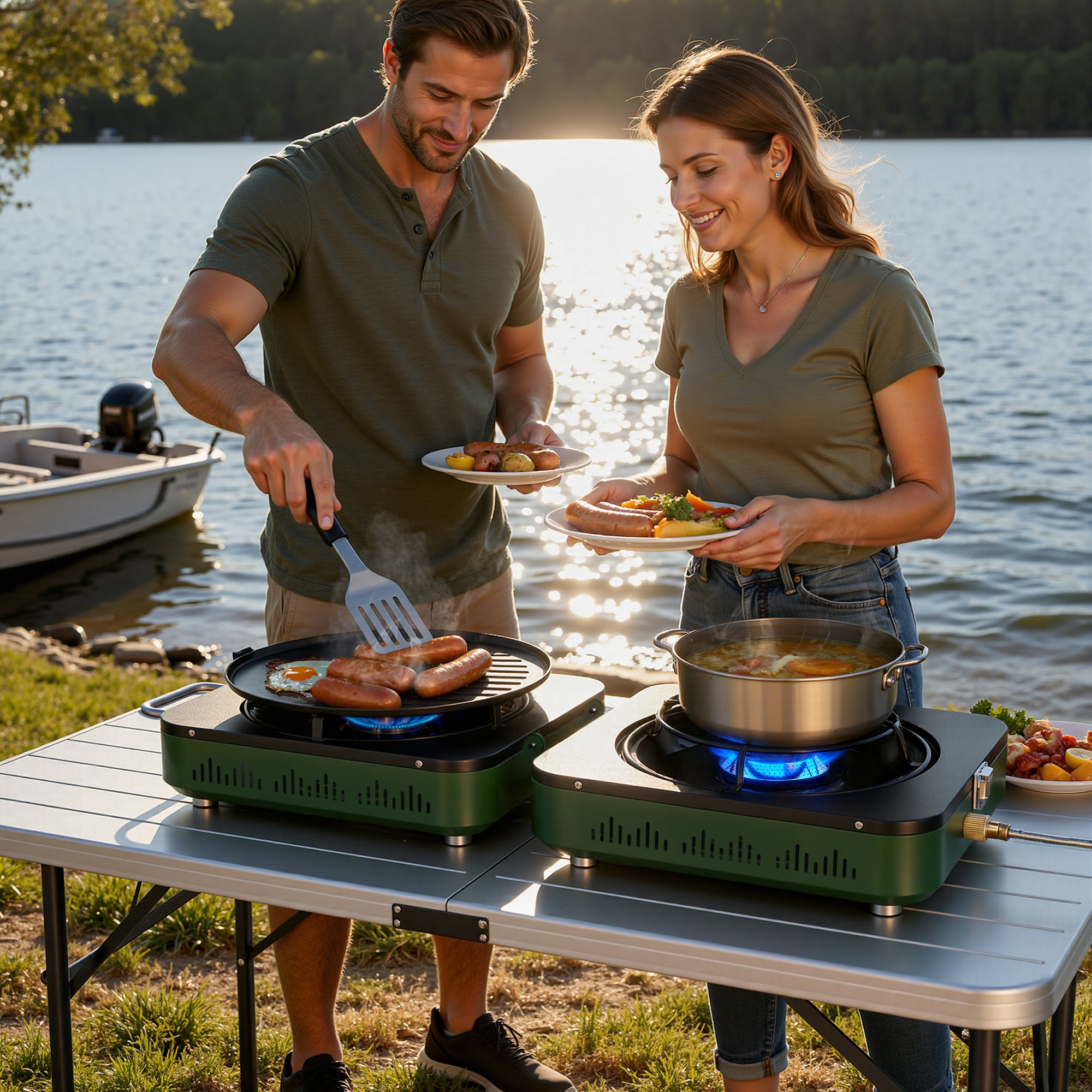
2-burner propane: simmer, stockpots and a 20-lb option
A 2-burner propane stove earns its place when breakfast or dinner needs two heat sources at the same time. Coffee or a pot of water can sit on one burner while eggs, a sauce, or a stockpot sit on the other. A longer simmer is easier when the fuel supply is a tank you can bring in the car, including, on some stoves, a connection to a 20-lb tank with the hose and regulator the maker allows.
That 20-lb option is a compatibility question, not an automatic yes. Use only the hose, fittings, and tank type the stove manual names. A grill tank is convenient for a family weekend only when the connection is listed and the tank is secured, outdoors, and used in the open. NFPA grilling fire-safety guidance and U.S. Fire Administration cooking-and-fire prevention are the official starting points for outdoor gas use; they do not replace the stove's own fittings list.
The photos on this page show a portable 2-burner propane camping stove, open and in use, because that is the product this plan can illustrate. A folding butane stove looks and packs differently, and it should be judged on the comparison table, not on these pictures.
Folding butane: pack size, cartridge limits and wind
A folding butane stove is easy to slide into a bin. That is the honest advantage. The limits come with the cartridge and the single burner. You get one pot at a time unless you bring a second stove. The can is finite in a way a refillable tank is not, and a cold morning or a breeze across the burner can make that can feel weaker. Wind shields help only when they are the kind the maker allows and they do not trap exhaust.
Butane also has a storage and travel habit of its own, including heat in a parked car, which is a later article on this site's plan and not a reason to leave cartridges in a hot trunk. For the fuel behavior itself, butane versus propane camping stoves and butane versus propane in the cold go deeper than this family-trip page can. The short version for a car-camp with kids: butane is a strong choice for a compact, one-pot kit and a weaker choice when breakfast needs two burners or the forecast is cold.
A comparison table for a weekend with kids
The table is a planning tool for a Friday-to-Sunday car-camp, not a lab test and not a price list. Fill it in with your actual meals. If breakfast is coffee, eggs, and a starch, count the pans, not the marketing claims on a box.
| Question on a family weekend | 2-burner propane | Folding butane |
|---|---|---|
| Can coffee and a skillet run at once? | Yes, that is the usual reason to take two burners. | Only if you bring a second stove, or you queue the coffee first. |
| Fuel on a two- or three-night trip | A listed larger tank can cover more meals; confirm the hose and fittings. | You are limited to the cartridges you packed; carry a clear spare plan. |
| Cold morning or wind | Propane usually remains usable longer in the cold, still in a wind-aware setup. | Butane and small cans can feel weak in the cold or in a breeze. |
| Packed size in the car | Larger stove, plus a tank or cylinders, which the car can usually accept. | Smaller stove and cans, easier to tuck into a bin. |
There is no single winner in that grid. A family that already cooks one-pot dinners and makes coffee in a flask may be fine on butane. A family that wants eggs and oatmeal at the same time will feel the missing burner immediately. Weather.gov cold-weather safety is a reminder to check the actual forecast, not the memory of last July's trip.
How this differs from 2-burner vs single-burner and cost-per-meal pages
The live car-camping page compares two burners with one burner. It does not decide propane versus butane. The fuel-choice pages compare the gases in general terms, including propane versus butane and which to choose. This article takes those two threads and applies them to a family car-camp: kids, a cooler, a picnic table, and a breakfast that usually needs more than one pot.
It is also not a cost-per-meal spreadsheet. Local cartridge and tank prices change, and a number invented here would not be trustworthy by the time you shop. If you already know you want two burners, how to cook real meals on a 2-burner camp stove is the cooking method. Come back here only for the fuel and form-factor decision that comes first.
A packing list that matches the stove you chose
Pack the stove, the fuel, and the pots as one kit so you do not discover a mismatch at the site. The second table is a checklist, not a shopping demand to buy every line.
| If you chose | Pack with the stove | Leave out or rethink |
|---|---|---|
| 2-burner propane | The listed hose and regulator, the tank or cylinders the manual allows, a way to secure the tank, two pots or a pot and a skillet, and a lighter the stove can use. | A butane cartridge that does not fit this stove, and any adapter the maker does not list. |
| Folding butane | Enough cartridges for the meals plus a spare, a pot that sits stably on that single burner, and the bag or case the stove came with. | A 20-lb tank plan this stove cannot use, and a two-pan breakfast that has no queue. |
In both cases, cook outdoors and in the open. EPA's carbon monoxide overview is why a camp stove does not go in a tent, a camper with the vents closed, or a running vestibule. Ready.gov food guidance and Ready.gov home-fire guidance support the same outdoor, attended-cooking habit. NFPA home fire-safety guidance is a further official starting point if you also cook at home with gas; the camp stove still has its own manual.
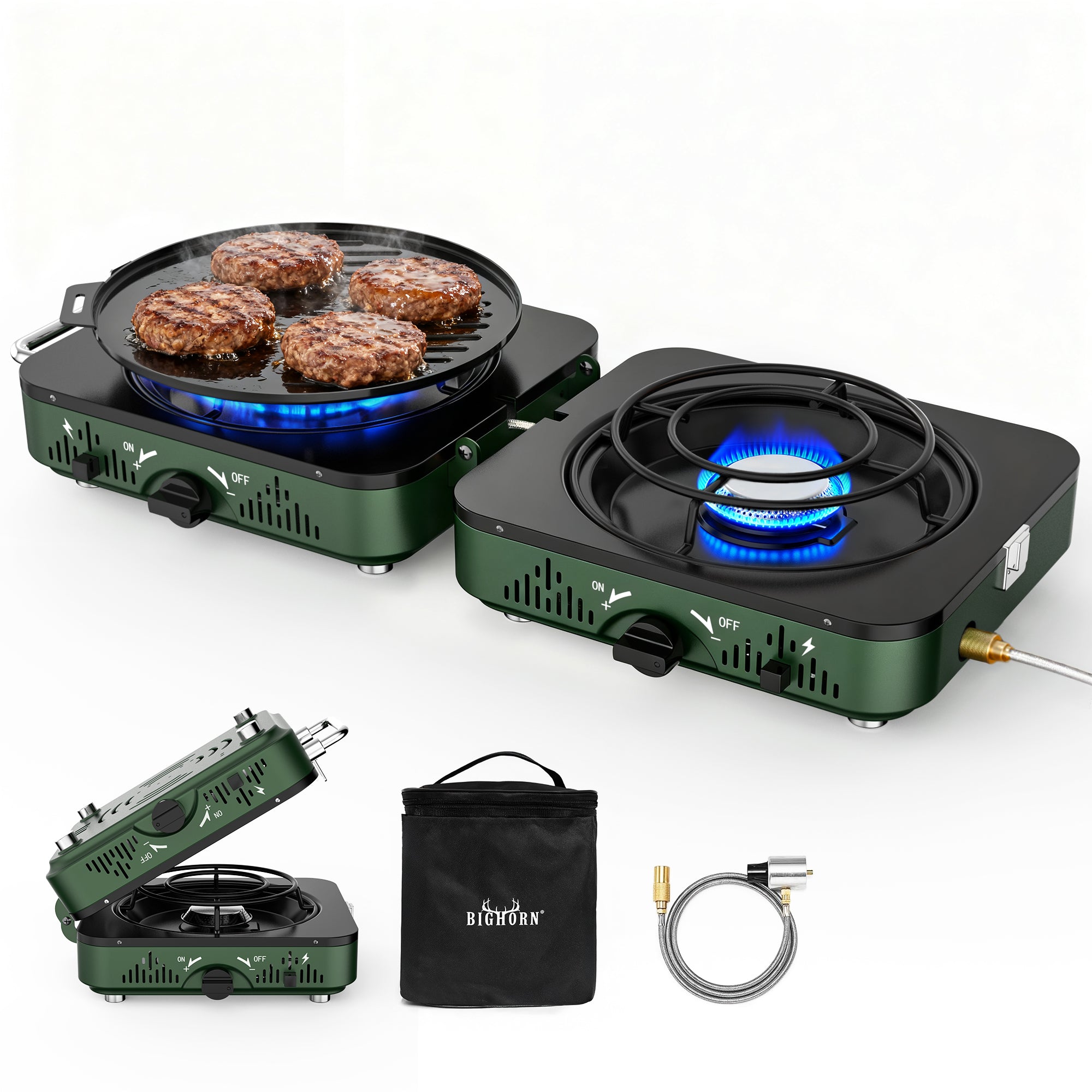
A pot-count and coffee plan that exposes a one-burner shortage early
Before you leave, write the first breakfast in order. If coffee or a kettle needs a long burner, and eggs or a starch need another, a single butane burner will force a queue. That is not a moral failing of the little stove. It is information. Either you accept the queue, you bring a second butane stove, or you take the 2-burner propane kit.
Do this on paper at home, not in a cold parking spur with hungry children already out of the car. The shortage is cheap to discover at the kitchen table and expensive to discover on Saturday morning. If the written breakfast needs two heat sources, believe the paper.
A recap of who this method is for, and who should use a different cooker
This method is for a family packing a car for a camp or a long picnic, when the real question is propane versus butane and how many pans must run at once. It is not a backpacking-weight guide, not a restaurant-style menu, and not a price ranking.
If you are cooking alone with one pot, a folding butane stove may be the simpler kit. If you are feeding four and you want coffee and a skillet together, the 2-burner propane path is the one this page defends. Either way, match the fuel to the stove, keep the cook outdoors, and let the forecast, not last summer's trip, have a vote.
If a weekend with kids means coffee and a skillet at the same time, a portable 2-burner propane camping stove is the shape of that plan. Confirm the fuel fittings in the manual before you pack the tank.
FAQ
Is a butane stove better than a propane stove?
Neither fuel wins in every trip. For a family car-camp, a 2-burner propane stove usually handles more pans, a longer simmer, and colder mornings, especially if you can bring a larger tank. A folding butane stove wins on packed size and a quick single-pot meal, and it can struggle in the cold or in wind. Choose by the meals and the weather, not by a general ranking. The rest of this page is that family-trip decision.
Is camping gas the same as LPG?
Not always. People say "camping gas" for the small screw-on or clip-in cartridges sold for camp stoves, which may be butane or a butane-propane mix, depending on the can. LPG is a broader term for liquefied petroleum gases, including propane and butane used in many tanks and cylinders. Read the label on the cartridge or tank and match it to the stove the maker designed. Do not assume a grill tank, a screw cartridge, and a camp "gas" can are interchangeable.
How long does a butane gas canister last on a camping stove?
It depends on the canister size, the burner setting, the wind, and the pot you are heating, so this page will not invent a number of hours. A small cartridge can be enough for a short lunch and short on a breakfast that includes coffee, a skillet, and a second pot. Carry a spare, and treat the printed net weight on the can as the fuel you actually have. If mornings are cold, expect the can to feel weaker sooner than it did on a warm afternoon.
Is it cheaper to use butane or LPG?
The cheaper fuel is the one that is actually available at the price you will pay on the way to camp, and that can cook the meals you planned. This article will not invent a cost per meal or a national price. A small butane cartridge can look inexpensive and still add up if you burn several in a weekend. A refillable propane tank can cost more at first and then less per meal, or the reverse, depending on local fill prices. Check current local prices rather than a remembered sale.
More to Read
Al Pastor Pizza: Marinade, Pineapple Balance and High-Heat Timing
Make al pastor pizza at high heat with thin, safely cooked pork and drained pineapple. Finish with salsa after the bake, and do not invent taco cal...
Mixed Vegetables on a Gas Grill: Baskets, Skewers and Direct Heat
Grill mixed vegetables on a gas grill with a path for baskets, skewers, or a bare grate, plus oil, salt timing, and a cut-size rule so pieces finis...
Pizza al Taglio (Roman Tray Pizza) at Home Outdoors
Make pizza al taglio at home as a Roman tray pie: oil the pan, dimple relaxed dough, top modestly, bake thoroughly outdoors, and cut it into squares.
