An electric pizza oven is a small, very hot oven, and that description opens more doors than most owners expect. It excels at anything that wants intense bottom heat and fast browning: flatbreads, roasted vegetables, seared proteins and small baked dishes. What it does not do well is slow, moist cooking — a braise or a big roast belongs in a conventional oven. Because it is electric, it works on the kitchen counter with no combustion exhaust or carbon monoxide concerns; its practical limits are heat, steam and the outlet it draws from. This guide groups the foods that work, gives temperature ranges and doneness signals as starting points, and explains the limits so you use the oven for what it is good at.
What an electric pizza oven does well
The two characteristics that make a pizza oven good at pizza — high temperature and a hot stone or deck under the food — are exactly what other foods need to brown quickly. Vegetables that roast well in a hot conventional oven roast faster here; flatbreads and naan puff against the heat; small pieces of meat and fish develop crust before they dry out. Because the chamber is compact, it also preheats faster than a full-size oven, which makes it practical for weeknight sides.
The flip side is equally important: the oven is not a general-purpose replacement. Tall items may not fit, anything that needs a long gentle cook will scorch on the outside first, and dishes with a lot of liquid can bubble over onto the stone. Match the food to the oven and it earns its counter space; force the wrong food into it and no temperature setting will save it.
Breads and flatbreads
Flatbreads are the closest cousin to pizza and usually the best second use. Naan, pita, focaccia slabs and par-baked baguettes all benefit from the oven's high heat. Stretch or roll the dough thin, let it rest on a floured peel, and bake on the hot stone until it puffs and browns in spots — the same launch technique you use for pizza. Watch the first batch closely; flatbreads cook in about the time it takes to turn around, and they go from golden to scorched quickly.
Countertop sheet-pan vegetables
Vegetables that thrive at high heat are the easiest win for this oven: broccoli and cauliflower florets, asparagus, Brussels sprouts, peppers and mushrooms. Toss them with oil and salt, spread them in a single layer on a tray, and roast until the edges char. The enclosed chamber and hot deck do two useful things here: they hold steady heat so pieces brown evenly without the cycling of a full-size oven, and they make a single sheet of sides practical for nights when turning on the conventional oven would be overkill. Smaller pieces work better than large wedges, so check at short intervals and pull when the edges are brown but the centers are tender.

Proteins and fast dinners
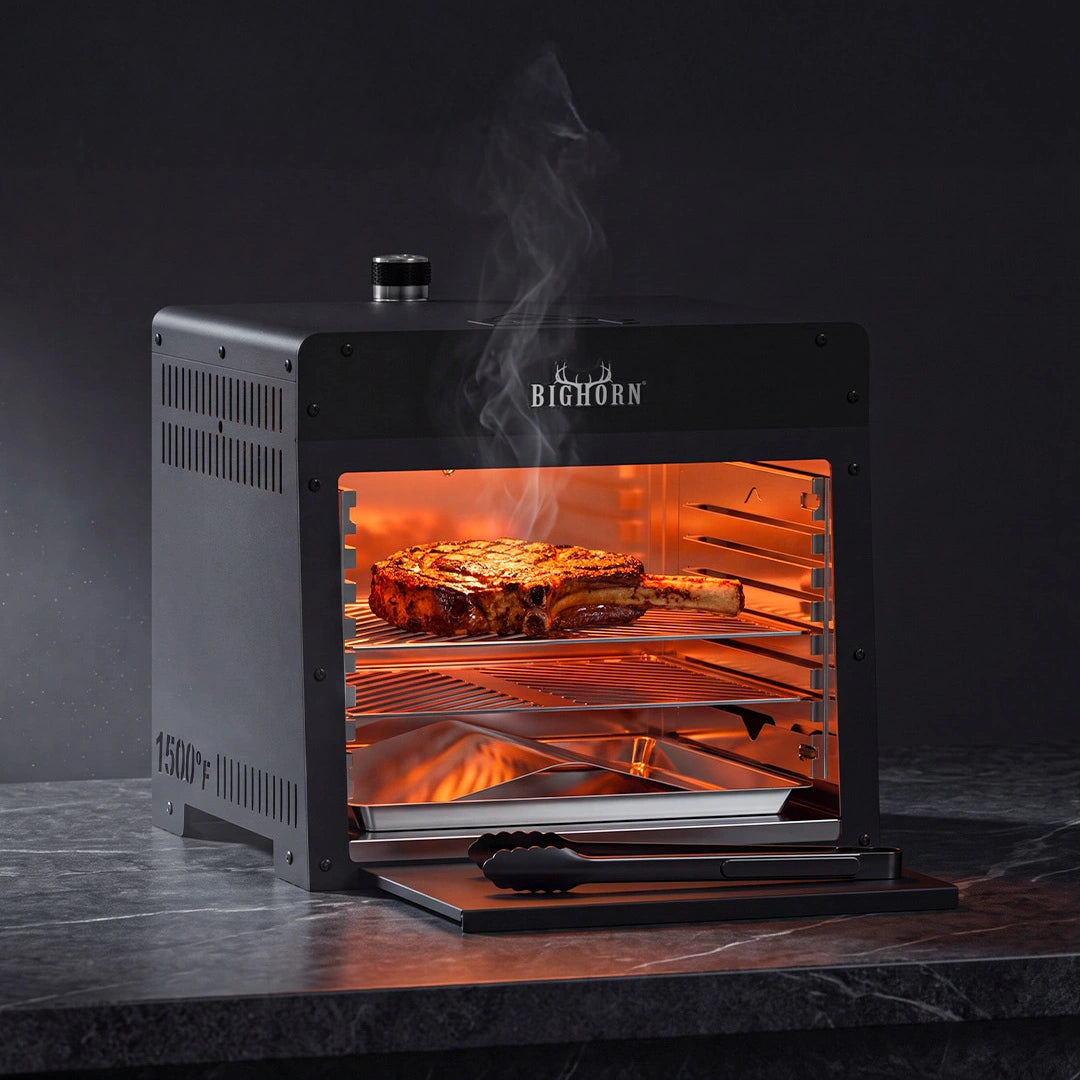
Small, quick-cooking proteins suit the oven well: chicken thighs and drumsticks, fish fillets, shrimp, meatballs, and thin steaks or chops. The pattern is the same every time — preheat fully, oil the surface, place the protein, and trust a thermometer over the timer, because the oven runs hotter than recipes written for conventional ovens assume. Pull proteins at the temperature you want and let them rest; the carryover is smaller in a compact oven than in a big roast, so do not overcorrect.
Whole chickens, large roasts and anything taller than the chamber are the wrong fit. If you want to roast a whole bird or a big joint, that is a job for a conventional oven or a larger outdoor oven, not a countertop pizza oven.
Preset settings and doneness signals
Use these as starting ranges, not lab data; your model's preset modes, your stone and the size of the pieces all shift the numbers. Match the food to the preset that approximates the heat the dish needs — usually a roast or high mode instead of the pizza default when the machine offers separate programs — then check early and use doneness signals in place of exact minutes.
| Food | Approx. heat | Doneness signal |
|---|---|---|
| Naan / pita / flatbread | High | Puffed, brown spots, cooked through |
| Roasted vegetables (small pieces) | High | Charred edges, tender centers |
| Chicken thighs / drumsticks | Medium-high | 165°F at the thickest point |
| Fish fillets / shrimp | Medium-high | Flakes easily / opaque and firm |
| Meatballs / thin steaks | High | Thermometer target for your doneness |
A note on thermometers: the oven is hot enough that visual cues lie. Use an instant-read thermometer for proteins every time, and treat the first batch of any new food as calibration for the next.
Building the technique: preheat, tray, rotate
Three habits make non-pizza cooking in an electric pizza oven predictable. Preheat fully. The oven's advantage is a hot stone, and a short preheat gives you a lukewarm stone that cooks slowly and unevenly; give it the same full preheat you use for pizza. Use a tray or pan when the food would drip. Vegetables with oil, fish, and anything saucy can be roasted on a small tray or in a cast-iron pan, which also makes cleanup easier and protects the stone. Rotate or stir once. Compact ovens still have hot zones, and a single turn halfway through the cook evens out the browning more than any dial adjustment.
Watch the first batch closely no matter what the recipe says. Foods that take 20 minutes in a conventional oven may take 8 to 12 here — or less, if the pieces are small — and the difference between perfect and scorched can be a minute. Start checking early and pull when the food looks done; the timer is only a cue.
Frozen and convenience foods
Frozen foods work in an electric pizza oven when you adjust for the heat. Par-baked pizza crusts and flatbreads crisp beautifully, and frozen vegetable mixes roast well if spread in a single layer. Larger frozen items — breaded chicken, fish fillets, anything thick — can brown on the outside before the center heats through, because the oven's high heat does not give frozen centers time to catch up. For those, thaw first or cut the pieces smaller, and always verify the center temperature instead of trusting color. If a frozen product has oven instructions written for a conventional oven, treat them as a starting point and expect shorter cook times here.
Cleaning up after non-pizza cooks
Because the chamber is enclosed and the heating elements sit close to the food, oil mist from roasted vegetables and proteins settles on the interior walls, the element guard and the stone in a way pizza alone rarely does. Clean the electric way: switch the oven off, let it cool completely, then remove any tray or crumb catcher your manual lists and wash it separately. Wipe the interior walls and the element guard with a barely damp cloth once they are cool — never pour or spray water into the chamber or onto the element — and brush loose debris off the stone. For oil that has baked on, a gentle scrape with a wooden or plastic tool usually lifts it; check your manual before using any cleaner on the stone. The payoff is that the next pizza tastes like pizza, not like last night's fish, and the element keeps radiating evenly instead of cooking through a greasy film.
When the full-size oven should take over
Keep the conventional oven for anything that needs volume, moisture or long, low heat: whole chickens, large roasts, casseroles, braises, soups and most baked desserts. The pizza oven can finish a dessert — a small fruit crisp or cookies on a tray — but batters that need even, moderate heat are better in a full-size oven. If a dish would spill, smoke heavily or take longer than the oven's session comfortably allows, choose the other appliance and let the pizza oven do what it does best.
Capacity is the other practical limit. A countertop pizza oven fits one tray or a few small dishes at a time, which makes it a great partner for cooking in batches — roast the vegetables for one meal while the chicken rests, then slide in the next tray. If you are cooking for a crowd, treat the pizza oven as the high-heat finisher and use the conventional oven for volume, or plan the menu so everything passes through the hot chamber in sequence. Trying to force a whole dinner for eight through a small oven at once is the fastest way to make it underperform.
Finally, map your oven's preset modes to the foods in this guide the first week you own it. Most electric pizza ovens include modes beyond pizza, and the preset names usually correspond to the heat ranges that flatbreads, vegetables and proteins want. Test one food per mode, note the results, and you will have a personal reference that is more useful than any generic table — because it is calibrated to your oven, your stone and your taste.
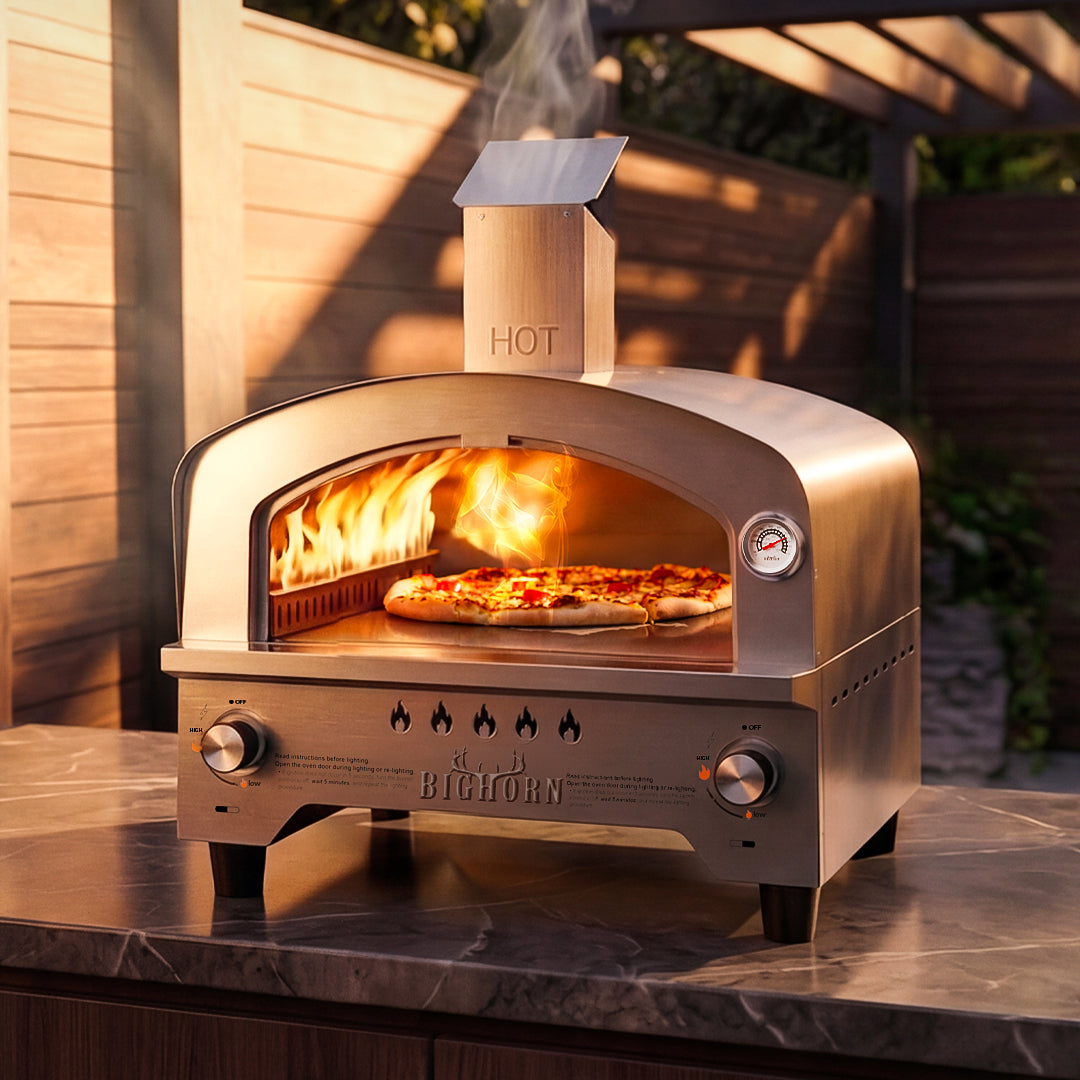
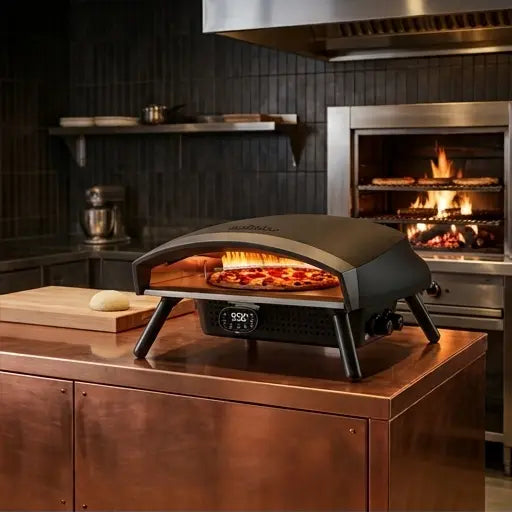
The electric pizza oven collection shows the countertop models this guide is written around, and each model's preset modes are worth mapping to the foods above — most electric pizza ovens include modes that line up with the heat ranges in this table.
Product details and prices in this guide were verified against official Big Horn Outdoors listings during the September 5, 2026 review; re-check prices and availability at checkout.