


Grills & Griddles
Are Infrared Grills Healthy? The Truth About Safety and Cancer Risks
Worried "infrared radiation" sounds dangerous for infrared grills? You've felt it safely already—the sun's warmth, campfire glow. As infrared grilling surges for steakhouse sears, real questions arise: Are infrared grills healthy? Do they raise cancer risks vs. charcoal or gas?
This guide cuts through radiation myths with science-backed answers on safety, HCAs, PAHs, bacteria-killing heat, and nutrient retention—so you grill confidently.
No, infrared grill radiation is completely safe. This verdict is well supported by science. According to research, it's the same type of heat you feel from sunlight or a campfire—non-ionizing energy (heat waves too weak to damage DNA, unlike X-rays) that heats food without altering its molecular structure or making it radioactive.
The confusion comes from the word "radiation" itself. In everyday language, it sounds alarming, but scientifically, it just means energy moving through space. The electromagnetic spectrum (full range of energy waves) includes:
Infrared radiation sits right next to visible light on this spectrum. It is essentially heat that you can feel but cannot see.
Infrared radiation is fundamentally different from X-rays or nuclear radiation. It doesn't have enough energy to damage cells or alter DNA; it just heats the surface of your food.
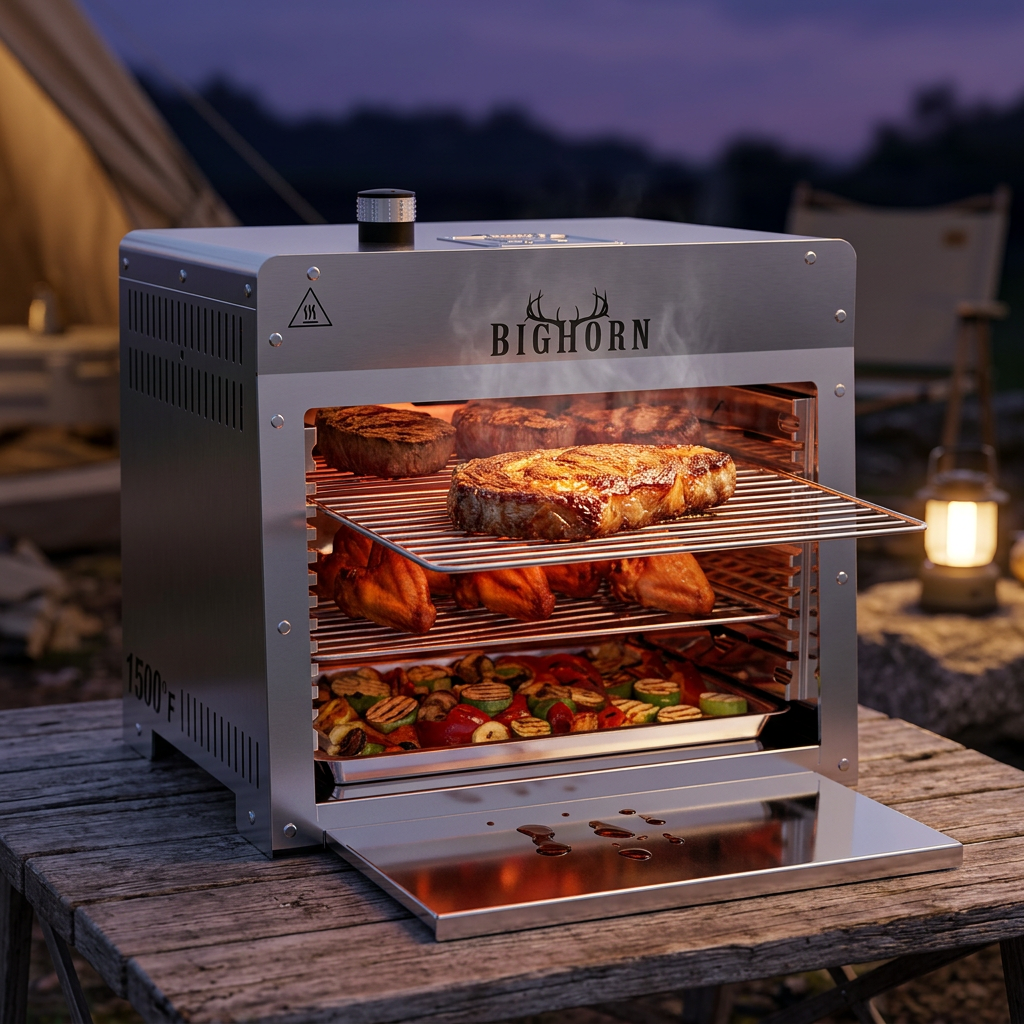
When you use a portable infrared grill, a ceramic or metal plate absorbs intense heat from a gas burner and radiates it directly onto your food. You are cooking with focused thermal energy, which is the same principle humans have used for thousands of years, simply refined for modern efficiency.
Both are safe, but infrared grills deliver superior cooking results and texture. While microwaves and infrared grills both use electromagnetic energy, they work in completely different ways and produce very different outcomes.
Microwaves:
Infrared Grills:
From a health perspective, both methods are safe when used correctly. However, infrared grilling provides the advantage of authentic grilling without the "steamed" effect of a microwave. You get a hard sear on the outside while keeping the inside tender and juicy.

Infrared grills can help reduce certain cancer-related risks compared to traditional grills that have frequent flare-ups. They minimize the formation of harmful compounds by limiting smoke from burning drippings.
When you grill meat at high temperatures, two types of potentially harmful chemicals can form:
This is where infrared grills, particularly those with a 16-inch portable infrared propane grill design, offer a distinct health advantage.
On a standard charcoal or gas grill, fat and juices from the meat drip down onto hot coals or burner covers.
Many high-end infrared units utilize a top-down burner design or efficient vaporization systems that change this dynamic entirely.

Infrared grills provide faster surface bacteria reduction than standard grills due to their intense, consistent heat. They reach temperatures up to 1,500°F within minutes and maintain that heat even in windy conditions—helping create conditions where E. coli and Salmonella (common foodborne bacteria) struggle to survive on the surface.
Food safety is not just about long-term health risks; it is about immediate protection from foodborne illnesses. Bacteria such as E. coli and Salmonella are serious concerns when handling raw meat.
Traditional grills struggle to maintain consistent high temperatures, especially outdoors. A gust of wind can drop the grate temperature by 100°F or more, leaving cold spots where bacteria can survive. This leads to uneven cooking where the center of the meat might not reach the safe zone.
A quality infrared grill delivers consistent, intense heat. Capable of reaching temperatures up to 1,500°F within minutes, it creates a hostile environment for bacteria.
Note: Always use a meat thermometer to ensure the internal temperature reaches safe levels (145°F for steaks with rest time, 160°F for ground meat, 165°F for poultry), but the exterior of your food benefits from rapid high-heat sterilization.
Yes, infrared grills can preserve more nutrients because they cook faster. While high heat itself does not destroy nutrients, the duration of cooking does. Infrared grills often cut cooking time significantly, helping retain vitamins and moisture that would otherwise evaporate.
There is a common misconception that high heat "kills" nutrients in food. In reality, prolonged exposure to heat causes more damage to nutrient retention than the temperature itself.
Extended cooking time can:
Infrared grills cook fast—really fast. They transfer heat directly to the food instead of heating the air around it. A steak that takes 15 minutes on charcoal might take only 3 to 5 minutes on an infrared unit.
Yes, portable infrared grills offer multiple health advantages beyond convenience. Choosing a portable infrared grill is not just about ease of transport for camping or tailgating; it is a conscious step toward cleaner, healthier cooking.
Here are three reasons why portability meets health:
Most portable infrared units run on propane, which burns significantly cleaner than charcoal.
Portable units are designed for precision. You have complete control over the distance between the heat source and the food. This allows you to manage cooking intensity and prevent excessive charring (carbonization), which is a source of bitter flavor and potential carcinogens.
The intense heat of infrared grilling renders intramuscular fat effectively.
So, are infrared grills healthy? Science says yes—they support cleaner cooking than traditional grills prone to flare-ups.
Focused radiant energy reduces smoke-based compounds (PAHs) and limits flare-ups that form HCAs. High-heat sears kill surface bacteria rapidly while preserving moisture and nutrients through shorter cook times. The "radiation"? Just sunlight-like heat humans have safely used forever, now refined.
Ready for steakhouse sears anywhere? Big Horn Outdoors® portable infrared gas grills deliver precision, safety, and flavor for your next campout or backyard feast.
No, infrared grilling itself does not cause cancer. Because it uses radiant heat and often creates less smoke than charcoal grilling, it can help lower the formation of carcinogenic compounds (PAHs) that are usually caused by flare-ups and grease fires.
Yes, it is perfectly safe for daily use. Infrared grills utilize the same type of radiant heat found in nature (like the sun). As long as you clean your grill regularly to prevent old grease buildup, it is a safe, clean, and efficient way to cook family meals.
Infrared is generally considered cleaner. Charcoal produces ash and particulates, and lighter fluids can leave chemical residues. Infrared uses clean-burning propane and drastically reduces the smoke that creates harmful deposits on meat.
Absolutely. The high heat is excellent for quickly blistering peppers, asparagus, or zucchini. This "flash cooking" method locks in their crunch and nutrients without turning them mushy, which often happens with slower, lower-heat cooking methods.
Explore more in the Infrared Grill Cooking Guides.
 Big Horn Outdoors® Expands Retail Presence with New Experience at Piedmont Outfitters
Big Horn Outdoors® is excited to announce a new retail destination for outdoor cooking enthusiasts. Customers can now experience the brand's popula...
Big Horn Outdoors® Expands Retail Presence with New Experience at Piedmont Outfitters
Big Horn Outdoors® is excited to announce a new retail destination for outdoor cooking enthusiasts. Customers can now experience the brand's popula...