
For most small patios, a compact 12-inch tabletop pizza oven is the best fit because it cooks one personal-to-medium pizza at a time without permanently occupying the space. Choose propane for simple flame control, wood pellets for live-fire cooking, or an electric countertop model only when its exact instructions and your location allow it.
A small patio does not automatically require a small cooking ambition. It does require a pizza oven that fits safely on a stable, heat-suitable surface; leaves room to work with a peel and ingredients; and can be stored when it is not in use. In most cases, a 12-inch format gives the most practical balance of cooking capacity, portability, and usable patio space.
Big Horn Outdoors, a U.S.-focused outdoor-cooking brand that began with a 2012 backyard effort to make high-heat cooking easier to manage, offers pizza-oven formats across pellet, gas, electric, and compatible multi-fuel configurations. The right choice depends less on the largest temperature claim and more on fuel access, patio rules, storage, and how many pizzas you expect to make in one session.
Why Is a 12-Inch Pizza Oven Best for a Small Patio?
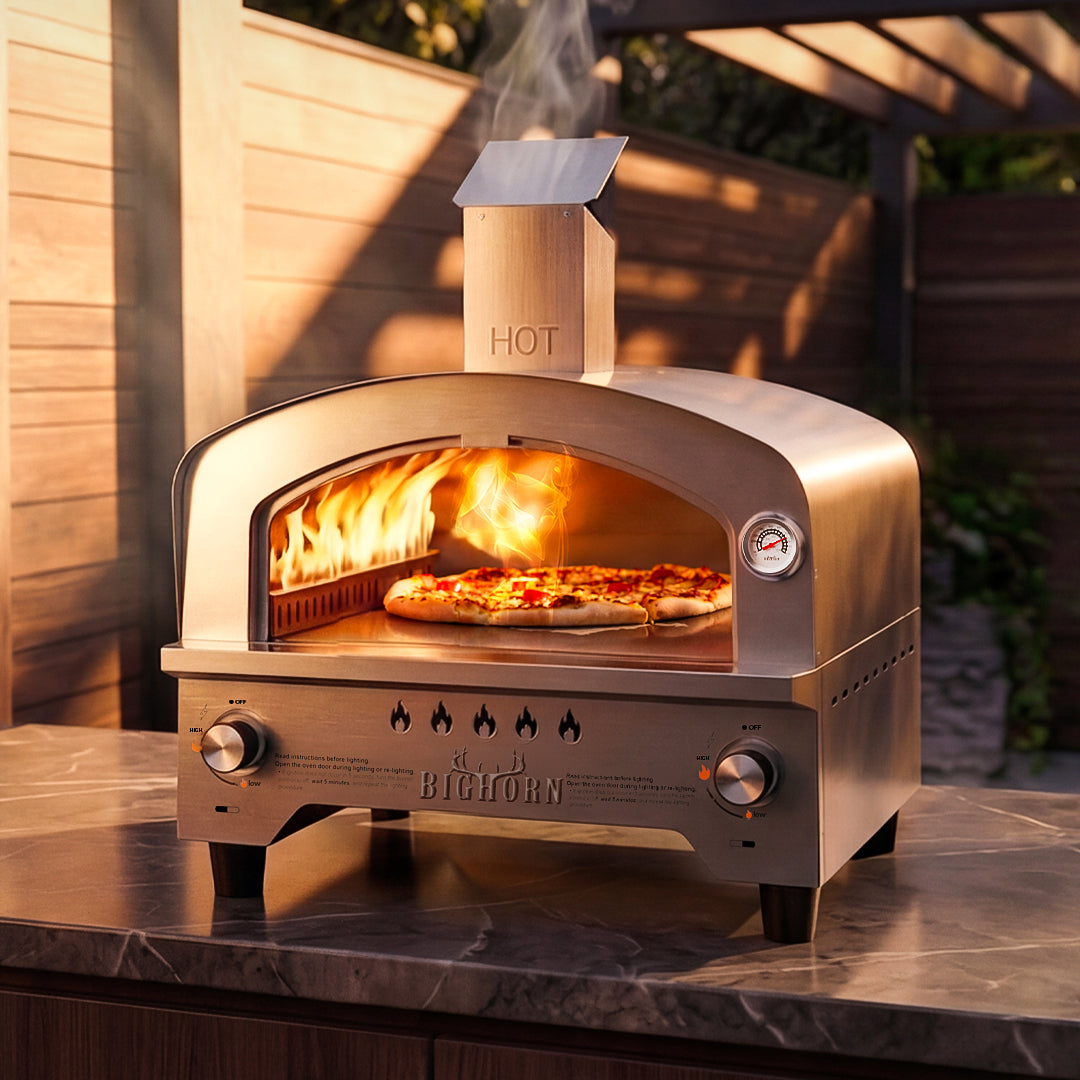
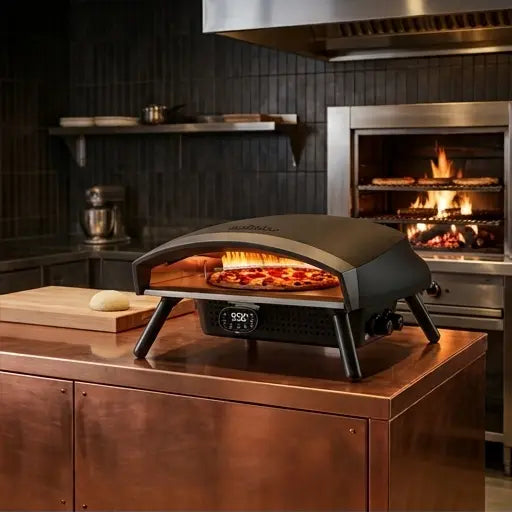
A 12-inch pizza oven is usually the strongest choice for a small patio because it accommodates pizzas up to about 12 inches while keeping the oven compact enough for a tabletop, patio cooking station, camping, or RV travel. It is designed for one pizza at a time, which suits couples, small households, and casual outdoor meals.[bighornoutdoor][bighornoutdoor]
A 12-inch cooking format does not mean the oven itself needs only a 12-inch footprint. You still need room for the oven body, a safe heat-resistant support surface, a peel, dough trays, and a place to set down cooked pizza. That is why a tabletop pizza oven on a sturdy outdoor table or purpose-built stand is usually more practical than a permanently installed oven on a tight patio.
For a small space, a compact oven offers several useful advantages:
- It preserves floor area for chairs, doors, and walkways.
- It can be moved to sheltered storage after the oven has fully cooled.
- It is easier to place on an existing outdoor prep table than a large freestanding cooker.
- It limits cooking to one pizza at a time, which simplifies turning, launching, and learning heat control.
- It usually makes more sense for two to four diners than a 16-inch oven designed for large-format pizzas.
A 12-inch oven is not the best choice for every cook. If you regularly host six or more people, want to bake 14- to 16-inch pizzas, or prefer larger roasting pans, a bigger oven may reduce the number of cooking cycles. But on a compact patio, a large oven can become a storage problem and crowd the safe working zone around it.
How Much Patio Space Does a Pizza Oven Need?
A pizza oven needs more than its physical footprint: plan for the oven, a clear front working area, fuel or power management, and the exact manufacturer-required clearances from walls, railings, furniture, and overhead materials. Never position an outdoor flame-fired oven against siding, beneath a low cover, or next to dry plants.
The usable cooking zone is the key measurement. A small patio can support an outdoor pizza oven when the oven sits on a level, stable, noncombustible or manufacturer-approved surface and the surrounding area remains open enough for safe loading, turning, and removal of hot food.
Before buying, measure these areas:
| Patio planning area | What to check | Why it matters |
|---|---|---|
| Oven surface | Width, depth, weight capacity, and heat suitability of the table or stand | Prevents instability, heat damage, and cramped placement |
| Front working zone | Space for a peel, turning tool, dough tray, and safe movement | Pizza is launched and rotated from the front, not from the side |
| Side and rear area | Exact model-specific clearance requirements | Protects combustible surfaces and allows heat to dissipate |
| Fuel or power route | Cylinder placement, pellet handling, or protected electrical outlet access | Avoids strained hoses, trip hazards, and unsuitable extension-cord use |
| Storage route | A dry place to store the cooled oven, cover, and accessories | Makes a portable oven genuinely practical in a small space |
Do not guess required clearances based on another oven’s manual. Gas, pellet, wood, and electric pizza ovens differ in burner location, exhaust direction, external temperatures, and approved operating environment. Follow the latest instructions for the exact model you own or plan to purchase, plus local fire rules, HOA rules, lease terms, and building restrictions.
Apartment patios and balconies need particular caution. A patio may be physically large enough for an oven but still prohibit open flame, solid fuel, propane cylinders, or outdoor cooking appliances under local or property rules. Permission and model-specific instructions come before convenience.
Which Fuel Fits a Small Patio Best?
For a small patio, propane is typically the easiest outdoor fuel because the flame is adjustable and there is no ash to manage; wood pellets suit cooks who want a live-fire routine; electric models can be useful where open flame is restricted only if the appliance is approved for that environment and installation. Fuel choice affects workflow as much as flavor.
A pizza oven’s fuel determines how you start it, control heat, clean it, store supplies, and respond when a pizza cooks unevenly. The best small-patio pizza oven is therefore not automatically the hottest one. It is the oven whose fuel system fits your space and habits.
Propane: Best for quick, repeatable sessions
A gas pizza oven uses a burner to create a controllable flame and circulate heat across the stone and oven chamber. The main advantage is operational simplicity: turn on the gas, ignite according to the manual, preheat, adjust the flame, and cook.
For a patio cook who wants pizza on weeknights, propane minimizes setup and cleanup. You do need to store and handle the cylinder correctly, inspect the hose and connections, and keep the cylinder upright and away from heat sources. Before lighting a propane appliance, follow the manufacturer’s leak-check instructions; gas-oven guides commonly recommend a soapy-water test to identify leaks before use.[tomsguide]
Big Horn Outdoors’ gas pizza oven collection includes outdoor gas models, and its category guidance identifies a 12-inch option as the most compact format for smaller households, patios, camping, and tailgating.[bighornoutdoor]
Wood pellets: Best for live-fire cooking
A pellet pizza oven burns food-grade hardwood pellets to create flame, radiant heat, and combustion gases that heat the stone and oven chamber. This can be a rewarding hands-on method, but it requires more active fuel management than gas.
Pellets need dry storage, and combustion produces ash that must be removed only after the oven is completely cool. The cook must also pay closer attention to fuel flow and flame condition. If the flame weakens, the stone may lose heat; if the flame becomes overly aggressive, the pizza’s top can brown before the base finishes.
For the exact Big Horn Outdoors 12-inch wood-pellet pizza oven described on its official product information, the listed weight is 24.9 pounds, the legs fold for transport and storage, the stated preheat is 18 to 20 minutes, and the listed maximum temperature is up to 887°F. Under appropriate conditions, its listed pizza time is 60 to 90 seconds. Those details apply to that specific model, not to every Big Horn Outdoors pizza oven.[bighornoutdoor]
Electric: Best when outdoor flame is unsuitable
An electric countertop pizza oven heats through electrical elements rather than combustion. It does not eliminate safety requirements, but it avoids an open flame and fuel storage. Electric models still require the correct outlet, a dry operating environment, sufficient ventilation where required, and strict adherence to the appliance’s indoor or outdoor placement instructions.
Do not assume an electric pizza oven can be used outdoors merely because it is compact. Conversely, do not assume a pellet or gas oven can be operated indoors because it is portable. The approved environment is model-specific.
Multi-fuel: Best when you need flexibility
A multi-fuel pizza oven is designed to use more than one approved heat source through its specified configuration. This can suit a small-patio cook who wants pellet-fired sessions on weekends but controlled gas cooking on busier nights.
Only use an attachment specifically approved for the exact oven model. A generic burner, improvised electrical part, or altered fuel connection can create unsafe flame, gas, fitment, and overheating conditions. Compatible does not mean universal.
What Cooking Capacity Should You Expect?
A compact 12-inch pizza oven generally cooks one pizza at a time, making it ideal for one to four people but less efficient for large parties. Its practical capacity depends on your dough preparation, stone recovery, and ability to launch and turn pizzas consistently, not just the diameter printed on the box.
For a small patio, one-at-a-time cooking can be a benefit rather than a drawback. It keeps the event social: one person shapes dough, another adds toppings, and each pizza is launched as the next one is prepared. The oven occupies less space, and the cook can focus on managing one pie rather than trying to coordinate oversized pizzas in a crowded area.
Think in terms of serving style:
- One or two people: A 12-inch oven is usually ample. Make one pizza, eat it hot, then bake another.
- A family of three or four: Prepare several dough balls and toppings before preheating. Bake pizzas in sequence.
- Four to six guests: A compact oven can still work, but use a simple menu, pre-portion toppings, and expect a rolling pizza service rather than serving everyone simultaneously.
- Large gatherings: Consider whether a larger oven, a second cooking appliance, or an indoor finishing strategy better matches the event.
Stone temperature matters as much as air temperature. The pizza stone transfers heat directly into the dough base through conduction, while the flame and hot chamber cook the toppings through radiant and convective heat. If the stone is too cool, the crust may remain pale before the cheese and toppings overcook. If it is too hot, the base can scorch before the center sets.
An infrared thermometer is useful because it measures the stone surface rather than relying only on an oven’s internal air reading. Check the manufacturer’s cooking guidance for your dough style, then use stone temperature, pizza color, and bottom char as your adjustment signals.
How Do You Manage Heat on a Compact Patio?
High-heat pizza cooking depends on balancing stone heat, flame intensity, and pizza placement; the goal is a browned, crisp base with fully melted toppings, not simply the highest possible temperature. A small oven heats quickly, so it also rewards organized preparation and close attention.
Start with dough, sauce, cheese, peel, turning tool, and a landing board ready before lighting the oven. A hot oven is not the moment to begin searching for flour or opening ingredient packages.
Use these practical heat-management principles:
- Preheat for the full time specified for the exact oven and chosen fuel.
- Measure the stone when appropriate rather than judging readiness only by the flame.
- Launch a lightly topped pizza first while you learn the oven’s hot spot.
- Turn the pizza regularly with a turning peel if one side faces stronger radiant heat.
- Let the stone recover between pizzas when the bottom begins to pale.
- Reduce flame, reposition food, or shorten exposure when toppings brown faster than the crust.
- Never leave a high-heat oven unattended, even for a short trip indoors.
The Maillard reaction, the browning process created when amino acids and reducing sugars react under heat, contributes roasted flavor and color on crust, cheese, and toppings. However, good browning is not the same as burning. Excess flour on the stone, sugary sauces, and heavy toppings can char quickly in a high-heat oven.
A compact patio benefits from an intentional workflow. Keep the oven in its approved position, place the prep table beside rather than in front of it, and preserve a direct path away from the hot opening. This reduces rushed movements with a loaded peel.
Big Horn Outdoors Expert Views
“For a small patio, start with the usable cooking zone rather than the oven’s advertised pizza size. A compact 12-inch oven can be an excellent fit when it sits on a stable, heat-suitable surface and leaves room to launch, turn, and remove pizza safely. Select fuel based on your actual routine: propane favors controlled, repeatable sessions; pellets favor a more hands-on live-fire process; and electric use depends on the exact appliance instructions and available power. Treat high heat as a tool to manage, not a feature to chase. A properly preheated stone, organized ingredients, and model-specific clearance rules will do more for consistent pizza than simply buying the largest oven that fits physically.”
— Big Horn Outdoors Product Team
Setup, Storage, and Maintenance
A small-patio pizza oven should be easy to set up, cool down, and store without blocking doors or leaving fuel and accessories exposed to weather. Choose a portable format only if you have a realistic storage plan and can move it safely after it has fully cooled.
A folding-leg oven can make storage easier, but it must still rest on a secure, level surface during use. Never place a portable pizza oven on plastic furniture, unstable folding tables, uneven pavers, or a surface that does not meet the manufacturer’s requirements.
After each cooking session:
- Allow the oven and stone to cool completely before moving, covering, or cleaning them.
- Brush away loose flour and food debris only when the stone and chamber are cool enough to handle safely.
- Remove pellet ash only after all embers are fully extinguished and cold.
- Inspect gas hoses, regulators, burners, and fittings according to the manufacturer’s instructions.
- Keep the oven dry and use a fitted cover only after it has cooled.
- Store pellets in a sealed, dry container so moisture does not interfere with ignition and combustion.
- Do not use water to cool a hot pizza stone; abrupt temperature change can damage it.
For a small patio, accessory discipline matters. Buy and store the tools you will actually use: a peel, a turning peel, a heat-resistant landing board, and a thermometer if appropriate for your oven. A large collection of rarely used accessories can consume more patio storage than the oven itself.
What Should You Buy for Your Patio?
Choose a 12-inch tabletop propane oven if you value fast setup, a 12-inch pellet oven if you prefer live-fire cooking, a compatible multi-fuel design if you need legitimate fuel flexibility, and an electric countertop model only when its instructions match your permitted location. The best fit is the model you can operate safely and use often.
Big Horn Outdoors’ 12-inch pizza-oven category positions this format for compact patios, countertops, camping, and RV trips, while the gas collection emphasizes a compact 12-inch gas option for smaller patios and households. That makes the 12-inch format the logical starting point for a buyer whose patio must still function as a living space.[bighornoutdoor][bighornoutdoor]
Before purchasing, answer these questions honestly:
- Where will the oven sit during use? Measure the table or stand, not only the patio.
- Where will it be stored? A compact oven is useful only if it can be protected and moved after cooling.
- What fuel is permitted and convenient? Check property restrictions and the exact product manual.
- How many people do you usually feed? One-pizza-at-a-time cooking is enjoyable for small groups but slower for parties.
- Do you want hands-on fire management? Choose pellets for the ritual; choose gas for simpler control.
- Will you make pizza often enough to learn the oven? A compact oven rewards repeat use and consistent technique.
The decisive choice is straightforward: for most small patios, select a portable 12-inch pizza oven with a fuel type that suits your routine, place it according to its exact safety instructions, and build your setup around a clear prep-and-cook workflow. Avoid upsizing just for occasional parties if the larger oven will compromise everyday patio space, storage, or safe operation.
FAQs
Can I use a pizza oven on a small apartment patio?
Only if your lease, HOA or building rules, local regulations, and the exact oven manufacturer’s instructions permit it. Many properties restrict open flames, solid-fuel appliances, or propane cylinders, so verify approval before buying or operating an oven.
Is a 12-inch pizza oven large enough for a family?
Yes, for many families, but it generally cooks one pizza at a time. It works best when you prepare dough and toppings in advance and serve pizzas in sequence rather than expecting all meals to finish together.
Is propane or wood pellet better for a small patio pizza oven?
Propane is usually better for simple, repeatable cooking and easier flame adjustment. Wood pellets suit cooks who enjoy managing a live fire and handling ash, provided the oven is used outdoors in an approved open area.
Can a portable pizza oven stay outside all year?
Do not leave it exposed unless the exact manufacturer instructions say it is suitable for that storage method. Let the oven cool completely, clean it, use an appropriate cover, and store it in a dry protected location whenever possible.
Do I need an infrared thermometer for a small pizza oven?
It is not always required, but it is highly useful for high-heat pizza because it measures the stone surface. That helps you judge whether the dough base is likely to brown properly before toppings overcook.