







Gas Grills & Griddle Cooking
Apartment rules, HOA covenants, and a small patio can decide the fuel before flavor does. If you are weighing an electric grill vs gas grill for a balcony, deck, or backyard, start with what you are allowed to burn—then compare heat, cleanup, and weeknight convenience.
Gas usually wins on sear power and open-flame character. Electric wins where open flame or propane cylinders are banned. A portable infrared propane grill can sit between those poles when you need intense heat without a full-size cart.
The decision in one table: heat, flavor, rules and cost
Use this snapshot to eliminate options that your building or budget will not allow, then read the sections below for the trade-offs that remain.
| Factor | Electric grill | Gas (propane / NG) |
|---|---|---|
| Peak sear | Limited by element and pan design | Stronger open-flame / infrared potential |
| Flavor character | Cleaner, less smoke | More grill aroma when fat hits heat |
| Rules / buildings | Often allowed where flame is banned | May be restricted on balconies |
| Fuel logistics | Outlet + cord management | Tank exchanges or gas line |
| Weeknight ease | Plug in, steady controls | Fast heat; tank checks needed |
Neither column is “healthier” by default—technique and doneness matter more than fuel marketing. Confirm building rules in writing before you buy.

Searing power: where electric stops and gas starts
Electric grills can brown food well, especially contact-style or heavy-plate designs, but they rarely match a well-preheated gas grate or infrared sear station for deep crust on thick steaks. The heating element has a ceiling; gas and infrared can push harder radiant and convective heat into the surface.
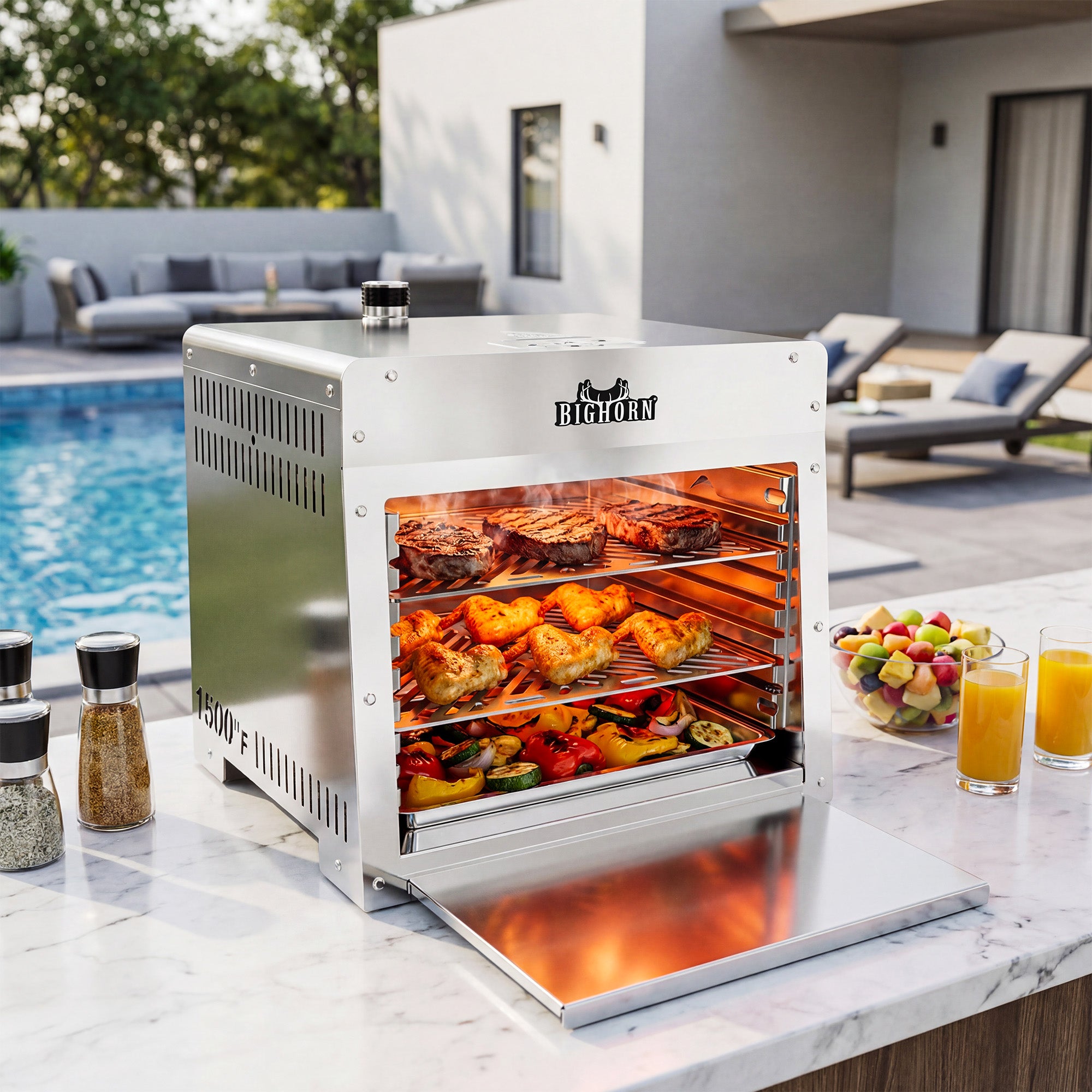
If your signature meal is a restaurant-style sear, gas or a dedicated infrared propane grill is the more direct tool. If your signature meal is weeknight chicken, vegetables, and smash burgers under balcony rules, a strong electric unit may be the one you will actually use. Compare radiant propane options in the infrared grill collection and the infrared steak grill collection when sear is the priority and outdoor flame is allowed.
Preheat patiently on either fuel. A barely warm electric plate and a gas grill lit for thirty seconds both disappoint for the same reason: the cooking surface is not ready.
Apartment and HOA rules to check first
Rules beat wish lists. Many high-rises ban propane cylinders on balconies, restrict open flame within a set distance of the building, or allow only electric cooking devices. HOAs may add aesthetic rules about lids, covers, and where carts can sit.
Ask the property manager or HOA for the written outdoor-cooking policy, including tank storage, charcoal bans, and whether infrared propane counts as an open-flame device. Do not rely on a neighbor’s setup as permission. For fire-risk context around outdoor cooking, read the NFPA grilling safety guidance and keep any allowed device far from curtains, siding, and overheard soffits.
If flame is banned, shop electric first—including a dedicated electric steak grill—instead of buying a propane cart you cannot legally light.
Running cost and convenience compared
Electric cost is the outlet: you pay residential electricity for the minutes the element runs. Gas cost is propane refills or a natural-gas line. Which is cheaper per cook depends on local utility rates, how hard you preheat, and whether you leave burners roaring between batches.
Convenience differs. Electric is grab-and-cook if you have a safe outdoor-rated outlet and weatherproof cord discipline. Gas is grab-and-cook until the tank is low—then you need a spare cylinder or a utility hookup. Natural-gas service, where available, removes tank swaps; the American Gas Association explains residential natural gas at a high level, while appliance conversion remains model-specific.
Factor the walk to the grill. A heavy cart you dread rolling out loses to a lighter electric plate you will use on Tuesday night.
Also price your time. If propane exchanges are a fifteen-minute drive and you grill twice a week, that errand becomes part of the true cost of gas. If your outdoor outlet sits behind a locked storage closet, electric stops feeling convenient. Write down the real path from kitchen to cooking spot for each option before you decide from a showroom floor.
Propane fuel math for carts still follows the same BTU planning used on larger grills; retailer explainers such as the Ferrellgas BTU overview help you estimate how often a cylinder needs attention once you know your burner load.
Cleanup, cooking surface and maintenance
Electric plates and nonstick-style surfaces often wipe down quickly after a cool-down, which is a real advantage on a balcony with limited sink access. Gas grates need brushing, occasional deep cleans, and attention to grease trays so flare-ups stay rare.
Gas also adds hose, regulator, and burner-port checks each season. Electric adds cord inspection and careful storage out of standing water. Neither is maintenance-free. If cleanup friction is why you stopped grilling last summer, prioritize a surface you will actually scrub. Browse conventional and specialty options together in the grills and griddles collection once rules and space are clear.
Keep household fire readiness in mind while you clean grease: Ready.gov’s home fire page and CPSC fire-safety education both stress preventing outdoor cooking from becoming an indoor hazard.

Who should choose which
Choose electric if your building bans flame or tanks, you want minimal fuel logistics, and your menu is everyday proteins and vegetables rather than trophy sears. Choose gas if you have outdoor space that allows it, you care about high-heat crust and multi-zone cooking, and you will keep a spare tank or a gas line.
Choose a portable infrared propane grill if rules allow flame, space is limited, and steak nights matter more than feeding a dozen sides at once. Renters who move often may prefer lighter electric or portable propane over a built-in island. Homeowners building a permanent patio kitchen can plan gas from the start and add specialty sear tools later. If you already own a gas cart but just moved into a flame-restricted building, pause before buying a second fuel system—confirm the new policy first, then decide whether an electric plate becomes the weekday workhorse while the gas cart waits for park or backyard use.

A third option: portable infrared propane
Portable infrared propane grills are not “electric without a cord.” They are compact gas tools aimed at intense radiant heat. They still need outdoor use, safe clearances, and a fuel cylinder.
They shine for steak-focused cooks who lack room for a four-burner cart but are allowed to use propane outdoors. They are a poor workaround for a hard flame ban. If your policy forbids propane on the balcony, infrared propane does not create a loophole—ask before you unbox.
What's the difference between e and s Weber grills?
They are different Weber model families, not a universal electric-vs-gas code.
In Weber’s naming, letter suffixes often mark product lines or feature packages rather than a single industry standard where “E” always means electric and “S” always means stainless. Exact meanings change by series and year.
When you see E or S in a Weber model name on a retail shelf, read that model’s current specification sheet for fuel type, grate material, and burner count instead of assuming the letter alone answers electric versus gas. This article notes the public naming confusion because shoppers ask it while comparing fuels; it is not a full Weber catalog. Compare attributes on paper and pick the fuel your space allows.
Which grilling method is healthiest?
No fuel is automatically the healthiest.
Doneness, charring, and what you cook matter more than whether the heat came from an element or a burner. Cook poultry and ground meats to safe internal temperatures and limit heavy black charring if that is a personal concern.
Follow agency temperature guidance such as the USDA FSIS safe minimum internal temperature chart and general grilling food-safety advice. Trim excess dripping fat that causes flare-ups, keep a cool zone so you can move food off direct flame, and use a thermometer instead of color alone. Electric vs gas is a rules-and-heat decision; safe temperatures are a food-safety decision.
Conclusion
Pick electric when buildings ban flame, gas when you can run open heat and want stronger sear zones, and portable infrared propane when space is tight but flame is allowed. Confirm the written outdoor-cooking policy first, then match the tool to the meals you cook most weeks.
See electric and gas options side by side in Big Horn Outdoors Grills & Griddles, or start with the electric steak grill if your balcony rules require a plug-in.
FAQ
How well do electric grills work?
Electric grills work well for everyday meals—chicken pieces, vegetables, burgers, and thinner steaks—especially when building rules block open flame. They are less satisfying if you want deep steakhouse crust on thick cuts. Success depends on preheating fully, not overcrowding the plate, and choosing a model with a surface sturdy enough for the food you cook most.
What's the difference between e and s Weber grills?
Weber uses letter suffixes in some model names to mark lines or feature sets; the letter alone is not a universal code for electric versus gas. Always read the specific model's fuel type and specs for the year you are shopping. Shoppers comparing electric and gas should verify fuel on the data plate rather than decoding letters from memory.
Which grilling method is healthiest?
Healthiest depends more on cooking to safe temperatures and managing charring than on choosing electric or gas. Use a thermometer, follow USDA minimum internal temperatures for poultry and ground meats, and avoid serving heavily blackened portions if you are minimizing char. Lean proteins and vegetables grill well on either fuel when handled safely.
Is it worth getting a gas barbecue?
A gas barbecue is worth it if your outdoor space allows flame or tanks, you cook outdoors often, and you want fast preheats with multiple heat zones. It is less worth it if your building bans propane or you would only grill a few times a year. In restricted buildings, a quality electric grill you can legally use beats a gas cart that stays in storage.
Explore more in the Gas Grilling Guides.
More to Read
Fireproof Grill Mat Under Pizza Ovens and Infrared Grills
Place a fireproof grill mat to catch grease and sparks under ovens and grills. Confirm the live 48-by-30-inch claims, and use a cart when you need ...
No Oven Spring on a High-Heat Pie: Dough Temp, Launch and Floor
Diagnose no oven spring on a high-heat pizza by checking dough temperature, launch handling, and floor heat before you spend another mix changing t...
Heat-Resistant BBQ Gloves: Temperature Ratings and Wet-Grip Limits
Read a 1472°F glove rating as a short, dry, instant figure. Wet or oily conditions change grip, so let long peels reach into hot ovens and grills.
