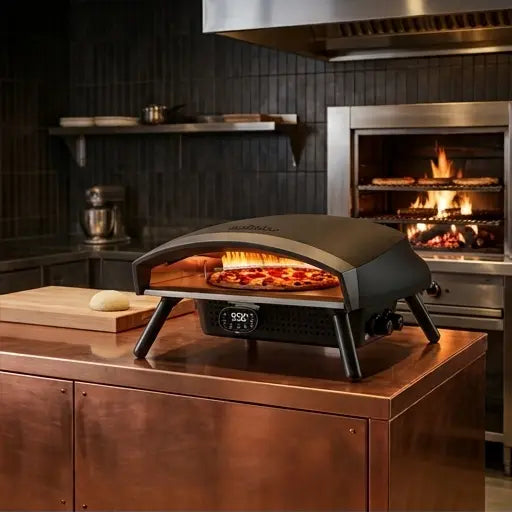
The best countertop electric pizza oven is the one that fits the pizzas you actually serve, the counter space you have, and the heat control you can trust. For most home cooks, that means an indoor-rated model with a pizza stone, independent top and bottom heat, a useful temperature range, and enough capacity for a full pizza — not the oven with the highest advertised peak temperature. Big Horn Outdoors’s 14-inch countertop model preheats in about 15 minutes, holds a PID-controlled range of 220–850 °F, and bakes a 14-inch pizza in roughly 3 minutes; those numbers are what a realistic buying decision should be compared against.
What “best” means for a countertop electric oven
“Best” depends on your pizza size, crust style, kitchen layout, and how often you cook. A household that mostly bakes one or two 12-inch pies wants different capacity and preheat behavior than a family that regularly serves 14-inch pizzas. The practical definition is simple: the best oven is the one whose cooking area, temperature control, and placement requirements match your routine without forcing you to change how you cook.
Start with capacity. A 14-inch cooking surface fits a full-size family pizza and leaves turning room for a peel; smaller decks handle personal pizzas and frozen pies but limit what you can bake. Next, temperature. Thin-crust Neapolitan-style dough benefits from a hotter stone (850 °F and above), while pan and deep-dish styles bake better at moderate heat. An oven with continuous temperature control covers both; a fixed 750–800 °F setting is fine for one style but not for others.
Then evaluate the things wattage alone does not tell you: the stone’s heat retention, insulation, element placement, and temperature accuracy. The 14-inch Big Horn model uses PID temperature control to hold a stable 220–850 °F range, which matters more for repeatable results than a single peak claim. Finally, check the physical fit — countertop depth, clearance above the oven, and the outlet requirements — before you buy.
How does an electric pizza oven cook differently from a regular oven?
An electric pizza oven concentrates heat in a small, insulated chamber and directs it at both the top and bottom of the pizza, so it bakes faster and crisps the base better than a standard home oven. The stone transfers heat into the dough by contact, while the upper elements melt cheese, cook toppings, and brown the crust rim. The key is balancing the two: if bottom heat runs too strong, the base darkens before the cheese melts; if top heat is weak, the dough dries before it colors.
That balance is why chamber design and stone recovery matter as much as maximum temperature. When a pizza launches, the stone surface cools instantly; a good oven recovers quickly so the next pie bakes like the first. A PID control system helps by keeping the chamber near a set temperature instead of cycling widely. The result is repeatable baking rather than a single fast first pie followed by inconsistent ones.
Electric ovens also remove the fuel workflow entirely: no pellets to load, no gas to connect, no ash to empty, no flame to manage. You preheat, launch, bake, and shut down. For apartments, kitchens, and enclosed spaces where a live-fire oven is impractical, an indoor-rated electric model is the practical route to high-heat pizza.

The features that matter most
Five features decide how well an oven fits you: capacity, temperature range and control, countertop footprint, stone design, and cleaning access. Electrical requirements and clearance are the constraints that quietly disqualify many models, so verify those before comparing specs.
- Capacity: a 14-inch deck fits family-size pies; 12-inch decks suit personal pizzas and frozen pizza. Measure the interior deck and the exterior footprint, not just the advertised diameter.
- Temperature control: continuous control (220–850 °F on the Big Horn model) lets you match the heat to the dough; presets help beginners, while manual control suits experienced bakers.
- Stone: a removable stone simplifies cleaning and replacement. Preheating it fully is the difference between a crisp base and a pale, doughy one.
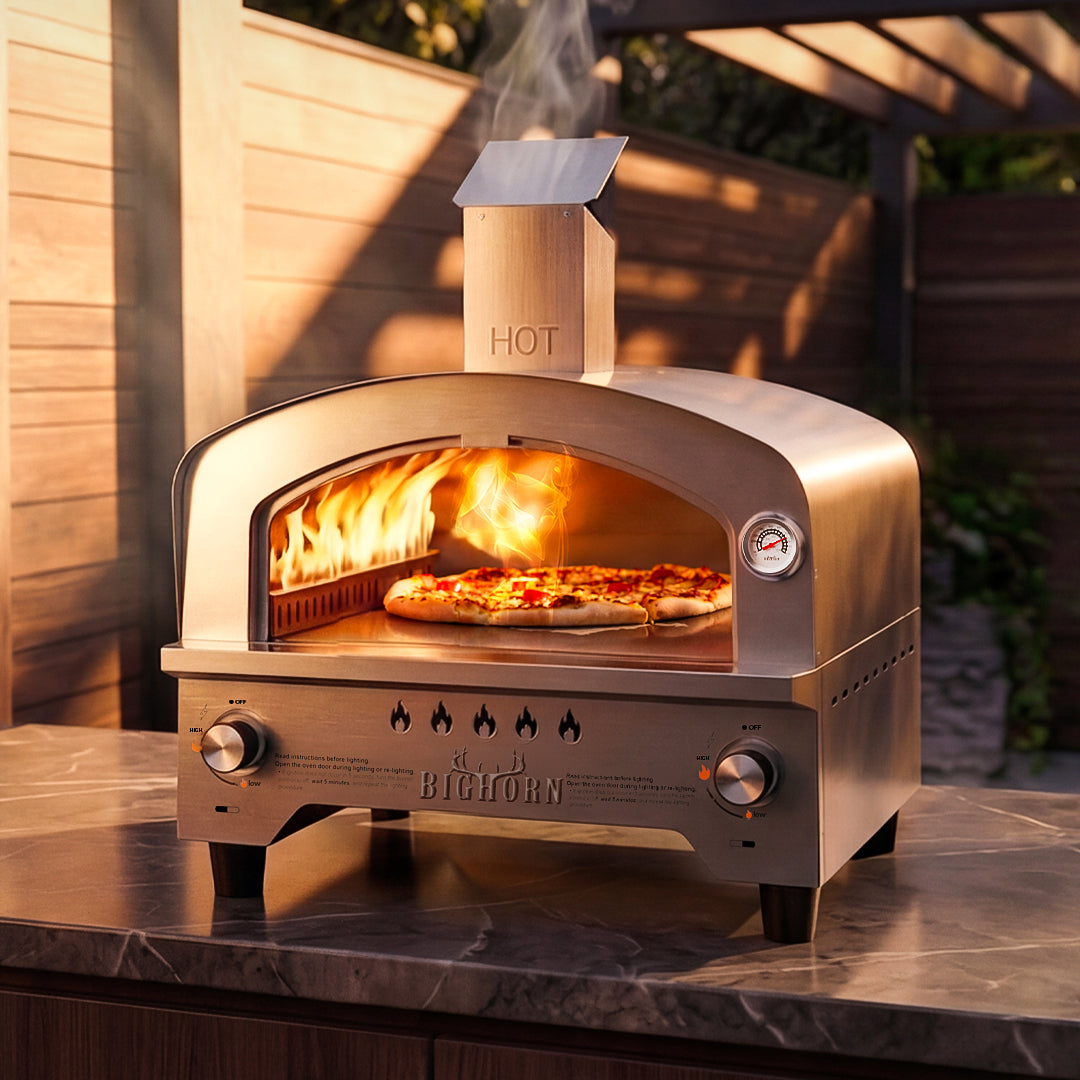
- Footprint: fold-up or flip-up designs reduce storage depth. The Big Horn 14-inch model uses a flip-up build that cuts its footprint by about half compared with conventional countertop ovens.
- Cleaning access: a removable stone and a crumb tray make post-bake cleanup fast. Avoid ovens with fixed stones that are hard to reach.
Do not choose on wattage alone. Wattage describes electrical draw, not heat retention, insulation, element placement, or stone performance. Two ovens with the same wattage can bake very differently depending on chamber design.
Pizza styles a countertop electric oven can handle
With enough top heat and a well-preheated stone, a countertop electric oven can handle thin-crust, New York–style, pan, and deep-dish pizzas — provided you adjust time and temperature to the style. The upper elements give you the blistering and browning that standard ovens struggle to produce; the stone handles the base.
For thin-crust and artisan styles, preheat the stone fully at the oven’s high end, launch the pizza, and bake for 2–4 minutes, watching the rim. For pan and deep-dish, drop to the middle of the range and lengthen the bake so the thicker dough cooks through before the top over-browns. Cold-fermented dough performs best because it is easier to shape and less prone to tearing at high heat; the basics of dough management are covered in the Big Horn signature pizza dough recipe, which belongs to the dough page rather than this buying guide.
The single most common failure is launching a pizza before the stone has recovered or reached temperature. Let the oven preheat fully — around 15 minutes on the 14-inch model — then bake the first pizza, and allow a short recovery between pies instead of rushing consecutive launches.
Is a countertop electric pizza oven safe indoors?
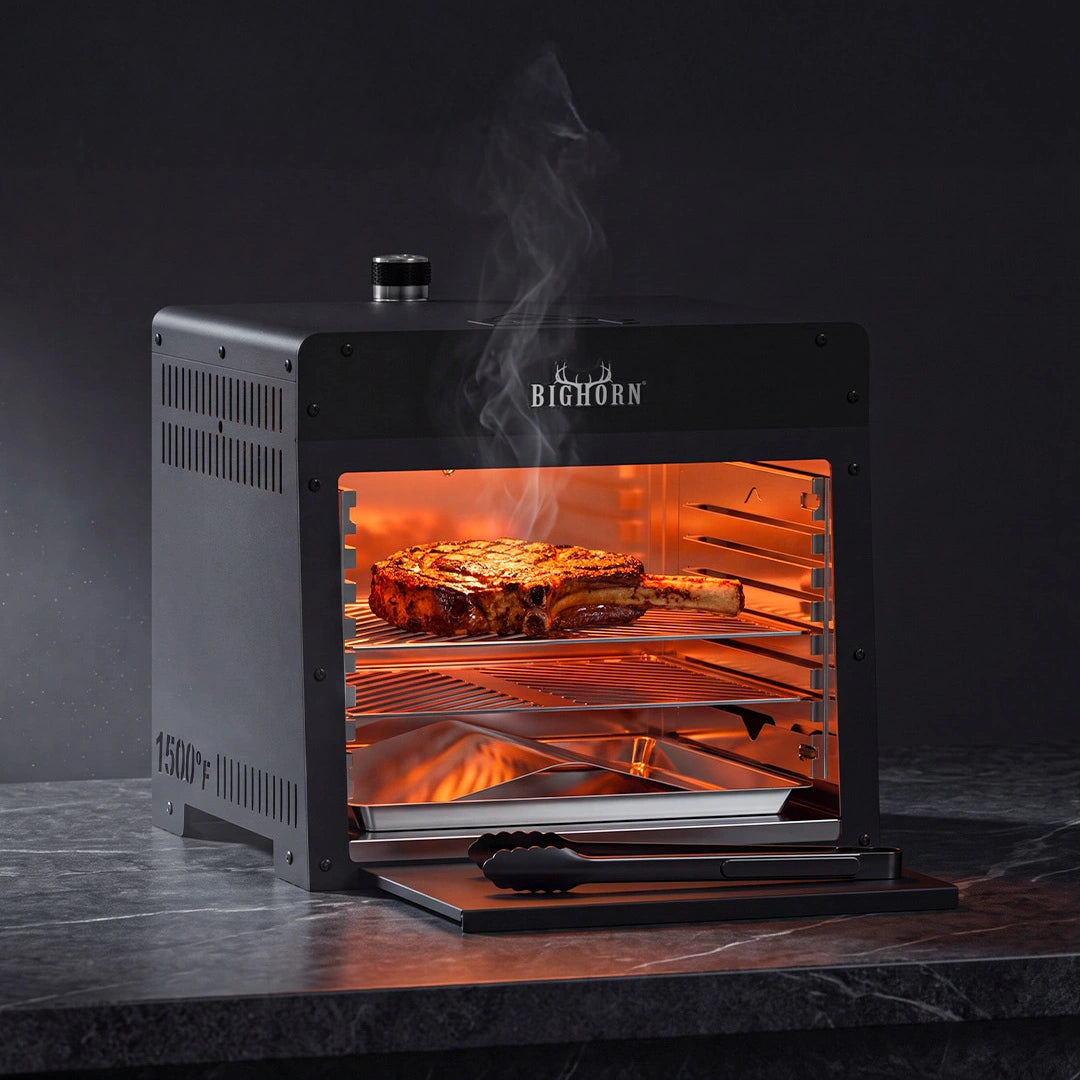
Yes, when the model is explicitly rated for indoor use and you follow its placement and electrical requirements. Unlike pellet or gas ovens, an indoor-approved electric oven produces no combustion byproducts, so it can run in a kitchen. The same is not true of fuel-burning models: a pellet oven or propane infrared grill must stay outdoors, while an indoor-approved electric oven is designed for enclosed spaces.
Before operating, check the manual for clearance — a few inches of open space around the unit, nothing flammable above the exhaust, and a stable, heat-resistant counter. Confirm the circuit can handle the oven’s draw; running a high-wattage oven on a shared kitchen circuit with other appliances can trip breakers. If your kitchen has limited counter space, a flip-up model like the 14-inch Big Horn reduces the depth you need to keep available.
Managing heat for better crusts
Manage heat in three stages: preheat, launch, and recovery. Preheat the stone long enough that it stops climbing — at least the manufacturer’s stated time (about 15 minutes on the Big Horn 14-inch). Launch only when the stone is stable; a cold stone drags heat out of the dough and produces a pale base.
During the bake, use the top heat to judge doneness. Blistered rim and lightly charred edges indicate the upper elements are doing their job; a pale top with a dark base means you need either a higher top setting or a shorter bake. After each pizza, give the stone a short recovery window, especially for consecutive thin-crust pies. For thick or heavily topped pies, start at the middle of the range and adjust after the first bake rather than guessing at maximum heat.
These are the adjustments you make with dough you already trust; if you are still new to high-heat baking, the electric pizza oven preheat guide walks through the timing in more detail.
Routine care for an electric pizza oven
Daily care is minimal: let the oven cool, brush or scrape debris off the stone, and wipe the exterior. The stone should not be washed with soap — soap seeps into porous stone and can flavor later pizzas. Remove loose residue while the stone is warm, then finish with a dry brush once it is cool. If your model’s stone is removable, take it out for a deeper clean only when the manual allows it.
Check the crumb tray or drip tray regularly; accumulated grease and crumbs smoke at high heat and can make the oven smell. Wipe the interior with a damp cloth when it has cooled, and avoid abrasive cleaners on the finish. With the flip-up footprint of the 14-inch model, you can store it upright after cooling, which helps keep the cooking chamber clean between uses.
Choosing the oven that fits your needs
Match the oven to how you cook, not to the loudest marketing claim. Choose a larger deck if you bake family-size pizzas or want turning room; choose a compact model if counter space is tight or you mostly bake personal pies. Choose continuous temperature control if you experiment with dough hydration and style; presets are a reasonable starting point for beginners.
Before you buy, confirm the following on the product page: indoor/outdoor rating, pizza diameter, countertop footprint and clearance, voltage and outlet type, maximum temperature and control settings, included accessories, and the stone’s cleaning method. The 14-inch Big Horn electric pizza oven is the reference point for this guide: 15-minute preheat, 220–850 °F PID range, 3-minute bake for a 14-inch pizza, and a flip-up design. If your priority is outdoor live-fire cooking instead, an electric model is the wrong tool — compare the full pizza oven range before deciding.
Countertop electric pizza oven FAQs
These answers cover the follow-up questions that come up after the buying decision. The exact limits differ by model, so treat the manual as final.
Can you use parchment paper in an electric pizza oven?
Only if the manufacturer permits it and the paper is rated for the temperature you are using. At high heat, loose parchment can lift, scorch, or smoke. A well-floured peel and properly prepared dough are more reliable for launching directly onto the stone.
Does a pizza stone need seasoning?
No. Most pizza stones perform best without oil; seasoning can create sticky residue and smoke. Preheat the stone, remove loose debris after it cools, and follow the cleaning instructions for that specific stone.
Why does pizza stick to the peel?
Dough usually sticks when it sits too long on the peel, absorbs moisture, or carries wet toppings. Build the pizza quickly, dust lightly with flour or semolina, and shake the peel before launching to confirm the pizza moves freely.
Can an electric pizza oven cook foods besides pizza?
Many models can bake bread, flatbreads, wings, vegetables, and other small dishes when the manufacturer allows those uses. Use an appropriate pan for foods that release grease or liquid so drippings do not fall directly onto the stone.
Could an electric pizza oven replace a standard oven?
No. A countertop pizza oven excels at concentrated heat for pizza and small dishes, but it does not replace the capacity of a full-size oven for roasts, sheet-pan meals, or multiple dishes at once.
If you are comparing countertop electric ovens, start from the 14-inch Big Horn electric pizza oven’s product page and verify the current specs against your kitchen setup before ordering. For help matching an oven to your space and cooking style, contact Big Horn Outdoors directly.