







Infrared Grilling & Steak Cuts
You did everything “right,” yet the first bite fights back. When you search why is my steak tough and chewy, the fix is usually one of a short list: cut choice, doneness, slicing, heat, salt, or skipping rest.
Use this page as a diagnosis, then cook with a thermometer and safe handling from USDA grilling guidance and safe temperature charts. High-heat tools in the infrared steak grill collection help with sear, but they cannot rescue a poorly sliced flank.
Quick diagnosis: match your steak to its cause
Match the symptom to the likely cause before you buy another marinade or tenderizer gadget. Most chewy steaks share one dominant mistake, not five at once.
| What you notice | Likely cause | First fix |
|---|---|---|
| Chewy even when pink | Wrong cut or sliced with the grain | Choose a tender cut or slice thinly against the grain |
| Dry and tight | Overcooked or no rest | Pull earlier; rest 5–10 minutes |
| Rubbery gray band | Cold center + harsh heat | Temper the steak; use two-zone heat |
| Bland and tight | Under-salted or wet surface | Dry brine; pat dry before sear |
Write down cut name, thickness, and pull temperature after each cook. Patterns appear within two or three dinners.
Cut choice and grain direction
Tender steaks such as ribeye, strip, and filet forgive more mistakes than skirt, flank, hanger, or chuck eye. Hard-working muscles need thin slices across the grain or a long moist cook that is not a quick grill sear.
Look for the parallel lines of muscle fiber on the raw steak and cut perpendicular to them on the board. Thick with-the-grain strips feel like rubber bands even at a perfect pink center.
Grade language such as USDA Prime or Choice describes marbling potential—see USDA AMS beef grades—but grading does not replace correct slicing or temperature control.
Doneness and carryover
Cooking far past your target tightens proteins and squeezes out juices. Carryover heat keeps rising a few degrees after you leave the grate, especially on thick cuts.
Pull 3–5°F early, rest on a warm plate, then slice. Chasing “extra brown” with endless lid-closed roasting is a common toughness path when you already had a good crust.
Ground beef and mixed dishes still need their own safe finishes per FoodSafety.gov charts; whole-muscle steaks are a different risk profile than burgers.
Resting and slicing errors
Skipping rest dumps juice onto the board and leaves the center tight. Five to ten minutes for a typical steak is enough; tent loosely with foil if the kitchen is cold.
Slice too thick on a fibrous cut and every bite feels chewy. Aim for thin ribbons on flank and skirt; thicker tender steaks can take slightly wider slices if the grain is short.
Sharpen the knife. A dull blade compresses meat instead of cutting fibers cleanly, which reads as chew even when the cook was correct.
Cold steak and uneven heat
A fridge-cold center over a blasting grate can give you a tough gray band outside and an underdone middle you then overcook trying to fix.
Temper 20–40 minutes on the counter for thick steaks while keeping raw meat out of direct sun and away from pets. Use a hot zone for sear and a cooler zone to finish so you are not stuck on maximum flame.
Browse two-zone friendly cookers in the infrared grill collection or your main grill—the heat pattern matters more than the logo on the lid.

Under-salting and moisture loss
Salt early enough to season through, or dry brine uncovered in the fridge on a rack. A wet, unsalted surface steams and toughens the exterior before a crust can form.
Pat dry before oiling and searing. Excess marinade sugar can scorch while the interior stays underseasoned, tricking you into thinking you need more heat.
Do not confuse a hard bark from sugar with tenderness. Tenderness lives in cut selection, final temperature, rest, and slice direction.
When tenderizing helps (and when it does not)
Mechanical tenderizing or a brief acidic marinade can help fibrous cuts. They will not fix a ribeye you cooked well past your preferred doneness.
If you cube or pierce meat, clean tools well and cook promptly—disrupted surfaces change handling needs. Prefer thin slicing for skirt and flank before you reach for powdered tenderizer.
For holiday surf-and-turf menus, keep steak technique simple and pull ideas from the recipes blog rather than stacking five unverified “tenderness hacks” in one night.
A simple practice cook that teaches faster than tips
Buy two identical steaks of the same thickness. Cook one your usual way; cook the second with a thermometer pull, a full rest, and deliberate against-the-grain slices.
Taste them side by side. The difference teaches more than another marinade recipe. Keep notes on grate heat and timing so you can repeat the better plate.
Food-safety habits from FoodSafety.gov cookout guidance still apply: separate raw and ready-to-eat trays, and refrigerate leftovers promptly.
Field notes you can reuse next time
Write down timing, heat feel, and what you would change. A two-line phone note beats trying to remember a perfect cook a month later. Keep raw and cooked tools separate, and chill leftovers within two hours.
If wind is strong, shield the fire and extend timing rather than maxing every control. If food browns too fast, build a cool zone and finish there. If food stays pale, preheat longer before the next batch hits the surface.
Scrape grease mid-session when smoke turns bitter. Keep a lid or sheet pan ready for flare-ups, and shut fuel down fully before you walk inside. Confirm ashes or burners are out.
Practice once on a quiet night before you host a crowd. One calm rehearsal teaches timing better than another tip list. Stage spare fuel, a clean platter, and a thermometer before you light anything.
Conclusion
Chewy steak is usually cut, temperature, rest, or slicing—not bad luck. Diagnose with the table, measure doneness, and slice against the grain. Fix one variable per cook so you learn what actually worked.
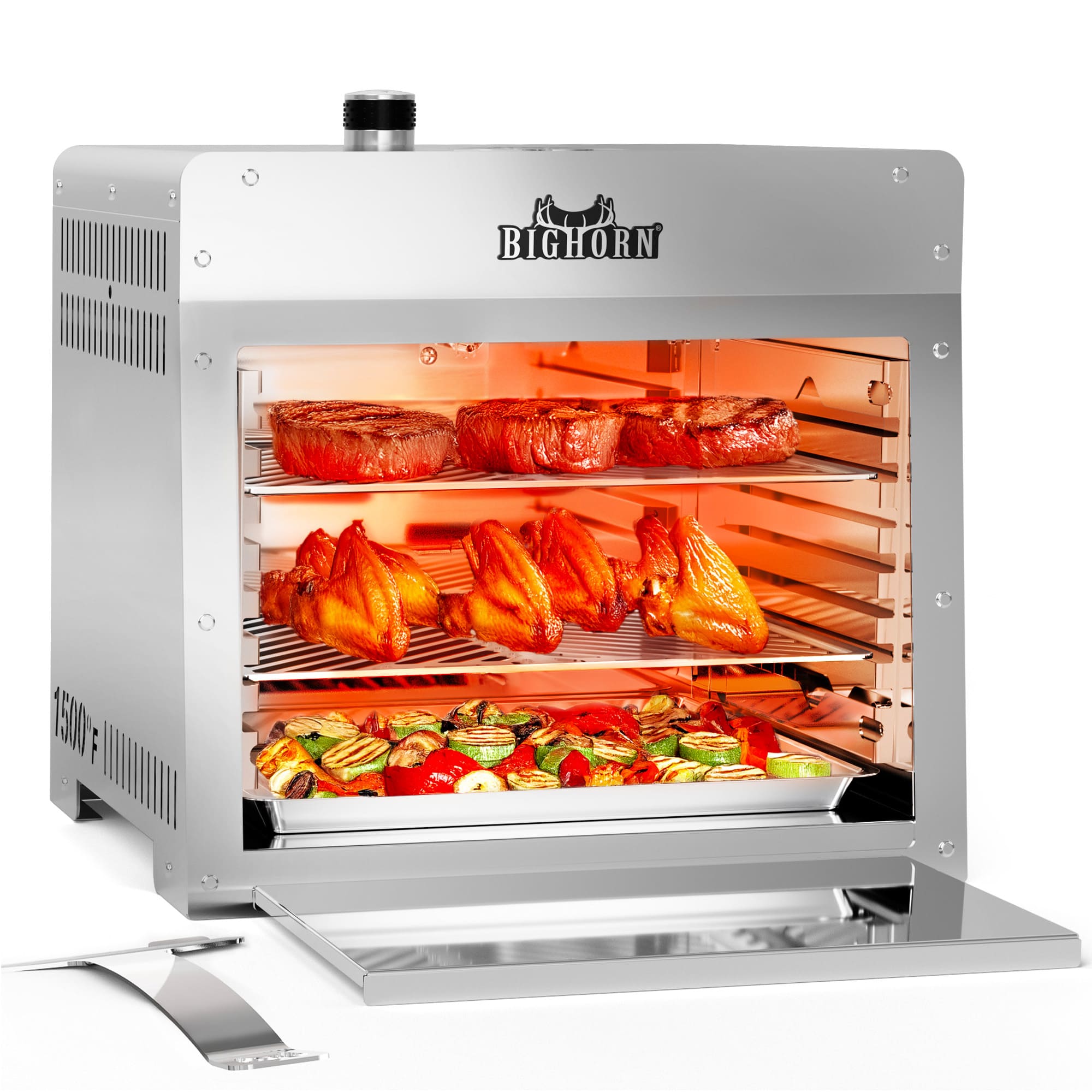
Want a dedicated sear station for thick steaks? See Big Horn Outdoors infrared steak grills.
FAQ
What does "rubbery steak" mean?
Rubbery usually means the muscle fibers feel tight and springy instead of tender—often from overcooking, slicing with the grain, or a hard-working cut served in thick strips. It can also show up when a cold steak hits fierce heat and you overcompensate. Identify cut and pull temperature before changing marinades.
Why is my steak chewy but not overcooked?
Chewiness with a pink center often points to grain direction or cut choice rather than doneness. Flank, skirt, and similar cuts need thin slices across the grain. A dull knife can also make correctly cooked steak feel tougher than it is.
How do restaurants make their steaks so tender?
Restaurants control cut selection, thickness, heat, timing, rest, and slicing—and they cook the same steaks repeatedly. Many also serve inherently tender cuts. At home, a thermometer, rest, and against-the-grain slicing close most of the gap.
Does steak get more chewy the longer you cook it?
Past a point, yes: higher internal temperatures tighten proteins and drive out moisture, which reads as chewy or dry. Very long moist cooks for stewing cuts are a different technique. For grilled steaks, pulling near your target and resting beats extending the sear.
Explore more in the Grill Recipes.
More to Read
Fireproof Grill Mat Under Pizza Ovens and Infrared Grills
Place a fireproof grill mat to catch grease and sparks under ovens and grills. Confirm the live 48-by-30-inch claims, and use a cart when you need ...
No Oven Spring on a High-Heat Pie: Dough Temp, Launch and Floor
Diagnose no oven spring on a high-heat pizza by checking dough temperature, launch handling, and floor heat before you spend another mix changing t...
Heat-Resistant BBQ Gloves: Temperature Ratings and Wet-Grip Limits
Read a 1472°F glove rating as a short, dry, instant figure. Wet or oily conditions change grip, so let long peels reach into hot ovens and grills.
