


By the Big Horn Outdoors Product Team
Published September 16, 2026
A stained pizza stone usually does not need to look new to be safe or effective. Let the stone cool completely, scrape away baked-on food, then spot-clean persistent marks with a small amount of baking-soda paste. Avoid soap, soaking, and sudden temperature changes because porous stones can absorb residue or crack. Dark discoloration is generally normal and may remain after cleaning.
What Causes Pizza Stone Stains?
Pizza stone stains usually come from absorbed oil, sauce, cheese, flour, or carbonized food, and dark marks are often a normal result of repeated high-heat cooking. Because many stones are porous, they can develop permanent discoloration even when they are clean enough to use.
A pizza stone is a porous baking surface—commonly made from cordierite, ceramic, or another heat-resistant material—that absorbs moisture from dough while retaining heat. That porosity helps produce a crisp crust, but it also allows grease and food pigments to penetrate below the surface.
Common marks include:
- Black spots: Burned flour, cheese, or sauce.
- Brown or yellow patches: Absorbed oil or grease.
- White residue: Excess flour, ash, or mineral deposits from water.
- Cracks or soft, crumbly areas: Possible thermal or moisture damage rather than ordinary staining.
A stained stone is not automatically dirty or unsafe. Focus on removing loose food and greasy surface residue rather than trying to restore the original color. Manufacturers commonly advise scraping and brushing the stone, while specific water instructions vary by model and material. Always check the care guidance for your exact stone before using liquid.
How Do You Clean a Stained Pizza Stone?
To clean a stained pizza stone, use a plastic scraper, a dry or slightly damp brush, and—only for stubborn marks—a baking-soda paste made with approximately equal parts baking soda and water. Never clean the stone while it is hot, and let it dry completely before heating it again.
Step-by-step method
-
Let the stone cool completely.
Remove it from the oven only when it is safe to handle. Placing water on a hot stone can create thermal shock and cause cracking. -
Remove loose debris.
Brush away crumbs, ash, and flour with a dry nylon brush or pizza-oven brush. -
Scrape baked-on food.
Use a plastic scraper, bench scraper, or blunt spatula. Hold the tool at a low angle and work gently so you do not gouge the surface. -
Treat the stain locally.
Mix about 1 tablespoon of baking soda with 1 tablespoon of water to make a thick paste. Apply it only to the stained area, not across the entire stone. -
Wait briefly.
Allow the paste to sit for roughly 10 minutes. For a particularly greasy spot, a slightly longer dwell time may help, but do not saturate the stone. -
Scrub gently.
Use a nylon-bristled brush or non-abrasive pad in small circular motions. -
Wipe away residue.
Use a barely damp cloth if the manufacturer permits water. Do not rinse the stone under a running faucet unless the product instructions specifically allow it. -
Air-dry completely.
Leave the stone uncovered until all moisture has evaporated. Drying may take several hours or overnight, depending on how much water was used.
The goal is a clean cooking surface, not a spotless appearance. Some oil marks may remain permanently without affecting pizza quality.
Can You Use Soap or Soak the Stone?
Traditional unglazed pizza stones should generally not be cleaned with dish soap, submerged in water, or placed in a dishwasher. Their porous material may absorb detergent, and retained moisture can increase the risk of cracking during the next heating cycle.
The safest general rule is:
| Cleaning method | General guidance |
|---|---|
| Dry brushing | Recommended for routine cleanup |
| Plastic scraping | Recommended for baked-on food |
| Baking-soda paste | Useful for localized stains |
| Small amount of water | Use only if the product instructions permit it |
| Dish soap or detergent | Avoid on most unglazed stones |
| Soaking or dishwasher cleaning | Avoid unless the manufacturer specifically approves it |
Product instructions can differ. For example, Ooni advises cleaning cooled stones with a pizza-oven brush and avoiding soap and water, while Weber care guidance for some stones permits rinsing with plain water but still prohibits soap and soaking. This difference is why the exact model’s manual takes precedence over generic cleaning advice. cite[ooni][contact-emea.weber]
Glazed stones may have different care requirements from unglazed cordierite stones. A glaze creates a less absorbent surface, but it does not automatically make every glazed stone dishwasher-safe or suitable for detergent. Check the manufacturer’s instructions before changing the cleaning method.
Should You Burn Off Stubborn Residue?
A high-temperature burn-off can loosen or carbonize stubborn food, but it should be used only when the oven and stone are designed for that operating method. The stone must still cool completely before brushing or scraping.
For an oven that permits burn-off cleaning:
- Remove loose food first.
- Place the stone correctly in the oven.
- Run the empty oven at its normal high cooking temperature for about 20 to 30 minutes, following the oven manufacturer’s instructions.
- Turn the oven off and allow it to cool fully.
- Brush away the remaining ash or carbonized material.
Do not add water to accelerate cooling. Do not use a self-cleaning oven cycle unless the stone and oven manufacturer explicitly approve it; self-cleaning cycles can reach temperatures beyond the intended operating range of some accessories.
Burn-off is most useful for dried cheese, flour, and sauce. It is less effective for deeply absorbed grease stains, which may remain as darker patches.
How Do You Prevent Future Stains?
Preventing stains is easier than removing them: use the correct preheating routine, limit excess flour, and clean loose residue after every cooking session. A pizza peel and properly stretched dough also reduce the chance of sauce or cheese spilling onto the stone.
Practical habits include:
- Use only enough flour or semolina to prevent sticking. Excess flour burns quickly and leaves black residue.
- Check that dough is not torn before launching it.
- Keep sauce, cheese, and oil away from the exposed edge of the dough.
- Brush the cooled stone after each use.
- Avoid cutting pizza directly on the stone.
- Do not oil, season, or intentionally coat an unglazed pizza stone.
- Store the stone in a dry location where it will not be struck or exposed to rapid temperature changes.
- Keep a replacement stone or compatible baking surface available if the original develops structural damage.
A stone’s darkened color is not the same as a layer of harmful buildup. Routine brushing is usually more important than cosmetic whitening.
Heat Management and Stone Safety
Pizza stones are vulnerable to thermal shock, which occurs when a hot stone experiences a rapid temperature change. The most important safety practice is to cool the stone naturally and keep moisture to a minimum.
Follow these precautions:
- Never pour cold water onto a hot stone.
- Never move a hot stone directly onto a wet or cold surface.
- Do not place a cold, damp stone into a fully heated pizza oven.
- Allow a washed or spot-cleaned stone to dry completely before use.
- Inspect the stone for cracks before each cooking session.
- Replace a stone that is split, crumbling, or unstable.
- Use heat-resistant gloves when handling the oven and accessories.
- Follow the pizza oven’s clearance and ventilation requirements.
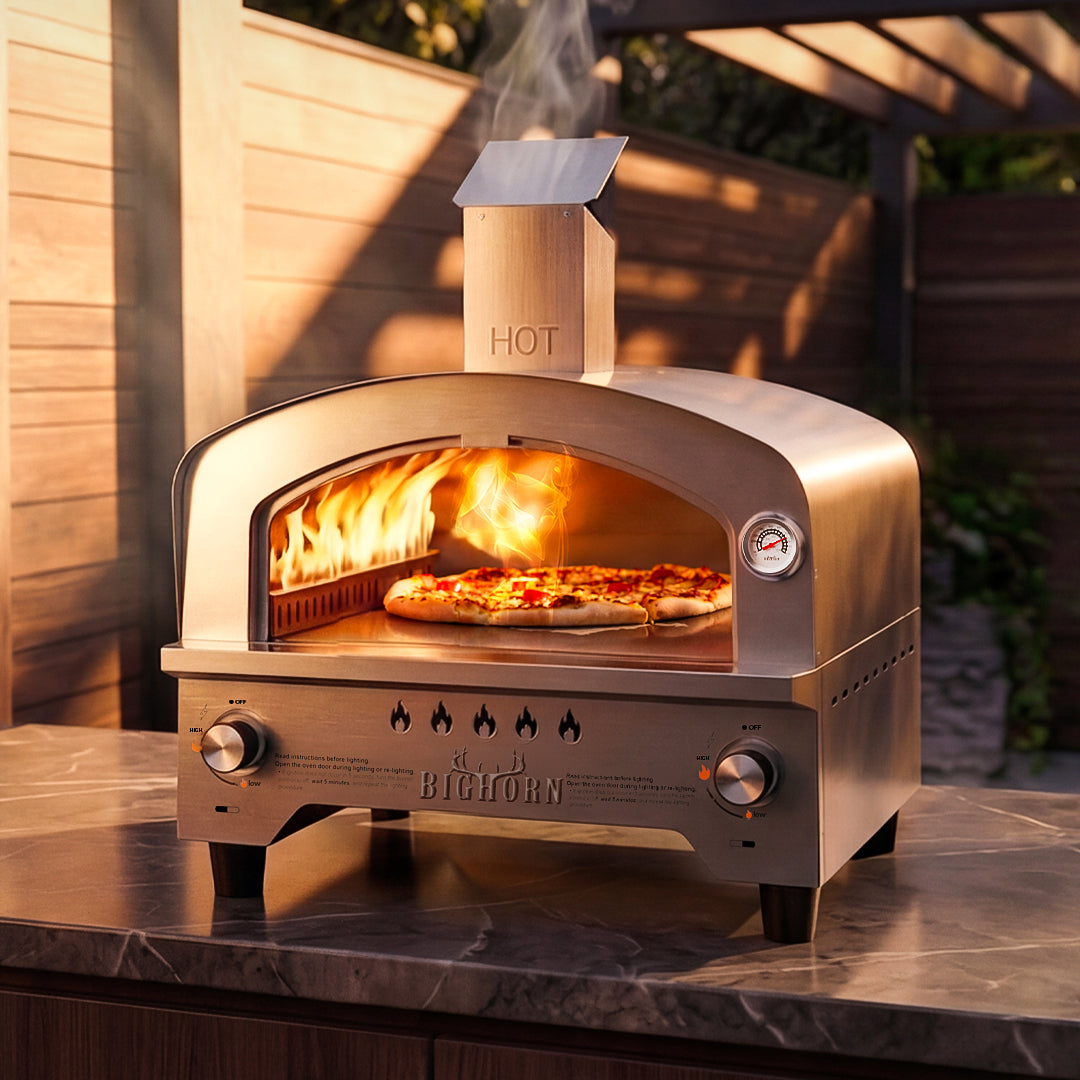
High-heat equipment requires additional care. A Big Horn Outdoors pizza oven, for example, should be cleaned according to the instructions for its specific model and fuel system rather than by transferring care practices from another oven or stone. Product formats, fuel types, heating systems, and accessory requirements vary across the Big Horn Outdoors range.
Which Cleaning Tools Should You Use?
The best pizza-stone cleaning tools are simple: a brush with nylon or other suitable bristles, a plastic scraper, a microfiber cloth, and baking soda for localized stains. Avoid aggressive abrasives that can damage a glazed surface or create loose particles.
A useful basic kit includes:
- Nylon pizza-oven brush.
- Plastic bench scraper or spatula.
- Small bowl for mixing paste.
- Baking soda.
- Barely damp microfiber cloth.
- Dry towel for handling and final wiping.
- Heat-resistant gloves.
A metal scraper may be acceptable for some unglazed stones, but it can scratch glazed surfaces and may shed sharp edges if used forcefully. If the stone came with a care brush or scraper, use those tools first.
Do not use oven cleaner, bleach, abrasive powders, steel wool, or citrus-based degreasers unless the stone manufacturer specifically approves them. Chemical residue can be difficult to remove from porous materials.
Big Horn Outdoors Expert Views
“A pizza stone does not need to remain the color it had on its first day. In most cases, the right maintenance routine is to let it cool naturally, remove loose debris with a brush, scrape carefully, and treat only persistent surface residue. The most common avoidable mistakes are soaking the stone, using detergent on an absorbent surface, and reheating it before moisture has fully evaporated. If the discoloration is flat and the stone remains structurally sound, it is generally a sign of use rather than a reason to replace it. Cracks, crumbling edges, or an unstable cooking surface are more important warning signs than dark marks.”
This practical guidance reflects Big Horn Outdoors’ focus on manageable, responsible outdoor cooking. Always give the care instructions for the exact pizza oven, baking stone, and accessory priority.
When Should You Replace a Pizza Stone?
Replace a pizza stone when it has a large crack, breaks into unstable pieces, crumbles, or develops damage that could contaminate food or interfere with safe handling. Dark stains alone are usually not a reason to discard it.
A small hairline crack may not immediately prevent cooking, but repeated heating can cause it to spread. Inspect the stone when it is cool and dry. If pieces are loose, the surface is flaking, or the stone no longer sits flat, stop using it.
Before buying a replacement, confirm:
- Exact stone dimensions.
- Thickness and material.
- Whether it fits the oven rack or stone supports.
- Whether it is compatible with the oven’s fuel and heat range.
- Whether the replacement is sold individually or as a set.
- Whether the model requires a specific orientation.
Do not assume that a stone from one Big Horn Outdoors oven will fit another model. Diameter, thickness, support rails, airflow, and heat exposure can differ even among ovens with similar names.
Conclusion
Clean a stained pizza stone only after it has cooled completely. Brush and scrape away food, use a small baking-soda paste for stubborn marks, wipe sparingly when permitted, and let the stone dry fully before reheating. Avoid soap, soaking, harsh chemicals, and sudden temperature changes unless the exact manufacturer instructions say otherwise.
For everyday care, accept some permanent discoloration and concentrate on removing loose residue. If you use a Big Horn Outdoors pizza oven, match the cleaning method to the specific stone and oven model, fuel type, and official care guidance. Replace the stone only when structural damage—not ordinary staining—makes it unsafe or impractical to use.
People Also Ask
Can I use baking soda on a pizza stone?
Yes, baking soda can be used as a mild spot cleaner for many unglazed stones. Mix it with a small amount of water, scrub gently, wipe away the residue, and let the stone dry completely.
Why is my pizza stone turning black?
Black areas usually come from burned flour, oil, cheese, or sauce absorbed during cooking. A darkened stone is common and does not necessarily indicate a problem.
Can I put a pizza stone in the dishwasher?
Most pizza stones should not go in the dishwasher. The combination of water, detergent, and rapid drying can damage porous stone, but always check the exact product instructions.
Can I clean a hot pizza stone?
No. Let the stone cool completely before brushing, scraping, or applying any moisture. Rapid cooling can cause thermal shock and cracking.
How often should I clean my pizza stone?
Brush the cooled stone after each use and perform spot cleaning when residue accumulates. A full cosmetic cleaning is usually unnecessary because normal staining does not affect the stone’s cooking function.